Key takeaways
- Two separate walls allow the TV to sit nearer seated eye level.
- Open fireplace access remains distinct from storage and media equipment.
- One swiveling chair can serve both conversation and television viewing.
A practical living room layout with fireplace and tv stand starts by choosing which feature people face most often. Put the television on a separate wall when possible, use an adjacent console for wide rooms, and consider an above-fireplace screen only when the exact manufacturers permit it.
As an Amazon Associate we earn from qualifying purchases.
By KK Home Furnishings Editorial Team
Layouts That Give Both Focal Points Room to Work
Begin with real room geometry: mark the fireplace opening, doors, windows, outlets, sofa depth, and the full footprint of the TV cabinet. Then decide whether your household usually watches the screen or gathers around the fire. The options below change seating direction and storage location, not merely decorative colors.
| Layout | Room Fit | TV Stand Position | Seating | Watch Out For |
|---|---|---|---|---|
| TV on perpendicular wall | Rectangular room with two usable walls | Long wall beside fireplace | Sofa faces screen; chair turns to hearth | Some seats angle away from fire |
| Fireplace and TV side by side | Wide uninterrupted wall | Low console beside hearth | Sofa faces TV; armchair faces fire | Needs wall width and verified heat separation |
| Conversation-first hearth | Fireplace-led room with spare side wall | Compact stand on adjacent wall | Sofa faces fire; swivel seat reaches TV | Screen is secondary for several seats |
| Corner hearth plus TV long wall | Corner or diagonal fireplace | Longest straight wall | Sofa faces TV; chair sees hearth | Doors can limit available console length |
| Two activity zones | Long or open-plan room | Dedicated TV area | Sofa at TV; chairs by fireplace | Uses more floor area and furnishings |
| Approved vertical combination | No alternative TV wall | Side storage with approved TV above fire | Sofa views elevated screen | Heat and viewing-height restrictions |
1. Put the TV Stand on a Wall Perpendicular to the Fireplace
Best For: Rectangular living rooms with two available walls where you want low TV viewing and an intact fireplace focal point.
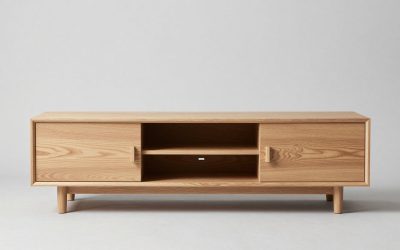
Using two neighboring walls often resolves the basic problem without asking one wall to accommodate everything. Give the fireplace the shorter focal wall and place the media console on the long wall beside it. This arrangement favors people who watch television most evenings but still want the fire visible when guests gather. It also avoids placing electronics directly above a heat source.
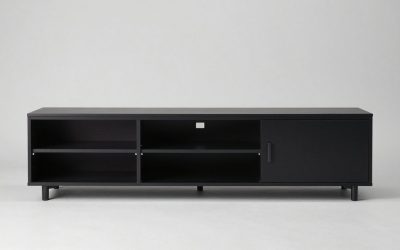
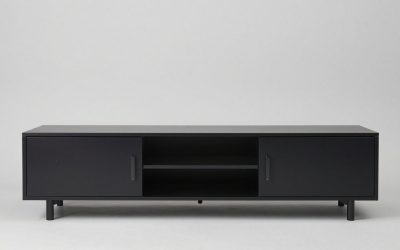
Place the main sofa where a seated viewer can see the television without turning sharply, then turn one lightweight chair toward the fireplace. A low, closed-front TV stand can house the streaming box and accessories while letting both walls breathe. Test positions with painter’s tape showing the actual console depth, sofa footprint, and open drawer travel before moving heavy furniture.
Check whether the nearest sofa arm, curtains, books, and cabinet edge are too close to the active firebox. The U.S. Fire Administration recommends keeping combustible items at least three feet from heat sources [USFA, undated]; the fireplace’s installation manual supplies any model-specific clearances. Keep the console’s cords on its own wall rather than stringing them across the hearth or a walking route.
Pros:
- Two separate walls allow the TV to sit nearer seated eye level.
- Open fireplace access remains distinct from storage and media equipment.
- One swiveling chair can serve both conversation and television viewing.
Cons:
- A sofa positioned for the screen may not directly face the flames.
- Adjacent windows can limit where the television avoids reflected daylight.
Who Should Skip It: Choose the side-by-side wall if your room offers just one uninterrupted wall and cannot support perpendicular sightlines.
2. Place the Fireplace and TV Console Side by Side
Best For: Wide rooms with a long uninterrupted focal wall and a strong preference for keeping the screen below mantel height.
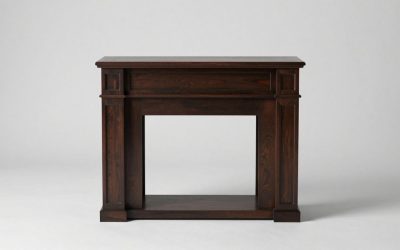
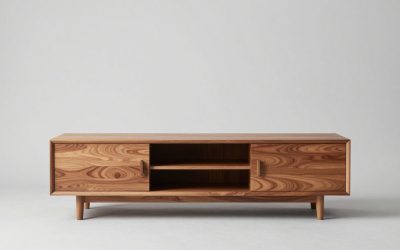
A side-by-side arrangement makes the television and fireplace feel related without stacking them. Set the hearth or fireplace surround on one section of a broad wall, then use a low TV console on the remaining section. The room reads as one focal zone, but each element keeps its own appropriate mounting and clearance requirements. This is an especially useful compromise for a wall that is wider than it is tall.
Center the sofa on the television if screen viewing drives daily use, not on the midpoint between the two focal points. An armchair can aim slightly toward the fire, and a shared rug can tie both areas together. Use a console with enough top area for the television’s actual feet if it is not wall mounted; a screen’s diagonal size does not tell you how wide its support base is.
Do not assume a wooden media cabinet can sit immediately against the fireplace surround. Measure from the active heat source and consult the firebox manufacturer’s clearances for combustible materials and any hot-air outlet. For a gas or wood fireplace, plan television power and signal cables away from the appliance and consider a qualified installer before altering the wall or hearth structure.
Pros:
- TV viewing stays lower than an over-mantel mount would require.
- A single furniture wall keeps most audio and media wiring together.
- Separate focal objects make flexible sofa and chair placement possible.
Cons:
- The scheme needs more horizontal wall area than stacked designs.
- An unbalanced mantel and console pair may look visually crowded.
Who Should Skip It: Use the perpendicular-wall plan if the fireplace projects into the remaining cabinet space or the wall is too narrow.
3. Let the Fireplace Lead and Angle a Chair Toward the TV
Best For: Conversation-first family rooms where the hearth is used more often than a television and seating is movable.
If the fireplace is the emotional center of the room, make the sofa face it and treat the television as a secondary destination. Place the TV stand on a neighboring wall where someone can still see the screen from a swivel chair or part of the sofa. The benefit is not perfect simultaneous viewing; it is a room that functions as a gathering place even when the television is off.
Arrange the sofa and a pair of chairs around a coffee table, but leave a direct route to exits and the firebox controls. The TV console works better as a compact cabinet here than a full entertainment wall because it should not compete with the hearth. A chair that rotates between fireplace and screen offers more flexibility than trying to force every seat into one rigid angle.
A furniture layout is successful only if the occupants will actually use those swivel or movable pieces. Test the seat turn, footrest extension, and sightline from a normal sitting position. If someone watches long programs every night, this layout can demand repeated head turns; the perpendicular-wall arrangement is typically more comfortable for that use case without changing the room’s primary fireplace orientation.
Pros:
- Fireplace seating remains welcoming when the television is switched off.
- Movable chairs accommodate conversation without relocating a large sofa.
- A smaller TV stand can leave valuable wall space for artwork.
Cons:
- Not every seat has a direct forward-facing view of the screen.
- Frequent TV watchers may find the secondary angle inconvenient.
Who Should Skip It: Choose the screen-first perpendicular layout for daily movies, games, or households needing straight-ahead TV access.
Layouts for Corners, Open Plans, and Difficult Walls
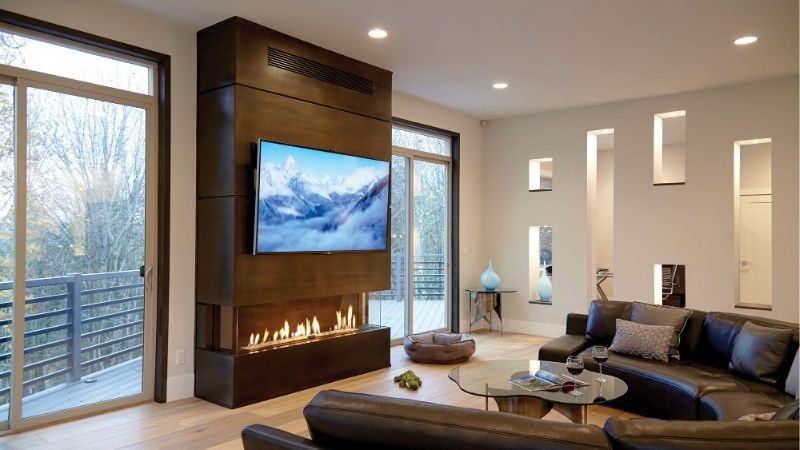
Rooms with a corner hearth or long open footprint benefit from layouts that separate viewing from fireside seating. A screen above the fireplace is a different case: it can raise the viewing height and must pass model-specific heat and wall-mount checks. Keep these choices distinct rather than treating one photograph as a universal floor plan.
4. Use the Long Wall for TV Storage Beside a Corner Fireplace
Best For: Rooms with a diagonal or corner hearth, one substantial remaining wall, and an awkward window or doorway.
A corner fireplace is already a visually strong feature, so you do not have to build a second feature wall around it. Put a low TV stand on the longest uninterrupted wall and aim the main sofa primarily at that screen. The corner fire becomes a side focal point that remains visible from an accent chair. This avoids packing a cabinet into the narrow diagonal area beside a working fireplace.
Measure the usable straight-wall span, not just the apparent width between the corner hearth and a doorway. Mark where cabinet doors will open and where people will walk when crossing to a hall or patio door. If the couch and media stand form a long narrow corridor, choose shallower storage and wall-mounted audio accessories where appropriate rather than borrowing circulation space for more shelving.
Keep loose blankets and baskets away from the fireplace opening and respect the unit’s installation directions. A television sitting on a cabinet should have a base fully supported by the furniture and be anchored as directed; CPSC’s Anchor It! guidance calls for securing TVs and furniture, particularly around children [CPSC, 2025]. A corner hearth does not change those tip-over concerns.
Pros:
- The longest straight wall can carry a practical, full-width TV console.
- The angled hearth remains a feature without dictating every seat.
- A compact armchair offers a dedicated place to enjoy the fire.
Cons:
- Door swings and passageways may sharply reduce available cabinet width.
- One sofa end can become farther from the fireplace than expected.
Who Should Skip It: Try a two-zone layout if the room is long enough to give the fireplace a distinct seating area.
5. Create Separate Fireplace and TV Zones in an Open Plan
Best For: Long living rooms or open-plan spaces where one household needs both conversation by the fire and regular screen viewing.
A generous room does not need one sofa to serve every activity. Give the television a compact media area with a sofa or sectional facing its stand, then establish a small fireside pair of chairs nearer the hearth. The zones can share a rug color or upholstery material without being forced into symmetry. Unlike a single shared focal wall, each destination can have seating at an appropriate orientation.
Use the back of a sofa or a slim console table to mark the transition, provided it does not block circulation. Place the TV stand where outlets and device connections are already practical. At the fireplace end, keep the chair positions outside manufacturer-specified heat clearances and leave the firebox accessible for cleaning, controls, and inspection. Two smaller rugs can work when one huge rug confuses the boundary.
This plan works only when it leaves room to move between zones and toward exits without stepping around the coffee table. Walk the intended routes before settling on furniture sizes, including paths used by children or anyone with mobility limitations. It may also require two task lights and more careful acoustic planning; avoid purchasing a second oversized sofa simply to make each area look ‘complete.’
Pros:
- Independent seating positions support television viewing and quiet fireside reading.
- A floating sofa defines a zone without constructing a partition.
- Different activities can occur without moving the entire furniture group.
Cons:
- Two zones need more usable floor area than a single seating group.
- Duplicate lighting and rugs can raise the furnishing budget.
Who Should Skip It: Choose a shared-wall arrangement if the room has only enough floor space for one practical seating circle.
6. Stack the TV Above the Fireplace Only With Verified Clearances
Best For: Rooms lacking another TV wall where the exact fireplace and television instructions explicitly permit an above-hearth arrangement.
Stacking the screen over the firebox preserves scarce horizontal wall space, but it should be the last layout considered rather than an automatic design trick. The television may sit too high for relaxed viewing, and heat can harm electronics. Samsung’s U.S. mounting guidance does not recommend positioning its TVs above a fireplace [Samsung, 2026]; check your own TV and fireplace documentation before accepting this compromise.
Some specific gas fireplaces have engineered heat-management systems that allow closer TV placement. Heat & Glo describes Passive Heat configurations for selected models, but their published spacing is not a rule for unrelated fireplaces [Heat & Glo, undated]. The relevant installation manual, mantel geometry, heat outlet, and TV operating-temperature limits must all be satisfied. If they cannot, use a separate wall or abandon this configuration.
If the system is approved, consider a small side media console for the receiver, remotes, and gaming devices so equipment is not sitting on the mantel. A trained installer can review the wall structure, electrical routing, and the actual heat exposure in operating conditions. Never route wiring through a flue or appliance cavity, cover required vents, or treat an attractive photo as evidence that your own unit is safe.
Pros:
- One vertical focal wall preserves a second wall for windows or storage.
- A separate side cabinet can keep heat-sensitive devices away from the mantel.
- Approved heat-management systems may allow options unavailable to standard fireplaces.
Cons:
- High screens can be uncomfortable for long seated viewing sessions.
- Manufacturer restrictions may rule this configuration out entirely.
Who Should Skip It: Pick any other arrangement if clearances, structural support, or the television manufacturer do not allow stacking.
Frequently Asked Questions
Once you know which walls will carry the television and fireplace, a few practical questions remain: glare, cabinet fit, visual coordination, and whether an electric media fireplace changes the plan. These checks are useful before buying furniture, mounting a TV, or bringing new equipment into the room.
How should I place a TV stand if the fireplace is on a wall with large windows?
Check the screen from the seat at the time you actually watch television. Side daylight can wash out the image, while windows directly across from a glossy screen can cause more distracting reflections. A perpendicular TV wall may help, but first test with the blinds and lamps in their usual positions.
Do not move the media stand into an unsafe space near the fire just to escape glare. Window shades, a different sofa angle, or a screen position farther from the glass may solve the problem while preserving safe access to the hearth and unobstructed exits.
Does the TV stand need to match the fireplace mantel?
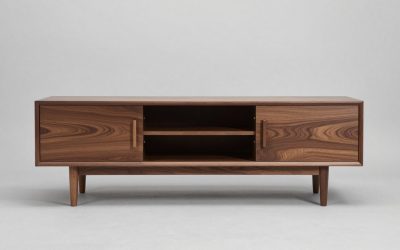
No. The mantel and media cabinet can have different finishes if the room relates them through scale, undertone, or repeated material. A warm wood TV console beside a painted stone surround often looks more intentional than a forced match that ignores the sofa and floors.
Choose finishes after the layout is functional. Paint, hardware, and textiles are relatively easy to change; a media console that obstructs the fireplace or cannot hold the television safely is much harder to fix.
What if the TV base is wider than the available media console?
Use a cabinet designed for the television’s actual footprint and load, or choose a compatible wall mount installed in suitable framing. The screen diagonal is not the footprint of its feet, and furniture labels differ in the way they describe maximum TV size and supported weight.
Do not balance feet beyond the stand edges or rely on decorative shelving for structural support. The CPSC recommends properly securing televisions and suitable furniture against tip-over hazards [CPSC, 2025].
Can I use an electric fireplace TV stand instead of a separate fireplace?
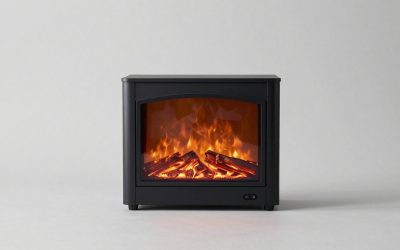
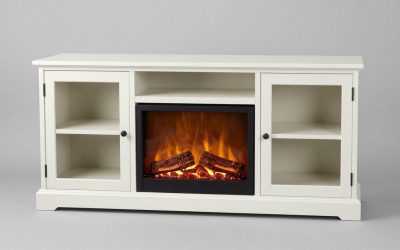
An electric fireplace TV console combines media storage and a listed heating appliance in one purpose-built unit; it is not the same construction as setting a generic cabinet near an existing wood-burning hearth. Some models are designed for a TV on top, within the published load and size limits.
Check that model’s full instructions for room placement, hot-air discharge, wall clearances, cord routing, and electronic equipment storage. Do not retrofit a heater into an ordinary cabinet unless its manufacturer supplies instructions for the exact combination.
Final Thoughts
The most useful living room layout with fireplace and tv stand is the one that gives the household a comfortable viewing angle, a workable conversation area, and clear fireplace access. Start with a separate or side-by-side TV wall; reserve stacking for carefully documented installations that meet both appliance and television limits.