Key takeaways
- A lumbar support pillow for desk chair use is often the cheapest fix for a sore back — but not always the right one, since a chair that is too deep or too high needs adjusting or replacing, not padding.…
A lumbar support pillow for desk chair use is often the cheapest fix for a sore back — but not always the right one, since a chair that is too deep or too high needs adjusting or replacing, not padding. This guide compares four current pillows by real size, attachment and foam, and flags when a pillow is the wrong answer.
As an Amazon Associate we earn from qualifying purchases.
By KK Home Furnishings Editorial Team
How to Choose a Lumbar Support Pillow
A lumbar pillow has to fit your back and your chair and actually stay where you put it, so weigh more than the price. Consider four things: the pillow’s size against your back and chair, how it attaches, the foam’s firmness rather than its raw thickness, and whether a pillow is even the right fix for your problem.
Size and fit to your chair
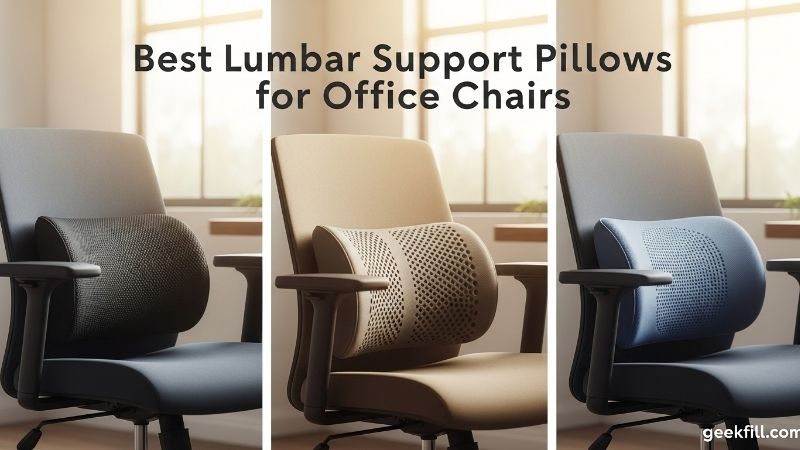
A lumbar pillow has to fit both your back and the chair’s backrest, so size matters more than it looks. These pillows range from Cushion Lab’s 16-by-16-by-4-inch molded pad to ComfiLife’s 15-by-12.5-by-4.7 inches and the Tempur-Pedic’s 15-by-15-by-4, so a wide chair back suits a broader pillow and a narrow one a smaller pad.
Match the pillow’s height to where your spine actually curves, not just the chair. A pillow that lands too high sits between your shoulder blades; too low and it pushes your hips forward. Measure from the seat to the small of your back and compare it to the pillow’s height, since placement decides comfort more than overall size.
Fit also depends on the chair’s own shape: a deeply contoured gaming chair needs a different pillow than a flat task-chair back. A pillow that adds too much depth on an already-deep seat pushes you forward off the backrest, so confirm the added depth works with your seat depth rather than creating a new problem while solving one.
How it attaches
A pillow that slides down behind you every hour is a pillow you stop using, so attachment is central. Look for an adjustable strap that loops around the backrest; ComfiLife’s pillow uses one, which keeps it at the set height, while a strapless molded pad relies on friction and your back to stay in place through the day.
Match the strap to your chair. A strap needs something to loop around, so a mesh or open-back chair gives it a clear anchor, while a solid executive back may need a longer strap. Check the strap length and whether it is adjustable, since a fixed loop sized for a narrow chair will not reach around a wide backrest.
Straps also wear and can slip, so an adjustable, reinforced one lasts longer than a thin elastic loop. For all-day use, a pillow that stays exactly where you set it saves constant repositioning, which is the difference between a pillow that quietly helps and one that ends up on the floor or shoved aside by mid-afternoon.
Foam type and firmness
Support comes from how the foam behaves under your weight, not the number on the box. A common trap is ranking pillows by uncompressed thickness: ComfiLife lists 4.7 inches against others’ 4 inches, a 17.5 percent nominal gap, but that says little about the actual lumbar projection once your back compresses it in real use.
Memory foam molds to your back and spreads pressure, while firmer or molded foam like Cushion Lab’s holds a defined curve that pushes back more. Which suits you depends on preference and how much support you want: a softer pillow feels gentle but may compress too far, while a firm one holds its shape but can feel aggressive at first.
Firmness also drives longevity: cheaper foam packs down over months and stops supporting, while denser foam holds its curve longer. Judge a pillow by how it feels under load and how it recovers overnight, not by its stated thickness, since two pillows with the same number can support very differently once you sit back against them.
When a pillow is the wrong fix
Sometimes a pillow treats a symptom when the chair is the problem, so it is worth checking before you buy. If your feet dangle, your seat is too high; if the front edge presses your knees, the seat is too deep. A pillow does not fix those, and an adjustable chair or a footrest addresses the real cause more reliably.
A pillow is the right fix when the chair otherwise fits but lacks lower-back support, or when you cannot replace the chair. It is the wrong fix when the seat height, depth or backrest angle are off, since padding a mismatched chair can push you into a worse position. Diagnose the chair first, then add a pillow if the gap is only support.
Cost also frames the choice: a pillow is a fraction of a new ergonomic chair, so it is a sensible first step for a chair that nearly works. But if you spend all day in a chair that fits poorly, the pillow is a stopgap, and the money is better put toward a chair that adjusts to you. No pillow treats a medical back condition.
Top Picks
These four cover the range of a lumbar support pillow for desk chair use, from a firm molded pad to an adjustable-strap design, all with published dimensions. Rather than ranking them by thickness, which does not reflect real support under load, the picks below match pillow shape and attachment to how and where you sit.
| Product | Best For | Key Spec | Watch Out For |
|---|---|---|---|
| Cushion Lab Back Relief | Best overall, firm molded support | 16 x 16 x 4 in; molded memory foam; holds a defined curve | Strapless design relies on position |
| ComfiLife | Best for staying in place | 15 x 12.5 x 4.7 in; adjustable strap | Narrower; confirm it covers your back width |
| Tempur-Pedic LumbarCushion | Best brand-backed foam | 15 x 15 x 4 in; Tempur memory foam | Premium tier; confirm strap and fit on your chair |
| Everlasting Comfort | Best compact option | About 13 x 12.6 x 4 in; strap varies by SKU | Strap configuration differs — confirm the current SKU |
Cushion Lab Back Relief — Best Overall, Firm Molded Support
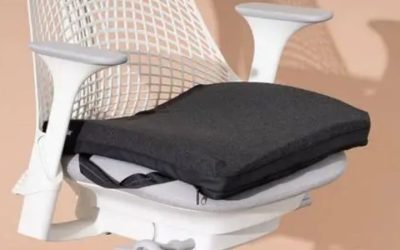
Cushion Lab’s Back Relief pillow takes the top spot for defined support: a 16-by-16-by-4-inch molded memory-foam pad that holds a firm, ergonomic curve rather than flattening under your back. The larger footprint covers a wide chair back, and the molded shape pushes into the lumbar curve consistently. It sits in the mid tier for lumbar pillows.
The firm molded foam suits people who want real pushback into the lower back, and the broad size works on executive and task chairs alike. It holds its shape over a long day rather than compressing flat, which is the common failure of soft pillows, so it keeps supporting from morning to evening without needing to be fluffed.
The honest drawback is attachment and feel: a molded pad can rely more on position than a strap, so confirm whether your version includes one, and the firm curve can feel aggressive until you adjust to it. Its depth also adds to a seat, so on an already-deep chair check that it does not push you off the backrest.
ComfiLife — Best for Staying in Place
ComfiLife’s pillow is the pick when keeping the pillow put is the priority: it measures 15 by 12.5 by 4.7 inches and uses an adjustable strap to loop around the backrest, so it stays at the height you set instead of sliding down. The strap is the feature that separates it from strapless pads. It sits in the budget-to-mid tier.
The adjustable strap suits mesh and open-back chairs where it has a clear anchor, and the memory foam molds to your back over the day. Its narrower width makes it a better fit for slimmer task-chair backs than very wide executive chairs, so confirm it covers your back width before buying if your chair back is broad.
Its 4.7-inch nominal thickness looks like more support than a 4-inch pad, but that gap largely disappears once your back compresses the foam, so judge it by feel rather than the number. The narrower footprint is the main limit, so a broad-backed sitter may prefer the wider Cushion Lab pad despite ComfiLife’s handy strap.
Tempur-Pedic LumbarCushion — Best Brand-Backed Foam
The Tempur-Pedic LumbarCushion is the choice for buyers who want a known foam brand: a 15-by-15-by-4-inch cushion using Tempur’s memory foam, which molds closely to the back and spreads pressure. The square footprint suits most task and office chairs. It sits in the premium tier for lumbar pillows, above the other picks here on price.
Tempur foam is dense and slow to pack down, so it tends to hold its support longer than cheaper foam, which is where the premium price goes. The square size works on a range of chair backs, and for someone who already likes Tempur mattresses or pillows, the familiar feel is a reason to choose it over firmer molded pads.
The drawbacks are price and fit confirmation: it costs more than the others, and you should confirm how it attaches and whether its molding feel suits you, since Tempur foam is softer and more enveloping than a firm molded pad. For someone who wants firm pushback rather than a gentle mold, the Cushion Lab pad may suit better.
Everlasting Comfort — Best Compact Option
Everlasting Comfort’s cushion is the compact pick: the current back cushion runs about 13 by 12.6 by 4 inches, smaller than the others, which suits narrower chair backs and smaller sitters. Its strap configuration differs by SKU, so confirm the current version’s attachment before buying rather than assuming it matches an older listing you saw.
The smaller footprint makes it easy to fit on a compact task chair or to move between a chair and a car seat, and the memory foam molds to the back. For a slim chair back where a 16-inch pad would overhang, this size sits more naturally, so match the pillow footprint to your backrest rather than buying the largest one available.
The drawbacks are the SKU variation and the smaller size: because the strap and exact dimensions differ by version, verify the current product’s details, and a broad-backed sitter may find it too small. As with the others, judge it by how it supports under load rather than its stated thickness, and confirm the strap suits your chair.
Frequently Asked Questions
A few questions come up about lumbar pillows, usually about whether they help, how thick they should be, and whether to buy one or replace the chair. The answers below lean on fit and the published sizes rather than marketing, since support is personal and no pillow treats a medical back condition on its own.
Does a lumbar support pillow actually help?
It can, when the issue is a lack of lower-back support on a chair that otherwise fits. A pillow fills the gap between a flat backrest and your spine’s curve, which may ease slouching and the aches that come with it. But it is a comfort aid, not a treatment, and it helps most when placed at your actual lumbar curve.
What changes the answer is why your back hurts. If the chair is too high, too deep or reclined wrong, a pillow can mask the problem or even worsen your position, so fix the chair’s fit first. Your height, how long you sit and the chair’s shape all affect whether a pillow helps or just adds depth you do not need.
If back pain is persistent or severe, see a clinician rather than relying on a cushion, since no pillow treats a medical condition. As a low-cost first step for a chair that nearly works, a well-placed lumbar pillow is reasonable, but treat lasting pain as a signal to check your whole setup and get professional advice.
How thick should a lumbar pillow be?
Thickness is a poor guide on its own, because the number on the box is the uncompressed height, not the support you feel. ComfiLife lists 4.7 inches against others’ 4, a 17.5 percent nominal gap, but once your back presses into the foam that difference largely disappears, so judge support by feel under load rather than by the figure.
What matters more is the foam’s firmness and how far it compresses. A firm molded pad holds a defined curve, while a soft one flattens, so two pillows with the same stated thickness can support very differently. Match the firmness to how much pushback you want, and check that the added depth does not shove you off the backrest.
A practical approach is to pick a height that fills the gap at your lumbar curve without forcing your hips forward, then adjust placement. If a pillow feels like too much, a firmer, thinner pad often supports better than a thick soft one, since density, not raw thickness, is what holds your lower back over a long day.
Should I buy a pillow or just get a new chair?
Start by diagnosing the chair. If it fits — right seat height, depth and backrest angle — but lacks lower-back support, a pillow is the cheap, sensible fix. If the seat is too high, too deep or the back reclines wrong, a pillow treats a symptom, and adjusting or replacing the chair addresses the real cause more reliably.
Cost frames it too: a pillow is a fraction of an ergonomic chair, so it is a reasonable first step for a chair that nearly works or one you cannot replace. But if you sit all day in a poorly fitting chair, the pillow is a stopgap, and the money is better spent on a chair that adjusts to your body over the long run.
A middle path is to add a footrest or adjust the chair first, then try a pillow for any remaining support gap. That order fixes the structural problems cheaply before padding over them, so you are not masking a height or depth issue with a cushion that pushes you into a different awkward position at the desk.
How do I position a lumbar pillow correctly?
Place it at the small of your back, where your spine curves inward, not up between your shoulder blades. Sit all the way back so your hips meet the seat-to-backrest junction, then set the pillow so its fullest part fills the lumbar gap. Measuring from the seat to your lower-back curve helps you set the height before you strap it.
Use the strap if the pillow has one, since a pillow that slides down ends up supporting nothing. Adjust the height until sitting back feels like gentle support rather than a shove, and re-check after a few days, since your sense of the right position settles once you are used to it. The goal is to keep your natural curve, not force it.
If the pillow pushes your hips forward or your knees into the seat edge, it is too thick or too low, so move it up or choose a thinner pad. Correct placement does more than any spec, so spend a little time setting it rather than assuming a good pillow works wherever it happens to land against your back.
Final Thoughts
The right lumbar support pillow for desk chair use is the one that fits your back and your chair, stays put, and fills only the gap your chair leaves. Diagnose the chair’s height and depth first, judge a pillow by how it supports under load rather than its stated thickness, and treat lasting pain as a reason to see a clinician.