Our Top Picks
 Razer Iskur V2 X Ergonomic Gaming ChairRegular27.58 x 27.58 x 49.64 inches50.26 poundsCheck on Amazon
The best gaming chair for back pain is not the one with the loudest racing styling: it is the one with adjustable lumbar support that you can position at your own lower-back curve, a seat cushion firm enough not to bottom out, a wide recline range with a lock, and armrests that let your shoulders drop. Among current listings, the Secretlab Titan Evo, Razer Iskur V2 X, Razer Enki and AutoFull C3 Pro stand out on those points, and big-and-tall options such as the GTPLAYER 400 lb model suit larger frames.
This guide compares seven options for a gaming chair for back pain, with specs taken from listings, a comparison table, a buying guide on lumbar adjustment, seat foam and recline lock, setup measurements, and answers to common questions. A chair is a tool that supports sitting posture, not a treatment; if back pain is persistent or severe, talk to a clinician or physical therapist.

Secretlab Titan Evo Black Gaming Chair - Regular, Leatherette, Ergonomic | Lumbar Support, High Back, Reclining, Magnetic Head Pillow, Standard (285 lbs), 4D Armrests, Height Adjustable, Basic
Chosen because it specifies Regular and Leatherette.
View on AmazonSecretlab Titan Evo XL Black Gaming Chair - Leatherette, Ergonomic | Lumbar Support, High Back, Reclining, Magnetic Head Pillow, Big & Tall (Up to 395 lbs), 4D Armrests, Height Adjustable, Basic
Chosen because it specifies Leatherette and Ergonomic.
View on AmazonRazer Iskur V2 X Ergonomic Gaming Chair, Light Gray Edition | Built-In Lumbar Support, Wide Seat, High Density Foam Cushions, Adjustable 152 Degree Recline, 2D Armrests, Plush Fabric
Chosen because it specifies Light Gray Edition and Built-In Lumbar Support.
View on Amazon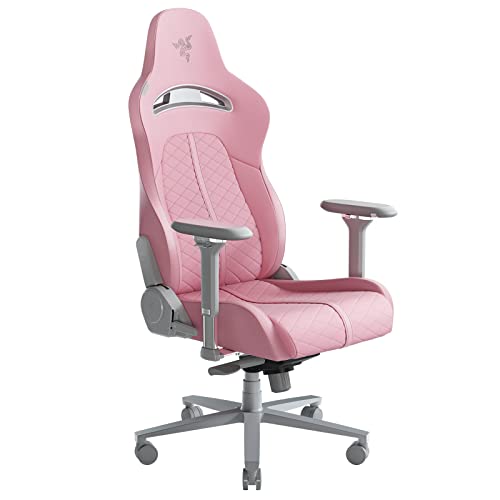
Razer Enki Gaming Chair, Built-in Lumbar Arch, All-Day Comfort, Pink | Optimized Cushion Density, Dual-Textured, Eco-Friendly Synthetic Leather, Adjustable 152-degree Recline
Chosen because it specifies Built-in Lumbar Arch and All-Day Comfort.
View on AmazonKey takeaways
- Prioritize adjustable lumbar support over built-in fixed lumbar pillows: height or depth adjustment lets you fit the chair to your spine.
- A firm, high-density seat foam keeps its shape better over long sessions than soft stuffing.
- A recline range of about 150 to 160 degrees plus a tilt lock lets you change posture during long sessions.
- Armrest adjustment (3D or 4D) matters because it stops you hunching your shoulders.
- Larger users should check the stated weight limit: Secretlab lists 285 lb for the Regular size and up to 395 lb for the XL.
Quick comparison table
| Chair | Lumbar | Recline | Armrests | Stated capacity | Tier |
|---|---|---|---|---|---|
| Secretlab Titan Evo | Built-in lumbar support | Reclining, magnetic head pillow | 4D | 285 lb (Regular) | Premium |
| Razer Iskur V2 X | Built-in lumbar support | 152 degrees | 2D | See listing | Mid |
| Razer Enki | Built-in lumbar arch | 152 degrees | See listing | See listing | Premium |
| AutoFull C3 Pro | Adjustable lumbar | Up to 160 degrees plus 25 degree rocking | 3D, 2D headrest | See listing | Mid |
| GTPLAYER Big and Tall | Pocket spring lumbar | High back, footrest | See listing | 400 lb | Mid |
| COMHOMA Big and Tall | Spring lumbar support | 150 degrees, footrest | Adjustable | See listing | Mid |
| GTPLAYER Gaming Chair with Footrest | Lumbar support | Reclining, footrest | See listing | See listing | Budget |
What makes a gaming chair a back-pain chair
Many gaming chairs are built around a bucket-seat look. That look often means stiff side bolsters, a fixed lumbar bump and a backrest tilted forward at the top. For a long session you want three things instead: a lumbar pad you can raise, lower or deepen; a seat that supports the thighs without pressing on the back of the knees; and a recline that you can lock in at least two positions. The sections below use that checklist for every pick.
1. Secretlab Titan Evo: Best Overall for Adjustable Support
Secretlab’s Titan Evo is the best-known gaming chair with built-in adjustable lumbar support. The listing describes lumbar support, a high back, recline, a magnetic head pillow, 4D armrests and a standard-size weight rating of 285 lb for the Regular size.
- Regular size · 285 lb stated capacity · leatherette or fabric options
- Lumbar support with adjustment, high back
- 4D armrests
- Reclining back and magnetic head pillow
Best for: shoppers who want the most adjustment and a well-known brand.
Skip if: you weigh over the Regular rating; choose the XL size or a different chair.
Pros
- 4D armrests let you match desk height and shoulder position
- Several sizes: Regular, XL and Small in listings
- Magnetic head pillow can be moved or removed
Cons
- Highest price tier here
- Leatherette surfaces can run warm; consider the fabric version
2. Razer Iskur V2 X: Best Mid-Priced Chair with Wide Seat
The Iskur V2 X is Razer’s more affordable ergonomic gaming chair. The listing states built-in lumbar support, a wide seat, high-density foam cushions, 152 degree recline and 2D armrests in plush fabric.
- Built-in lumbar support · wide seat · high-density foam cushions
- Adjustable 152 degree recline
- 2D armrests · plush fabric
- Several editions and colors, including NewGen with EPU leather
Best for: gamers who want a wide, supportive seat at a mid price.
Skip if: you need height and depth lumbar adjustment beyond the built-in curve.
Pros
- High-density cushions resist flattening
- Wide seat suits larger frames
- Fabric is breathable in warm rooms
Cons
- 2D armrests offer less positioning than 3D or 4D ones
- Check the listing for the lumbar’s adjustment type
3. Razer Enki: Best for Long Sessions and All-Day Comfort
The Enki is Razer’s all-day chair. The listing mentions a built-in lumbar arch, optimized cushion density, dual-textured eco-friendly synthetic leather and a 152 degree recline.
- Built-in lumbar arch · optimized cushion density
- Adjustable 152 degree recline
- Dual-textured synthetic leather
- Wide seat design
Best for: long daily sessions in a firm, wide seat.
Skip if: you want adjustable lumbar height or a tight budget.
Pros
- Designed for comfort over long periods
- Textured surfaces grip clothing
- Strong brand support and parts
Cons
- Premium pricing
- Lumbar arch is built in rather than adjustable per the listing
4. AutoFull C3 Pro: Best for Adjustable Lumbar at a Lower Price
The AutoFull C3 Pro stands out for its fully adjustable specifications: lumbar support you can move, 3D armrests, a 2D headrest, up to 160 degree recline with 25 degree rocking and a breathable cushion.
- Adjustable lumbar · 3D armrests · 2D headrest
- Up to 160 degree recline with 25 degree rocking
- Breathable cushion
- Silver standard-size edition in the listing
Best for: users who want maximum adjustment without premium pricing.
Skip if: you prefer a brand with a long service record; check warranty terms.
Pros
- 3D armrests are rare at this price
- Wide recline range with rocking
- Adjustable lumbar matches your lower-back curve
Cons
- Less brand history than Secretlab or Razer
- Check the listing for exact weight capacity
5. GTPLAYER Big and Tall Gaming Chair: Best for Larger Frames
This GTPLAYER model states a 400 lb capacity, high-back pocket spring lumbar support, a footrest and a wide, comfortable cushion. Pocket springs distribute pressure differently from foam alone, and some users find they feel more supportive.
- 400 lb stated capacity · high back · pocket spring lumbar support
- Footrest and wide cushion
- Heavy-duty frame
- Carbon-black finish
Best for: larger or heavier users who need a stated capacity above 300 lb.
Skip if: you want a narrow modern look or a mesh seat.
Pros
- 400 lb rating is higher than most gaming chairs
- Footrest supports leg elevation
- Pocket spring lumbar
Cons
- Bulky; needs room
- Check the listing for armrest adjustment
6. COMHOMA Big and Tall Office-Style Gaming Chair: Best for Footrest and 150 Degree Recline
COMHOMA’s heavy-duty executive-style chair includes a footrest, spring lumbar support, 150 degree reclining and adjustable armrests. It suits shoppers who split time between work and gaming.
- High-back executive design · spring lumbar support
- 150 degree reclining · footrest
- Adjustable armrests
- Big and tall build
Best for: people who work long hours and want a footrest and a more conservative look.
Skip if: you want a racing design or a head pillow.
Pros
- Work-friendly appearance
- Footrest and recline give position variety
- Mid price tier
Cons
- Capacity is not stated in the short title
- Less gaming-style adjustment options
7. GTPLAYER Gaming Chair with Footrest: Best Budget Option
For a tight budget, this GTPLAYER chair offers lumbar support, a footrest, height adjustment, a 360 degree swivel and a headrest in a standard size.
- Lumbar support · footrest · headrest
- Height-adjustable · 360 degree swivel
- Pearl white finish
- Entry-level tier
Best for: casual use and shoppers who cannot spend more.
Skip if: you play or work more than a few hours daily, where a firmer seat and adjustable lumbar matter.
Pros
- Lowest price tier in this list
- Includes a footrest and headrest
- Easy to assemble
Cons
- Foam and lumbar are likely softer than premium chairs; confirm in the listing
- Limited adjustment compared to higher tiers
Also consider
- Secretlab Titan Evo XL: the larger size, listed up to 395 lb, for bigger frames in the same design as the Regular chair.
- Razer Soma Chroma: dual-density foam cushion, built-in ergonomic lumbar support, steel frame and 155 degree recline with RGB lighting.
- Marsail Ergonomic Office Chair: an office chair with high-back mesh and adjustable lumbar support, a good option if you do not need gaming styling.
- Everlasting Comfort Lumbar Support Pillow: a memory-foam lumbar pillow you can strap to an existing chair.
How we chose
We did not personally use these chairs. The picks come from desk research on current listings and published specifications. We looked for chairs that list adjustable or built-in lumbar support, a recline of at least 150 degrees, a stated capacity or a big-and-tall build, and adjustable armrests. We left out chairs with no lumbar mention, unbranded listings and renewed units. We also limited each brand to two models. When a listing does not state a spec, we say so and recommend checking the maker page. We make no medical claims about pain relief.
Buying guide: lumbar, seat foam and recline lock
Lumbar support: fixed or adjustable
The lower back curves inward at roughly belt height. A fixed lumbar bump works only if it happens to match your curve. An adjustable lumbar support moves up and down and sometimes in and out, so you can set it where your lower back needs support. If the chair has only a strap-on pillow, treat that as a starting point, since a pillow can slide or flatten. Seat the pillow at the small of your back, with your hips pushed fully back into the seat.
Seat foam and seat depth
Foam density rarely appears on listings, but terms like high-density foam, cold-cure foam or pocket springs hint at firmer support. A good test is to sit for an hour: the seat should feel supportive, not sink to the base, and your thighs should be level or slightly lower than your hips. Seat depth should leave about two fingers between the seat edge and the back of the knee. Wide seats suit larger frames, but too wide a seat can leave your arms reaching for the armrests.
Recline range and tilt lock
- 90 to 110 degrees: typical working posture.
- 110 to 135 degrees: relaxed gaming or reading posture; some people find a slightly reclined position comfortable, but comfort varies, so adjust to what feels right.
- 150 to 160 degrees: rest posture for breaks.
Choose a chair with a lock at more than one angle and a tension knob so the back does not drift. A rocking function is helpful for micro-movement, but it should lock when you do not want it.
Armrests: 2D, 3D and 4D
2D armrests move up and down and in and out of the seat. 3D add angle, and 4D add forward and backward sliding. The more adjustment, the better you can keep your elbows at about 90 degrees and your shoulders relaxed. Adjust until your forearms rest lightly on the pads while your shoulders drop.
| Setting | Target | Why it matters |
|---|---|---|
| Seat height | Feet flat on floor, knees at about 90 to 100 degrees | Avoids pulling the pelvis forward |
| Desk height | Roughly 28 to 30 inches for most adults | Keeps elbows near 90 degrees |
| Monitor top edge | At or slightly below eye level | Avoids neck strain and slouching |
| Lumbar position | At the small of the back, about belt height | Supports the inward spine curve |
| Recline for play | 100 to 120 degrees, locked | Reduces forward lean |
| Break interval | Stand or move every 30 to 60 minutes | No chair replaces movement |
Materials and weight limits
- Leatherette or PU: easy to wipe but warmer; can peel over years.
- Fabric: breathable and softer; absorbs spills.
- Mesh: coolest; common on office-style chairs such as the Marsail alternative.
Weight limits differ widely. Secretlab lists 285 lb for the Regular and up to 395 lb for the XL; GTPLAYER lists 400 lb on its big-and-tall model. Choose a rating comfortably above your weight and check the seat width and back height against your own measurements.
Match the chair to your situation
| Your situation | Prioritize | Candidates |
|---|---|---|
| Sit 6 or more hours daily | Firm seat, adjustable lumbar, 3D or 4D armrests | Secretlab Titan Evo, AutoFull C3 Pro, Razer Enki |
| Larger or heavier frame | Stated capacity 395 to 400 lb, wide seat | GTPLAYER Big and Tall, Secretlab Titan Evo XL |
| Shorter than about 5 ft 4 in | Small size, adjustable seat height, footrest | Secretlab Titan Evo Small, GTPLAYER with footrest |
| Warm room or sweat-prone | Fabric or mesh surfaces | Razer Iskur V2 X fabric, Marsail mesh office chair |
| Work and gaming on one chair | Understated look, lockable tilt, footrest | COMHOMA Big and Tall |
| Tight budget | At least a lumbar pad and tilt lock | GTPLAYER Gaming Chair with Footrest plus a lumbar pillow |
How to set up a new chair in ten minutes
- Set the seat height so your feet rest flat and your knees sit near 90 to 100 degrees.
- Push your hips fully to the back of the seat and sit upright.
- Raise or lower the lumbar support until it fills the curve at the small of your back, then adjust depth so it supports without pushing you forward.
- Set armrests so your elbows rest near 90 degrees and your shoulders feel loose.
- Choose a recline angle between 100 and 120 degrees for play, and lock the tilt.
- Adjust the monitor so the top edge sits at or just below eye level, at about an arm’s length away.
- Set a timer to stand or stretch every 30 to 60 minutes and, if the chair has a footrest, use it for breaks only.
Why headrests and neck pillows are secondary
Many gaming chairs ship with a headrest or neck pillow, and they are useful when you recline, but they do not replace lower-back support. In an upright working posture, a neck pillow may push your head forward. Place it so it supports the base of the skull when you lean back, and remove it when you sit upright. Magnetic pillows like the one on the Secretlab Titan Evo move more easily, which makes this adjustment simpler.
What wears out first
The gas lift cylinder, the tilt mechanism and the armrest pads usually show wear before the frame. Leatherette on the seat edge and armrest tops can crack after years of heavy use, so read the warranty term for each part. Foam softens gradually, which is why a firmer, higher-density cushion has an advantage over a soft one in the long run. Parts like casters and gas lifts are often replaceable, but sizes and class ratings vary, so check the maker’s parts list and follow its instructions before swapping anything.
Gaming chair versus ergonomic office chair
Both can work. A gaming chair tends to offer more recline, a head pillow and a bolder look. An ergonomic office chair tends to offer more lumbar and seat-depth adjustment and better airflow with mesh. If your top priority is lumbar adjustment, compare an office chair like the Marsail with the AutoFull C3 Pro and Secretlab Titan Evo before deciding on style.
Assembly and parts
Gaming chairs come in boxes of around 40 to 60 lb that fit through most doors. Plan 30 to 60 minutes for assembly. Check what the warranty covers: gas lift, tilt mechanism and armrests are the parts that wear first. Keep the box for the first month in case of a defect.
Frequently asked questions
What is the best gaming chair for back pain?
Chairs with adjustable lumbar support, firm seat foam and a lockable recline, such as the Secretlab Titan Evo or AutoFull C3 Pro, are good starting points. The best choice depends on your size and budget.
Are gaming chairs bad for your back?
Not by nature, but styles with fixed lumbar, soft foam or tilted-forward backs can cause problems for some people. Adjustability matters more than the label.
Should I use a lumbar pillow?
A pillow helps when the chair lacks lumbar support. If the chair already has adjustable lumbar, adjust that first, because a pillow on top of a built-in bump can push you forward.
What recline angle is best?
Many people find about 100 to 120 degrees more comfortable for gaming than a strict 90 degrees. Use the lock so the back does not drift.
Is an office chair better for back pain?
Some office chairs have more lumbar adjustment than gaming chairs. If you do not need the styling, an ergonomic office chair like the Marsail is worth comparing.
Which chair suits larger users?
Look at the GTPLAYER Big and Tall at 400 lb or the Secretlab Titan Evo XL at up to 395 lb, and check the seat width and height range.
How often should I take breaks?
Standing or moving every 30 to 60 minutes is a common suggestion in office ergonomics guidance. If pain continues, consult a clinician.
Which one should you buy?
- Most adjustment and brand support: Secretlab Titan Evo.
- Mid-priced wide seat: Razer Iskur V2 X.
- All-day sitting: Razer Enki.
- Adjustable lumbar on a mid budget: AutoFull C3 Pro.
- Larger frames: GTPLAYER Big and Tall or Secretlab Titan Evo XL.
- Work and play with a footrest: COMHOMA Big and Tall.
- Tightest budget: GTPLAYER Gaming Chair with Footrest.
If your pain is already limiting your day, an adjustable-lumbar chair plus regular breaks is a better investment than any single feature, and a clinician’s advice should come first.
Before you order, compare three listing lines on your shortlist: the lumbar description (adjustable or built-in), the recline range and whether a lock is mentioned, and the stated weight capacity with seat width. If a listing leaves one of these out, check the maker page. A chair that names all three in plain numbers is usually easier to judge than one that relies on adjectives, and it gives you a clearer basis for a return if the fit is wrong in your first weeks of use. Give any new chair a couple of weeks of regular use before judging it, since a change in sitting position can feel unfamiliar at first.
Sources
- Product listing details for each named chair (brand pages and retailer listings)
- Secretlab, Razer, AutoFull and GTPLAYER maker information
- Office ergonomics guidance for seat height, desk height and monitor position from workplace-safety publications
- General seating posture guidance from physical-therapy resources
Last updated: November 2026
More from Amazon
Programs that pair well with the guide above. Offers and eligibility are set by Amazon and may change.
Collect the home and kitchen items you want in one registry that guests can shop from.
Create a wedding registrySet up recurring deliveries of everyday items on eligible products. Terms and savings are set by Amazon.
Explore Subscribe & SaveFree shipping on eligible items, Prime Video and more. Eligible new members can start with a free trial.
Start a Prime free trialAudiobooks and podcasts to listen to on the go. Eligible new members can start with a free trial.
Try Audible freeAs an Amazon Associate we earn from qualifying purchases.