
Key takeaways
- On a low platform bed, the mattress height decides how high you end up, since the total sleep surface is the platform plus the mattress. The best mattresses for low-profile platform beds state their height clearly and their support needs,…
On a low platform bed, the mattress height decides how high you end up, since the total sleep surface is the platform plus the mattress. The best mattresses for low-profile platform beds state their height clearly and their support needs, so you keep the low look without sacrificing the structure a mattress still requires.
As an Amazon Associate we earn from qualifying purchases.
By KK Home Furnishings Editorial Team
How to Choose Mattresses for Low-Profile Platform Beds
On a low platform, height and support are the whole decision, so the criteria below start there. From the mattress height that sets your total bed height, they move to the foundation and slat rules each brand sets, the feel for your sleep position, and the reminder that a thin mattress still needs real structural support.
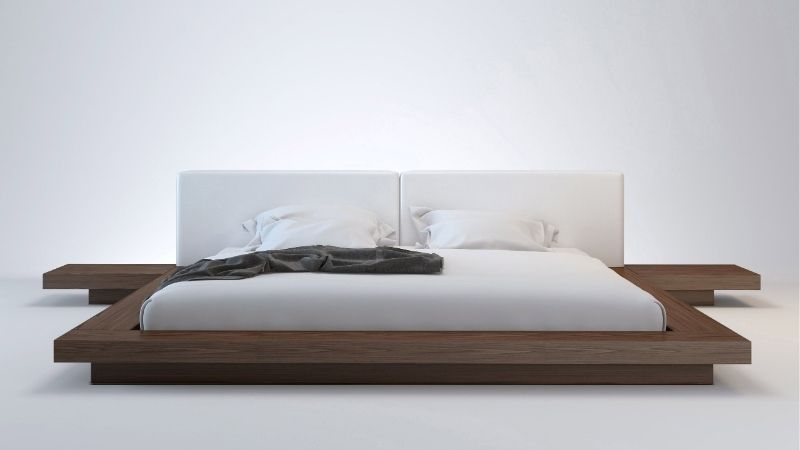
Mattress Height and Total Bed Height
The mattress height drives the finished height of a low platform bed, since the total sleep surface equals the platform plus the mattress. These range from the PurpleFlex at 8 inches and the Purple Mattress at 9.25 to the Casper One at 11 and the Nectar Classic at 12, so pick the height for the look and access you want.
Add the mattress to your platform to see where you will actually sit. A low platform plus an 8-inch mattress stays genuinely low, suiting a minimalist look or a room where a high bed feels wrong, while a 12-inch mattress raises the surface noticeably, which some prefer for getting in and out but changes the low profile.
Height is a design and access choice, not a quality one, since a thinner mattress is not worse, only lower. Decide how high you want to sit, measure your platform, and choose the mattress height that lands the total where you want it, rather than assuming a taller mattress is automatically the better buy for the bed.
Foundation and Slat Rules
Each mattress sets its own support requirement, so check it rather than assuming. The PurpleFlex, for instance, specifies a slat gap under about 3.5 inches per Purple, a rule that keeps the mattress properly supported and the warranty valid, so read the maker’s foundation and slat-spacing requirement for the specific mattress you choose.
Do not generalize one brand’s slat rule to every mattress, since Purple’s under-3.5-inch guidance is Purple’s, and another maker may require a different maximum gap or a center support. Confirm the rule for your mattress and check that your platform’s slats meet it, since a platform that fails the requirement can void coverage.
If your platform’s slats are too far apart, close the gap rather than ignoring it. A bunkie board or a sheet of plywood across wide slats brings the support within requirement for far less than a new base, which matters on a low platform bed whose slats are often spaced for looks rather than for a foam mattress.
Feel and Sleep Position
With height and support settled, feel comes down to your sleep position. The Casper One offers a balanced feel with a 100-night trial, while the Purple models use a flexible grid and the Nectar a foam feel, so match the surface to whether you sleep on your back, side, or stomach rather than to the lowest or thickest option.
A thinner mattress can still suit your position if the feel is right, since height and comfort are separate. A side sleeper may want enough give at the shoulder even in a low-profile bed, while a back sleeper wants support that keeps the hips up, so judge the feel for your body rather than assuming thin means less comfortable.
Use any trial window to confirm the feel over weeks, since a low-profile mattress is chosen as much for look as for comfort, and the two must both work. A bed that fits the aesthetic but leaves you sore is the wrong choice, so let the trial settle whether the feel suits you before committing to the low profile.
Support a Thin Mattress Still Needs
A thin mattress does not need less structural support, which is the most common misconception here. An 8-inch bed still relies on a flat, properly spaced base to keep from sagging, so treat support as a requirement regardless of thickness rather than assuming a low-profile mattress can sit on a poor or widely slatted platform.
The base matters as much as the mattress on a low bed. A platform with slats spaced for appearance can leave a foam mattress unsupported between them, so confirm the slat gap meets the maker’s rule, add a bunkie board if needed, and ensure a center support where the mattress requires it on Queen and larger sizes.
Protect the mattress and the warranty with proper support from the start. A thin mattress on an adequate base performs as intended, while the same bed on wide slats or a sagging platform fails early and may lose coverage, so the structure beneath a low-profile bed is as important as the mattress you place on it.
Top Picks
Each pick leads with its height and support needs, the two things that matter for mattresses for low-profile platform beds, plus the trade-off worth knowing. Remember the total bed height is the platform plus the mattress, and even the thinnest option still needs a flat, properly spaced base rather than less support.
| Product | Best For | Key Spec | Watch Out For |
|---|---|---|---|
| Purple Mattress | Best overall | 9.25 in; grid support | Grid feel is distinctive; test it first |
| PurpleFlex | Best for the lowest height | 8 in; slat gap under ~3.5 in (Purple) | Purple’s slat rule is not universal |
| Casper The One | Best value | 60×80×11 in; 100-night trial | 11 in adds height to a low platform |
| Nectar Classic | Best for a taller feel | 12 in; box spring not required | 12 in is the highest here; raises the bed |
Purple Mattress: Best Overall
The Purple Mattress takes the top slot for balancing a low profile with support, at 9.25 inches with the brand’s flexible grid. It suits most sleepers who want a low-profile bed without going to the thinnest option. It sits in the premium tier, so confirm the current price before ordering it.
Its advantage is a moderate 9.25-inch height that keeps a platform bed low while offering the grid’s distinctive support, which suits a range of sleep positions. Add the 9.25 inches to your platform to confirm the total height, and check the maker’s foundation requirement, since even a grid mattress needs an adequate, properly spaced base.
The honest caveat is the grid feel itself, which is distinctive and not for everyone, so use the trial to confirm it suits you. As with any mattress, do not assume its support needs match another brand’s, confirm Purple’s foundation guidance, and remember the height you choose sets how high the finished low-profile bed will sit.
PurpleFlex: Best for the Lowest Height
The PurpleFlex is the pick for the lowest total height, at just 8 inches, with Purple’s guidance for a slat gap under about 3.5 inches. It suits a minimalist low platform where keeping the bed low matters most. It sits in the mid-to-premium tier, so confirm the live price before choosing it.
Its advantage is the thin 8-inch profile, which keeps a platform bed genuinely low for a clean look or a room where a tall bed feels wrong. Confirm your platform’s slats meet Purple’s under-3.5-inch guidance, adding a bunkie board if they are wider, since the low profile does not reduce the need for proper support.
The honest caveat is that Purple’s slat rule is Purple’s, not a universal standard, so do not apply it to other mattresses or assume another platform meets it. A thin mattress still needs real structure, so confirm the base, and note the 8-inch height offers less material, which heavier sleepers may find insufficient for their needs.
Casper The One: Best Value
The Casper The One is the value pick, a 60-by-80-by-11-inch mattress with a 100-night trial. It suits buyers who want a balanced feel on a low platform at a friendlier price. It sits in the mid tier, so confirm the current price before ordering, and factor the 11-inch height into your total bed height.
Its advantage is a balanced feel and a real trial at a reasonable price, so you can judge it over weeks on your platform. Add the 11 inches to your platform height to confirm the finished bed is not higher than you want, and check Casper’s foundation guidance, since the mattress needs an adequate, properly spaced base.
The honest caveat is that at 11 inches it adds more height than the thinnest options, which slightly raises a low-profile bed, so confirm the total suits the look you want. As always, a flat, supportive base is required regardless of the feel, so plan the slats or foundation to meet the maker’s requirement before setup.
Nectar Classic: Best for a Taller Feel
The Nectar Classic is the pick for more cushion, a 12-inch mattress that does not require a box spring. It suits buyers who want a plusher, taller feel while still using a platform base. It sits in the mid tier, so confirm the live price before ordering, since 12 inches is the highest profile here.
Its advantage is the extra cushion of a 12-inch build and the convenience of needing no box spring, since a platform’s slats support it directly. Confirm your platform’s slat spacing meets Nectar’s requirement, and add the 12 inches to your platform to check the total, since this is the tallest option and raises the bed most.
The honest caveat is height: at 12 inches it adds the most to a low-profile bed, which works against the low look if that is your goal, so weigh the extra cushion against the raised surface. A platform supports it without a box spring, but confirm the slat gap and center support meet the maker’s foundation rule.
Frequently Asked Questions
Shoppers pairing a mattress to a low bed ask the same questions about height and support. Each answer below opens with the short version, then the detail that changes it, so you can match mattresses for low-profile platform beds to your frame and your height rather than to a thickness that undoes the low look you wanted.
How does mattress height affect a low platform bed?
It sets the total height, since the sleep surface is the platform plus the mattress. An 8-inch mattress keeps a low platform genuinely low, while a 12-inch one raises it noticeably, so the mattress height is the main lever for how high you end up on a low-profile bed, which is why the thickness you choose matters so much here.
Decide how high you want to sit and work backward. Measure your platform, add the mattress height, and confirm the total lands where you want for getting in and out and for the look of the room, since a low platform defeats its purpose if a thick mattress brings the bed up to a standard height anyway.
Remember height is a design and access choice, not a quality one. A thinner mattress is not inferior, only lower, so choose the height for the finished bed you want and judge comfort by the feel and support rather than assuming a taller mattress on a low platform is automatically the better option.
Does a platform bed need a box spring?
Usually not. A platform bed’s slats support the mattress directly, so a traditional box spring is generally unnecessary and can even raise a low bed higher than intended. What matters is that the slats meet the mattress maker’s spacing requirement, not that a spring box sits between the mattress and the frame.
The deciding factor is slat spacing and support, not a box spring. Confirm your platform’s slats fall within the maker’s maximum gap, often with a center support on larger sizes, and add a bunkie board if the slats are too wide, which is the low-profile fix rather than adding a bulky box spring.
If you want the bed higher, choose a taller mattress or a different frame rather than adding a box spring that undoes the low profile. The Nectar Classic, for example, states no box spring is required, so support it on compliant slats and keep the low look if that is why you chose a platform bed.
Can I use any mattress on a low platform bed?
Most mattresses work if the support is right, but check the maker’s foundation rule. A platform’s slats must meet the mattress’s maximum gap and provide a center support where required, so a mattress is compatible when the base satisfies its requirement, not simply because it is called a platform bed.
Height is the other consideration, since any mattress raises the finished bed by its thickness. A thick mattress on a low platform works mechanically but undoes the low look, so if the low profile is the point, choose a thinner mattress, and if comfort is, make sure the slats support whatever thickness you pick.
Confirm two things before buying: the slat spacing meets the mattress’s rule, and the total height suits you. A mattress that fits both the support requirement and the height you want is a good match, while one that ignores the slat rule can sag and lose its warranty regardless of how well it fits the frame.
Does a thin mattress need less support?
No. A thin mattress needs the same flat, properly spaced support as a thick one, since thickness does not reduce the need for even structure underneath. An 8-inch bed on wide slats or a sagging base will still fail, so treat support as a requirement regardless of how low-profile the mattress is.
The misconception is that less material means less structure, but the opposite can be true, since a thin mattress has less to bridge gaps between wide slats. Confirm the maker’s slat-spacing rule, add a bunkie board if the slats are too far apart, and ensure a center support where the mattress requires it.
Protect the mattress and its warranty with proper support from the start, whatever the thickness. A thin mattress on an adequate base performs as designed, while the same bed on an inadequate platform sags early and may void coverage, so the structure beneath a low-profile bed matters as much as the mattress on top.
Final Thoughts
The right mattresses for low-profile platform beds are the ones whose height lands your total bed where you want it and whose support rules your platform meets, not simply the thinnest. Before ordering, add the mattress height to your platform and confirm your slats meet the maker’s gap rule, since even a thin mattress still needs real support.
