Key takeaways
- With modern recliner chairs for small spaces, the number that decides the fit is wall clearance, not the upright width you see in a showroom. A recliner’s real footprint is its installed depth and motion envelope, so measure how far…
With modern recliner chairs for small spaces, the number that decides the fit is wall clearance, not the upright width you see in a showroom. A recliner’s real footprint is its installed depth and motion envelope, so measure how far it sits from the wall and how far it swings.
How to Choose a Recliner for a Small Space
Judge a small-space recliner by its installed depth and reclined footprint, not the slim look of the chair standing upright. Wall clearance, overall width through doorways, reclined length, and seat fit together decide whether the chair works in a tight room, so read all four before you fall for a compact-looking frame.
Wall Clearance
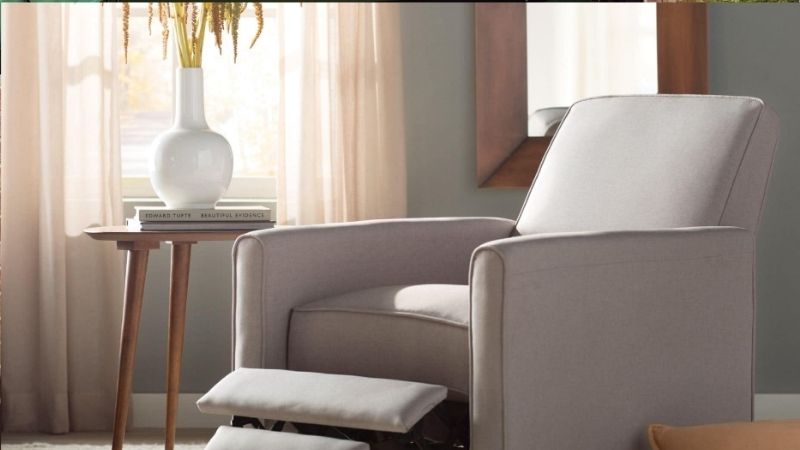
Wall clearance is the spec that defines this category, because it sets how far from the wall the chair must sit to recline fully. La-Z-Boy lists the Cade wall recliner at roughly 4 inches of clearance, Ashley lists the Nerviano at 4 inches, and Rooms To Go lists the Haven Point power recliner at 3.5 inches, all manufacturer-stated.
A wall-hugger design slides the seat forward as the back tilts, so it needs only a few inches behind it rather than the foot or more a traditional recliner demands. In a small living room that difference is the whole decision, because it lets the chair live against the wall instead of marooned in the middle of the floor.
Treat the clearance figure as the planning number and still add a touch of margin, since baseboards, outlets, and cords eat into the gap. A 3.5 to 4-inch rating leaves little room for error, so confirm the exact figure for the model you want rather than assuming every wall recliner in a line clears the same.
Overall Width and Doorway Fit
Overall width matters twice: it sets how much wall the chair eats, and whether it fits through your door on delivery. La-Z-Boy lists the Cade at 33.5 inches wide and Ashley lists the Nerviano at 33.5 inches, both of which clear a standard 32-inch interior door only if the door and the carton allow it.
In a small room, a narrower chair leaves space for a side table or a walkway, so weigh the width against what else shares the wall. Two chairs at 33.5 inches sit very differently in a 10-foot room than one does, and the arm style can add visual bulk even when the stated width stays the same across models.
For delivery, measure the narrowest doorway and any turn on the route, because a 33.5-inch chair may need to be tipped or have its back removed to pass. Confirm whether the model ships in parts or whether the back detaches, since that detail decides a tight entry more than the finished width alone.
Reclined Length
Reclined length is the forward footprint people forget, and it governs how far the footrest reaches into the room. Ashley lists the Nerviano at 66 inches reclined, a manufacturer-stated figure that tells you how much floor the chair claims when fully open, which is often more than its upright depth suggests.
Measure from the wall out to where the footrest lands and check it against your coffee table and walkway, because a chair that fits closed can block a path when open. In a small space the reclined length, not the standing depth, is what bumps into furniture and feet, so plan the open position deliberately.
If the reclined length is tight against a table, a chair with a shorter extension or a wall-hugger glide helps, but do not assume every compact recliner opens short. Confirm the reclined figure for your model, since two chairs with the same upright depth can reach very different distances once the footrest deploys.
Seat Fit
Seat fit decides daily comfort, so match the seat to the people who will use it rather than only the room. A compact frame can mean a smaller seat, which suits shorter users well but can feel tight for taller or broader sitters, so weigh the seat dimensions against who actually relaxes in the chair.
Because small-space recliners trim the frame to save floor, the seat and arms can be narrower than a full-size chair, which is the trade-off for the tight clearance. Sit in the model if you can, or compare the seat width and depth figures to a chair you already find comfortable before committing to a compact design.
Comfort over long sittings also depends on back support and the recline mechanism, which vary by model and brand. A power recliner like the Haven Point offers fine control of the angle, while a manual chair is simpler and cheaper; pick the mechanism that suits how the chair will be used day to day.
Best Modern Recliners for Small Spaces
Each pick below leads with its manufacturer-stated wall clearance, the spec that makes or breaks a small room, plus width and reclined figures where published. Prices vary by retailer and finish, so check the current price and confirm the exact model’s clearance before you place an order.
| Product | Best For | Key Spec | Watch Out For |
|---|---|---|---|
| Rooms To Go Haven Point | Tightest verified clearance | 3.5 in wall clearance; power recline | Confirm reclined length for your layout |
| La-Z-Boy Cade Wall Recliner | Best wall-hugger overall | ~4 in wall clearance; 33.5 in wide | Width near a standard door opening |
| Ashley Nerviano | Best for reclined-length planning | 4 in clearance; 33.5 in wide; 66 in reclined | 66 in open footprint is long |
| Best Home SpaceSaver line | Verify the exact model | As close as 2 in on select models (line-level) | 2 in not stated for every model in the line |
Rooms To Go Haven Point – Tightest Verified Clearance
The Haven Point is the tightest verified fit here, a power recliner Rooms To Go lists at 3.5 inches of wall clearance. For a room where every inch against the wall counts, that half-inch edge over the 4-inch chairs is exactly the kind of margin that lets a recliner sit flush instead of floating.
Power recline is the standout feature, letting you stop at any angle with a touch rather than muscling a lever, which suits users who want fine control or have limited mobility. The tight clearance plus powered motion makes it a strong match for small living rooms and apartments where placement options are limited.
The trade-offs are a nearby outlet for the power mechanism and a reclined length you should confirm for your layout, since the clearance figure covers the back, not the footrest reach. Check the current price at the retailer, and verify the model’s reclined depth against your coffee table before you commit.
La-Z-Boy Cade Wall Recliner – Best Wall-Hugger Overall
The La-Z-Boy Cade is the balanced wall-hugger pick, listed at roughly 4 inches of wall clearance and 33.5 inches wide. It pairs a recognized brand’s build with a genuine small-space clearance, making it a safe choice when you want a compact recliner that still feels like a proper La-Z-Boy.
The wall-hugger mechanism slides the seat forward as it reclines, so the roughly 4-inch gap is all it needs behind the chair, and the 33.5-inch width keeps it reasonable on a shared wall. For a living room that has to do double duty, that combination of modest clearance and brand support is the everyday-use advantage.
At 33.5 inches wide it sits close to a standard door opening, so measure your delivery route and ask whether the back detaches for a tight entry. Confirm the exact clearance for the finish you choose, and check the current price at the retailer, since upholstery options can shift both size and cost.
Ashley Nerviano – Best for Reclined-Length Planning
The Ashley Nerviano is the pick when you need to plan the open footprint, because Ashley publishes the full set: 33.5 inches wide, 4 inches of clearance, and 66 inches reclined. Having the reclined length stated removes the guesswork that trips up most small-space recliner buys in a tight room.
That 66-inch figure lets you measure exactly how far the footrest reaches toward a coffee table or walkway before you buy, which matters more in a tight room than the upright depth. For a layout where the open chair has to thread between furniture, the published reclined length is the detail that makes it work.
The flip side is that 66 inches is a long open footprint, so a cramped room may not have the forward space even with a tight wall gap. Map the reclined reach against your floor plan, confirm the clearance figure for your model, and check the current price at the retailer before you decide.
Best Home SpaceSaver Line – Verify the Exact Model
Best Home Furnishings markets its SpaceSaver line with wall clearance as close as 2 inches, which would be the tightest here, but that figure applies to select models only. It is a line-level claim, not a number stated for every chair in the range, so it cannot stand in for a specific model’s spec.
The appeal is real for the smallest rooms, since a verified 2-inch clearance on the right model would beat everything else on this list. Treat the line as a promising place to shop rather than a single confirmed pick, and focus on the individual model’s published clearance instead of the range-wide headline.
Before buying, confirm the exact clearance, width, and reclined length for the specific SpaceSaver model you choose, because the 2-inch figure is not guaranteed across the line. Check the current price at the retailer, and ask the seller for the model-level spec sheet so you are comparing a real number, not a range claim.
Measure Before Buying
A recliner that looks compact can still fail in a small room, so measure before you order. Wall clearance, the full motion envelope, the delivery path, and room for the controls are the four checks that separate a chair that fits from one that fights your floor plan every time it opens.
Wall Clearance Check
Measure the gap you actually have behind the planned spot, accounting for the baseboard, any outlet, and cords, then compare it to the model’s stated clearance. A chair rated at 3.5 to 4 inches needs that much clear wall, and a baseboard alone can eat an inch, so the usable gap is often less than the raw wall distance.
Add a small buffer beyond the rating rather than planning to the exact figure, because recliners settle and upholstery adds bulk the spec sheet may not. If your gap is under the rating, a wall-hugger with a lower clearance number is the fix, not squeezing a chair that needs more room than the wall allows.
Where the clearance is a line-level claim rather than a model number, confirm the specific model before relying on it. This is the single measurement that most often sinks a small-space recliner, so verify it against the exact chair you intend to buy rather than a range or a similar model in the catalog.
Motion Envelope
The motion envelope is the full space the chair uses as it reclines, combining the small gap behind it with the long reach in front. A chair with 4 inches of clearance and 66 inches reclined, like the Nerviano, claims a defined slice of floor the moment it opens, and that slice is what must stay clear.
Map the envelope on your floor, not just the wall, by marking where the footrest lands when fully open and checking it against tables, rugs, and walkways. In a small room the forward reach collides with furniture long before the back touches the wall, so the open footprint is the constraint to design around.
If the envelope overlaps a path or a table, either move the furniture or choose a model with a shorter reclined length. Do not assume a compact upright chair opens short, because two recliners of the same standing depth can reach very different distances once the mechanism fully extends the footrest forward.
Delivery Path
Plan the delivery path as carefully as the final spot, since a 33.5-inch-wide chair has to reach the room first. Measure the narrowest doorway, the tightest turn, and any stair, and ask the retailer whether the back detaches or whether the chair ships in parts that reassemble inside the room.
A standard interior door is about 32 inches, so a 33.5-inch chair may need tipping or a removable back to pass, and a sharp hallway turn can stop a chair a doorway would have cleared. Knowing whether the back comes off turns a tight entry from a dealbreaker into a minor step on delivery day.
If the path is genuinely too tight, a model that ships flat-packed or with a detachable back is the practical answer. Confirm the packaging and assembly details with the seller before ordering, because the finished width only matters if the chair can physically reach the small space you measured for it.
Controls Clearance
Leave room for the controls and any power needs, which small-space buyers often overlook. A manual lever swings out to the side, so a chair wedged tight against an end table can be awkward to recline, while a power model like the Haven Point needs a reachable outlet near the chosen spot.
Check that the lever side or the power button stays accessible once the chair is in place, and that a cord can reach an outlet without crossing a walkway. In a cramped layout these small clearances decide whether the recliner is pleasant to use daily or a chair you fight every time you sit down.
For power recliners, confirm the cord length and outlet position before delivery, and avoid relying on an extension cord across the floor. These final clearances finish the job the wall and motion measurements started, making sure the modern recliner chairs for small spaces you chose actually work in the spot you planned.
Final Thoughts
The best modern recliner chairs for small spaces are the ones whose wall clearance, width, and reclined length match the room you measured, not the chair that merely looks slim upright. Compare the Haven Point, Cade, and Nerviano on verified clearance, confirm any line-level claim at the model level, and check the current price before you buy.