Key takeaways
- A recliner only works in a bedroom if it is narrow enough to fit and still has room to lean back. The best small recliners for bedroom use publish an overall width and the clearance they need behind them, so…
A recliner only works in a bedroom if it is narrow enough to fit and still has room to lean back. The best small recliners for bedroom use publish an overall width and the clearance they need behind them, so you can map the corner before it arrives instead of discovering the wall is too close.
As an Amazon Associate we earn from qualifying purchases.
By KK Home Furnishings Editorial Team
How to Choose Small Recliners for a Bedroom
For a bedroom corner, two numbers decide everything: how wide the chair is and how much space it needs behind to recline. The criteria below start with overall width and wall clearance, then cover seat fit and the frame and mechanism that decide how a recliner holds up through years of nightly reading and relaxing.
Overall Width for the Corner
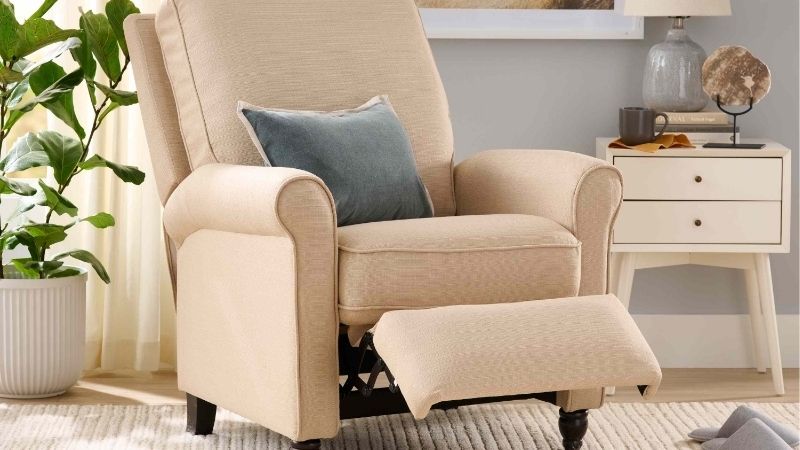
Width is the first filter, since a bedroom corner is tight. These range from the 29-inch Stauton to the 33-inch Majorca and La-Z-Boy Pinnacle, a four-inch spread that decides whether the chair tucks neatly or crowds a nightstand or door. Measure the corner and any furniture beside it before settling on a width.
Overall width is not seat width, so a chair that measures 33 inches outside gives a narrower seat inside once the arms are counted. If a comfortable seat matters, check the seat width separately, since a slim overall footprint can mean a cramped sit, especially on the narrowest models built mainly to save floor space.
A narrower chair frees room but seats a smaller person more comfortably than a larger one. Match the width to both the corner and who uses it, and remember a recliner needs clear floor in front for the footrest, so a chair that fits the corner can still block a closet or a path to the bed when open.
Wall Clearance to Recline
A wall-hugger does not mean zero clearance; it means less. The Stauton needs about two inches behind it, the Majorca around three, and the La-Z-Boy Pinnacle about seven, so even a compact recliner must sit off the wall to lean back. Measure from the wall, including baseboards, and leave the stated gap before pushing it flush.
Closed depth, reclined depth, and wall clearance are three different numbers, so plan for all three in a small bedroom. The closed depth is the parked footprint, the reclined depth is how far the footrest extends forward, and the clearance is the space behind for the back to tilt, and a tight corner has to accommodate each.
Confirm the clearance against your actual wall, since trim, a radiator, or a window sill can eat into the gap. A wall-hugger mechanism reduces the space needed but never removes it, so a chair pushed too close simply will not recline fully, which defeats the point of putting a recliner in the bedroom at all.
Seat Fit and Capacity
Comfort comes from seat depth, height, and support, and capacity sets who can use it. The Stauton and La-Z-Boy Pinnacle, for example, list a 300-pound rating, a useful figure for heavier sitters. Check the per-chair capacity and the seat dimensions, since a small footprint can still suit a taller or heavier person if the seat is sized right.
Seat height matters in a bedroom, where you may rise from the chair often. A seat that is too low is hard to get out of, while one that is too high leaves feet dangling, so match it to the user, and consider a power lift mechanism for anyone with mobility needs rather than a manual lever that requires effort to work.
Reclined length decides whether a taller user is supported to the feet or left hanging off the footrest. If the chair serves a tall person, confirm the open length, and for a mixed household favor a mid-depth seat with firm support, since a very deep seat suits tall sitters but leaves shorter ones unsupported at the knee.
Frame, Mechanism and Durability
The reclining mechanism works hardest, so its quality decides lifespan. Established makers like La-Z-Boy publish first-party figures, while smaller brands’ specs are manufacturer-stated without independent testing, so weigh the build and the mechanism, since a reclining joint that loosens or a worn cable is the usual first failure on any recliner.
Upholstery is the daily-wear surface in a room you use nightly, so match it to the household. Performance fabric resists stains where pets or snacks are involved, while leather wears differently; either way, check whether the maker sells replacement parts for the mechanism and whether the cover can be cleaned without a specialist.
Warranty terms usually split the frame from the mechanism and the upholstery, so read which part is covered and for how long. A long frame warranty means little if the mechanism, the part most likely to fail, carries a short one, so weigh the mechanism coverage most heavily and confirm parts are available before you commit.
Top Picks
Each pick leads with the two numbers that define small recliners for bedroom use, overall width and wall clearance, plus the trade-off worth knowing. Three publish both figures and are ranked directly; the fourth row is a verification step, since many recliners omit a numeric wall clearance you need to plan a tight corner.
| Product | Best For | Key Spec | Watch Out For |
|---|---|---|---|
| Stauton | Best for tight corners | 29 in wide; 2 in clearance; 300 lb | Narrow seat; specs are manufacturer-stated |
| Majorca | Best value | 33 in wide; 3 in clearance | Clearance tighter than it looks with trim |
| La-Z-Boy Pinnacle | Best for build quality | 33 in wide; 7 in clearance; 300 lb | Needs about 7 in of wall space to recline |
| What to verify on any unit | Fit you can plan | Seat width; closed vs reclined depth | Many models omit a numeric wall clearance |
Stauton: Best for Tight Corners
The Stauton is the tight-corner pick at 29 inches wide with about two inches of wall clearance and a 300-pound rating, the narrowest and closest-to-the-wall option here. It suits a small bedroom with little room to spare. It sits in the mid tier, so confirm the current price before ordering it for a snug corner.
Its advantage is footprint: at 29 inches wide and needing only two inches behind, it fits where larger chairs cannot, while still carrying a 300-pound capacity. Measure the corner, the clearance behind, and the floor in front for the footrest, since even the most compact recliner needs room ahead to open fully in the room.
The honest caveat is that a narrow overall width means a narrower seat, so a larger user may find it snug, and its figures are manufacturer-stated without independent testing. Treat the width and clearance as the maker’s numbers to verify against your space, and check the mechanism warranty, since that joint is the usual first failure.
Majorca: Best Value
The Majorca is the value pick at 33 inches wide with about three inches of wall clearance. It suits a bedroom with a little more room that still wants to recline without overspending. It sits in the budget-to-mid tier, so verify today’s price before choosing it over the narrower Stauton for your corner.
Its strength is a balance of a reasonable footprint and a modest three-inch clearance at a friendly price, with a roomier seat than the slimmest option. Measure the wall and leave at least the stated clearance behind, allowing for baseboards and trim, and confirm the floor in front clears the footrest when the chair is fully open.
The trade-off is that three inches of clearance can feel tighter once molding or a radiator is counted, so give it a little extra behind. Its specs are manufacturer-stated, so verify them against your space, check the mechanism warranty and parts availability, and sit-test the seat depth if you can, since a value chair can still feel shallow.
La-Z-Boy Pinnacle: Best for Build Quality
The La-Z-Boy Pinnacle is the build-quality pick at 33 inches wide with about seven inches of clearance and a 300-pound rating, from an established maker. It suits a bedroom with space to spare that prioritizes a proven mechanism. It sits in the premium tier, so confirm the current price before ordering it.
Its advantage is a trusted recliner mechanism and first-party specifications rather than manufacturer-stated figures without testing, which matters most on the joint that works hardest. Measure carefully, though, since the seven-inch clearance means it needs noticeably more wall space than the compact picks before it can recline fully in a corner.
The caveat is that clearance: at about seven inches, it is the least wall-hugging option here, so it suits a roomier bedroom rather than a truly tight one. If your corner is small, the Stauton or Majorca fits closer to the wall; choose the Pinnacle when build quality and a roomier seat outweigh the extra space it needs behind.
What to Verify on Any Bedroom Recliner
Because fit is specific and many listings omit the key number, verify the wall clearance yourself before buying. If a recliner does not publish a numeric clearance, as some models do not, treat that as a gap to confirm with the seller rather than assuming it hugs the wall, since a wall-hugger still needs real space behind.
Separate the three depth figures so you plan correctly: the closed footprint, the reclined depth with the footrest out, and the clearance behind for the back to tilt. Measure your corner against all three, and check overall width against seat width, since a chair that fits the corner can still offer a cramped seat inside the arms.
Finally, confirm capacity and the mechanism before trusting a compact chair. Look for a published weight rating that suits the user, a reclining mechanism with available parts, and a warranty that covers it, since the small footprint that makes a bedroom recliner appealing means little if the seat or the mechanism does not fit the person using it.
Frequently Asked Questions
Shoppers fitting a recliner into a bedroom ask the same questions about clearance, size, and fit. Each answer below opens with the short version, then the measurement that changes it, so you can match small recliners for bedroom corners to your actual space rather than discovering after delivery that the wall is an inch too close.
How much wall clearance does a bedroom recliner need?
Less than a standard recliner, but never zero. Wall-hugger designs here need roughly two to seven inches behind them to lean back, so the Stauton’s two inches and the La-Z-Boy’s seven mark the range. Measure from the wall, including baseboards and trim, before pushing any recliner flush against it in a tight corner.
The exact figure is set by the mechanism, so use the maker’s clearance number rather than a general rule. A chair pushed closer than its stated gap will not recline fully, so give it at least the listed clearance and a little more if a window sill, radiator, or thick molding sits behind it in the corner.
Remember clearance is only one of three depth figures. The closed depth is the parked footprint and the reclined depth is how far the footrest extends forward, so a wall-hugger that saves space behind still needs room in front. Map all three against your corner before deciding a small recliner truly fits the bedroom.
Will a small recliner fit a tight bedroom corner?
It can, if you measure the full footprint, not just the width. Check the corner against the overall width, leave the stated clearance behind, and allow the reclined depth in front for the footrest. A 29-to-33-inch chair suits many corners, but the footrest claims more floor than the parked chair suggests on paper.
The path in matters too. Measure doorways and any hallway or stair turn, since a chair that fits the corner can still be awkward to carry in, especially a heavier power model. Confirm the delivery route and whether the chair comes assembled, because a one-piece recliner is bulky around tight bedroom doorways.
If the corner is very tight, favor the narrowest option and the smallest clearance, and consider a chair without a swinging reach to a nightstand or closet. Tape out the footprint, including the reclined position, on the floor first, so you can see whether a path to the bed survives once someone leans back.
Is overall width the same as seat width?
No. Overall width includes the arms and frame, while seat width is the usable space between them, so a 33-inch chair gives a seat several inches narrower. If a comfortable sit matters, check the seat width separately, since the narrowest recliners save floor space partly by trimming the seat you actually sit in.
The gap between the two numbers varies by design, with heavily padded arms taking more. A larger user should compare seat width across models rather than overall width, since two chairs with the same outside footprint can offer very different room inside depending on how thick and shaped the arms are.
Balance the corner against the sitter. If space is the priority, a narrow overall width wins; if comfort is, a slightly wider chair with a generous seat may be worth the extra inches. Measure both the corner and the seat, and sit-test where you can, so the chair fits the room and the person using it.
Should I pick power or manual recline for a bedroom?
It depends on who uses it and whether an outlet is near. A manual recliner is simpler with fewer parts to fail, while a power or lift chair adjusts smoothly and helps anyone with mobility needs, though it needs a nearby outlet and adds electronics. Match the type to the user and the corner’s access to power.
Placement affects the choice, since a power chair must reach an outlet and route a cord without crossing a path to the bed. A manual chair goes anywhere but requires the strength and reach to push back against the mechanism, which can be awkward in a tight corner against a wall or beside a nightstand.
Either way, the mechanism is the part most likely to fail, so weigh its warranty heavily and confirm replacement parts are sold. Power adds convenience at the cost of complexity and a cord; manual keeps it simple at the cost of effort, so choose the trade-off that fits the person who will use the chair nightly.
Final Thoughts
The right small recliners for bedroom corners are the ones whose width fits the space and whose clearance still lets them recline once baseboards and a walkway are counted. Before ordering, tape out the closed footprint, the reclined depth, and the clearance, since a chair that fits the corner can still block the path to the bed.