Key takeaways
- Shopping for cheap recliners means weighing a low sticker price against the risk of a chair that crowds the wall or sits below your weight. This guide pairs four currently listed models with verified load ratings, seat sizes, and reclined…
Shopping for cheap recliners means weighing a low sticker price against the risk of a chair that crowds the wall or sits below your weight. This guide pairs four currently listed models with verified load ratings, seat sizes, and reclined clearance so the price makes real sense.
As an Amazon Associate we earn from qualifying purchases.
By KK Home Furnishings Editorial Team
How to Choose a Cheap Recliner
A low number only helps when the chair fits both the room and the person, so these four criteria stay measurable: purchase cost against real value, published weight capacity, the floor-and-wall clearance a recliner needs when fully open, and whether the motion is simple manual or motor-powered throughout daily use.
Price vs Real Value
Price is the obvious filter, yet value depends on what that number buys. In this sample the verified spread ran from around $295 at Living Spaces to about $499 at IKEA as of October 2026, roughly a 70% gap for chairs that all recline, so the lowest price is not automatically the weakest build in this group.
A sub-$300 manual model suits a guest room, a bonus room, or a first apartment where you mainly want a comfortable seat that leans back for a while. For a chair used for hours every day, paying a little more often buys thicker foam and a frame rated for heavier repeated use rather than occasional sitting.
The least expensive chair can cost more later if the foam flattens within a year or the release handle loosens over time. Budget recliners frequently carry shorter frame warranties than mid-tier lines, so confirm the coverage term and whether replacement handles or cushions are sold on their own before you commit.
Weight Capacity Matters More Than Upholstery Claims
Weight capacity is the spec that keeps a recliner safe, and it is published far less often than fabric names. IKEA lists both GRYTERYD and ARNASVALL as tested for 353 pounds for home use, while several budget chairs skip a stated rating, which makes a direct comparison harder than it first appears on a listing.
If anyone in the household is near or above a chair’s limit, treat the number as a hard gate rather than a guideline. A model rated for 353 pounds leaves more daily margin than an unrated one, and that margin matters most at the hinge and footrest, the parts that take the load each time the seat opens.
A rating measured one way does not transfer to another brand, so an IKEA tested figure should not be assumed for a chair from a different maker. When a listing omits capacity, ask the seller for the frame rating and treat a missing number as a reason to budget for a sturdier option, not for a bargain.
Measure Wall Clearance Before Buying
Clearance is how much space a recliner needs behind it to open fully, and budget chairs vary widely here. The Vinnie lists just 2.5 inches of wall clearance fully reclined, while the ARNASVALL needs about 18 inches, a difference that decides whether a chair works against a wall or must float out in the room.
Measure from the baseboard to any furniture behind the planned spot, then add a couple of inches for cords, trim, and the cushion’s travel. A wall-hugger design like the Vinnie fits tight layouts and small living rooms, whereas a rocker-recliner that swings back wants clear floor on every side as it moves.
Guessing clearance is a common reason a cheap recliner gets returned, and bulky-item return fees can erase the savings fast. Overall footprint matters too: the Vinnie measures 35 by 38 by 40.5 inches upright, so check doorways and hallways before the delivery window rather than after the box arrives at the door.
Manual Reclining vs Added Features
Manual recliners use a side handle or body weight to lean back and stay the cheapest to buy and maintain. Rocking and swivel models, like the ARNASVALL, add motion but also add moving parts, while powered lift chairs cost several times more and introduce a motor and control box to the whole equation.
Pick manual for a straightforward secondary seat, and add rocking or swivel only if someone will use that motion daily. Each extra mechanism is another part that can wear, so match the feature to real use rather than paying for a swivel that stays still or a motor the household never actually ends up needing.
Features also change upkeep: a rocker’s springs and a swivel’s base need the occasional check, and a powered chair depends on its motor long-term. Budget chairs rarely sell spare mechanisms, so favor a simple design from a maker that stocks replacement handles if you want the seat to last past its warranty.
Top Picks
These four picks are currently listed models with verified sizes and, where published, tested load ratings; the prices shown are the retailer’s own figures as of October 2026 and shift often, so treat each dollar amount as a snapshot in time rather than a fixed, permanent price tag on any one chair.
| Product | Best For | Key Spec | Watch Out For |
|---|---|---|---|
| Vinnie 35 in Manual Recliner | Best overall value | 35x38x40.5 in; 2.5 in wall clearance reclined; ~$295 (Oct 2026) | Weight rating not published |
| Keamey Manual Recliner | Tight budgets | 19.5 in seat height; 3 in wall clearance; ~$340 (Oct 2026) | Compact seat |
| IKEA GRYTERYD | Verified load rating | 353 lb tested load; 130 deg recline; ~$399 (Oct 2026) | Rocker only, no swivel |
| IKEA ARNASVALL | Rocking and swivel | 353 lb tested load; 18 in wall clearance; ~$499 (Oct 2026) | Needs ~18 in behind it |
Best Overall – Vinnie Manual Recliner
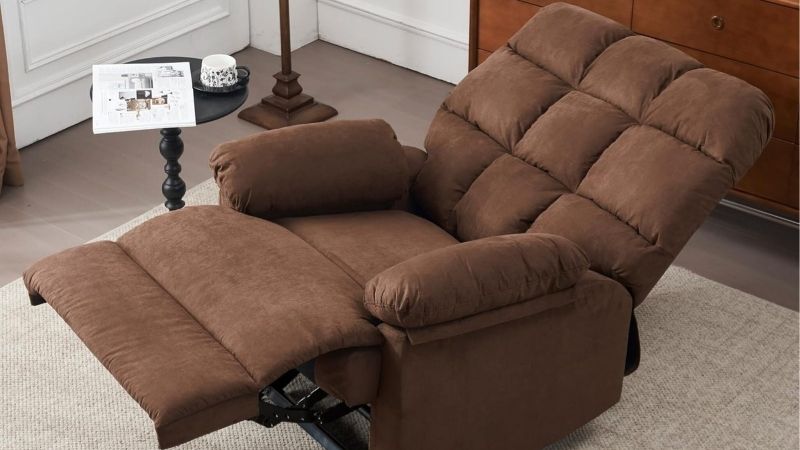
The Vinnie suits buyers who want the lowest price without losing a known footprint. It measures 35 by 38 by 40.5 inches and needs only 2.5 inches of wall clearance fully reclined, listed at around $295 at Living Spaces as of October 2026, which places it firmly in the budget tier for a full-size seat.
Its wall-hugger motion is the standout, letting the chair sit close to a wall where a rocker could not, so it fits apartments and small living rooms. At roughly $295 it undercuts the IKEA pair by about 26 percent, a meaningful gap, though not the half-price difference the sticker spread can seem to suggest.
The main drawback is that Living Spaces does not publish a weight rating for this model, so heavier users should confirm the frame limit first. Budget chairs also tend to show foam compression first at the seat front, so expect to rotate cushions and check the release handle over the first year of regular use.
Best Value – Keamey Manual Recliner
The Keamey fits shoppers who want a compact seat and a slightly higher back than entry chairs. It lists a 19.5-inch seat height and about 3 inches of wall clearance reclined, priced around $340 at Living Spaces as of October 2026, a small step up that mainly buys a more upright, easier-to-exit seat.
That 19.5-inch seat height helps average-height adults stand without sinking too low, and the 3-inch clearance keeps it close to a wall like the Vinnie. It works well as a reading chair or a bedroom seat, where the extra forty dollars over the cheapest option buys a posture that is a little easier on the knees.
The compact seat that makes it easy to leave can feel tight for taller or broader users, so measure seat width against your frame first. As with the Vinnie, the listing omits a tested load figure, and budget upholstery can pill over time, so ask about the frame rating and fabric grade before you place the order.
Best for a Verified Load Rating – IKEA GRYTERYD
The GRYTERYD is the pick when a published capacity matters more than the lowest price. IKEA lists it as tested for 353 pounds for home use with a 130-degree recline, priced around $399 as of October 2026, so it carries a real rating where the two Living Spaces chairs leave that number entirely blank.
That tested 353-pound figure gives daily margin for heavier users and households that want documentation, and the rocker motion suits a nursery or a TV room. IKEA’s flat-pack delivery keeps the price down, but plan for self-assembly and read the recline direction so the chair ends up facing into the room correctly.
Because it rocks rather than hugs the wall, it needs clear floor behind and to the sides, unlike the wall-hugger Vinnie. IKEA’s tested rating uses its own method, so do not read it as identical to another brand’s claim, and keep the hardware, since replacement parts for flat-pack chairs can be limited later.
Best for Rocking and Swivel – IKEA ARNASVALL
The ARNASVALL fits buyers who want both rocking and swivel in one budget-friendly frame. IKEA lists it as tested for 353 pounds and needing about 18 inches of wall clearance, at around $499 as of October 2026, the priciest here yet still modest for a chair that rocks, swivels, and reclines together.
The combined motion makes it versatile for a living room where the chair turns toward a window or a TV, and the shared 353-pound tested rating matches the GRYTERYD. Its swivel base wants open floor, so it reads best as a centerpiece seat rather than something tucked into a tight corner against the trim.
That 18-inch clearance is the catch: it needs roughly seven times the space behind it that the Vinnie does, so it is wrong for tight rooms. Swivel bases and rocker springs add wear points over years of use, so check that the base turns smoothly on delivery and keep the manual for the hardware specifications.
Frequently Asked Questions
These answers cover what budget shoppers ask most before ordering, from whether a low price signals poor quality, to how much weight a frame can take, and how much floor space a leaning seat really needs once it is fully open against a wall in a real living room rather than on a store showroom floor.
Are cheap recliners worth buying?
Yes, when the low price still comes with a real footprint and, ideally, a stated weight rating. In this sample, verified options ran from about $295 to $499 as of October 2026, and the least expensive chair was not the weakest, so a careful budget pick can serve a secondary room well for years to come.
Value holds when the intended use is light to moderate rather than all-day seating, because budget foam and frames are built for occasional use. A guest room, bonus room, or reading corner is the right home for cheap recliners; a primary seat used hours a day usually justifies a sturdier mid-tier frame instead.
The exception is weight and space: if a user is near a frame’s limit or the spot has little clearance, a slightly pricier rated model avoids a costly return. Check the stated capacity and measure the wall gap before ordering, and favor sellers that stock replacement handles for the chairs they list online.
How much weight can a budget recliner hold?
It varies, and the honest answer is that many budget listings do not publish a number at all. The IKEA models here are tested for 353 pounds for home use, while the two Living Spaces chairs omit a rating, so capacity should be confirmed per model rather than assumed across the whole budget category.
A published figure like 353 pounds reflects the maker’s own test and leaves daily margin for heavier users, with the footrest hinge taking the most strain each time the seat opens. Ratings are not interchangeable between brands, so a tested number from one maker should never be applied to a chair from another.
When a listing shows no capacity, ask the seller for the frame rating before buying, and treat the silence as a reason to step up a tier, not a bargain. For users above roughly 300 pounds, a documented rating and a center-supported frame matter far more than the fabric or the styling shown in the photos.
How much space does a recliner need to recline?
A wall-hugger can open in as little as 2.5 inches, while a rocker-recliner can need around 18 inches behind it. That range, drawn from the Vinnie and the ARNASVALL here, is why clearance is the single most useful thing to measure before you choose a motion type for a given spot along a wall in the room.
Measure from the baseboard to the nearest object behind the planned location, then add a couple of inches for cords, trim, and the cushion’s travel. Wall-hugger designs suit tight layouts and small rooms, whereas rocking or swivel frames want open floor on the sides as well as directly behind the seat itself.
Overall footprint matters too, since a chair like the Vinnie is 35 by 38 by 40.5 inches upright and must clear doorways on the way in. Confirm hallway and door widths before the delivery window, because bulky-item return fees on a mismeasured chair can wipe out the money a low price seemed to save you in the first place.
Is a manual or power recliner better on a budget?
For most budgets, a manual recliner is the better buy because it costs less upfront and has fewer parts that can fail. Power and lift versions add a motor and control box and typically run several times the price, so they make sense mainly when a user genuinely needs assistance standing up each time.
Manual chairs use a handle or body weight and keep maintenance simple, which is why the picks here are manual. Rocking and swivel add useful motion but also springs and a base that wear, so choose those features only if someone will use them daily rather than paying for motion the household rarely ends up touching.
If powered motion is a real need, budget for the motor’s long-term reliability and confirm the maker sells a replacement control box. Otherwise, a simple manual frame from a seller that stocks spare handles will usually outlast a cut-rate powered chair whose electronics have no available parts once the warranty ends.
Final Thoughts
Choosing among cheap recliners comes down to three numbers the listing may not volunteer: the weight rating, the reclined wall clearance, and the upright footprint. The Vinnie wins on price and tight clearance, the Keamey on an easier-to-exit seat, and the IKEA pair on a tested 353-pound rating, so match those figures to your room first.