A shoe rack for home works best when its claimed pair count matches the floor space, shoe sizes, and room where it will live. For a typical entryway or closet, depth and usable capacity matter more than tier count alone, while tall covered racks suit larger collections but need more vertical clearance.
As an Amazon Associate we earn from qualifying purchases.
By KK Home Furnishings Editorial Team
How to Choose a Shoe Rack for Home
The four racks below show why one headline number rarely tells the whole story. Fixed racks range from 24.8 to 31.5 inches wide, while capacities run from 9 to 30 pairs. An expandable model changes width with use, so its maximum pair claim should not be compared with a fixed footprint as if both were measured in one setup.
Compare Pair Capacity With the Floor Footprint
Pair count becomes useful when you know how much floor the rack occupies. The Seville Classics model lists 12 pairs on a 27.25-inch by 12.75-inch footprint, while Brightroom lists 9 pairs at 24.8 inches wide and 11.81 inches deep. Both are low racks that trade vertical capacity for easier access.
The Mainstays covered rack uses a 31.5-inch by 13.46-inch footprint and lists room for 30 pairs. Based on those published dimensions, it stores far more claimed pairs per square foot than the two low fixed racks. That advantage comes from its 69.09-inch height, not from a smaller base or wider shelves.
The Container Store model needs a different reading. Its current listing gives a 24.75-inch exterior width, 9-inch depth, and capacity up to 16 pairs, but the same listing describes the rack as expandable. Treat its capacity as width-dependent and verify the current expanded dimension before planning a tight closet bay.
Check Rack Depth Before You Measure the Hallway
Depth is the dimension most likely to affect traffic flow in a narrow entryway. The Container Store rack is listed at 9 inches deep, Brightroom at 11.81 inches, Seville Classics at 12.75 inches, and Mainstays at 13.46 inches. Measure from the wall to the point where feet normally pass, not to the baseboard.
A shallow rack can still feel intrusive if shoe toes or heels project beyond its frame. Large sneakers, work shoes, and boots often use more depth than flats or children’s footwear. Before buying a shoe rack for home use, place the bulkiest pair against the wall and measure the real projection you are willing to accept.
Door swing also changes the usable zone. A rack that fits the wall dimension can block a closet door, front door, or nearby drawer once shoes are loaded. Mark the rack depth on the floor with painter’s tape, then open every adjacent door fully. That simple check catches conflicts that product dimensions cannot predict.
Match Height and Tier Count to Daily Shoe Types
Overall height ranges widely in this group: Seville Classics is 18.5 inches, Brightroom is 20 inches, The Container Store is 27 inches, and Mainstays is 69.09 inches. Low racks are easier to reach and can also serve as landing surfaces, while tall racks concentrate storage vertically and demand more wall clearance.
Tier count does not guarantee that boots will fit. Seville Classics publishes 5.5 inches between tiers, which suits many low shoes but can be restrictive for high-tops. Brightroom uses two shoe shelves and a wood top, while the Mainstays unit spreads 30-pair capacity across ten shelf levels under a fabric cover.
Keep the most frequently worn shoes between knee and waist height when possible, and reserve awkward top or bottom levels for occasional pairs. If most of the household wears boots, do not buy on total pair count alone. Fewer shelves with more vertical room may be more useful than a dense rack built around low-profile footwear.
Choose Open or Covered Storage for the Room
Open racks such as Seville Classics, Brightroom, and The Container Store make shoes visible and easy to grab. They also expose footwear to room dust and leave damp soles uncovered. The Mainstays model includes a zip-down fabric cover, which hides the collection but adds another surface that needs occasional cleaning and clear access.
For a mudroom, open slats or bars make it easier to see wet footwear and avoid trapping it unseen. For a bedroom or multipurpose room, a cover can reduce visual clutter. A shoe rack for home storage should match the room’s job first: quick daily access, display, concealed bulk storage, or a mix of those needs.
Current October 2026 listings also show different ownership details. Brightroom includes installation hardware and tools, Seville Classics requires no tools for assembly, and the Mainstays unit includes its cover. Those inclusions reduce the chance that a small missing accessory turns a simple organizer into an extra shopping trip.
Top Picks
No single rack is an outright overall winner on verified data because these models solve different space problems. The comparison therefore uses fit-specific labels. Pair capacities are manufacturer or retailer stated, and the fixed-size models are easier to compare directly than the expandable design from The Container Store.
| Product | Best For | Key Spec | Watch Out For |
|---|---|---|---|
| Seville Classics 3-Tier Resin Slatted Shoe Rack SHE15882 | Best For Modular Stacking | 12 pairs; stack to 3 units; 30 lb per shelf | 5.5 in tier gap limits taller footwear |
| Brightroom 3 Tier Shoe Rack TCIN 83546965 | Best For Light-Duty Entryways | 9 pairs; 24.8W x 11.81D x 20H in; 25 lb max load | Not designed as a sitting bench |
| The Container Store 4-Tier Expandable Shoe Rack SKU 10078153 | Best For Shallow Closets | Up to 16 pairs; 24.75W x 9D x 27H in listed | Capacity changes with expansion and shoe width |
| Mainstays 10 Shelf Organizer with Cover MS89-635-008-01 | Best For Large Collections | 30 pairs; 31.5W x 13.46D x 69.09H in | Tall profile needs a clear vertical zone |
Seville Classics SHE15882 – Best For Modular Stacking
The main limitation is the 5.5-inch space between tiers, so this rack is better for sneakers, flats, and low shoes than upright boots. In return, Seville Classics publishes unusually complete hard specs: 27.25 inches wide, 12.75 inches deep, 18.5 inches high, and up to 12 pairs indoors.
Each resin slat shelf is rated for 30 pounds, with 90 pounds stated for the rack, and the manufacturer allows compatible units to stack up to three high. That makes it useful when a household expects storage to grow. Do not mix it with the brand’s incompatible 2-tier rack, which uses a different stacking system.
The direct manufacturer listing is active in October 2026 and includes no-tool assembly. Expansion still has a real ownership cost because extra vertical or horizontal capacity requires another compatible rack, and extra stacking pins are sold separately. For a small entryway, one unit keeps the commitment modest.
Brightroom 3 Tier Shoe Rack – Best For Light-Duty Entryways
This is not a bench, and Target’s product expert lists a 25-pound maximum loading weight for the unit. That caveat matters because the natural wood top looks seat-like. The rack itself is 20 inches high, 24.8 inches wide, and 11.81 inches deep, with a stated capacity of 9 pairs total.
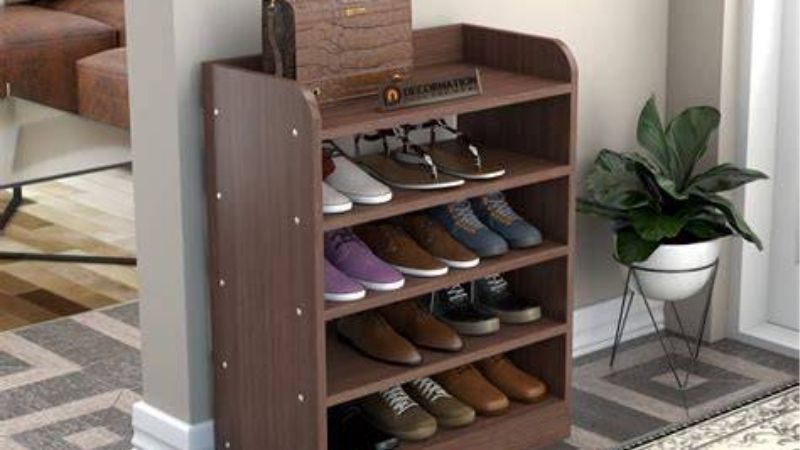
Two metal shoe shelves sit below the wood top, so the upper surface can hold a bag or small entryway items instead of another row of footwear. The 11.81-inch depth is shallower than the Seville and Mainstays picks, which can help where the walking path is tight but the wall width is adequate.
Target lists the Brightroom rack in stock in October 2026 and includes installation hardware and assembly tools. Its return window is listed at 365 days for eligible Target purchases, which is unusually forgiving for checking fit at home. The tradeoff is fixed capacity: there is no published stacking system for this model.
The Container Store 4-Tier Expandable Shoe Rack – Best For Shallow Closets
The caveat comes first: the current listing states capacity up to 16 pairs while also describing an expandable frame, so pair count depends on the width you actually use. The listed exterior size is 24.75 inches wide, 9 inches deep, and 27 inches high. Verify the current expanded width before buying for a precise bay.
The steel design is stackable, and the official assembly sheet shows connectors for joining units widthwise along with a no-tools-required setup. That flexibility is the reason to choose it over a fixed rack. A 9-inch listed depth also keeps the frame relatively shallow, although shoe toes can extend beyond the bars.
Because the rack changes width, we did not rank it on derived pairs per square foot against fixed-size products. That would mix different operating conditions. Its better use case is a closet where available width may change after hanging clothes, boxes, or luggage are rearranged and the rack can adapt without replacement.
Mainstays 10 Shelf Organizer – Best For Large Collections
The Mainstays unit is 69.09 inches tall, so it is a high-capacity organizer rather than a low entryway shelf. Walmart lists 30-pair storage within a 31.5-inch wide and 13.46-inch deep footprint. That tall format concentrates the largest stated collection here into less floor area than multiple low racks would need.
A zip-down fabric cover is included, giving the rack a different job from the three open picks. It can hide a large shoe collection in a bedroom or closet and limit direct dust exposure. The frame uses steel with polypropylene, polyester, and polyethylene components, and adult assembly is required.
Walmart lists the single rack sold and shipped by Walmart.com in October 2026 with a 90-day return window. The included cover avoids a separate dust-cover purchase, but tall lightweight organizers should be kept on a level surface and away from climbing children. The 30-pair figure is a stated capacity, not an independent fit test.
Frequently Asked Questions
Buying the right shoe rack for home use usually comes down to dimensions that listings cannot decide for you: the shoes you actually wear, the path people walk, and the place where wet or dirty pairs land. These answers focus on measuring and placement so stated capacities become useful rather than optimistic numbers.
How many pairs should a home shoe rack hold?
A home shoe rack should hold the pairs your household needs in that location, not necessarily every pair owned. Count the shoes used during a normal week, then separate seasonal, formal, and rarely worn footwear. A smaller daily rack can work better than a tall unit that turns the entryway into long-term storage.
Published capacity also assumes a certain shoe mix. The four picks here range from 9 to 30 stated pairs, yet wide sneakers, men’s shoes, and boots can reduce the practical count. Treat pair capacity as a planning ceiling, then check shelf width and vertical clearance against the bulkiest footwear in the household.
If you are choosing a shoe rack for home entry storage, leave a little unused capacity for guests, wet shoes, or a new pair. Overfilling makes it harder to return shoes to the correct shelf and can push toes into the walkway. Extra capacity is useful when it comes from vertical organization rather than a deeper obstruction.
What depth works well for an entryway shoe rack?
There is no single ideal depth, but the racks compared here use frames from 9 to 13.46 inches deep. That range is a useful reference, not a universal rule. The better test is whether the loaded shoes stay clear of the normal walking path, door swing, and any drawers or closet doors nearby.
Measure the largest everyday shoe from heel to toe, then place it where the rack will sit and check how far it projects from the wall. A shallow frame does not guarantee a shallow installation if footwear hangs over the bars. Painter’s tape on the floor makes this clearance easier to judge before ordering.
For a narrow hall, width can be easier to accommodate than depth because people move parallel to the wall. The Brightroom frame is 11.81 inches deep, while The Container Store lists 9 inches. If the household uses larger shoes, however, choose based on the loaded footprint rather than the frame dimension alone.
Is an open or covered shoe rack better?
Neither style is automatically better. Open racks make pairs visible, speed up daily access, and let you notice damp soles quickly. Covered storage hides visual clutter and reduces direct dust exposure. The right choice depends on whether the rack sits in a working mudroom, a bedroom, a closet, or a visible front hall.
Do not close wet shoes behind a fabric cover and assume the cover solves moisture. Let footwear dry before long storage, especially after rain or snow. Open bars can help air reach the shoes, but they do not dry footwear on a fixed schedule. Room humidity, shoe materials, and how soaked the shoes are all matter.
For a shoe rack for home bedrooms, the Mainstays cover can make a 30-pair collection look calmer. For entryways, Brightroom and Seville Classics keep everyday pairs immediately visible. If one rack must serve both jobs, prioritize the location used most often and move seasonal shoes to separate closed storage.
Can I stack shoe racks to save floor space?
Yes, when the manufacturer designs the rack for stacking and states the limits. Seville Classics allows compatible 3-tier units to stack up to three high. The Container Store assembly sheet also describes stacking multiple units. Do not assume two unrelated racks can be safely combined because their footprints look similar.
Stacking increases height, so stability becomes more important than raw capacity. Follow the supplied connectors, caps, and assembly sequence, keep the unit on a level surface, and do not let children climb on it. If instructions call for wall attachment at a certain height, use the specified hardware and placement method.
Before stacking a shoe rack for home storage, check ceiling clearance, closet rods, switches, and access to the highest shelf. Vertical growth is useful when the upper tiers remain practical. If you need a step stool for daily shoes, a wider low rack or a tall purpose-built organizer may be the more usable choice.
Final Thoughts
Before buying a shoe rack for home use, photograph the intended wall, tape the rack’s depth on the floor, and place your widest and tallest everyday shoes inside that outline. That quick mockup reveals traffic and footwear conflicts that capacity labels miss, and it gives you a record to compare against future listings.