Key takeaways
- Separate overall sofa depth from usable sitting depth. Use a comparison worksheet and an illustrative room-fit example before choosing a sofa.
What's inside
Overall sofa depth tells you how much room the sofa occupies; seat depth describes the space available for sitting. They are not interchangeable. Compare both, with the back cushions in their normal position, before deciding whether a sofa fits your room and the way you sit.
A deeper outside measurement can come from the frame, a sloping back or thick cushions. It does not necessarily provide the additional lounging space you expect. This guide gives you a repeatable comparison method without pretending that one depth suits every person.
Write down the two questions separately
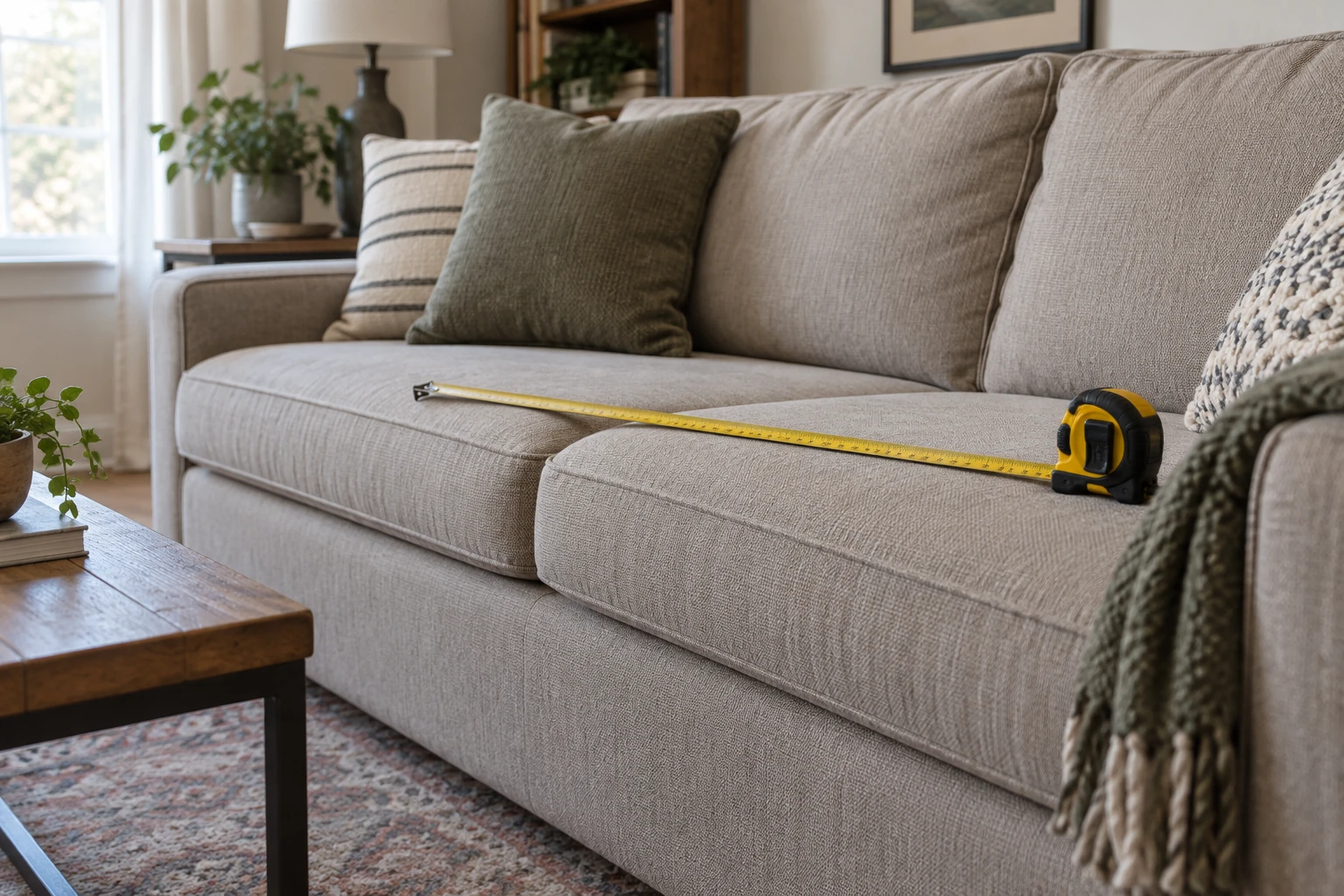
For room planning, ask: what is the sofa’s maximum front-to-back footprint in the configuration I will use? For seating, ask: how far is it from the front sitting edge to the front of the back cushion, with that cushion properly placed? Use the manufacturer’s dimension drawing to understand its published measurement convention.
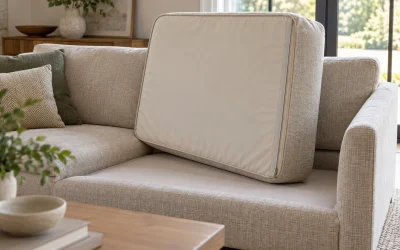
Do not measure the entire loose seat cushion after pulling it out and call that usable depth. Part of that cushion may normally sit beneath the back cushion. Similarly, removing the back cushion can create more apparent space without representing the sofa’s intended everyday setup.
A real specification example makes the distinction clear: Room & Board’s Ryan 106-inch sofa, item 10013336, lists an overall depth of 41 inches and a seat depth of 24 inches. The difference is not missing seating; the measurements describe different parts of the furniture. This is a published dimension example, not our test or a product recommendation.
Use your current seat as a reference
Choose a chair or sofa you know well. Place its cushions as you normally use them. Measure the usable sitting depth without forcing soft upholstery flat, and note the measurement method. Then write a short observation: comfortable for conversation, useful for curling up, too deep without a pillow, or too short for the preferred posture.
This record is more useful than treating your height as a formula. People with similar height can prefer different postures, and cushion firmness and seat height also change the experience. The reference is a shopping aid rather than an ergonomic prescription.
If two people share the sofa, record both experiences. Do not average their preferences into a number neither person likes. A sofa with a separate lounging place may solve a disagreement more effectively than choosing the deepest possible seat everywhere.
Build a comparison worksheet
| Field | What to enter | Question it answers |
|---|---|---|
| Overall depth | Maximum outside depth from the dimension drawing | How much room does it occupy? |
| Seat depth | Published value and measurement convention | What sitting space is provided? |
| Cushion setup | Normal back cushions and any required support pillow | Is the comparison like for like? |
| Seat height | Published or measured height, with method noted | What other dimension affects the fit? |
| Preferred posture | Conversation, reading upright, lounging or mixed | What will the seat actually be used for? |
| Room result | Marked footprint and remaining route | Does the layout still work? |
Use “unknown” when a listing does not provide seat depth. Ask the retailer for the measurement with the back cushions in place and a photo showing the endpoints. Do not estimate it by subtracting an assumed back thickness from overall depth.
A worked comparison with illustrative numbers
Illustrative candidates, not real products: Sofa A is 40 inches deep overall with a 22-inch usable seat. Sofa B is also 40 inches overall with a 26-inch usable seat. Both occupy the same front-to-back floor area, but their sitting spaces differ by 4 inches.
Suppose your familiar reading chair has a 22-inch usable depth and feels comfortable with its normal back cushion. A is the closer dimensional starting point for an upright showroom trial. B may suit a preferred curled-up position, but the extra depth alone does not prove comfort. Try the posture instead of awarding B an automatic advantage.
Now consider Sofa C: 44 inches overall and the same 22-inch seat as A. If all three sit with their rear edge on the same room-plan line, C extends 4 inches farther into the room without adding usable sitting depth. Check whether another feature justifies that space cost.
Keep the showroom comparison consistent
When possible, compare candidates with their supplied back cushions correctly positioned. Sit in the posture you expect to use at home. Note whether you add a loose pillow, slide forward, curl up or prefer a footrest. Those observations explain your preference better than a star rating for depth.
Record the specific model, cushion option and configuration you tried. If an online version uses another cushion fill or a different chaise module, do not assume the showroom experience transfers unchanged. Ask which dimensions or construction details differ.
Check the footprint and delivery separately
Mark the candidate’s full footprint on your room drawing, including any chaise or reclined position you intend to use. Keep the coffee table, doors and normal walking routes on the same sketch. A comfortable seat is still a poor fit if the layout cannot perform its daily tasks.
Room & Board’s delivery fit guide treats access-route measurement as its own check. Follow the selected seller’s delivery guidance for the actual furniture and route. Overall depth and seat depth alone cannot tell you whether a boxed sofa will turn through a hallway.
Make the final choice with three separate results: acceptable sitting experience, usable room layout and feasible delivery. Keeping those results distinct prevents a generous-looking sofa from winning on one attractive number.