Key takeaways
- A regular sofa is built for sitting, while a sleeper adds a guest bed. In the sleeper sofa vs regular sofa comparison, decide by how often someone stays overnight and whether there is room to unfold the bed. Choose a…
A regular sofa is built for sitting, while a sleeper adds a guest bed. In the sleeper sofa vs regular sofa comparison, decide by how often someone stays overnight and whether there is room to unfold the bed. Choose a standard sofa for seating-first use; choose a sleeper for real guest needs. Cushion feel, upkeep, and durability vary by model.
As an Amazon Associate we earn from qualifying purchases.
By KK Home Furnishings Editorial Team
Sleeper Sofa vs Regular Sofa: The Practical Differences
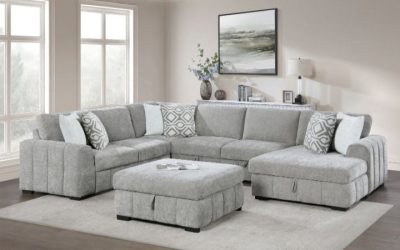
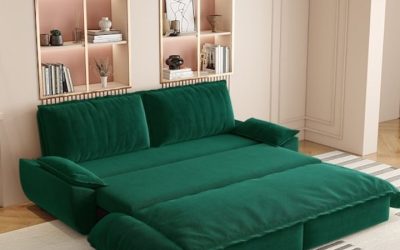
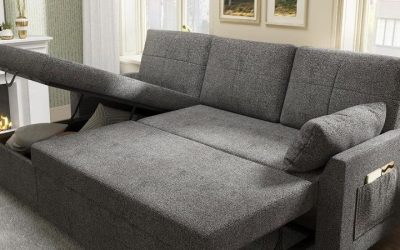
Both types can look similar with the bed closed. The difference appears when guests arrive: a sleeper converts by unfolding a mattress, extending a platform, or repositioning its cushions, whereas a standard sofa retains its seating configuration. Room & Board lists these different sleeper families separately [Room & Board, accessed October 2026]. Check the model, not a generic photo, before deciding.
| Decision Factor | Sleeper Sofa | Regular Sofa | What to Check |
|---|---|---|---|
| Primary use | Daytime seating plus a designed sleeping surface | Daytime seating and lounging without a bed conversion | Whether someone actually stays overnight |
| Sleeping setup | Fold-out mattress, convertible cushions or extending platform | No purpose-built convertible bed | Actual open bed dimensions and support |
| Room footprint | Closed sofa size AND deployed depth matter | Usual sofa footprint remains fixed | Furniture movement and walking route |
| MORABO model example | 88 5/8 in. W × 36 1/4 in. D closed; 63 in. D open | 81 1/8 in. W × 36 1/4 in. D | IKEA U.S. listings, specified variants |
| Sleep-surface example | MORABO bed is 54 3/8 in. W × 78 3/4 in. L | No published bed dimension | Do not infer bed size from sofa width |
| Daytime feel | Depends on seat foam, support and hidden mechanism | Depends on cushions, suspension and frame | Try the actual sitting position |
| Hardware and care | Upholstery plus convertible components to maintain | Upholstery, cushions and standard frame joints | Cleaning label, serviceability and warranty |
| Guest frequency | Useful when the conversion will be used | Usually simpler when there is no overnight need | Use case instead of assumed value |
The Sleeping Function Is the Main Distinction
A standard sofa is not a failed sleeper; it is a seat without a dedicated fold-out bed. A sleeper is meant to handle two different jobs, but designs vary. Room & Board distinguishes traditional fold-out mattresses, convertible back-and-seat surfaces, and extending platforms. These constructions should not be treated as equally soft or equally spacious just because each retailer calls them a sleeper.
For this comparison, focus on whether a guest has a usable, supported sleep surface without borrowing the living-room cushions as a makeshift mattress. A standard sofa can accommodate an occasional nap, yet its narrow seat and armrests are not a substitute for a specified bed. Do not buy a conversion mechanism merely because an extra feature sounds convenient.
Closed Dimensions Can Hide the Real Space Requirement
IKEA provides a helpful same-family comparison: the MORABO standard sofa in Gunnared dark gray/metal measures 81 1/8 inches wide and 36 1/4 inches deep. The MORABO sleeper in Gunnared dark gray/metal measures 88 5/8 inches wide and 36 1/4 inches deep when closed, with a total unfolded depth of 63 inches [IKEA, accessed October 2026]. These are model-specific measurements.
The crucial extra space is in front, not necessarily behind. A coffee table that works with the closed sleeper may block the extended bed. Mark the maker’s deployed depth on the floor, then allow room to pass and set down bedding. Never assume the MORABO numbers describe another sleeper: Room & Board lists an open depth of 93 inches for one Ludlow variant [Room & Board, October 2026].
Evaluate Sitting and Sleeping as Separate Comfort Tests
Neither category guarantees superior sitting comfort. A traditional sofa may offer cushion or suspension options that suit long evening use, while a well-designed sleeper can also be comfortable to sit on. On the IKEA MORABO listings, the ordinary sofa uses a published high-resilience foam seat cushion; the sleeper combines a seat cushion and mattress with its own slatted support system [IKEA, October 2026].
Sleeping quality needs a different check. Ask what forms the bed surface, its length and width, whether a mattress is included, and how the support feels when extended. Room & Board’s Natalia lists a four-inch high-resilience foam sleeping construction, but that specification belongs to Natalia alone [Room & Board, October 2026]. A thick-looking seat cushion is not evidence of a specific bed thickness.
Adjust for Your Situation Before Buying
Decide from real use, not from a blanket claim that sleepers save space or regular sofas last longer. The following six scenarios separate guests, daily seating, floor clearance, delivery, and household care. For most homes the right choice is the piece that performs its main job comfortably, while its least-used feature creates as little inconvenience as possible.
1. Guests Stay a Few Weekends Each Year
A sleeper sofa often makes sense when relatives or friends need an occasional bed and there is no permanent guest bedroom. It keeps floor space available for normal seating between visits, provided the conversion area can be cleared quickly. Before ordering, confirm that the sleeping surface is long enough for the expected guest and that opening it does not trap access to the door.
Occasional use does not justify assuming the least expensive mechanism will work for everyone. Check how the mattress or cushions store, where linens go, and whether one person can operate the hardware safely according to the maker’s directions. If overnight visitors almost never come, a regular sofa may avoid maintenance and layout compromises for a problem you rarely have.
2. The Living Room Is Used for Sitting Every Day
Choose a regular sofa when conversation, reading, and television account for nearly all of the furniture’s use. You can prioritize the seat depth, back angle, cushion feel, and upholstery without requiring a built-in sleeping function. A sleeper remains a valid alternative if it happens to sit well, but the presence of a mattress alone should not outweigh a poor daytime fit.
Test the sitting position on the exact candidate model if possible. Check whether all cushions have the same firmness, whether the seat feels comfortable when you stand up again, and whether the arms serve your household. Different designs within a single brand can feel different. Avoid broad declarations that every sleeper feels firmer or that every ordinary sofa uses better materials.
3. A Small Room Has a Coffee Table or Narrow Aisle
Pick based on the maximum occupied floor space. For a sleeper, measure the open depth, not just the attractive closed outline shown online. IKEA’s MORABO sleeper expands to a published 63-inch total depth; the matching fixed MORABO sofa remains 36 1/4 inches deep [IKEA, accessed October 2026]. These examples show why a room can fit both as seats but only one as a bed.
Place painter’s tape around the fully unfolded footprint, then test where the table, ottoman, rug, and standing lamp would move. Consider how a guest reaches the bathroom at night. If you cannot clear an uninterrupted sleeping area without moving heavy furniture, the sleeper’s dual function may be impractical even though it technically passes through the door.
4. Someone May Sleep on the Furniture Often
If a person will use the furniture for frequent overnight sleep, compare the sleeper as a bed first rather than purchasing on sofa styling alone. The IKEA MORABO sleeper lists a sleep surface of 54 3/8 by 78 3/4 inches, while Room & Board’s Natalia lists a 61-by-80-inch sleeping surface for one configuration [IKEA; Room & Board, accessed October 2026]. Different specifications can affect fit.
Check the support construction, usable length, mattress care instructions, and whether replacement components can be sourced. Verify any stated frequency-of-use recommendation for the exact model. Some convertible designs use seating surfaces to make the bed, while others have a separate fold-out mattress. A regular sofa has no manufacturer-designated bed surface, making it the wrong purchase for this primary requirement.
5. You Rent, Relocate, or Have Tight Delivery Access
A regular sofa can be easier to select when moving flexibility matters, but neither category promises easy handling. Packaging, detachable legs, removable arms, frame sections, and overall weight determine delivery. The IKEA MORABO sleeper listing identifies several packaging pieces; the fixed MORABO listing has a different frame configuration [IKEA, accessed October 2026]. Compare actual box dimensions before you order.
Measure the tightest apartment stair turn and elevator opening rather than only the living-room wall. For a sleeper, also ask whether installers must assemble any mechanism in the room and whether future service requires clearance. Do not lift a folding bed by its moving parts. A modular or disassemblable sleeper can sometimes travel more conveniently than one oversized stationary sofa.
6. Kids, Pets, or Shared Spaces Make Cleaning Important
For a busy household, evaluate what gets dirty and which parts can be accessed. A regular sofa may have fewer mechanical joints to reach around. A sleeper can hide rails, hinges, or a storage compartment that collect debris or need inspection. That is a maintenance consideration, not evidence that one category inevitably fails sooner; upholstery and construction quality matter in both.
Read the upholstery care label and the mechanism instructions separately. IKEA lists non-removable upholstery on its MORABO examples and says the sleeper’s pad should not be machine-washed [IKEA, October 2026]. Those instructions apply to the cited product, not all sleepers. Keep children and pets away from moving sections during conversion and use the manufacturer’s specified operating procedure.
Frequently Asked Questions
The answers below address practical questions that are easy to miss in product listings. When a decision depends on an advertised specification, use the correct variant and its assembly or care document instead of assuming that two products with a similar silhouette share the same construction.
Can You Use a Regular Sofa as an Occasional Guest Bed?
Someone may nap on an ordinary sofa, but it is not a designated guest bed. The usable lying length can be shorter than the advertised external width because arms and back cushions take space. The seating cushions may also create gaps or a slope. A regular sofa is still the better fit if the sleeping question is genuinely exceptional rather than a recurring household need.
If visitors do need to sleep, compare a genuine sleeper with a separate guest-bed solution that suits your storage. Whichever option you choose, check real surface dimensions and manufacturer-use instructions. Do not market a standard couch as supporting two overnight adults just because two people can sit on it comfortably.
Does Every Sleeper Sofa Have a Queen-Size Bed?
No. The word “sleeper” does not specify a standardized bed size. IKEA lists the MORABO sleeper at 54 3/8 inches wide and 78 3/4 inches long when unfolded, whereas Room & Board publishes different measurements for its mattresses and convertible sleep surfaces [IKEA; Room & Board, accessed October 2026]. Confirm both dimensions rather than trusting the category name.
When purchasing sheets or a protector, also verify the thickness and whether the model uses a separate mattress or part of its upholstered seat. A nominal queen label does not guarantee standard queen bedding will fit a particular convertible surface. The product’s own bedding guidance should take precedence over broad size charts.
Can You Replace a Worn Sleeper Sofa Mattress?
Sometimes. Replacement is more straightforward when a manufacturer specifies a removable mattress and sells compatible parts. Other designs create the sleeping surface from the sofa cushions or an integrated support, so a standard mattress may not work. Never insert a thicker replacement into a folding mechanism without the maker’s approval; it may prevent safe closing.
Before purchasing, ask for the mattress dimensions, thickness limit, replacement part number if available, and coverage terms. A new mattress cannot solve every discomfort problem if the support platform or joints are worn. On a regular sofa, service questions instead tend to concern cushion inserts, suspension, upholstery, and frame repair.
Is a Sleeper Sofa More Difficult to Clean or Maintain?
It can involve additional inspection because the conversion system adds joints or surfaces, but upkeep differs widely by product. Both sofa types need fabric-appropriate cleaning, cushion care, and checks for loose components. A sleeper may also require keeping the moving path clear and preventing bedding from being caught in the mechanism when folded.
Use only cleaning methods allowed by the model’s care label; removable-looking fabric is not necessarily machine-washable. If a mechanism binds or makes an unusual sound, stop and consult the operating instructions or manufacturer rather than forcing it. Proper use and access to replacement parts are more informative than a claim that either sofa type is universally durable.
Final Thoughts
For sleeper sofa vs regular sofa, buy the sleeper when a guest bed is a real need and the room fits its fully opened dimensions. Buy the regular sofa when seating comes first and the sleeping feature would add little practical value. Compare actual seat comfort, surface dimensions, delivery access, care labels, and replacement support by model; neither category wins automatically.