Key takeaways
- A sectional is mainly about how seats fit together; a reclining sofa is about how seats move. In a sectional vs reclining sofa decision, pick a stationary sectional when you need a corner-friendly gathering area, or a reclining sofa when…
A sectional is mainly about how seats fit together; a reclining sofa is about how seats move. In a sectional vs reclining sofa decision, pick a stationary sectional when you need a corner-friendly gathering area, or a reclining sofa when adjustable back and foot support matters more. Some models are both. Measure the occupied space in use, not just the furniture at rest.
As an Amazon Associate we earn from qualifying purchases.
By KK Home Furnishings Editorial Team
Sectional vs Reclining Sofa: The Differences That Matter
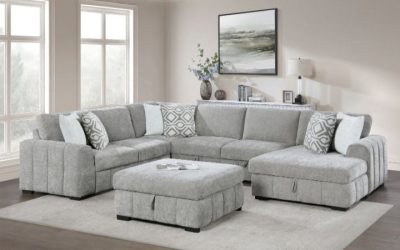
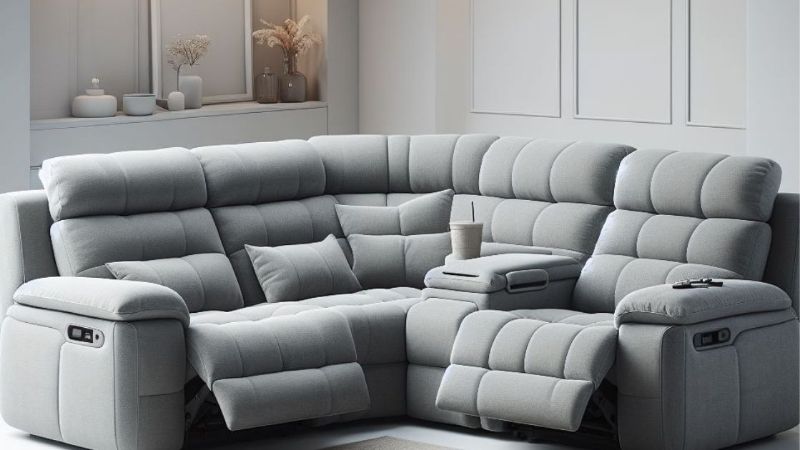
Do not mistake the two labels for opposing product categories. A sectional describes an assembled shape, such as an L or U configuration, while a reclining sofa has one or more seats that tilt and extend. Ashley sells power-reclining sectionals, demonstrating the overlap [Ashley Furniture, accessed October 2026]. The table compares typical stationary sectionals with separate reclining sofas, not every possible design.
| Decision Factor | Stationary Sectional | Reclining Sofa | Choose Based On |
|---|---|---|---|
| Primary feature | L- or U-shaped seating configuration | Backrest and footrest movement on equipped seats | Room arrangement versus adjustability |
| Conversation seating | Corner and chaise arrangements group people | Typically a straighter shared seating line | Whether guests face one another |
| Floor-space check | Overall width plus returning side or chaise | Closed footprint plus full operating extension | Usable area after all seats are occupied |
| Power need | None for a stationary model | Manual: none; power version: accessible outlet | Outlet, cord routing and desired controls |
| Moving and delivery | Multiple sections may separate; connectors vary | May include heavy mechanisms and detachable backs | Stair turns, packaging and handling |
| Wear and upkeep | Fabric, cushion fillings, seams and connectors | Fabric and cushions plus moving parts or electrics | Cleaning versus mechanism servicing |
| Hybrid option | May also contain reclining modules | Can be part of a modular sectional | Compare actual model configuration |
Configuration and Seat Count
A sectional adds a corner, chaise, or return, allowing several people to sit along adjoining sides of the room. That arrangement can invite conversation or create a defined viewing area without buying a separate chair. It does not automatically provide more usable seats: a chaise may occupy a full seat module while serving mainly as one person’s leg space.
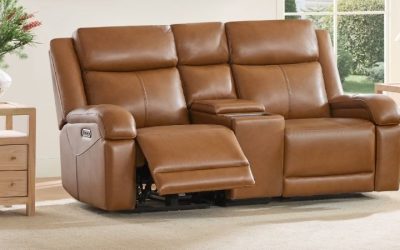
A conventional reclining sofa is often a straight, two- or three-seat design with selected seats that recline; the center seat might stay fixed. Confirm which positions operate rather than assuming every cushion moves. If a household needs simultaneous lounging for several people, count functioning reclining positions, not simply advertised seats.
Measure the Shape and the Fully Open Footprint
For a stationary sectional, record wall lengths, chaise projection, arm orientation, and the room’s walking paths. Pottery Barn recommends sketching the floor plan, measuring door and stair access, and allowing an unobstructed route around the seating [Pottery Barn, accessed October 2026]. Its suggested 30-inch walking passage is a design reference, not a universal accessibility rule.
For a reclining sofa, record both closed depth and full extension in the exact model instructions. The La-Z-Boy Pinnacle Power Wall Reclining Sofa is listed at 80.5 inches wide and 38.5 inches deep when upright, but those figures alone do not describe its fully deployed legrests [La-Z-Boy, accessed October 2026]. A wall-hugging mechanism may reduce rear clearance without removing the need for space in front.
Stationary Seating, Manual Motion, or Power Motion
Stationary sectionals have no reclining hardware to operate, although modular clips and cushion construction still affect daily use. Manual reclining sofas use occupant-operated mechanisms; power reclining sofas add motors, controls, cords, and a dependence on compatible power. Neither type guarantees a particular comfort outcome because cushion feel and seat geometry vary by model.
La-Z-Boy’s instructions for certain power motion units tell users to keep the travel path clear and use the specified wall outlet connection [La-Z-Boy, operating instructions; consulted October 2026]. Treat such directions as requirements for the model in question, not proof every recliner uses identical clearances or a single control design.
Six Real-Life Situations: What Should You Choose?
Select the layout before debating upholstery, reclining buttons, or cup holders. The following situations distinguish the furniture’s effect on everyday movement and seating. If two needs carry equal weight, the right answer may be a reclining sectional, but that hybrid usually asks for both corner clearance and legrest operating space.
1. An Open Living Room Where People Gather
Choose a stationary sectional when several people regularly sit together and you can give the return or chaise a permanent place. An L shape can divide living and dining zones while keeping occupants in one shared group. A sofa with reclining end seats favors individuals who want to adjust their own positions, but it does not establish the same corner arrangement on its own.
Before ordering, outline the projected footprint with painter’s tape and place a dining chair where traffic must pass. Confirm the sectional’s facing direction from the seller’s diagram: Pottery Barn explains that left- or right-arm terms are defined from the viewer facing the piece [Pottery Barn, sectional configuration guide]. A mislabeled orientation can block a doorway or make the chaise unusable.
2. A Compact Room With One Main Wall
Choose a straight reclining sofa only if its fully extended legrest leaves enough space for a table, people, and the opening path of nearby doors. It can make better use of a single wall than a deep L-shaped sectional whose return cuts across the only walkway. However, a compact nonreclining sofa or small sectional can be a better fit when the recliner’s operating depth causes an obstruction.
Do not select a “wall recliner” by its closed dimensions alone. Some La-Z-Boy wall-reclining models are described as operating inches from a wall, yet the front footrest still needs free travel [La-Z-Boy, Pinnacle product page]. Make a second floor-plan outline at full extension. If a coffee table has to be moved each time someone reclines, the layout is not convenient.
3. Movie Nights With One or Two Dedicated Loungers
Choose a reclining sofa when one or two household members actively prefer to raise their feet and shift their backrest while watching television. A model with independent adjustments may accommodate different seated positions without adding a chaise. Verify exactly which seats and functions move; some units offer separate headrest controls while others change the back and footrest together.
A stationary sectional with a chaise works when someone prefers to stretch out without operating a mechanism. It may suit a larger group sharing the same viewing position, but the chaise seat is not a substitute for multiple independently adjustable legrests. Focus on where eyes face the screen and whether people can reach tables while another seat is extended.
4. Households With Children or Pets
Choose the arrangement that keeps children and pets away from moving joints, cords, and areas where a footrest passes near the floor. A stationary sectional removes motor and legrest movement from the equation, though upholstered frames, loose connectors, and tipping accessories still require ordinary furniture precautions. Do not assume that either category is intrinsically safe in every household.
If reclining seats are essential, check the maker’s operating instructions and adult supervision recommendations. La-Z-Boy cautions users to keep hands and others clear of moving parts on specified motion furniture [La-Z-Boy, PowerReclineXR operating instructions]. Position toys, blankets, rugs, and side tables outside the legrest travel path; stop operating the seat if its movement is obstructed.
5. Renters and People Who Move Frequently
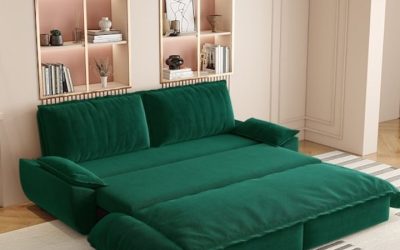
A sectional assembled from smaller modules can sometimes be easier to bring through tight stairs than a single long sofa, but connector systems and overall packed dimensions differ. Count the size and weight of each delivered piece. A reclining sofa might have removable backs yet also contain heavy hardware, so the product sheet and delivery method matter more than the furniture’s category name.
Check lift dimensions, stair turns, corridors, entrance doors, and any required assembly labor. Do not assume modular pieces can be rearranged in unlimited ways: a left-arm end may not function as a right-arm end. If a move is likely, favor a configuration that fits more than one possible room and can be disconnected by following the manufacturer’s instructions.
6. Someone Wants Both Corner Seating and Reclining
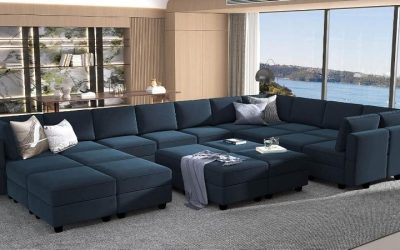
Consider a reclining sectional rather than forcing an either-or decision. Ashley’s Silverbrooke three-piece sectional combines a chaise, console, and power reclining seat, illustrating that a modular corner-style layout can contain motion components [Ashley Furniture, Silverbrooke U62606S17; accessed October 2026]. That is a product example, not a recommendation based on personal testing.
Check the particular powered positions, whether the chaise itself reclines, cord routing between modules, and enough floor room for every equipped seat to extend. Some multi-part configurations require dedicated controls or connectors, and configurations may not be interchangeable. A hybrid is useful only when the room can accommodate both its full sectional footprint and the motion travel.
Frequently Asked Questions
These answers address common points that buyers miss when comparing sectional and reclining seating. Because product terms overlap, always confirm the assembly diagram, specifications, and operation instructions for the actual model you plan to buy rather than treating the category label as a full product description.
Can a Sectional Sofa Also Recline?
Yes. A sectional can include reclining modules and still have a corner or chaise configuration. Ashley lists power-reclining modular sectionals, including models with adjustable headrests and specific left- or right-arm orientations [Ashley Furniture, accessed October 2026]. The words “sectional” and “reclining” describe different features, not mutually exclusive categories.
Check the seat map before buying. Some sections are fixed, some include motion, and a console or chaise may not provide an additional reclining position. Confirm whether all power cords and linking hardware are included, and verify the operating clearance in the arrangement you intend to install.
Does a Reclining Sofa Always Need Electricity?
No. Manual reclining sofas use mechanical controls and do not need power for the reclining action. Powered recliners need the electrical supply or supported battery arrangement specified by their manufacturer. USB charging ports, power headrests, and motorized lumbar adjustment are separate features, so verify which ones are actually included in your chosen model.
Before ordering a powered sofa, plan where cords will lie when the furniture shifts or reclines. Follow the specific manual for plugs and extensions instead of assuming one brand’s requirements cover all recliners. If outlets are inaccessible or cables would cross a walkway, manual motion or stationary seating may be the more practical choice.
Which Type Is Easier to Clean Under and Behind?
Neither wins in every room. A sectional with a chaise or low base can cover a broad floor area and may require moving several connected pieces for deep cleaning. A reclining sofa may be shorter from side to side yet have a legrest mechanism that needs careful access. The decisive factors are leg height, clearance, sectional connectors, and manufacturer maintenance instructions.
Do not lift or tilt powered furniture by the motor, footrest, or cable. Disconnect electrical power when directed by the care manual, and ask for help with heavy pieces. If pets shed or crumbs accumulate, consider removable cushions or accessible leg profiles without assuming a “modular” or “reclining” label guarantees washable covers.
Should I Choose a Chaise or a Reclining Footrest?
Choose a chaise when you want a dedicated stretch-out spot without mechanical movement and the chaise projection fits the room. Choose a reclining footrest when you want an adjustable position that closes away, provided you have unobstructed travel space. A chaise often supports one person’s legs; a sofa with two active recliners can serve two people independently.
Check the exact depth and position of the chaise as well as the fully opened footrest length. Sit in the candidate furniture if practical to assess seat depth and ease of operation; do not infer comfort from photos. If several people want to recline together, look at the number of adjustable seats, not the furniture’s total width.
Final Thoughts
In a sectional vs reclining sofa choice, start with the room and the people using it: sectionals organize group seating, while reclining sofas offer adjustable positions. Check arm orientation, walking routes, full legrest extension, power access, and the delivery path before buying. A reclining sectional can do both jobs, but only if its complete operating footprint fits.