Key takeaways
- 1. Confirm the corner angle: Most corners are 90 degrees, but older homes can be 88-92 degrees. Hold a square or two pieces of cardboard in the corner. If there is a gap, you will need shelves with a small rear gap or scribed edges, not a tight L-shape that will leave one side off the wall.
- 2. Measure both walls from the corner: For a standard triangular corner shelf, measure the run along each wall. Common sizes are 12×12 inches, 16×16 inches, and 20×20 inches. A 12-inch shelf needs at least 13 inches of clear wall space on both sides to allow for the thickness and end caps.
- 3. Check vertical clearance: Leave 12-15 inches between shelves for small decor and picture frames, and 15-18 inches if you plan to place a 10-12 inch tall plant or vase. From the top shelf to the ceiling, keep at least 8-10 inches so the display does not feel cramped.
- 4. Check horizontal clearance around furniture: If the shelf is above a corner chair or cabinet, leave 18-24 inches between the top of the furniture and the bottom shelf. This prevents head bumps and keeps sightlines open. Keep at least 30 inches of walkway clearance in front of the corner if the shelf extends 12+ inches into the room.
- 5. Mark studs before you buy: Use a stud finder and mark studs within 16 inches of the corner on both walls. True floating shelves must hit at least one stud on each wall side to hold rated weight. If your studs are in an awkward spot, a bracketed shelf with adjustable bracket placement is more flexible.
What's inside
- Floating vs. Bracketed Corner Shelves: The Core Trade-Off
- How to Measure Your Corner So Shelves Actually Fit
- How Much Weight Can Corner Floating Shelves Hold?
- Material and Construction: What Lasts in Corners
- How to Maximize Dead Space Without Overcrowding
- Assembly, Installation and Durability Realities
- Decision Matrix: Which Corner Shelf Type to Pick
- Frequently Asked Questions
Corner floating shelves are the best way to reclaim dead corner space if you need light display and storage without adding floor furniture — choose a floating design for a clean, minimal look with light to medium loads, and a bracketed corner shelf when you need to hold books or heavier decor.
- Floating vs. Bracketed Corner Shelves: The Core Trade-Off
- How to Measure Your Corner So Shelves Actually Fit
- How Much Weight Can Corner Floating Shelves Hold?
- Material and Construction: What Lasts in Corners
- How to Maximize Dead Space Without Overcrowding
- Assembly, Installation and Durability Realities
- Decision Matrix: Which Corner Shelf Type to Pick
- Frequently Asked Questions
Floating vs. Bracketed Corner Shelves: The Core Trade-Off
Both styles turn an unused 90-degree corner into usable storage, but they work very differently on the wall. Understanding the construction helps you avoid sagging, wall damage, or shelves that can’t hold what you bought them for.

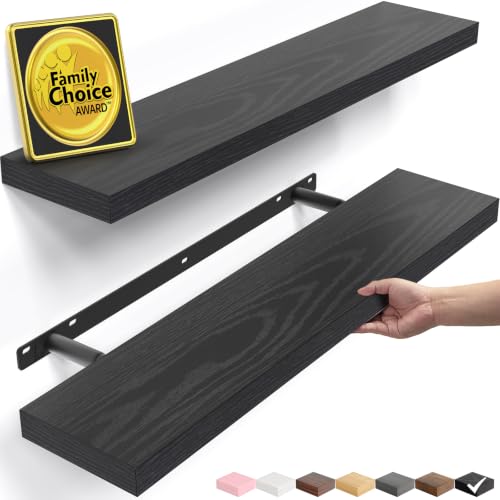
ROMGUAR CRAFT Corner Floating Shelves Wall Mounted Set of 4, Black
Included for 'Corner Floating Shelves: Smart Storage for Unused Corners' because the listing specifies Black, details this guide uses to compare options.
View on Amazon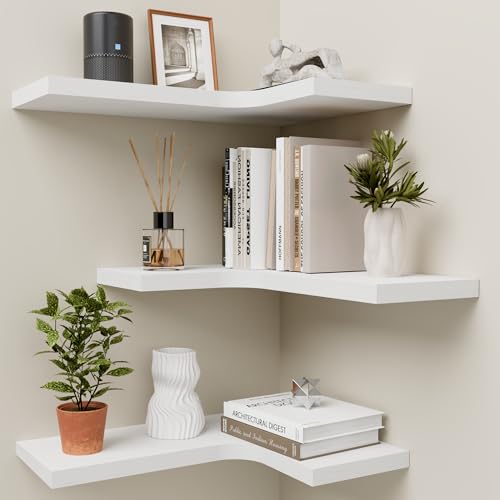
Homagle Corner Floating Shelves for Wall Mounted L-Shaped Wood Corner Wall Shelf, Hanging Shelf for Bathroom, Bedroom, Kitchen, Living Room, Office, Home Decor, Set of 3 (White)
Included for 'Corner Floating Shelves: Smart Storage for Unused Corners' because the listing specifies Hanging Shelf for Bathroom and Bedroom, details this guide uses to compare options.
View on Amazon
VASAGLE Floating Corner Shelves, Set of 2, 6 x 6 x 0.5 Inches
Included for 'Corner Floating Shelves: Smart Storage for Unused Corners' because the listing specifies Set of 2 and 6 x 6 x 0.5 Inches, details this guide uses to compare options.
View on Amazon
FNBAR Corner Floating Shelves, Rustic Brown Wood, Set of 2, Wall Mount Storage with Guardrail for Bathroom Kitchen Living Room
Included for 'Corner Floating Shelves: Smart Storage for Unused Corners' because the listing specifies Rustic Brown Wood and Set of 2, details this guide uses to compare options.
View on AmazonHow They Are Built
True floating corner shelves have no visible supports. They use a hidden metal bracket or cleat that slides into a hollowed-out shelf and anchors into wall studs. The shelf itself is usually a hollow-core MDF box or solid wood with a routed channel.
Bracketed corner shelves use visible L-brackets, decorative corbels, or a metal frame underneath. The brackets transfer weight directly to the studs and are visible as part of the design, often in black metal, brass, or wood.
| Feature | Floating Corner Shelf | Bracketed Corner Shelf |
|---|---|---|
| Visual Profile | Seamless, minimal, shelf appears to float | Industrial or traditional, hardware is visible |
| Weight Capacity (per shelf, into studs) | 15-25 lbs for hollow-core MDF; 25-35 lbs for solid wood | 30-50 lbs with quality metal brackets |
| Best For | Plants, photos, small decor, folded towels | Books, cookware, heavy ceramics, collections |
| Installation Difficulty | Higher — requires level, stud finder, precise drilling | Lower — brackets are forgiving and easier to level |
| Wall Damage on Removal | Larger anchor holes, 4-6 screw points hidden by shelf | Smaller but visible bracket holes, 4-8 points |
| Typical Market Range | Usually $25-$70 per shelf | Usually $30-$90 per shelf |
If your priority is aesthetics in a living room or bedroom and you are displaying lightweight items, floating is worth the extra installation effort. If you are organizing a kitchen corner, home office, or children’s room where weight and durability matter, bracketed is the safer long-term choice.
How to Measure Your Corner So Shelves Actually Fit
Most buying mistakes come from measuring the wall but not the space around it. Corner shelves need clear approach and viewing distance to avoid a crowded look.
Step-by-Step Measuring
- 1. Confirm the corner angle: Most corners are 90 degrees, but older homes can be 88-92 degrees. Hold a square or two pieces of cardboard in the corner. If there is a gap, you will need shelves with a small rear gap or scribed edges, not a tight L-shape that will leave one side off the wall.
- 2. Measure both walls from the corner: For a standard triangular corner shelf, measure the run along each wall. Common sizes are 12×12 inches, 16×16 inches, and 20×20 inches. A 12-inch shelf needs at least 13 inches of clear wall space on both sides to allow for the thickness and end caps.
- 3. Check vertical clearance: Leave 12-15 inches between shelves for small decor and picture frames, and 15-18 inches if you plan to place a 10-12 inch tall plant or vase. From the top shelf to the ceiling, keep at least 8-10 inches so the display does not feel cramped.
- 4. Check horizontal clearance around furniture: If the shelf is above a corner chair or cabinet, leave 18-24 inches between the top of the furniture and the bottom shelf. This prevents head bumps and keeps sightlines open. Keep at least 30 inches of walkway clearance in front of the corner if the shelf extends 12+ inches into the room.
- 5. Mark studs before you buy: Use a stud finder and mark studs within 16 inches of the corner on both walls. True floating shelves must hit at least one stud on each wall side to hold rated weight. If your studs are in an awkward spot, a bracketed shelf with adjustable bracket placement is more flexible.
Room-Size Fit: What Looks Right
In a compact 10×12 ft bedroom or home office, one to three small 12-inch corner shelves stacked vertically use space without overpowering the wall. In a larger 14×18 ft living room with 8-9 ft ceilings, you can use 16-20 inch shelves and extend them 60-72 inches up the corner, leaving the lower 36-42 inches empty if there is floor furniture beneath.
How Much Weight Can Corner Floating Shelves Hold?
Weight limits depend on construction and, more importantly, what you anchor into. Drywall anchors alone will fail under load — even heavy-duty toggle bolts only hold 10-15 lbs per shelf in half-inch drywall and will eventually sag.
| Shelf Construction | Depth | Anchored Into Studs | Anchored Into Drywall Only |
|---|---|---|---|
| Hollow-Core MDF Floating | 7-9 inches | 15-20 lbs | 8-12 lbs (not recommended for daily use) |
| Solid Wood Floating (pine, rubberwood) | 8-10 inches | 25-35 lbs | 10-15 lbs |
| Solid Wood with Metal Brackets | 10-12 inches | 35-50 lbs | 15-20 lbs |
| Thick Engineered Wood with Support Rods | 9-11 inches | 20-30 lbs | 10-14 lbs |
For reference: a set of five hardcover books weighs about 10-12 lbs, a medium 6-inch potted plant with soil weighs 5-8 lbs, and a ceramic vase weighs 4-9 lbs. If you plan to load a shelf with books, keep it under 20 lbs total on a floating shelf and distribute weight evenly toward the wall, not the outer edge where leverage is highest.
Material and Construction: What Lasts in Corners
Corners collect dust and can be exposed to humidity, especially in bathrooms and kitchens. Material choice affects sag, warping, and cleaning.
- Solid wood (pine, oak, walnut, rubberwood): Most durable and resists sagging on spans over 16 inches. Heavier — a 20-inch solid wood corner shelf can weigh 6-9 lbs empty, so stud anchoring is critical. Best for long-term display and heavier loads. Usually $40-$90 per shelf.
- Engineered wood / MDF with veneer or laminate: Lightweight, affordable, and perfectly smooth finish. Vulnerable to moisture swelling if the finish is chipped. Prone to sagging over time if overloaded beyond 15 lbs. Ideal for renters and decorative displays. Usually $25-$55 per shelf.
- Metal (steel, aluminum) or wood + metal frame: Highest strength-to-weight ratio, excellent for kitchen or bathroom humidity and for modern industrial looks. Thin profile keeps corners feeling open. Can feel cold visually, best paired with wood accents.
- Glass corner shelves with metal brackets: Visually lightest option, great for small bathrooms to reflect light. Limited to 10-15 lbs and requires careful cleaning. Not ideal for homes with kids or for heavy decor.
How to Maximize Dead Space Without Overcrowding
The goal is not to fill the corner, but to create a vertical focal point that draws the eye up and leaves breathing room.
- Use the rule of three: Install 3 shelves in a vertical stack rather than 5-6 short-spaced shelves. This leaves negative space and makes each shelf easier to style. Stagger spacing slightly — for example, 14 inches, 16 inches, 14 inches — for a more dynamic look.
- Vary the shape: Triangular shelves use the least wall space and fit tight corners. L-shaped wrap-around shelves provide more display depth (10-12 inches vs 7-9 inches) and work well when you have 18+ inches of clear wall on each side. Curved or quarter-round shelves soften the corner in a nursery or small bathroom.
- Leave 30% empty: On each shelf, leave at least one-third of the surface visible. Place one taller item (12-14 inches) at the back corner and one to two shorter items in front. This prevents the corner from looking like cluttered storage.
- Consider depth by room: In hallways or entry corners with foot traffic, keep depth to 8-10 inches maximum to avoid shoulder contact. In living room corners behind a sofa, you can go 12 inches deep because the sofa creates a natural setback.
- Anchor styling to the room: Match the shelf finish to an existing wood tone in the room (floor, table, or door trim) rather than introducing a new color. This makes the corner feel integrated, not added on.
Assembly, Installation and Durability Realities
Corner floating shelves typically ship flat and weigh 4-12 lbs per box for a set of three. Solid wood sets are heavier and may arrive in two boxes. Before buying, measure your doorway and stairwell clearance — boxes are usually 22-26 inches long and can be awkward to carry up tight apartment stairs.
Installation takes 30-60 minutes for a set of three floating shelves if you have a drill, level, and stud finder. The most common failure is an unlevel bottom shelf — use a laser level or mark both walls simultaneously rather than leveling one side at a time. Pre-drill pilot holes to avoid cracking the shelf, especially with engineered wood.
What wears first: the laminate edge on MDF shelves chips after 2-3 years of dusting and re-styling, and screw points can loosen if shelves are repeatedly overloaded. Solid wood shelves rarely sag but may develop hairline finish cracks in dry climates. Metal brackets can scuff walls if overtightened. To extend life, dust with a dry microfiber cloth, avoid hanging wet towels or plants that drain directly onto MDF, and tighten anchors once a year.
Decision Matrix: Which Corner Shelf Type to Pick
| Your Situation | Best Choice | Why It Works |
|---|---|---|
| Small apartment (under 600 sq ft), need light storage | 3-piece set of 12-inch floating MDF shelves, triangular | Vertical storage with zero floor footprint, keeps small corners airy |
| Renter who can’t drill heavily | Small bracketed shelves with 2-4 anchor points or tension corner pole shelf | Fewer large holes and easier to patch; tension poles use no drilling at all |
| Family with kids and pets | Solid wood or metal with rounded front edge, bracketed for strength | No sharp corners, holds weight if bumped, rounded edge is safer at head height |
| Home office with books and files | 16-20 inch bracketed L-shaped shelves | Higher weight limit (35-50 lbs) supports books without sag |
| Bathroom or kitchen corner with humidity | Metal frame or solid wood with sealed finish | Resists moisture swelling that ruins MDF in damp corners |
| Display-focused living room | Floating solid wood shelves, 16-inch, staggered height | Clean look puts focus on art and plants, not hardware |
Frequently Asked Questions
Can I install corner floating shelves on drywall without studs?
You can for very light decor under 10 lbs using high-quality toggle bolts, but for anything heavier you must hit at least one stud per shelf side. Use a stud finder and choose shelves where bracket holes align with your stud spacing (usually 16 inches on center).
How high should the lowest corner shelf be?
In an empty corner, mount the bottom shelf 48-52 inches from the floor to keep it at eye level and leave wall space below for a floor plant or lamp. If above furniture, measure 18-24 inches above the furniture top to allow headroom and visual separation.
Will floating shelves sag over time?
Hollow-core MDF shelves will sag if consistently loaded over 15 lbs or if span exceeds 18 inches without support. Solid wood resists sagging much longer. To prevent sag, keep heavy items close to the corner where support is strongest and use bracketed shelves for book storage.