Key takeaways
- A portable air conditioner already pulls moisture out of the air while it cools, so the real question is how much it removes and how it drains. A good AC dehumidifier combo publishes both a SACC cooling rating and a…
A portable air conditioner already pulls moisture out of the air while it cools, so the real question is how much it removes and how it drains. A good AC dehumidifier combo publishes both a SACC cooling rating and a dehumidification rate, so you can size it to your room and your humidity at once.
As an Amazon Associate we earn from qualifying purchases.
By KK Home Furnishings Editorial Team
How to Choose an AC Dehumidifier Combo
These units do two jobs, so judge them on both a modern cooling rating and a stated moisture-removal rate, not one headline number. The criteria below start with SACC cooling and the dehumidification figure, then cover when a combo beats a standalone dehumidifier, and the venting, power, and noise that decide daily livability.
SACC Cooling for the Room
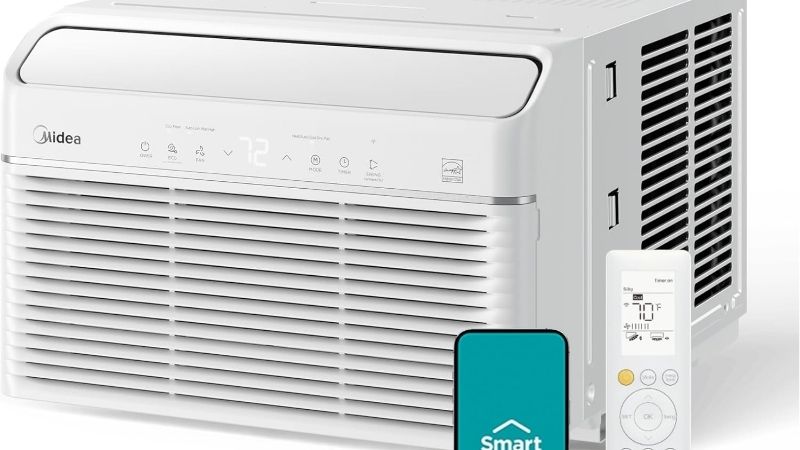
Size the cooling by SACC, the Department of Energy’s seasonally adjusted rating, which reflects real-world performance far better than an older ASHRAE BTU figure. Among these, the Whynter ARC-14S lists 9,500 SACC, the Midea MAPX08 and LG LP0821 each list 8,000, and the Midea MPA05 lists 5,000, so match the number to your square footage.
Do not compare a SACC rating against an older ASHRAE BTU number, because the two are measured differently and SACC is usually the smaller, more honest figure. Use your room’s size and sun exposure to pick a SACC rating, and remember a unit far larger than the room cools fast but cycles off before it removes much humidity.
Oversizing hurts dehumidification. A compressor that short-cycles never runs long enough to wring moisture from the air, so a modestly sized unit that runs steadily often leaves a room feeling drier than a bigger one. Match the SACC to the space rather than buying the largest, which is the common and costly mistake here.
Dehumidification Rate and Drainage
The moisture figure is the other half of the decision, and the units are stated differently, so read carefully. The Whynter removes up to 71 pints per day, the Midea MAPX08 up to 61, and the Midea MPA05 up to 42, all on a daily basis; the LG quotes about 5.5 pints per hour, a different measure you cannot rank directly against pints per day.
Because an hourly rate and a daily rate are measured under different conditions, do not convert one to the other to force a comparison. Compare daily figures with daily figures, and treat the hourly number as its own spec. Match the capacity to how damp your room runs, since a basement needs far more removal than a dry bedroom.
Drainage decides how hands-off it is. Most combos collect condensate in a tank you empty, or let you attach a hose for continuous drainage, which matters in a humid space that fills a tank quickly. Confirm the unit supports a gravity drain or a pump if you want to run it unattended, rather than emptying a bucket daily.
Combo or Standalone Dehumidifier
Decide whether you actually need a combo. A portable air conditioner removes moisture as a byproduct of cooling, so in summer it may dry the room enough on its own. A combo adds a dehumidify-only mode that runs the compressor to pull moisture without cooling much, useful on mild, muggy days when you do not want cold air.
A standalone dehumidifier is a different tool: it removes moisture without cooling the room and often pulls more pints per day for the price, which suits a damp basement year-round. If your problem is humidity rather than heat, a dedicated dehumidifier usually does it better and cheaper than a combo trying to do both.
Choose the combo when you want cooling and moisture control from one unit in a space without a window dehumidifier, and accept that it is a compromise at each job. If damp is your main issue in a cool space, put the money toward a standalone unit instead and keep the cooling for a separate device.
Venting, Power and Noise
A portable air conditioner must vent its heat outside through a window kit, so confirm the hose and bracket fit your window before buying. Single-hose units are simpler but pull conditioned air from the room; dual-hose designs, like some larger models, cool more efficiently by drawing outside air for the condenser instead.
Power draw is real on these units, so plug a combo directly into a grounded wall outlet rather than an extension cord, since the Whynter alone draws about 1,300 watts. Check the cord placement and outlet rating, and note the smaller Midea MPA05 at 790 watts is gentler on a circuit shared with other appliances in a room.
Noise is the daily trade-off, since the compressor and fan run in the same room you occupy. Where a maker publishes a decibel figure it is usually a single speed, so read the condition, and expect a bedroom unit to be more noticeable than a living-room one. Filters also need regular cleaning to keep both modes effective.
Top Picks
Each pick below leads with the two specs that define an ac dehumidifier combo, a SACC cooling rating and a dehumidification figure, plus the trade-off worth knowing. Sizes span small rooms to larger spaces, so match the SACC to your square footage first, then weigh the moisture rate against how damp the room runs.
| Product | Best For | Key Spec | Watch Out For |
|---|---|---|---|
| Whynter ARC-14S | Best overall | 9,500 SACC; 71 pints/day | Draws ~1,300 W; needs a direct outlet |
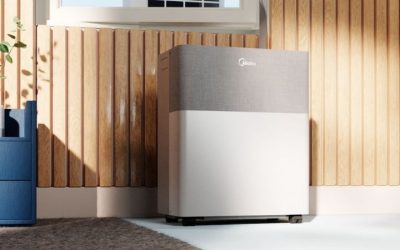
| Midea MAPX08 | Best value | 8,000 SACC; 61 pints/day | Single-hose pulls room air for the condenser |
| Midea MPA05 | Best for small rooms | 5,000 SACC; 42 pints/day | Too small to cool a large or sunny room |
| LG LP0821 | Best for a listed drain rate | 8,000 SACC; ~5.5 pints/hour | Hourly rate; not comparable to pints/day |
Whynter ARC-14S: Best Overall
The Whynter ARC-14S leads on both jobs, pairing a 9,500 SACC cooling rating with up to 71 pints of moisture removal per day. It suits a larger or sunnier room that needs real cooling and dehumidification together. It sits in the premium tier, so check the current price before ordering a unit this capable.
Its advantage is capacity and a dual-hose design that cools more efficiently by drawing outside air for the condenser rather than pulling from the room. Confirm the window kit fits your window, and plan for the exhaust hose routing, since a larger portable unit needs a clear path to vent its heat outdoors reliably.
The honest caveat is power and size: at about 1,300 watts it should plug directly into a grounded wall outlet, not an extension cord, and it is bulky to move. Clean the filter regularly to keep both modes effective, and in a small room its cooling may short-cycle, which actually reduces how much moisture it removes.
Midea MAPX08: Best Value
The Midea MAPX08 is the value pick, listing 8,000 SACC and up to 61 pints of dehumidification per day, enough for a typical room without the premium outlay. It suits a bedroom or office that needs balanced cooling and moisture control. It lands in the mid tier, so verify today’s price before buying it.
Its strength is a sensible balance of cooling and moisture removal at a moderate draw of about 1,050 watts, which is easier on a shared circuit than the Whynter. Confirm the window kit fits, and route the exhaust hose with a gentle run, since kinks and long paths reduce how efficiently any portable unit sheds its heat.
The trade-off is a single-hose design, which pulls already-conditioned air from the room to cool the condenser, making it slightly less efficient than a dual-hose unit on a hot day. For most rooms that is a fair compromise; empty the tank or attach a drain hose in a damp space so it can run unattended.
Midea MPA05: Best for Small Rooms
The Midea MPA05 is the small-room pick at 5,000 SACC and up to 42 pints per day, sized for a compact bedroom, office, or nursery. It suits a space where a larger unit would short-cycle. It sits in the budget tier, so confirm the live price before choosing it for a tight room, where oversizing would leave the air cold but still damp.
Its advantage is a gentle 790-watt draw and a compact body that fits a small window and a shared circuit, running steadily enough to keep a little room both cool and dry. Confirm the window kit fits, and keep the filter clean, since a smaller unit has less margin and loses capacity quickly when the filter clogs up.
The caveat is simply scale: at 5,000 SACC it cannot cool a large or sunny room, and pushing it to try leaves the space warm and the unit running flat out. Match it to a small space, and if your real problem is damp rather than heat, a standalone dehumidifier may serve that little room better.
LG LP0821: Best for a Listed Drain Rate
The LG LP0821 lists 8,000 SACC and quotes its moisture removal as about 5.5 pints per hour, giving a clear hourly figure for its dehumidify mode. It suits a room where you want cooling plus an explicit hourly moisture rate. It sits in the mid tier, so confirm the current price before you order.
Its advantage is a well-built 8,000-SACC unit from a major brand, with a dehumidify mode quoted on an hourly basis that some shoppers find easier to picture during a muggy afternoon. Confirm the window kit fits and plan the drainage, since a continuous drain hose keeps the hourly removal from filling a tank too fast.
The honest caveat is that hourly figure: about 5.5 pints per hour is measured under different conditions than the pints-per-day ratings of the other units, so you cannot rank it directly against them. Judge the LG on its SACC rating and build, and treat the hourly moisture number as its own spec rather than a daily total.
Frequently Asked Questions
Shoppers weighing a two-in-one unit ask the same questions about cooling, moisture, and setup. Each answer below opens with the short version, then adds the condition that changes it, so you can match an ac dehumidifier combo to your room and your real humidity rather than a spec that only looks impressive on the box.
Does a portable AC already dehumidify?
Yes. A portable air conditioner removes moisture as a natural byproduct of cooling, so in summer it often dries a room noticeably on its own. A combo adds a dedicated dehumidify mode that pulls moisture without cooling much, which is the real reason to choose one over a plain portable air conditioner.
The deciding factor is the weather. On a hot, humid day the cooling mode handles both heat and damp at once; on a mild, muggy day you want moisture gone without cold air, which is where the dehumidify-only mode earns its place. Pick a combo if you face those mild damp days, not just summer heat.
If damp is your problem year-round in a cool space like a basement, a standalone dehumidifier usually removes more moisture per dollar and does not cool a room you do not want chilled. Match the tool to whether heat, humidity, or both is your main issue before assuming a combo is the answer.
Is SACC the same as an older BTU rating?
No. SACC is the Department of Energy’s seasonally adjusted cooling capacity, measured to reflect real conditions, while older ASHRAE BTU figures tend to run higher for the same unit. Because they are measured differently, you cannot compare a SACC number against an ASHRAE one and expect a fair match.
Use SACC to size the unit to your room, since it is the honest, current figure. If a listing quotes both, rely on the SACC rating; if it quotes only an old-style BTU number, treat it with caution, as it may overstate how well the unit performs in a real room with sun and open doorways.
Matching SACC to square footage also protects dehumidification. A unit oversized on paper cools fast, short-cycles, and never runs long enough to wring out moisture, so the right SACC for the room keeps both jobs working rather than leaving the air cold but still damp after the compressor clicks off.
How many pints per day do I need?
It depends on how damp the room runs. A mildly humid bedroom may need only the 42 pints per day of a small unit, while a damp basement can justify the 71 pints of the Whynter. Match the daily removal to the space, and remember a tank fills faster the more moisture the unit pulls out of the air each day.
Compare like with like: daily ratings against daily ratings. The LG’s hourly figure is measured under different conditions, so do not convert it to a daily total to stack it against the others. Judge each unit by the figure in its own units and how steadily it will run in your particular room.
If a room is very damp, pair a higher removal rate with continuous drainage so you are not emptying a tank several times a day. For a space that is damp but not hot, a standalone dehumidifier often removes more pints for the money than a combo asked to cool and dry at the same time in a single unit.
Do I need a drain hose?
Not always, but it helps in a damp space. Every combo collects condensate, and in a humid room the tank fills quickly, so a gravity drain hose or a built-in pump lets the unit run unattended instead of stopping when the bucket is full. In a dry room, emptying the tank occasionally is fine.
The deciding factor is how much moisture you remove and how often you want to tend it. A basement at 71 pints a day will overflow a tank fast, so continuous drainage is almost essential, while a bedroom pulling modest moisture may go a day or two between empties without any hose at all.
Confirm the unit supports the drainage you want before buying, since not every model includes a pump for draining upward to a sink. Route a gravity hose downhill to a floor drain, and check the connection for drips, because a slow leak behind a unit is a common and avoidable cause of water damage.
Final Thoughts
The right ac dehumidifier combo is the one whose SACC rating matches your room and whose moisture rate suits how damp it runs, not simply the biggest number on the box. Before ordering, confirm the window kit fits and decide on tank versus continuous drainage, since an oversized unit that short-cycles leaves a room cold but still humid.