
Key takeaways
- A sofa in a box promises an easy move-in, but the box still has to clear your door, stairs and hallway, and some flat-pack cartons are long and heavy. This roundup compares four verified boxed sofas by package size, assembly…
A sofa in a box promises an easy move-in, but the box still has to clear your door, stairs and hallway, and some flat-pack cartons are long and heavy. This roundup compares four verified boxed sofas by package size, assembly design and finished footprint, so you plan the route in rather than assume a boxed couch slides anywhere.
As an Amazon Associate we earn from qualifying purchases.
By KK Home Furnishings Editorial Team
How to Choose a Sofa in a Box
The appeal of a boxed sofa is getting it indoors without wrestling a solid frame around a tight corner, but that only works if the cartons actually fit the path. Before the finished look or the price, compare the box dimensions, the heaviest package and how it assembles, because the route in is the problem a boxed sofa is meant to solve.
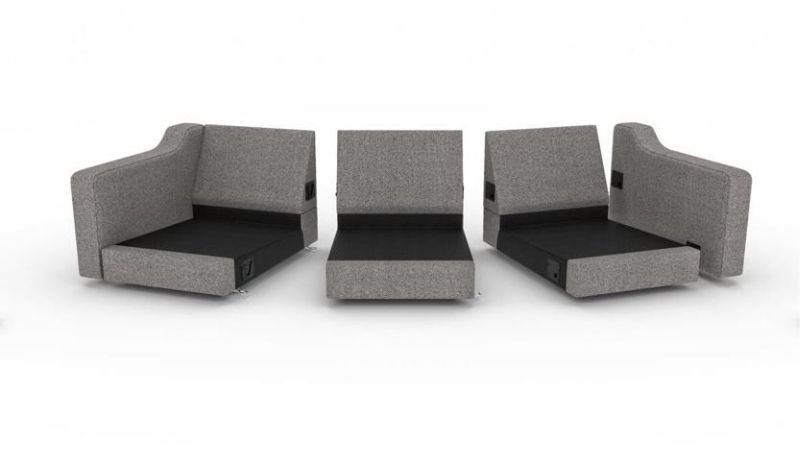
Measure the Box, Not Just the Finished Sofa
The box dimensions, not the assembled sofa, decide whether it reaches the room. The Article Abisko 91 ships in two identical cartons of 47 by 39 by 23 inches, and IKEA’s KIVIK frame comes in two packages, the larger of which is 72.5 inches long. A finished width tells you nothing about what actually has to pass your doorway.
Measure each carton against the tightest point on the route. Compare the largest box dimension to your door width, hallway and any stairwell, because a 39-inch box face or a 72.5-inch-long package can stall where a narrower one would pass. Where a maker publishes exact box sizes, use them; the Abisko and KIVIK both do here for you.
Where exact box sizes are not published, plan conservatively. Burrow lists the Nomad and Union as shipping in normal parcels but does not give precise carton dimensions in the data checked, so confirm them before delivery. A boxed sofa that will not fit the stairs is no easier to move in than a one-piece couch would have been.
Check the Heaviest and Longest Package
Weight and length matter as much as box width. IKEA’s KIVIK makes the point plainly: its frame arrives in two packages, and the larger weighs over 118 pounds and runs 72.5 inches long, while the second is about 52 pounds. A sofa in a box does not mean a small or light box that a single person can carry alone.
Plan the lift and the help you need. A 118-pound carton usually needs two people and a clear path, especially up stairs or around a turn, so factor that in rather than assuming flat-pack means effortless. Knowing the heaviest package in advance lets you line up a second person or a trolley before the delivery actually arrives at the door.
Length is the quiet obstacle. A long, narrow package can defeat a tight stair turn even when it is not especially heavy, so check the longest carton against your landing and corners. The lighter, shorter second package is rarely the issue; it is the largest box that decides whether the whole sofa can make it inside the room.
Compare Tool-Free, Modular and Traditional Flat-Pack Assembly
Assembly design varies more than the boxed label suggests. Burrow’s Nomad and Union use a tool-free modular system with no extra hardware, while IKEA’s KIVIK is a traditional flat-pack that you build up from frame packages. The Article Abisko sits between them, shipping as a small number of pieces you assemble into the finished sofa.
Match the method to your patience and your plans. A tool-free modular sofa goes together quickly and, by design, comes apart again for a move, which suits renters; a traditional flat-pack takes longer and more steps. Decide whether easy reassembly later matters to you, because that is where modular designs earn their keep over time.
Do not assume one style is sturdier than another by default. A well-made flat-pack can be very solid, and a modular sofa relies on its connectors holding over years of use, so read the frame details for each. The Abisko’s kiln-dried larch, plywood and aluminum build, for instance, speaks to its structure more than the assembly label does.
Check Returns Before Opening and Assembling Everything
Returns get harder once a boxed sofa is built, so read the policy first. Opening every carton and assembling the frame can affect whether a piece can go back and in what condition, which varies by retailer. Knowing the rules before you start building prevents a nasty surprise if the sofa does not suit the room after all.
Keep the packaging until you are sure. Assemble carefully, check the fit and comfort before discarding the cartons, and photograph the condition, because some returns require the original packaging or an as-new state. A modular design that comes apart cleanly is far easier to repack than a flat-pack you have fully fixed together.
Factor any return shipping into the decision. Sending a boxed sofa back can mean repacking heavy cartons and paying freight, which erodes the convenience that drew you to a boxed model, so weigh that before ordering a fabric or color you are unsure about. When in doubt, confirm the exact return terms for the specific sofa first.
Top Picks
Each boxed sofa below fills a clear role, with package, assembly and finished-size details drawn from the makers’ listings, current as of October 2026. Some prices reflect sale configurations and exact box sizes are not always published, so confirm before buying. The table pairs the standout detail with the main catch for each option.
| Product | Best For | Key Spec | Watch Out For |
|---|---|---|---|
| Article Abisko 91 | Best Overall | exact 47×39×23 in boxes; 91 in sofa | A 39 in box face must clear the route |
| Burrow Nomad | Best Tool-Free Modular | 85 in; normal shipping box | Exact box sizes not published |
| IKEA KIVIK | Best Traditional Flat-Pack | two frame packages | Largest box 72.5 in long, 118+ lb |
| Burrow Union | Best Larger Modular Sofa | 100 in; no extra hardware | Biggest finished footprint here |
Article Abisko 91: Best Overall
The Article Abisko 91 is the overall pick because it publishes exactly what you need to plan the move. It arrives in two identical boxes of 47 by 39 by 23 inches, assembles into a 91-inch-wide sofa that is 35 inches deep and 28 inches tall, and lists around $1,199 at Article as of October 2026, sitting in the mid tier of this group.
It suits a buyer who wants a boxed sofa with the route math already done, since the stated carton size lets you check doorways and stairs precisely before ordering. The kiln-dried larch, plywood and aluminum build gives it real structure. Confirm the 39-inch box face clears your tightest point, as that is the dimension to watch closely.
The catch is that 39-inch box dimension itself. While two cartons are easier than one solid frame, a 39-inch width still has to pass the narrowest door or stair, so measure before assuming it fits. The low 28-inch back also reads as a low-profile sofa, which suits some rooms more than others, so picture the proportions first.
Burrow Nomad: Best Tool-Free Modular
The Burrow Nomad sofa is the pick for easy, tool-free assembly and reassembly. It builds into an 85-inch-wide sofa that is 35 inches deep and 33 inches tall using a modular system with no extra hardware, ships in normal parcels, and lists around $780 at Burrow in a current warehouse-sale config as of October 2026 in the budget range.
It suits renters and anyone who expects to move, because the modular design comes apart as cleanly as it goes together, making a future relocation far simpler. Assembly is quick with no tools to find. The 85-inch finished width is the smallest here, so it also suits a more compact living room without feeling undersized for two people.
The catch is missing box data: the exact carton dimensions were not published in the data checked, so confirm them before delivery if your route is tight. The sale-configuration price also shifts with fabric, arm and leg choices, so check the current cost for your exact build rather than assuming the warehouse figure always applies.
IKEA KIVIK: Best Traditional Flat-Pack
The IKEA KIVIK is the traditional flat-pack pick and a useful reality check on the boxed-sofa idea. It assembles to 89.75 inches wide by 37.375 deep by 32.625 tall, and its frame ships in two packages, the larger 72.5 inches long and over 118 pounds, for around $899 at IKEA as of October 2026, the lowest price in this group.
It suits a buyer comfortable with flat-pack assembly who wants a lot of sofa for the money, and the two-package frame can be carried in stages. Plan help for that main carton, though. The deeper 37-plus-inch body gives a relaxed seat, so measure the finished depth and the long package against your space and route before ordering.
The catch is right in the numbers: the largest package is 72.5 inches long and weighs more than 118 pounds, so a sofa in a box is not automatically a small box here. That length can defeat a tight stair turn, and the weight needs two people, so treat KIVIK as flat-pack value that still demands a real moving plan.
Burrow Union: Best Larger Modular Sofa
The Burrow Union three-seat is the pick when you want a larger modular sofa that still ships in parcels. It assembles to 100 inches wide by 39 deep by 31.5 tall using the same no-extra-hardware system, and lists around $1,715 at Burrow in a current performance-chenille configuration as of October 2026, the priciest option in this roundup.
It suits a bigger living room that wants generous seating without hauling a 100-inch solid frame through the house, since the modular sections move and assemble separately. The tool-free design also eases a move. At 100 inches wide it is the largest finished footprint here, so measure the room and layout carefully before committing.
The catches are size and price. As the biggest finished sofa in this group it needs the most floor space, and at around $1,715 it is the costliest, so it suits a larger budget and room. Exact carton dimensions were not published in the data checked, so confirm them against your route, especially given the larger scale of the piece.
Frequently Asked Questions
Buyers weighing a boxed sofa ask the same practical things, mostly about doorways, package size, moving and tools. Each answer below starts with the direct reply, then adds the condition that changes it, so you can apply it to the specific model and route you are dealing with rather than a general assumption about flat-pack furniture.
Does a boxed sofa fit through any doorway?
No. A boxed sofa fits only if its largest carton clears the doorway, and some packages are wide or long enough to stall. Burrow describes its sofas as shipping in normal parcels, but that is not the same as fitting any doorway, so the safe move is to measure the box against the door rather than assume that it passes.
The deciding figure is the biggest box dimension, not the finished sofa. The Article Abisko’s 39-inch box face or the IKEA KIVIK’s 72.5-inch-long package has to clear the tightest point on the route, so compare those numbers to your door, hallway and stairwell. Where exact box sizes are not published, confirm them before you order.
If a carton is tight, the format still helps. A boxed sofa in several pieces is usually easier to angle through a narrow space than one rigid frame, and a modular design can sometimes go in section by section. But none of that replaces measuring, so check the largest package against your narrowest point first of all.
How big are boxed sofa packages?
They range from manageable parcels to long, heavy cartons. The Article Abisko ships in two boxes of 47 by 39 by 23 inches, while the IKEA KIVIK frame arrives in two packages, the larger 72.5 inches long and over 118 pounds. So a boxed sofa package can be compact or distinctly bulky depending entirely on the model you choose.
The size depends on the design and the number of pieces. A modular sofa may split into several smaller parcels, while a traditional flat-pack frame can come as one long, heavy carton plus smaller ones. Read the published package dimensions where a maker gives them, and ask for them where they are missing before you plan the move.
Use the figures to plan help and route together. A 118-pound package needs two people and a clear path, and a 72.5-inch length needs room to turn on the stairs, so the box dimensions drive the logistics. Knowing the largest and heaviest carton in advance is what turns an easy boxed sofa into one that is actually easy.
Are boxed sofas easier to move later?
Often, especially modular ones, but not universally. A tool-free modular sofa like the Burrow Nomad or Union comes apart as cleanly as it assembles, which makes a future move easier. A traditional flat-pack may not disassemble as neatly once built, so the move-later advantage depends on the specific design, not the boxed label.
The key is how it was designed to come apart. Modular systems with connectors are made for repeated assembly, while some flat-packs use fixings that are not meant to be undone often, which can loosen if you do. If easy relocation matters, choose a design that explicitly supports taking the sofa apart and rebuilding it again later.
Keep the packaging if a move is likely. Even a modular sofa travels better in its original cartons, so storing them makes the next move simpler, and it helps with any return. Do not assume every boxed sofa repacks easily, though; confirm the design supports it before counting on an effortless move somewhere down the line.
Do sofas in a box require tools?
It depends on the design. Burrow’s Nomad and Union assemble tool-free with no extra hardware, while a traditional flat-pack like the IKEA KIVIK is built up from frame packages in several steps. So some boxed sofas need no tools at all, and others ask for more involved assembly, which the listing usually makes clear enough beforehand.
Check the assembly description before buying if that matters to you. A tool-free modular design suits anyone who wants the sofa usable within minutes, while a multi-step flat-pack rewards patience and a second pair of hands. Neither approach is harder to get right if you follow the instructions, but they differ in time and effort.
Factor assembly into the convenience you are paying for. Part of a boxed sofa’s appeal is a quick setup, so if minimal fuss matters, favor a clearly tool-free design. If you do not mind the build, a flat-pack can offer more sofa for the money, as the KIVIK shows, as long as you plan for the time it takes to finish.
Final Thoughts
The real test of a sofa in a box is whether the box reaches the room, not how it looks: compare the largest carton and heaviest package to your door and stairs, weigh tool-free against flat-pack assembly, and check returns first. The route-ready Abisko, modular Nomad, flat-pack KIVIK and larger Union each suit a particular home and move.









