Key takeaways
- Click sound: crisp and easy to distinguish from household noises.
- Grip comfort: the button is practical for repeated sessions and can be used with a wrist loop.
- Target reach: telescoping sections give useful reach without requiring a full-length wand in storage.
- Training flexibility: suitable for dogs, cats, birds, and other animals that respond to shaping.
The best clicker training kits with target sticks are the Karen Pryor i-Clicker paired with a telescoping target stick for precise training, the PetSafe Treat Pouch and Clicker combination for everyday convenience, and a compact multi-piece clicker kit with a collapsible target for renters, travel, and small living spaces.
A good kit should make the correct behavior easy to mark and reward before your pet loses focus. That means a clicker with a distinct, consistent sound, a target stick long enough to keep your hands away from nipping or nervous animals, a comfortable grip, and a treat system you can operate with one hand. The most suitable choice depends less on the number of accessories than on how you train and where you store the kit.
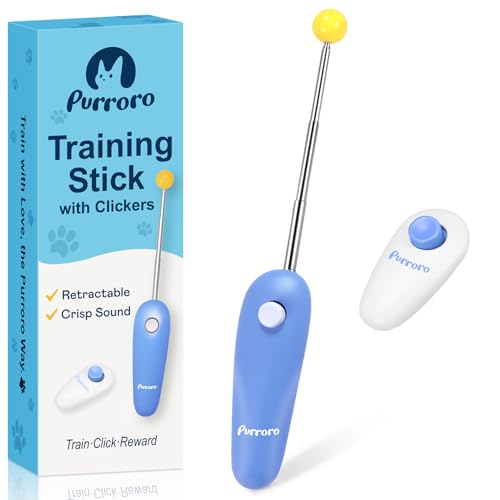
Cat Training Clicker Kit – Includes Finger Clicker and Target Stick – Perfect for Positive Reinforcement, Behavior & Obedience Training Indoors & Outdoors – Suitable for Dogs, Birds & Small Pets
Included for 'Best Clicker Training Kits With Target Sticks' because the listing specifies Includes Finger Clicker and Target Stick and Perfect for Positive Reinforcement, details this guide uses to compare options.
View on Amazon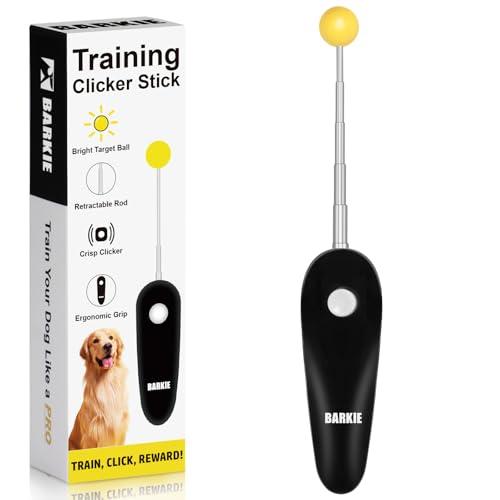
Dog Training Clicker with Target Stick – Portable & Retractable Trainer with Comfortable Handle and Bright Target Ball – Dog Agility Training Aids, Essential Tools & Equipment for Puppies, Cats & Pets
Included for 'Best Clicker Training Kits With Target Sticks' because the listing specifies Dog Agility Training Aids and Essential Tools & Equipment for Puppies, details this guide uses to compare options.
View on Amazon
ALBERT & MIA Cat Training Kit Quiet Clicker + Target Stick + Pouch + Guide
Included for 'Best Clicker Training Kits With Target Sticks' as a relevant option in this category; details come from the product listing.
View on Amazon
LBH MARKET Bird Clicker Training Kit Box Clicker & Target Stick, Red
Included for 'Best Clicker Training Kits With Target Sticks' because the listing specifies Red, details this guide uses to compare options.
View on AmazonQuick comparison of the best clicker training kits with target sticks
| Best for | Clicker and target-stick setup | Typical reach | Portability | What is usually included | Typical market range |
|---|---|---|---|---|---|
| Precise obedience and shaping | Karen Pryor i-Clicker plus separate telescoping target | 24–36 inches extended | High; clicker is small, target collapses | Button clicker, wrist loop, target tip depending on model | $15–$35 combined |
| Daily walks and basic manners | PetSafe clicker with treat pouch and compatible target stick | 20–30 inches | Medium to high | Clicker, pouch, belt attachment, sometimes waste-bag storage | $20–$45 combined |
| Small apartments and travel | Compact clicker kit with folding or telescoping target | 16–24 inches | Very high | Clicker, target, wrist strap, small treat container | $10–$25 |
| Dogs that need extra distance | Audible button clicker plus long telescoping target | 30–42 inches | Medium | Clicker, target wand, lanyard or wrist strap | $20–$40 combined |
Prices are broad market ranges because the clicker, target stick, and treat pouch are often sold separately. Buying components separately can produce a better result than choosing a large bundle with flimsy accessories.
Best overall for precise training: i-Clicker and telescoping target
The Karen Pryor i-Clicker is a strong choice when sound consistency matters. Its button-style design is intended to be pressed with the same finger that operates the treat pouch or target, and the click is sharper and less awkward to trigger than many flat, hand-squeezed clickers.
Pair it with a telescoping target stick rather than assuming a clicker alone is a complete training system. A target with a rounded tip can teach nose touches, position changes, mat work, heel alignment, and cooperative-care behaviors. A 24- to 36-inch reach is adequate for most dogs in a living room while keeping your hand outside the pet’s immediate mouth zone.
Why this combination wins
- Click sound: crisp and easy to distinguish from household noises.
- Grip comfort: the button is practical for repeated sessions and can be used with a wrist loop.
- Target reach: telescoping sections give useful reach without requiring a full-length wand in storage.
- Training flexibility: suitable for dogs, cats, birds, and other animals that respond to shaping.
The trade-off is that this is not always a one-box kit. You may need to choose a treat pouch and target stick separately, so check whether the target locks firmly at each length and whether its tip is smooth enough for a sensitive nose.
Best for walks: clicker with a treat pouch
For leash manners and outdoor practice, a PetSafe clicker paired with a waist-mounted treat pouch is more practical than a clicker bundled with a tiny plastic food cup. The pouch should remain open with one hand, have a washable lining, and attach securely to a belt or waistband. A target stick is most useful outdoors for short practice sessions, not for carrying on every walk.
Choose a compact target that collapses to about 8–12 inches. Extended to 20–30 inches, it is long enough for stationary targeting and directional work without becoming a nuisance around benches, doorways, or other people. Look for a clip or loop so the stick does not fall into the bottom of the pouch.
Important outdoor details
- A clicker with a wrist strap is easier to retrieve after dropping the leash or treat.
- A light-colored target tip is easier for a dog to see in dim conditions.
- A pouch with approximately 1–2 cups of usable space holds enough treats for a session without pulling heavily on your waistband.
- Keep high-value treats in a separate sealed container when training lasts longer than 20–30 minutes.
Best for apartments: compact folding target kit
In a small apartment, storage dimensions matter more than the longest possible reach. A folding or telescoping target that stores under 12 inches can fit in a drawer beside leashes and grooming tools. For most indoor behaviors, a 16–24-inch extension is sufficient because the pet is already working within a few feet of you.
Before buying, measure the clear floor area where you train. A 10-by-12-foot room is plenty for targeting, stationing, and basic position changes, but a 36-inch target can feel cumbersome if furniture leaves less than 30 inches of walking clearance. Avoid swinging the stick near glass coffee tables, lamps, or low shelves; target work requires controlled movement rather than large gestures.
Compact kits commonly include a clicker, target, wrist strap, and a small treat container. Their weakness is usually durability: thin telescoping sections can bend, while small treat cups may not seal against crumbs or odors. For occasional indoor use, that trade-off may be worthwhile.
Best for nervous or mouthy pets: longer target, quieter handling
A longer target stick can create useful distance from a dog that jumps, mouths hands, or feels worried when a person reaches toward its face. Choose a 30–42-inch model with a padded or rubberized grip and a blunt, rounded end. Keep the target still and let the animal approach it; extending the stick does not replace gradual desensitization.
Sound sensitivity also matters. A loud click can startle some animals, particularly newly adopted pets, cats, and birds. For them, start by muffling the clicker inside a pocket or use a quieter clicker if the manufacturer specifies one. Do not select a clicker solely because it is louder. The most useful sound is one your pet notices without becoming tense.
What to compare before buying
| Feature | Practical target | Why it matters |
|---|---|---|
| Clicker volume | Distinct at 6–10 feet, but not startling at close range | The marker must be heard immediately without creating fear or distraction. |
| Target reach | 16–24 inches indoors; 24–36 inches for general use | Longer is not always better in furnished rooms. |
| Stored length | Under 12 inches for drawers and travel bags | Prevents the kit from becoming another item left on a table or floor. |
| Grip diameter | About 0.5–1 inch, with a non-slip surface | Comfortable control helps prevent sudden target movement. |
| Treat capacity | At least 1 cup for short sessions; 1–2 cups for outings | Reduces refills while avoiding a pouch heavy enough to bounce. |
| Cleaning | Removable or wipe-clean pouch lining | Soft treats leave oils and crumbs that quickly create odors. |
Decision guide by home and training situation
- Small apartment: choose a quiet-to-moderate clicker and a target stored under 12 inches. A 16–24-inch reach is usually enough.
- Children and pets: choose a rounded target tip, a secured wrist strap, and a pouch with a covered closure. Store treats and the stick out of reach when training ends.
- Renters: select a kit that does not require wall mounts, permanent hooks, or bulky storage. A belt clip and drawer-sized target are sufficient.
- Back pain or limited bending: use a waist-level pouch and a target around 30 inches long so you do not repeatedly reach toward the floor. A lightweight clicker is easier to operate without twisting.
- Multiple pets: buy a clicker with a clearly distinct sound and use separate target colors or tips to avoid confusion during individual sessions.
- Travel: prioritize a target that collapses below 10–12 inches and a pouch that can be washed or sealed between uses.
Assembly, moving, and durability considerations
Most clicker-and-target combinations require little assembly, but inspect the threaded tip, telescoping locks, wrist loop, and belt clip before the first session. The parts that usually wear first are the clicker spring, the pouch lining, and the target’s locking joints—not the solid handle itself. A target that rattles or retracts during use can teach the pet to avoid it.
If you store training equipment in a furniture cabinet, leave about 1 inch of clearance around the packed target so the pouch does not become crushed. For a narrow entryway, check the closed length rather than the extended length; a 36-inch target may fit in a drawer but be awkward to carry through a doorway while holding a leash. Keep the kit away from direct heat, damp floors, and treat residue, which can stiffen clicker mechanisms and attract insects.
How to use the kit consistently
- Test the clicker away from the pet and observe whether the sound causes curiosity or concern.
- Pair one click with one small treat several times, without asking for a behavior.
- Present the target a few inches away and click the instant the pet looks at or touches it.
- Deliver the treat immediately after the click; the click marks what earned the reward, while the treat reinforces it.
- Keep early sessions to roughly 3–5 minutes, then store the target and treats so the equipment remains associated with focused training.
For most households, the best long-term setup is a reliable button clicker, a 24–36-inch telescoping target, and a washable treat pouch. Choose the compact version when storage and furniture clearance are limiting factors, or the longer, padded version when distance and handling comfort are more important than maximum portability.