Key takeaways
- Many chairs advertise ergonomic support that is really a fixed curve you cannot move, which does nothing if it lands in the wrong spot for your spine. This guide to a desk chair with adjustable lumbar support compares four options…
Many chairs advertise ergonomic support that is really a fixed curve you cannot move, which does nothing if it lands in the wrong spot for your spine. This guide to a desk chair with adjustable lumbar support compares four options on how the lumbar actually adjusts, plus seat fit and capacity, not padding alone.
As an Amazon Associate we earn from qualifying purchases.
By KK Home Furnishings Editorial Team
How to Compare Adjustable Lumbar Support
The four criteria below separate real adjustability from marketing: whether the lumbar moves in height only or in height and depth, the seat depth and width, the seat-height range and the weight capacity. Because one pick here does not publish an exact lumbar travel figure, this guide avoids ranking the group by largest lumbar range.
Height-only vs height-and-depth adjustment
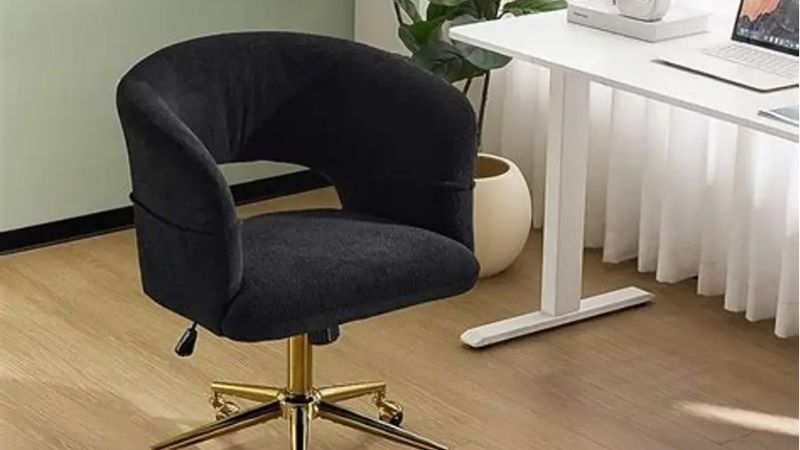
The key distinction is whether the lumbar moves up and down only or also in and out. The Branch Ergonomic Chair Pro adjusts lumbar height and depth and the pad is removable, the FlexiSpot C5 offers two-dimensional travel of about 2.17 inches up-and-down and 1.77 inches fore-and-aft, while the OC3B provides roughly 1.9 inches of vertical adjustment.
Height-and-depth matters because a lumbar pad that only slides up and down may still sit too far forward or back for your spine’s curve. A desk chair with adjustable lumbar support that moves in two directions can be dialed to press where you actually need it, which is the difference between support and an awkward bulge.
If a listing only says adjustable without a number, treat the claim as unconfirmed rather than assuming generous travel, which is why the Sihoo here is not ranked for range. The useful habit is to look for a published travel figure, since a stated 1.9 or 2.17 inches is concrete where lumbar support as a phrase is not.
Seat depth and width
Seat dimensions decide whether the chair fits your legs, and they vary here. The Branch Pro lists a 25-inch-wide by 24-inch-deep seat intended for users from about 5-foot-2 to 6-foot-2, the FlexiSpot C5 a 20.1 by 18.7-inch seat, the OC3B 20.4 by 15.9 inches, and the Sihoo a seat depth of 18.9 inches with a 20.47-inch max hip width.
Depth matters most: with your back against the lumbar, you want two to three fingers of gap behind the knees, so a 15.9-inch seat suits shorter legs while a 24-inch one fits taller users. The wrong depth pushes you off the lumbar or jams the knees, which undoes the support the adjustment is meant to provide.
Width should leave room to shift without the armrests pinching, so a broader hip measurement wants the Branch Pro’s 25-inch seat. Matching seat size to the body is the step most buyers skip, yet it decides whether the adjustable lumbar can even reach your spine, so measure your current seat before choosing.
Seat-height range
Seat-height range determines whether your feet rest flat with thighs level, the posture the lumbar is designed around. The OC3B lists an 18.5-to-22.4-inch range, which covers a wide span of desk and user heights, while the others adjust within their own ranges to set that neutral position.
The target is feet flat on the floor with knees near 90 degrees and the desk at elbow height, so a taller user at a standard desk needs the upper end of the range and a shorter user the lower. If the chair cannot drop low enough, a footrest helps, but the right range avoids that workaround.
Height interacts with the lumbar position, since raising the seat changes where your back meets the backrest. That is why a chair with both a wide height range and a movable lumbar is the most adaptable, letting you set the seat for your legs first and then tune the lumbar to the resulting back position.
Weight capacity
Weight capacity sets the margin for daily use, and these chairs rate from 275 to 330 pounds: the Branch Pro at 275, the two FlexiSpot models at 300, and the Sihoo M102C at 330. Those are manufacturer-stated figures, so leave headroom rather than choosing a chair rated right at your weight.
A higher number is not automatically a better chair, since capacity says nothing about lumbar quality or seat fit; the Sihoo’s 330-pound rating earns it the higher-capacity slot, not an ergonomic crown. Match the rating to the user with margin, then judge support and fit separately on their own merits.
The part that wears first under heavy daily use is usually the gas cylinder and tilt mechanism, not the rated capacity, so a chair run near its limit shows looseness and sinking sooner. Check the warranty term, which ranges from three to seven years here, since cylinder and mechanism coverage is what protects a chair over time.
Top Picks
These four chairs cover different priorities within adjustable lumbar support, from two-way movement to the widest fit to the highest capacity. Specs are manufacturer-stated and prices move, so check the current figure; none of these picks is a medical device, so support here describes adjustability and fit, not treatment of any back condition.
| Product | Best For | Key Spec | Watch Out For |
|---|---|---|---|
| Branch Ergonomic Chair Pro | Best Overall | Height + depth lumbar, removable; seat 25 x 24 in; 275 lb; 7-yr | Lowest capacity; fits 5 ft 2 to 6 ft 2 |
| FlexiSpot C5 | Best Value | 2D lumbar: 2.17 in up/down, 1.77 in fore/aft; 300 lb; 5-yr | Page lists multiple configs; confirm variant |
| FlexiSpot OC3B | Best Height-Adjustable Lumbar | 1.9 in vertical lumbar; seat height 18.5-22.4 in; 300 lb | Shallow 15.9 in seat suits shorter legs |
| Sihoo M102C | Best Higher-Capacity Option | 330 lb; seat depth 18.9 in; max hip width 20.47 in; 3-yr | Exact lumbar travel not published |
Branch Ergonomic Chair Pro — Best Overall
The Branch Ergonomic Chair Pro is the most complete desk chair with adjustable lumbar support here, offering lumbar that adjusts in both height and depth with a removable pad, a roomy 25-by-24-inch seat and a 7-year warranty. It suits the widest range of users, from about 5-foot-2 to 6-foot-2.
Two-way lumbar movement is its strength, letting you set the support both up-and-down and in-and-out so it presses where your spine actually curves. The large seat and broad fit range make it the most adaptable pick for households where more than one person shares the chair, and the long warranty backs the mechanism.
The trade-off is its 275-pound capacity, the lowest of the four, so heavier users are better matched to the Sihoo with more margin. The generous seat also needs desk space, so confirm it fits under your work surface, since a deep seat paired with fixed arms can block a shallow desk return.
FlexiSpot C5 — Best Value
The FlexiSpot C5 is the value pick, offering genuine two-dimensional lumbar movement of about 2.17 inches vertically and 1.77 inches fore-and-aft on its listed configuration, a 20.1-by-18.7-inch seat and a 300-pound rating under a 5-year warranty. It delivers real adjustability without a premium price.
The published travel figures are the reason to choose it, since many value chairs only claim adjustable lumbar with no number; here you can dial both the height and depth of the support. For a single user who wants concrete adjustability on a budget, it covers the essentials the marketing language usually glosses over.
The caveat is that the C5 page lists several configurations with different specs, so confirm you are buying the exact 300-pound variant rather than mixing its numbers with another build. As with any mid-price chair, the gas cylinder and tilt are the parts to watch over time, which the 5-year warranty helps cover.
FlexiSpot OC3B — Best Height-Adjustable Lumbar
The FlexiSpot OC3B is the pick when seat-height range matters most, pairing about 1.9 inches of vertical lumbar adjustment with a wide 18.5-to-22.4-inch seat-height range and a 300-pound rating. That tall range suits users who need to match a standing-adjacent desk or share the chair across heights.
Its broad height range is the standout, letting a taller user reach the upper end and a shorter one drop low enough for feet flat on the floor. The vertical lumbar then tunes support to the resulting back position, so the chair adapts to the person rather than forcing an awkward compromise in posture.
The seat is shallow at 15.9 inches deep, which suits shorter legs well but can feel short for tall users who want more thigh support, so match the seat depth to your legs. Lumbar adjusts in height only here, not depth, so buyers who need fore-and-aft tuning are better served by the C5 or Branch Pro.
Sihoo M102C — Best Higher-Capacity Option
The Sihoo M102C is the higher-capacity pick, rated to 330 pounds with an 18.9-inch seat depth and a 20.47-inch maximum hip width under a 3-year warranty. It confirms adjustable lumbar support and earns its slot on capacity and fit for broader or heavier users rather than on a published lumbar range.
The 330-pound rating and wide hip width make it the roomiest of the four for larger users, with margin that the 275-pound Branch Pro cannot match. For a buyer whose first concern is a chair that comfortably supports their weight and width, it is the natural choice in this particular group.
The honest caveat is that the exact lumbar travel is not published for the retrieved listing, so it is not ranked here for how far the support moves. Confirm the adjustment feel suits you if possible, and note the shorter 3-year warranty, which gives less long-term coverage on the cylinder and mechanism than the others.
Frequently Asked Questions
These answers address what buyers ask about a desk chair with adjustable lumbar support, from where the support should sit to whether it treats back pain. The guidance is about fit and adjustment, not medical treatment; if back pain is persistent or severe, speak with a clinician rather than relying on a chair feature.
Where should lumbar support sit?
Lumbar support should sit at the inward curve of your lower back, roughly at belt height, filling the gap between your spine and the backrest. That position supports the natural curve and discourages slouching, which is why a movable pad matters: a fixed curve that lands too high or low does little.
The right spot varies by height and torso length, so a chair whose lumbar adjusts in height, like these picks, lets you find it rather than accept a guess. If the support also moves in and out, as on the C5 and Branch Pro, you can tune how firmly it presses into that curve for your build.
Set it after adjusting the seat height and depth, since those change where your back meets the backrest. Sit fully back, raise or lower the lumbar until it meets the small of your back, then fine-tune depth if available, which is the simple routine that makes an adjustable chair actually fit you.
Is height adjustment enough?
Height-only lumbar adjustment is often enough for many users, since getting the support to the right vertical spot is the biggest factor. The OC3B, for example, offers about 1.9 inches of vertical travel, which covers a wide range of torso lengths and solves the most common complaint of a pad sitting too high or low.
Height-and-depth adjustment adds value when a vertically placed pad still feels too firm or too shallow for your curve, letting you tune how far it presses. Users with a pronounced lower-back curve or who sit for long stretches often appreciate that extra dimension, which the C5 and Branch Pro provide.
If you are choosing between the two, decide by how particular your back is: casual users are usually well served by height adjustment, while anyone who has struggled to get support to feel right benefits from two-way movement. Either way, the key is that the lumbar moves at all, not a fixed curve.
Does adjustable lumbar support fix back pain?
An adjustable lumbar chair supports better posture, but it is not a treatment for back pain and should not be described as one. It can reduce the strain of sitting by holding the lower back in a more neutral position, yet pain has many causes, and a chair feature addresses only how you sit.
The honest framing is that good support may help some people feel more comfortable over a long day, while others need different interventions entirely. If back pain is persistent, worsening or accompanied by other symptoms, that is a reason to see a clinician rather than to keep shopping for chair features.
Pair any chair with movement and setup habits: take regular standing breaks, set the seat and desk to keep feet flat and elbows level, and position the lumbar to your curve. Those practices, not a single purchase, are what most affects comfort, and a clinician can advise on anything beyond ordinary desk-sitting strain.
How do I know whether an office chair fits me?
A chair fits when your feet rest flat with thighs roughly level, there are two to three fingers of space behind your knees, and the lumbar meets the small of your back. Those three checks cover seat height, seat depth and lumbar position, which is why the chairs here publish depth, height range and lumbar travel.
Start with your measurements: compare your seated hip width to the seat width, your thigh length to the seat depth, and your height to the seat-height range. A 5-foot-2 user and a 6-foot-2 user rarely fit the same seat, which is why the Branch Pro states a fit range rather than a single size.
If possible, sit in the chair or buy from a seller with a return window, since fit is personal and specs only predict it. Adjust everything before judging, set the lumbar last, and give it a few days, because a chair that fits on the numbers still needs tuning to feel right for your body.
Final Thoughts
A desk chair with adjustable lumbar support is worth buying when the lumbar genuinely moves to your spine: the Branch Pro offers the most complete two-way adjustment, the FlexiSpot C5 real value, the OC3B the widest height range, and the Sihoo M102C higher capacity. Match the seat to your body and set the lumbar to your lower-back curve.