Key takeaways
- A seat cushion only helps if it fits the chair’s seat pan and does not lift you so high your desk feels wrong. This guide to an office seat pillow compares four cushions on footprint, thickness, grip and washable covers,…
A seat cushion only helps if it fits the chair’s seat pan and does not lift you so high your desk feels wrong. This guide to an office seat pillow compares four cushions on footprint, thickness, grip and washable covers, and on when adjusting the chair itself is the smarter first step.
As an Amazon Associate we earn from qualifying purchases.
By KK Home Furnishings Editorial Team
How to Fit a Seat Cushion to an Office Chair
The four criteria below fit a cushion to your chair and desk: measure the chair’s seat width, measure the usable seat depth, account for cushion thickness, and check the grip and washable-cover design. A cushion is not always needed, since adjusting the chair’s existing geometry may solve the comfort issue before adding anything on top.
Measure the chair’s seat width
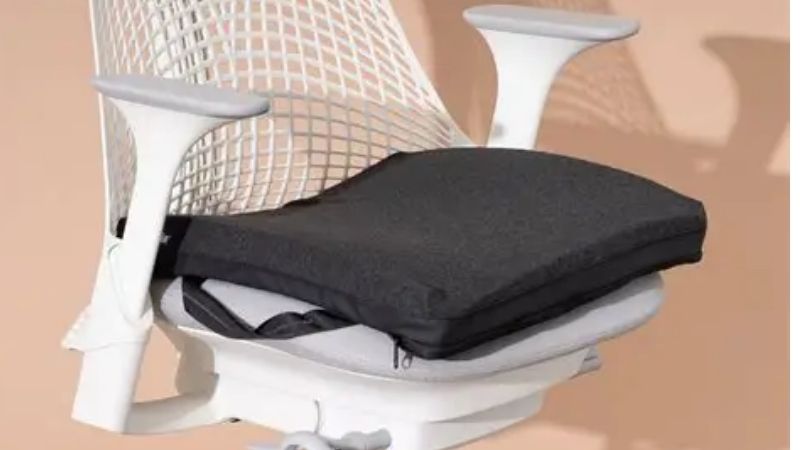
Start by measuring your chair’s seat pan width, since a cushion that overhangs or sits narrow will shift and feel unstable. These cushions range from the ComfiLife at about 17.7 inches wide and the Tempur-Pedic at 16 to the Purple Double at 18 and the Purple Ultimate at 21.75 inches, so footprints vary from roughly 242 to 391 square inches.
Match the cushion width to the seat so it sits fully supported without hanging over the edges, which causes it to fold or slide. A wide seat pan suits the broad Purple Ultimate, while a compact chair matches the smaller ComfiLife or Tempur-Pedic, so measure your seat before choosing an office seat pillow.
The Purple Ultimate at about 391 square inches has roughly 1.53 times the footprint of the Tempur-Pedic, so these are not interchangeable across chairs. A cushion sized to the seat stays put and supports you evenly, which is the first requirement before thickness or material, so get the width right to the chair first.
Measure usable seat depth
Depth matters as much as width, so measure the usable seat depth from the backrest to the front edge. A cushion that is too deep pushes against the backrest or overhangs the front, and one too shallow leaves part of the seat unused, so the cushion should match the depth available on your chair.
The cushion depths here, from the ComfiLife at about 13.7 inches to the Purple Ultimate at 18, should sit within your seat depth so the cushion rests fully on the pan. If the cushion extends past the front edge, it presses the back of your knees, which is uncomfortable over a long sitting session.
Check that with the cushion in place you still keep two to three fingers of space behind your knees, the same fit test as for the chair itself. Matching the cushion depth to the usable seat depth keeps it stable and comfortable, which is why depth is a separate measurement to confirm alongside width.
Account for cushion thickness
Thickness raises your seated height, which changes how the desk and footrest feel, so account for it. These cushions range from the Tempur-Pedic and Purple Double at 2 inches to the Purple Ultimate at 2.5 and the ComfiLife at 2.8, so a thicker cushion lifts you more, potentially making an otherwise fine desk feel low.
Crucially, the nominal thickness is not the exact height increase, since foam and gel grids compress under your weight, so a 2.8-inch cushion does not raise your hips by a full 2.8 inches. The real lift is less and varies by body weight, so treat the thickness as an upper bound on how much higher you will sit.
If adding a cushion makes the desk feel low or your feet dangle, lower the chair or add a footrest to restore the right posture. So choose thickness for comfort while remembering it shifts your height relative to the desk, which is a reason to adjust the chair first rather than assuming a thick cushion is always better.
Check grip and washable-cover design
Grip and a washable cover are the practical features that decide daily livability. The Purple cushions have a grippy bottom, the ComfiLife a non-slip base, and all four offer washable removable covers, so a cushion that stays put and cleans easily beats one that slides off or traps stains.
A non-slip base keeps the cushion from migrating as you shift, which is both a comfort and a safety point on a rolling chair, while a washable cover keeps it hygienic over months of use. For a shared or heavily used chair, these features matter as much as the foam, so confirm both before buying.
Covers also differ in material and breathability, which affects warmth over a long day, so consider the fabric if you run hot. Between two cushions that fit, the one with a secure grip and an easy-wash cover is the more practical office seat pillow, since those features determine how well it holds up in daily use.
Top Picks
These four cushions cover footprints from compact to broad and thicknesses from 2 to 2.8 inches, in gel-grid, TEMPUR and memory-foam builds. Specs are manufacturer-stated and prices move, so use the tiers and check the current figure; none of these treats a cushion as medical equipment, so comfort here is about fit, not relief of any condition.
| Product | Best For | Key Spec | Watch Out For |
|---|---|---|---|
| Tempur-Pedic Seat Cushion | Best Compact | 16 x 16 x 2 in; TEMPUR material; contoured; washable cover | Smaller footprint; compact seats only |
| Purple Double Seat Cushion | Best Two-Sided | 18 x 16 x 2 in; two-sided GelFlex Grid; grippy bottom; washable | Firmer grid feel than foam |
| Purple Ultimate Seat Cushion | Best for Large Chair Pans | 21.75 x 18 x 2.5 in; GelFlex Grid; grippy bottom; washable | Largest; needs a wide seat pan |
| ComfiLife Premium Comfort | Best Budget Memory Foam | 17.7 x 13.7 x 2.8 in; memory foam; U-cutout; non-slip; washable | 2.8 in thickness may lift you high |
Tempur-Pedic Seat Cushion — Best Compact
The Tempur-Pedic seat cushion is the compact pick, 16 by 16 by 2 inches in contoured TEMPUR material with a washable removable cover. Its small footprint suits a compact chair seat, and the TEMPUR foam conforms to you while the 2-inch thickness adds modest height without greatly changing how the desk feels.
Its contoured TEMPUR material is the draw, cradling the sitting bones without the firm feel of a gel grid, and the modest 2-inch thickness keeps your height close to normal. For a smaller chair or a user who prefers conforming foam, it is the natural fit among these office seat pillows.
The caveat is size: at 16 inches it suits compact seats and will not cover a wide pan, so measure your chair first. The washable cover keeps it clean, and as with any cushion, remember it is a comfort aid, not a treatment, so adjust the chair too if the desk feels off after adding it.
Purple Double — Best Two-Sided
The Purple Double seat cushion is the two-sided pick, 18 by 16 by 2 inches with a two-sided GelFlex Grid, a grippy bottom and a washable cover. Its grid construction distributes pressure differently from foam, staying cool and firm, and the two-sided design lets you choose a softer or firmer surface.
The GelFlex Grid and grippy base are its strengths, resisting heat buildup better than solid foam and keeping the cushion from sliding on the seat. For an all-day sitter who finds foam too warm or too soft, the grid offers a distinctive, breathable feel in a size that fits a standard office chair.
The grid feels firmer and bouncier than memory foam, which some prefer and others do not, so it is a matter of taste. At 2 inches it adds little height, the washable cover keeps it clean, and as with all these cushions, it supports comfort rather than treating any condition, so set the chair correctly alongside it.
Purple Ultimate — Best for Large Chair Pans
The Purple Ultimate seat cushion is the pick for wide seats, 21.75 by 18 by 2.5 inches with a GelFlex Grid, a grippy bottom and a washable cover. Its large footprint, about 1.53 times the Tempur-Pedic’s, suits a broad office or gaming chair and long sitting sessions where full support across a wide pan matters.
The large grid surface and grippy base are its advantages, supporting a wide seat evenly and staying cool over a long day, which suits extended work or gaming. For users with a broad chair or who want maximum coverage, it is the most substantial cushion here while keeping the breathable grid feel.
The caveats are that it needs a wide seat pan to sit properly and its 2.5-inch thickness lifts you a bit more, so a narrow chair or an already-high desk may not suit it. Measure your seat and watch the added height, and as always, adjust the chair down if the extra lift makes the desk feel low.
ComfiLife Premium — Best Budget Memory Foam
The ComfiLife premium comfort cushion is the budget memory-foam pick, with a structured spec of 17.7 by 13.7 by 2.8 inches, a U-shaped cutout, a non-slip base and a washable cover. It offers the thickest cushioning here in memory foam at the lowest price, suiting users who want plenty of padding affordably.
The memory foam and U-cutout are its features, with the cutout relieving pressure toward the back of the seat and the thick foam adding cushioning. For a budget-minded buyer who prefers conforming foam over a gel grid, it delivers the most padding of the group at the most modest cost here.
Two caveats: at 2.8 inches it lifts you the most, so watch desk and footrest height, and ComfiLife’s own page notes the product may not suit every condition and advises consulting a physician for specific health concerns. Treat it as comfort support, not a medical device, and lock the 17.7-inch spec rather than a secondary figure.
Frequently Asked Questions
These answers cover what buyers ask about an office seat pillow, from fitting it to a chair to whether it replaces lumbar support. The guidance is about fit and comfort, not medical treatment, so any pressure or pain concern should go to a clinician rather than being addressed by a cushion’s marketing claims.
How do I know if a seat cushion fits my office chair?
A cushion fits when it rests fully on the seat pan without overhanging the sides or front, so measure your seat width and usable depth and compare them to the cushion. These cushions range from 16 to 21.75 inches wide and 13.7 to 18 inches deep, so there is a size for compact and broad seats alike.
With the cushion in place, you should still keep two to three fingers of space behind your knees, the same fit test as for the chair, and the cushion should not press against the backrest. If it overhangs or shifts, it is too large or lacks grip, so a smaller or non-slip cushion suits better.
Measure before buying rather than guessing, since a cushion sized to the seat stays put and supports you evenly. Match the width and depth to your pan, confirm the grip holds it in place, and remember a thicker cushion lifts you higher, which may call for lowering the chair to keep the desk at the right height.
Is a thicker office-chair cushion better?
Not necessarily; a thicker cushion adds more padding but also lifts you higher, which can make an otherwise fine desk feel low or leave your feet dangling. The ComfiLife at 2.8 inches lifts you more than the 2-inch Tempur-Pedic, so thickness is a trade-off between cushioning and your height relative to the desk.
The right thickness depends on your chair and desk: if the seat is firm and low, more cushion helps, but if your posture is already good, a thick cushion can throw off the desk-to-elbow height. Remember the nominal thickness overstates the lift, since foam compresses, so the real height change is less.
Choose thickness for comfort while watching how it changes your posture, and lower the chair or add a footrest if needed. A thicker cushion is better only if it improves comfort without compromising the desk fit, so pick the thickness that keeps you supported and the desk at the right height.
Does a cushion make the chair seat higher?
Yes, a cushion raises your seated height, but by less than its nominal thickness, since foam and gel grids compress under your weight. A 2.8-inch cushion like the ComfiLife does not lift your hips a full 2.8 inches, so treat the stated thickness as an upper bound on the increase rather than an exact figure.
The actual lift depends on your body weight and the material, with firmer cushions compressing less and softer ones more. This matters because raising your seat changes how the desk and any footrest feel, so a cushion can make a desk feel low or leave feet unsupported if the chair is not adjusted.
If the added height throws off your posture, lower the chair to compensate or use a footrest so your feet rest flat. So a cushion does raise the seat, but you can offset it with the chair’s own adjustment, which is part of why adjusting the chair first is often the better starting point.
Should a seat cushion replace adjustable lumbar support?
No, a seat cushion and lumbar support address different things: a cushion sits under you and affects the seat, while lumbar support presses into your lower back. A cushion cannot replace adjustable lumbar, so if your back needs support there, adjust or add lumbar rather than relying on a seat pad to fix it.
In fact, adding a cushion can slightly change your position relative to the backrest and lumbar, so if the chair already fits, consider adjusting it before adding a cushion. The two work together at most, with the cushion improving the seat and the lumbar supporting the back, rather than one substituting for the other.
If the goal is simply to make a chair more comfortable, start by adjusting the seat height, depth and lumbar you already have, and add a cushion only if the seat itself is the problem. A cushion supports comfort, not back treatment, so for persistent back issues, consult a clinician rather than a cushion.
Final Thoughts
An office seat pillow helps when it fits the seat and adds the right height, not when it is simply the thickest. The Tempur-Pedic suits compact seats, the Purple Double a cool two-sided grid, the Purple Ultimate wide pans, and the ComfiLife the most memory-foam padding affordably. Measure the seat width and depth, and if the chair fits, adjust it first.