Key takeaways
- Actual American white oak parts with veneer, not decorative paper foil.
- Two wide cabinet zones give adjustable closed equipment storage.
- Separate cable cutouts help organize connections behind closed doors.
An oak tv stand should be chosen for what its material actually is, not just its color in photos. These six consoles range from furniture with genuine oak components to an inexpensive oak-effect option. Compare the construction, usable storage, assembled measurements and missing TV-load details before placing a screen on top.
As an Amazon Associate we earn from qualifying purchases.
By KK Home Furnishings Editorial Team
How to Choose an Oak TV Stand
The most important difference in this roundup is material honesty. Article lists actual solid oak and oak veneer in several models, while IKEA describes its white-stained oak-effect BESTÅ as paper-foil-covered engineered board. Both approaches can be practical, but they differ in what you are buying, how repairs work and whether natural grain is present.
Check Whether the Surface Is Oak, Oak Veneer or Oak Effect
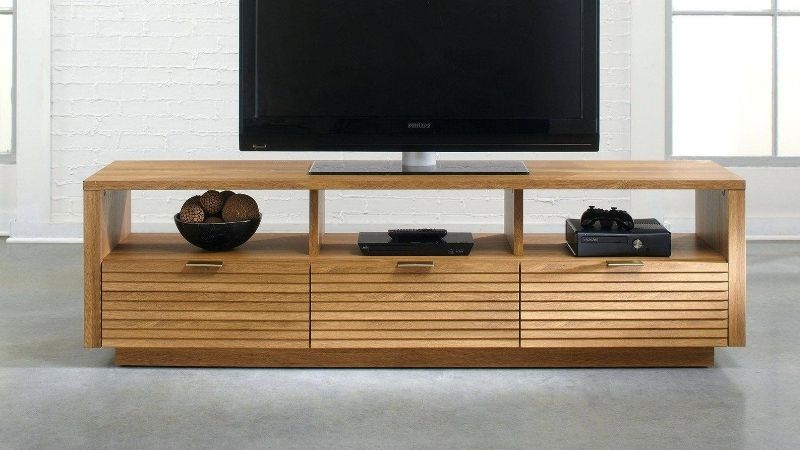
Solid oak is wood throughout the named component; oak veneer is a thin real-wood surface attached to a supporting core. A printed oak-effect finish reproduces a wood appearance without a real oak face. The entire cabinet is rarely all solid oak: even premium units may combine solid framing, veneered panels, engineered wood and metal hardware. Read the components list, not merely the finish name.
Article’s Merto specifies solid American white oak with veneer and engineered wood, while Nera combines American oak veneer with solid European beech. IKEA BESTÅ states paper foil over particleboard and fiberboard. These descriptions reveal genuine differences rather than a ranking of durability: moisture, edge impacts, repairability and replacement panels depend on each cabinet’s finish and construction details.
Match Finished Width and Usable Compartments to Equipment
Measure the assembled cabinet and the television’s actual feet separately. In this set, widths range from 62.5 inches for Article Fortra to 79 inches for Ansel; IKEA BESTÅ is about 70.9 inches across. Width alone does not establish safe support. Measure the TV base depth and weight, then seek a separate rated top-panel limit rather than mistaking cabinet shipping weight for load capacity.
Compartment dimensions matter just as much as outside measurements. Article Seno lists a 21-inch-wide open bay with 14-inch usable depth, while Ansel reports a central compartment 30 inches wide but just 7.75 inches high. Those spaces suit different receivers, soundbars and consoles. Allow for rear plugs and the electronic device manufacturer’s required airflow instead of treating every shelf as an empty box to fill.
Plan for Wood Care, Delivery and Tip-Over Protection
Real wood can vary in tone and grain between panels and products. Article advises gentle wiping and keeping wooden furniture away from strong heat sources; it also lists different assembly requirements by model. A cabinet advertised as requiring no assembly still arrives as a large, heavy box, so check elevator, hallway and doorway clearance. Veneer and printed finishes also need protection from standing water.
Before placing a TV, obtain a load rating specifically for that model’s top, plus information about anti-tip attachment. IKEA publishes a 66-pound TV-top limit for the 70.9-inch BESTÅ frame and says the frame must be secured as instructed. The CPSC’s Anchor It! campaign recommends securing furniture and TVs against tipping [CPSC, 2025]. That advice applies to oak consoles as furniture, not to an unrelated dresser-only test standard.
Top Picks
These six choices serve distinct needs: taller fully enclosed oak storage, preassembled fluted doors, long decorative wall furniture, deep soft-close drawers, reachable open equipment shelves and an oak-effect modular frame. Dimensions and material descriptions below come from the named manufacturers’ U.S. listings reviewed in October 2026. An unlisted TV-top rating is not a license to assume one.
| Product | Best For | Key Spec | Watch Out For |
|---|---|---|---|
| Article Merto 72-Inch Media Unit, Natural Oak | Enclosed storage with real American white oak components | 72 W, 16 D, 27 H inches; 35-inch-wide cabinets | Tall height and 130-lb furniture weight; top TV limit not published |
| Article Fortra 62.5-Inch Low Media Unit, White Oak | Preassembled fluted oak-front furniture | 62.5 W, 18 D, 19.5 H inches; no assembly required | Check delivery entry and individual top-panel rating |
| Article Ansel 79-Inch Media Unit, Natural Oak | Wide statement piece with adjustable compartments | 79 W, 17 D, 22 H inches; three rear cable openings | Side cabinets are only 11.25 inches wide internally |
| Article Nera 63-Inch Low Media Unit, Oak | Organized drawers with chevron real-oak veneer | 63 W, 16 D, 20 H inches; drawers 28.5 inches wide | Not an all-solid-oak build; upper drawer is 4 inches high |
| Article Seno 63-Inch Low Media Unit, Oak | Accessible receiver and game-console shelf | 63 W, 16 D, 20 H inches; open bay 21 W, 14 D, 10 H | Open bay exposes devices and requires dusting |
| IKEA BESTÅ TV Unit 70 7/8-Inch, White-Stained Oak Effect | Modular oak appearance with published TV load | 70 7/8 W, 15 3/4 D, 15 H inches; 66-lb TV-top rating | Printed paper foil, not actual oak; fronts sold separately |
Article Merto 72-Inch Media Unit – Best For Enclosed Oak Storage
Best For: People seeking genuine American white oak details, substantial enclosed storage and a taller furniture presence.
Merto makes sense when the entertainment wall needs furniture-grade character and hiding places for equipment. Its gently textured oak doors read as a deliberate design feature rather than a printed grain. Behind those doors, the cabinet has adjustable storage, so it can hold media accessories without looking like a stack of visible electronics. The trade-off is a taller profile than the other low units here.
Article identifies the natural-oak Merto as 72 inches wide, 16 inches deep and 27 inches high. Each listed cabinet compartment measures 35 inches across, 13.5 inches deep and 17.75 inches high, with adjustable interior shelving. Its documented materials include solid American white oak, veneer, engineered wood, iron and steel. This is a premium construction tier, not a claim that every panel is solid wood.
The manufacturer gives a 130-pound product weight and describes a short assembly process. Plan a second person for handling and room-entry measurements before delivery. Article specifically warns that the unit must be secured to the wall; its assembly service does not perform wall drilling. A TV top-load limit was not established from the product listing, so confirm the exact supported load before using it as a screen platform.
Pros:
- Actual American white oak parts with veneer, not decorative paper foil.
- Two wide cabinet zones give adjustable closed equipment storage.
- Separate cable cutouts help organize connections behind closed doors.
Cons:
- Twenty-seven-inch height can raise a tabletop screen above preferred sightlines.
- Heavy cabinet needs careful carrying and a suitable wall anchor.
Who Should Buy It: Choose Merto for concealed oak storage; choose Seno instead when frequently accessed devices need open shelves.
Article Fortra 62.5-Inch Low Media Unit – Best For No-Assembly Oak Design
Best For: Buyers wanting a fluted white-oak appearance and a completed cabinet without a flat-pack building session.
Fortra is the useful alternative to modular furniture when the assembly itself is a deal-breaker. Its fluted front creates texture without exposed cubbies, and soft-close doors conceal remotes, cables and spare peripherals. The main benefit is arriving as a built cabinet, not being a stronger TV support than the others. That convenience shifts the challenge to making sure the box can reach its final room.
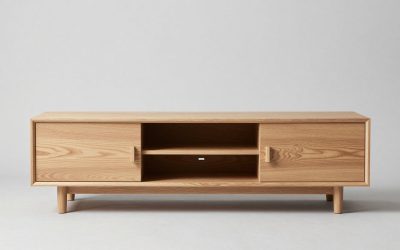
Article publishes 62.5 inches wide, 18 inches deep and 19.5 inches high for the white-oak Fortra. The main cabinet opening is 40.5 inches wide, 15.5 inches deep and 12.5 inches high. Materials are listed as solid oak, MDF and veneer; the listing also mentions an adjustable shelf. It sits in a premium furniture tier. The stated dimensions are assembled measurements, not the available TV-top load.
The manufacturer lists no assembly required and a shipping box around 67 inches long, 25 inches high and 23 inches wide. Measure stair turns and door clearances rather than relying on the final cabinet footprint alone. The low profile can work well under wall-mounted screens, but a tabletop television still requires a specific weight rating. Protect the veneered finish from prolonged moisture and avoid placing it by direct heat.
Pros:
- Manufacturer states no assembly required for this particular cabinet configuration.
- Soft-close doors reduce slamming against the fluted front.
- 18-inch overall depth provides more room than the 16-inch Article alternatives.
Cons:
- Large preassembled shipping carton can complicate narrow stairs and doors.
- Closed cabinet reduces quick access to frequently changed equipment cables.
Who Should Buy It: Pick Fortra to avoid assembly; choose Nera when pullout drawers organize small items better than doors.
Article Ansel 79-Inch Media Unit – Best For Wide Oak Display Walls
Best For: Large living rooms needing a long natural-oak statement piece with separately organized media compartments.
Ansel is designed for a wide wall where visual balance matters as much as the compartments. Its repeated solid-wood facing also acts as the handles, giving a textured front without prominent pulls. Three rear cord openings keep the sections functionally separated. Choose it for room-spanning furniture and deliberately arranged storage, not because its 79-inch length automatically makes it suitable for any large television.
Article lists the Ansel natural-oak unit at 79 inches wide, 17 inches deep and 22 inches high. The center compartment is 30 inches wide, 14 inches deep and 7.75 inches high; the left and right compartments are 11.25 inches wide at the same depth and height. Materials include solid oak, MDF, oak veneer and steel. This premium model provides adjustable shelves and soft-close doors in its published configuration.
The narrow side bays may not accommodate a full-size receiver despite the cabinet’s generous external width. Measure hardware and rear connector projections before assigning devices. Article lists a 171-pound furniture weight and some assembly, so arrange handling and protect floors during placement. As with several designer wood consoles, the visible specification does not establish a distinct TV-top load; request confirmation if the screen will rest on it.
Pros:
- Three separate rear cable holes support distinct equipment compartments.
- 79-inch finished width suits an intentionally broad furniture arrangement.
- Soft-close doors and adjustable shelves make the storage configurable.
Cons:
- Side openings only 11.25 inches across exclude many wider components.
- 171-pound cabinet weight raises placement and moving demands.
Who Should Buy It: Select Ansel for a broad decorative wall; choose Merto for taller cabinets with greater vertical clearance.
Article Nera 63-Inch Low Media Unit – Best For Organized Oak Drawers
Best For: Households storing controllers, discs and cables in drawers while preserving a visible shelf for electronics.
Nera solves the clutter problem differently from the door-front cabinets. Two soft-close drawers separate small media accessories, while open display space keeps a receiver or decorative objects reachable. The chevron veneer gives its oak surface a designed pattern without pretending the entire unit is solid oak. It is a practical choice for people who value sorted storage more than a perfectly uninterrupted cabinet face.
Article specifies an assembled width of 63 inches, depth of 16 inches and height of 20 inches. Listed drawers measure 28.5 inches wide and 13.5 inches deep, with upper and lower heights of 4 and 4.75 inches. Open spaces measure 30.75 inches across and 15.25 inches deep. The materials are American oak veneer, solid European beech, engineered wood, steel and aluminum, placing it in the premium tier.
The drawer heights are appropriate for smaller items but not tall controllers in upright storage organizers. Leave cable and airflow space behind devices placed on the open shelf. The manufacturer notes some assembly and describes an approximately 15-minute process, but users should prepare for delivery handling and hardware checks. The 96-pound figure given in its specifications is the cabinet’s own weight, not a TV-support rating.
Pros:
- Two soft-close drawers have published dimensions for accessory organization.
- Cord routing helps separate exposed equipment from hidden items.
- American oak veneer gives the front real wood grain.
Cons:
- Shallow 4-inch upper drawer cannot hold taller objects upright.
- Chevron-pattern veneer is not an all-solid-oak cabinet.
Who Should Buy It: Choose Nera for drawers; choose Ansel if wide enclosed compartments are more important than organizing small accessories.
Article Seno 63-Inch Low Media Unit – Best For Reachable Electronics
Best For: People who use consoles and receivers daily and prefer an unobstructed central shelf with oak veneer.
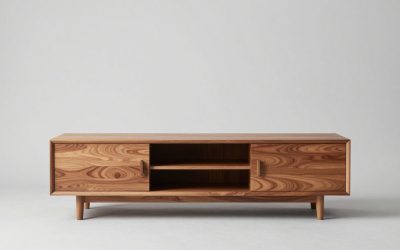
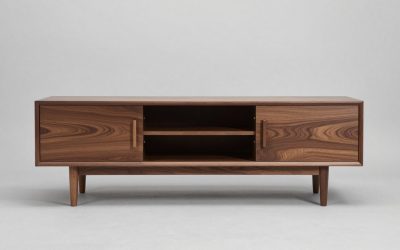
Seno earns its place because getting to the electronics is easy. Its mid-century cabinet leaves a central area open, avoiding the door-opening step every time cables or controllers need attention. The beveled face and tapered legs soften the furniture’s appearance, while the low height keeps the wall from feeling crowded. It is less appealing for households determined to conceal every blinking standby light and loose wire.
Article publishes Seno at 63 inches wide, 16 inches deep and 20 inches high. The open storage area is 21 inches wide, 14 inches deep and 10 inches high; a cabinet compartment measures 16.5 inches wide, 14 inches deep and 10 inches high. The material list includes rubberwood, oak veneer, MDF and steel. This is the relatively restrained mid-tier option among the actual-veneer Article models selected here.
The company describes a removable shelf and discreet cord management, plus some assembly. The listed 86 pounds is furniture weight and should not be reused as television load capacity. Unlike a closed cabinet, the central bay allows direct access to device buttons but exposes the contents to dust. Owners with heat-producing receivers must still follow the equipment maker’s recommended clearance, even in an open-sided space.
Pros:
- Open 21-inch bay accommodates easier access to frequently used equipment.
- Manufacturer documents 14-inch usable depth for the center shelf.
- Removable shelving adds flexibility for changes in accessory height.
Cons:
- Open bay displays power lights and cables in everyday use.
- 14-inch internal depth may not fit bulky receivers and rear plugs.
Who Should Buy It: Choose Seno for accessible equipment; consider Fortra if hidden doors and no assembly matter more.
IKEA BESTÅ 70 7/8-Inch TV Unit – Best For an Oak-Effect Alternative
Best For: Buyers who like oak-colored furniture but prioritize modular organization and a clearly published television weight allowance.
BESTÅ is included as an honest alternative, not as real-oak furniture. Its white-stained oak-effect surface delivers the look of pale timber while using a paper-foil finish over engineered panels. That distinction matters if the wood species itself is your buying criterion. The practical advantage is configurable interiors and a documented TV-top rating rather than premium joinery or naturally varied oak grain.
The underlying IKEA BESTÅ TV unit, article 205.760.01, measures 70 7/8 inches wide, 15 3/4 inches deep and 15 inches high. IKEA specifies a maximum 66-pound TV weight for its top and describes the materials as paper foil over particleboard and fiberboard with a honeycomb-paper construction. The entry-tier frame has cable openings, while door fronts, hinges and internal accessories are sold separately.
Those separate purchases influence the real completion cost, even when a bare frame initially seems simpler. IKEA instructs owners to anchor the unit to the wall and specifies additional support legs for the 70 7/8-inch configuration when using legs. Its 66-pound statement applies to the TV top, not to every shelf or an arbitrary wall mounting. This is a sensible choice only when you value oak appearance, not real oak content.
Pros:
- Published 66-pound maximum TV-top weight supports a measurable fit check.
- Modular front and shelf options allow interior storage changes.
- Oak-effect finish is clearly identified as paper foil by IKEA.
Cons:
- No natural oak veneer or solid oak in the stated frame materials.
- Doors, hinges and interior fittings require separate purchase decisions.
Who Should Buy It: Consider BESTÅ for a published TV load and wood look; choose Merto or Nera if real oak is essential.
Frequently Asked Questions
Material labels and device compatibility often matter more than a photograph’s grain pattern. Before ordering, check the manufacturer’s list of components, the cabinet’s usable interior dimensions and the exact support limit for a TV placed on top. The answers below address those decisions without treating oak color, oak veneer and a solid-oak cabinet as identical products.
Is an Oak TV Stand Always Made From Solid Oak?
No. An oak tv stand may include real oak veneer over engineered panels, solid oak used selectively for structural parts or hardware details, or even an oak-effect printed covering. Article Seno combines oak veneer with rubberwood and MDF; Article Merto combines solid American white oak with veneer and engineered wood. These material combinations are not equivalent to solid oak throughout.
Ask for the manufacturer’s component-by-component materials when a listing just says ‘oak finish.’ Real veneer has a wood face but may expose another core if an edge is deeply damaged, whereas printed paper foil has no natural wood grain in its surface layer. Avoid assuming higher density, greater lifespan or easier refinishing from the color alone; surface thickness and finish specifications must be evaluated separately.
Can a 70-Inch Oak-Look Stand Hold a 70-Inch Television?
Sometimes, but neither number is enough to decide. The television’s advertised inch size measures its diagonal screen, while a console’s width describes the furniture. The television feet need enough supported surface area, and the manufacturer’s maximum TV weight must exceed the actual screen weight. IKEA lists a 66-pound maximum TV weight for its roughly 70.9-inch BESTÅ frame.
Other cabinets in this comparison publish outside dimensions without a clearly stated top-TV rating in the reviewed listings. Do not substitute the cabinet’s own weight, a shelf allowance or a seller’s claimed screen-size range for a top-panel limit. If the manufacturer’s document cannot confirm support, use an independently suitable TV mount and still anchor the furniture as instructed.
Is Oak Veneer Harder to Maintain Than a Printed Wood Finish?
Not automatically. Both should be protected from standing water, excess heat and abrasive cleaners, but their repair possibilities differ. Oak veneer is real wood over a core and can be vulnerable if moisture reaches exposed edges. Printed paper foil can resist routine wiping but may show irreversible pattern damage when the covering peels. Construction details and care instructions matter more than a simple real-versus-fake label.
Article recommends wiping its wood units with a soft damp cloth and avoiding harsh household cleaners or nearby heat sources. IKEA recommends a damp cloth followed by drying, plus checking assembly fasteners periodically. Follow the instructions for the exact purchased variant, test any care product in an inconspicuous spot if the manufacturer allows it, and do not assume that a veneered surface can be sanded like thick solid wood.
What Should I Check Before Bringing a Heavy Oak Console Upstairs?
Measure the narrowest doorway, hallway turn, elevator opening and stair landing against the shipping carton, not just the assembled cabinet. Article Fortra arrives without assembly and is listed with a carton about 67 inches long, while the Ansel lists a cabinet weight of 171 pounds. Those figures refer to different models and are not interchangeable indications of carrying difficulty.
Arrange enough help for the actual packaged weight, and check whether delivery includes inside placement or merely delivery to the building. Protect flooring and avoid lifting by doors, drawers or projecting trim. After placement, follow the furniture maker’s wall-anchoring directions; the U.S. CPSC’s TV and furniture guidance recommends securing susceptible items and using TV furniture designed for screens [CPSC, 2025].
Final Thoughts
For a genuinely oak tv stand, Merto offers substantial enclosed real-oak construction, Nera organizes small items in drawers, and Seno keeps devices accessible. Fortra avoids assembly, while Ansel rewards a wide room. IKEA BESTÅ is a clearly labeled oak-effect option with a published 66-pound TV-top limit. Measure and verify your own TV before committing.