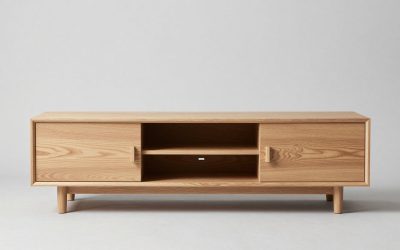
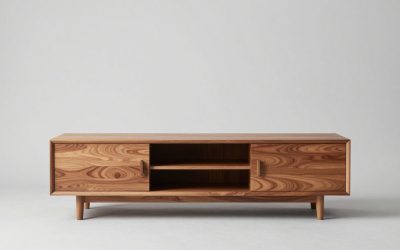
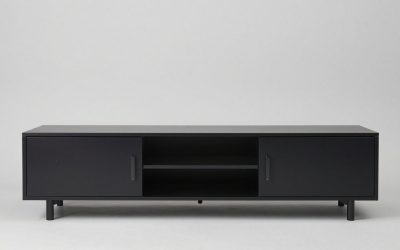
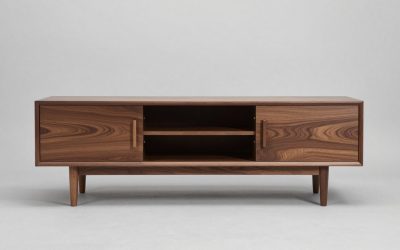
Yes, a floating TV stand can be safe when the cabinet is designed to hang, the wall and fasteners can support the actual load, and the television is secured appropriately. But are floating tv stands safe on any wall with a few convenient anchors? No. A polished wall-mounted appearance does not prove structural suitability, and installation instructions matter more than a generic weight claim.
As an Amazon Associate we earn from qualifying purchases.
By KK Home Furnishings Editorial Team
What Makes a Floating TV Stand Safe?
The most useful answer is conditional. Treat the cabinet, wall structure, fasteners, contents, and television as a connected system. A secure-looking cabinet can fail if one part is unsuitable. Before drilling, check the exact product manual and confirm that its wall-mount instructions apply to your model, country, and wall type.
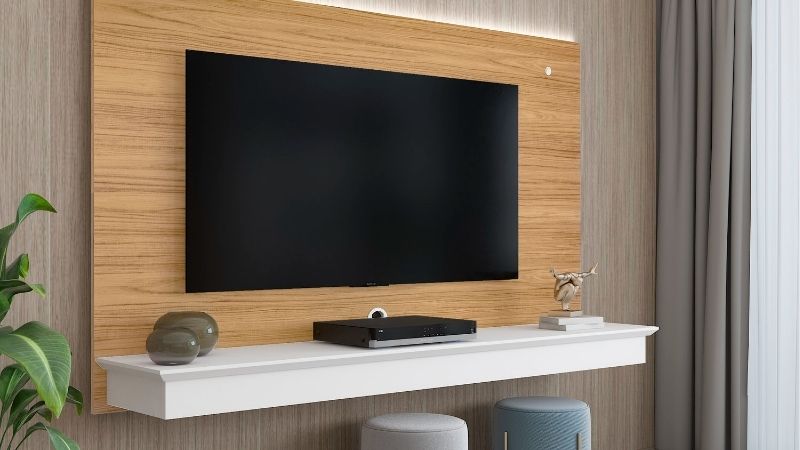
Verify That the Cabinet Is Designed to Be Wall-Mounted
Start with the manufacturer’s exact article number, not a marketplace photo labeled floating. Some consoles are floor-standing units styled to look suspended, while others are supplied with wall-mount brackets. An anti-tip strap on a floor-standing product does not transform it into a wall-hung cabinet. Look for explicit approval, the original mounting parts, and an installation diagram.
IKEA’s U.S. BESTÅ TV unit 705.660.33, for example, allows wall mounting with the product’s specified fasteners but states that the separate BESTÅ suspension rail must not be used for that TV unit [IKEA US, product instructions, accessed October 2026]. It also warns that wall-hung capacity depends on the wall material. That is a model-specific example, not approval to hang every BESTÅ configuration or similar-looking cabinet.
Check What Actually Carries the Weight Behind the Wall
Drywall is often only a facing over studs, not the structural support intended for a heavy console. With a stud wall, the mount must connect through approved fixings into suitable framing or installed structural backing as required by the furniture maker. For solid masonry, the anchor type and embedment must match the actual base material; decorative brick veneer or a layer of tile alone does not establish load-bearing strength.
IKEA’s U.S. wall-anchoring guidance distinguishes stud walls from solid walls and describes hardware choices according to the wall type [IKEA US, Creating Safer Homes Together, accessed October 2026]. That general guide addresses furniture anchoring; a suspended media cabinet may impose greater demands than an anti-tip restraint. The cabinet’s own installation instructions and a qualified installer take priority if the wall assembly is uncertain.
Separate Cabinet Capacity From Television Support
Ask what the cabinet is supposed to carry. A wall-mounted television fastened independently to a compatible TV mount places its main weight through the TV mount, while speakers and other devices load the floating console. A television standing on the console adds its full supported weight and a potential forward tipping force to the cabinet, so both arrangements require different checks.
For perspective, the U.S. BESTÅ 705.660.33 listing publishes a 35 lb maximum TV weight for the top panel but separately says the allowable wall-hung load depends on wall material [IKEA US, product specifications, accessed October 2026]. The 35 lb figure is not a universal rating for suspended consoles, nor proof that a particular wall and its fasteners can carry a television. Never substitute the product’s floor-use figure for an unverified suspended-installation limit.
| Installation Situation | What to Check | Safer Decision | Stop Condition |
|---|---|---|---|
| Wall-hang-rated cabinet | Exact model and original hardware | Follow its wall-mount manual | No wall-mount approval |
| Wood-stud partition | Stud placement and sound structural connection | Use approved stud/backing fixings | Mount misses required structure |
| Solid masonry wall | Base material and compatible anchors | Use the specified masonry system | Unverified veneer or damaged block |
| Metal-stud or unusual wall | Engineering and permitted fixing method | Seek manufacturer or professional guidance | Hardware instructions do not cover wall |
| Cabinet holding equipment | Loaded weight, shelf limits and load placement | Stay within verified system limits | No capacity for suspended setup |
| TV on the cabinet | Top approval, support depth and TV restraint | Secure TV as directed by maker | TV is unstable or top is unrated |
| Children or pets nearby | Accessible doors, cords and climbing temptations | Manage hazards and recheck attachments | Loose cabinet or reachable hazards |
Safety Decisions for Seven Common Floating Console Setups
Use these cases to decide whether a planned installation should proceed, change, or be assessed professionally. They are safety decisions, not shortcuts for building a cabinet: construction details belong in the separate DIY floating-console guide. For a new installation, do not load a cabinet until its exact attachment procedure is complete and every required fixing has been checked.
1. The Cabinet Mount Lines Up With Wood Studs
This is often the clearest path when the furniture maker specifically permits mounting into wood framing. Locate the actual studs rather than relying solely on an electronic stud finder reading; plumbing, wiring, and metal corner beads can create misleading indications. Compare confirmed framing positions with the cabinet’s intended hanging points before making holes or buying longer fasteners.
If the approved bracket will not reach the required structural locations, stop and request an approved solution. Shifting screws into arbitrary drywall positions or using fewer attachment points changes the manufacturer’s tested configuration. Structural backing can be a solution when properly designed and installed, but adding a narrow scrap strip behind damaged drywall is not equivalent to a documented load-bearing attachment.
2. The Cabinet Will Hang on Concrete or Solid Masonry
A solid concrete or properly identified structural masonry wall may support a wall-hung cabinet with anchors specified for both the cabinet and substrate. The key work happens before drilling: identify whether the surface is actual structural material, determine whether the fixings are permitted there, and check for hidden services. Plaster over block, hollow masonry and masonry veneer are not interchangeable descriptions.
Do not take an anchor’s marketing strength as the installed cabinet’s allowable load. Capacity depends on conditions such as edge distances, substrate condition, drilling quality, embedment, and loading direction. If the cabinet instructions are silent about your wall type, consult its support team or an installer familiar with the substrate. A carefully chosen floor-standing media console may be more sensible than improvising anchors.
3. The Wall Contains Metal Studs, Plaster, or Unknown Layers
Metal framing and layered walls deserve additional scrutiny because screws that work in solid lumber do not necessarily work in thin steel, lath, or patched surfaces. Look for an installation option expressly approved for the cabinet and the wall. If documentation only illustrates wood studs or solid masonry, do not assume the same hole pattern and fasteners are safe in a different wall construction.
Historic plaster can hide lath, loose substrate, or irregular framing; tiled walls add a brittle surface that can conceal the actual support behind them. A licensed or otherwise qualified installer can inspect the load path and decide if reinforcement is needed. For renters or homes with unknown previous repairs, inability to verify the wall is a reason to postpone mounting, not an invitation to try larger hollow-wall anchors.
4. A Regular TV Bench Is Being Converted Into a Floating Unit
A bench sold for legs or a floor base should remain on the floor unless the exact product instructions explicitly allow suspension. A backboard that feels rigid may only be a cover for cables, not a structural mounting member. The cabinet’s joints and panel materials also experience different stresses when they are suspended rather than supported underneath.
Some manufacturers make this distinction within a single furniture family. BESTÅ TV furniture has model-dependent wall-mount instructions, and IKEA’s product guidance warns against using the wrong hanging rail with a TV unit [IKEA US, product 705.660.33]. If the brand cannot provide a suitable wall-mount configuration for your exact model, buy a purpose-built floating unit or keep the existing stand on its intended supports.
5. The Television Will Stand Directly on the Floating Cabinet
This arrangement needs explicit support for the TV on the cabinet top plus secure television positioning. Confirm the TV’s actual assembled weight, the placement of its feet or center stand, and the cabinet’s usable top depth. A TV can weigh less than a printed limit yet still be unsafe if its feet overhang, its base slides, or the cabinet is not rated for that loading arrangement.
The U.S. Consumer Product Safety Commission advises placing televisions only on furniture designed for TVs and securing TVs that are not wall-mounted to help prevent tip-overs [CPSC, Anchor It!; CPSC, February 2026]. Follow the television and console makers’ restraint instructions rather than assuming that a securely suspended cabinet also secures the television sitting on it. Children should not be able to climb the cabinet or pull a screen forward.
6. The Television Is Wall-Mounted Above the Floating Console
This can reduce the load on the cabinet, but it creates two separate mounting systems that both need approval. Check the TV mount manual, the cabinet manual, and the wall construction independently. A TV bracket attached to one stud location does not certify another part of the wall for a floating shelf, and a console bracket must never be substituted for a purpose-built television mount.
As a distinct example, SANUS’s BLT2 television-mount instructions require installation only into specified supporting walls, prohibit drywall-only mounting for that model, and set model-specific TV and mount limits [SANUS, BLT2 installation manual]. Those are requirements for the BLT2 TV mount, not weight standards for floating TV cabinets. Keep the console free of unsupported heavy devices even when the screen has its own mounting system.
7. Children, Pets, and Frequently Used Media Equipment Share the Space
Even a properly attached console must remain sensible for the people who use the room. Keep toys and remote controls away from high cabinet surfaces that invite climbing, and route dangling power cables so they cannot be tugged. Do not treat a floating shelf as a step, handhold, or place for a child to sit. CPSC’s Anchor It! campaign specifically warns about children climbing furniture and unsecured televisions [CPSC, Anchor It!, accessed October 2026].
Check that drawer pulls and cabinet doors operate without pulling hard against a loosened suspension point. Spread equipment according to the manufacturer-approved layout and keep ventilation paths clear for receivers and gaming systems. Periodically inspect visible fixings and the wall for movement or cracking, then tighten or service only as the manufacturer’s maintenance instructions permit. If anything shifts, stop using the cabinet until it has been assessed.
Frequently Asked Questions
Floating media furniture introduces questions that do not apply to a floor-standing console. The answers depend on whether the mounting design is approved, whether you still have the original parts, and whether conditions have changed since the cabinet was installed. Uncertainty about a structural attachment should lead to verification, not a home-made load test.
Can I Install a Floating TV Stand in a Rental Apartment?
Possibly, but only if your lease or landlord permits the necessary permanent attachment and the wall is suitable for the chosen cabinet. Most substantial suspended cabinets require structural fixings that leave holes. Permission to hang a picture is not the same as approval to suspend a loaded media unit, especially in a shared or older building.
Ask about the wall structure and obtain installation approval before ordering furniture. Consider the cost of professional mounting and the rules for restoring the wall at move-out. If drilling is not allowed, a low, stable floor TV stand used with the television’s required anti-tip protection is the more appropriate choice than improvised adhesive mounting.
Is It Safe to Reuse Brackets From a Secondhand Floating Console?
Only if the exact manufacturer identifies those brackets as the correct parts for that cabinet, they are undamaged, and all required fasteners are present and appropriate for the new wall. A secondhand unit without a label or instructions cannot be declared safe simply because its brackets look substantial or worked in a previous home.
Ask the manufacturer for the installation manual and genuine replacement hardware by model number. Inspect the cabinet’s hanging points for enlarged holes, cracked panels, distorted rails, and prior makeshift repairs. If documentation and compatible parts are unavailable, do not suspend the unit; using it on a maker-approved floor base or replacing it may be safer.
What if a Floating TV Cabinet Begins to Pull Away From the Wall?
Stop using the cabinet immediately. Keep people away from the area and do not add more equipment, test the unit by pulling it, or try to compensate by tightening a random visible screw. A widening gap, cracking around fixings, tilting, or moving doors may indicate a failing attachment or damaged cabinet rather than a cosmetic leveling issue.
Protect the area from access and contact a qualified installer to assess the cabinet, fasteners, and supporting wall. Arrange for the load to be removed safely, particularly if the unit is already loose or suspended above cables and electronics. Reinstallation should follow a verified mounting method; patching the visible drywall alone does not restore the original support.
Are French Cleats Automatically Safer Than Mounting Brackets?
No. A French cleat is a hanging approach, not a guarantee of capacity. Its suitability depends on the cleat material, how it connects to the cabinet, where its wall fixings land, and the supported load. A well-known hardware shape cannot make a floor-only cabinet suitable for hanging or correct hidden structural problems.
Use the attachment system approved for a factory-made cabinet. For a purpose-built DIY unit, plan and verify the entire support path rather than copying a generic cleat drawing. The separate guide to building a floating TV cabinet covers fabrication; this safety article’s decision remains whether the finished unit and installation are demonstrably suitable for the intended use.
Final Thoughts
So, are floating tv stands safe? They can be when the exact unit permits wall mounting, the wall and hardware are appropriate, the loaded setup stays within verified limits, and the television is separately secure. If you cannot confirm any of those conditions, choose a floor-standing stand or get professional help before mounting.