
Key takeaways
- Yes, purpose-built electric fireplace TV stands can be safe when the heater, wiring, cabinet, and television are used as their manufacturers specify. The question “are fireplace tv stands safe?” has a conditional answer: check the wall outlet, hot-air openings, TV…
Yes, purpose-built electric fireplace TV stands can be safe when the heater, wiring, cabinet, and television are used as their manufacturers specify. The question “are fireplace tv stands safe?” has a conditional answer: check the wall outlet, hot-air openings, TV weight rating, and anti-tip restraints. Decorative flames do not make an electric heater risk-free.
As an Amazon Associate we earn from qualifying purchases.
By KK Home Furnishings Editorial Team
Are Fireplace TV Stands Safe? Three Checks That Matter
A fireplace TV stand combines an electric space-heating appliance with furniture designed to support a screen. Safety therefore depends on more than whether the flame looks realistic or a product page calls the insert “safe.” For a first inspection, check the heater power supply, its air path, and the separate support for the TV. A failed check calls for correction before the heater is operated, not merely a lower thermostat setting.
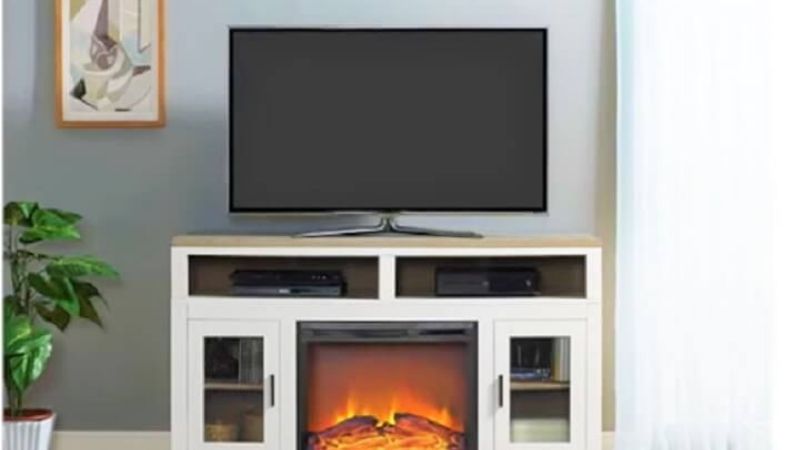
Check the Electrical Rating, Outlet, and Safety Listing
A common high-output electric firebox is rated at 1,500 watts. Real Flame publishes 120 volts and 12.5 amps for its Centennial Grand electric fireplace; those numbers describe that model, not every insert [Real Flame, October 2026]. On a typical US 15-amp circuit, a high-output heater leaves limited capacity for other substantial loads. A breaker that trips repeatedly is a warning to investigate, not something to bypass.
The US Consumer Product Safety Commission recommends plugging electric space heaters directly into a wall outlet instead of an extension cord or power strip [CPSC, 2026]. Follow the insert manual as well. Look for a genuine, model-specific UL or ETL safety certification rather than relying on an unverified listing icon. A safety mark concerns a tested product configuration; it cannot approve an improvised replacement firebox or altered power cord.
Inspect the Heater Outlet and Surfaces Near the TV
Many purpose-made fireplace media consoles position the warm-air outlet at the front, away from electronics above. Twin Star Home describes this design and warns against blocking the heater outlet; some of its specific ClassicFlame models include obstruction detection [Twin Star Home, 2018; Twin Star Home, October 2026]. Neither feature means every unit has the same vent placement or that the glass and trim stay cool. Read the actual insert manual before placing objects near the heat path.
Do not cover a discharge grille with seasonal garlands, fabric, books, a speaker, or a sliding cabinet door unless the manufacturer explicitly permits the door position while heating. Keep combustible materials out of the outlet path. CPSC gives a general three-foot separation recommendation for portable space heaters and combustibles [CPSC, 2026]; use the specific clearance instructions for a factory-integrated fireplace cabinet rather than misapplying this as a three-foot gap inside its intended housing.
Verify the TV Rating and Secure the Cabinet and Screen
TV size alone does not establish a safe load. Real Flame states that its Valmont media console accepts a TV up to 70 inches and supports 100 pounds on the mantel, while its Centennial Grand fireplace specifically says not to place a television on its 30-pound mantel [Real Flame, October 2026]. They are different products. Check the exact TV base footprint and actual weight against the media console manual; never assume that anything called an electric fireplace doubles as a TV stand.
A wide, heavy cabinet can still tip. CPSC advises securing furniture and televisions properly, using stands intended for TVs, and keeping tempting objects away from elevated surfaces [CPSC, Anchor It; CPSC, 2025]. Follow the furniture maker’s anti-tip hardware instructions and secure a freestanding TV using an approved restraint or a properly installed independent wall mount. The federal STURDY clothing-storage rule is not a TV-stand certification.
| Safety checkpoint | What to verify | Safer action | Stop-use signal |
|---|---|---|---|
| Electrical supply | Firebox label; wall outlet; circuit load | Plug directly into a suitable wall outlet | Hot plug, damaged cord, or repeated breaker trips |
| Certification | Exact firebox model and genuine listing | Check UL or ETL information for that unit | No traceable manufacturer or altered wiring |
| Heat path | Air intake, front grille, model clearance | Keep the specified outlet path unobstructed | Fabric, trim, or a closed door blocking discharge |
| TV compatibility | Manufacturer TV weight and base support | Confirm screen weight and feet fit the approved top | No permission to set a TV on the mantel |
| Tip-over control | Furniture brackets and TV restraint | Anchor cabinet and TV per their instructions | Unstable stand or missing needed hardware |
| Insert condition | Original fit, panels, controls, cord | Stop using a damaged or mismatched insert | Cracked panel, burning odor, or overheating |
Treat this as an inspection list, not a substitute for the paperwork supplied with your product. A safety feature on one model cannot be inferred for another. If a listing omits the firebox model, heater wattage, console load limit, or assembly instructions, obtain the documentation before relying on the unit as furniture and a heater.
Adjust Fireplace TV Stand Safety to Your Household
After the basic checks pass, look at how the console will actually be used. The same heater may be manageable in an adult-only room but poorly placed where children climb, loose blankets sit near the grille, or several high-load appliances share the circuit. These six situations identify a practical next action rather than repeating a generic claim that fireplace cabinets are always safe or always dangerous.
A Living Room with Toddlers or Climbing Children
Treat the console and the television as separate falling-object hazards. Young children may pull on drawer fronts or reach for a remote on the top shelf. Secure the cabinet with the hardware approved for its structure, then independently secure a TV that rests on top. Place remotes and attractive decorations where children are not tempted to climb. These precautions follow CPSC guidance on television and furniture tip-over prevention [CPSC, 2025].
The heater is a separate concern. Keep children and pets away from the discharge zone and any glass or trim that the exact instructions identify as hot. A thermostat or automatic shutoff can respond to a fault, but it does not physically prevent a child from touching a warm surface. If the room cannot be supervised adequately, turn the heat off and use the visual flames only when the manual permits that mode.
A Shared Circuit with Gaming Equipment and Other Loads
Before positioning the stand, locate an accessible grounded wall outlet and inspect its condition. The Real Flame Valmont lists a 1,500-watt heater, 120-volt supply, and 12.6-amp draw [Real Flame, October 2026]. That model-specific current draw matters more to electrical planning than its flame colors or advertised heating area. Do not assume a power strip behind the TV can safely run the firebox alongside consoles, chargers, and other appliances.
If the breaker trips when the heater operates, switch the heater off and identify what else uses the circuit. If the receptacle is loose, discolored, or unusually hot, stop using it and request an electrician’s evaluation. Never defeat a grounding pin, substitute a higher-rated breaker, or conceal the heater cord under a rug to hide visible wiring. A dedicated circuit may be appropriate in some homes, but that decision belongs to an electrician familiar with the installation.
Curtains, Throws, or Seasonal Decorations Nearby
A fabric throw draped over a media cabinet can shift in front of the heater as someone sits down or moves a basket. A holiday stocking or hanging greenery can also enter the airflow path. Keep the grille visibly clear during heating and check the owner’s manual for clearance from nearby fabric, drapes, and furnishings. CPSC’s portable-heater guidance provides a useful broader fire-safety warning, but it is not a universal cabinet-installation drawing [CPSC, 2026].
Decorate shelves away from the exhaust instead of covering the built-in air channels. The surface behind a heater insert may be engineered to accommodate heat in the approved cabinet; a separate cloth basket placed in front of its grille is not part of that design. Check placement after rearranging the room, because a changed furniture layout can defeat the original safety clearance.
Barn Doors or Cabinet Panels Covering the Insert
Sliding doors are attractive because they can conceal the fireplace when it is off, but the safe operating position depends on the model. Twin Star Home says its Cabaret TV stand has a Safer Sensor that warns when the heater is obstructed and can shut it off [Twin Star Home, October 2026]. That is a published feature of the Cabaret configuration, not permission to run any barn-door fireplace with doors closed.
Before switching on the heater, position movable panels exactly as the manual directs. If the doors can cover an outlet, keep them clear unless operation in that position is expressly authorized. Never disable an obstruction sensor or assume that a shutdown feature makes the blocked condition acceptable. If the fireplace repeatedly shuts off, first inspect the vent path and consult the model’s troubleshooting instructions.
A Larger Television or an Unusual TV Base
Check both the total TV weight and the physical feet resting on the console. Real Flame’s Valmont has published 70-inch and 100-pound limits, while its Penrose is listed for a TV up to 55 inches on a mantel rated at 100 pounds [Real Flame, October 2026]. Those example ratings show why weight and screen-size claims must be read together. The diagonal measurement does not tell you whether widely spaced feet will rest securely on the supported cabinet top.
A separately wall-mounted television transfers its weight to a distinct bracket and wall structure, but the cabinet still requires its own stability precautions. Do not attach a TV wall bracket to thin decorative back panels or assume a firebox opening can carry a mounting load. When the television or the cabinet is beyond any published limit, select a suitable stand or mounting arrangement instead of improvising reinforcement.
A Used Console, Replacement Insert, or Missing Manual
A secondhand cabinet may look intact while its original firebox has been swapped, a cord has been repaired, or anchoring parts have gone missing. Locate the brand, model number, and labels on both the insert and cabinet, then obtain the correct manuals. Check for loose hardware, damaged plug blades, blocked vents, cracked protective glass, and an insert that does not seat in the opening as designed.
Do not operate a mismatched insert merely because it physically fits the hole. Manufacturer-specified firebox-to-cabinet compatibility is part of the safety assessment, and unauthorized changes can defeat intended heat management. A product with a recall notice for its exact model needs the official remedy, not a guess based on another appliance. Search the US CPSC recall database using the identifying information and contact the manufacturer if the documentation remains unavailable.
Frequently Asked Questions
These questions address the distinctions most likely to be lost in advertising: the absence of real flames, what a certification mark actually establishes, unattended operation, and warning signs at the outlet. None changes the need to follow the instructions supplied with the specific media console and heater insert.
Do electric fireplace TV stands produce carbon monoxide?
A fully electric fireplace insert does not burn wood or gas, so its normal heating process does not generate combustion exhaust or carbon monoxide. That is an important difference from fuel-burning fireplaces. It does not eliminate fire or shock hazards associated with electrical appliances, hot components, or obstructed airflow.
The answer applies to an electric-only heater used as intended, not to a separate fuel-burning device placed nearby. Maintain working smoke alarms and follow your household’s broader fire-safety plan. A lack of smoke or visible flame should never be treated as proof that a damaged cord or overheating plug is harmless.
Does a UL or ETL mark make a fireplace TV stand completely safe?
No. A legitimate product certification is useful evidence about a specific tested configuration, not a guarantee of safe operation under all conditions. Real Flame lists UL certification and an automatic safety shutoff for named models such as Valmont, but the buyer should verify the exact item and the identity of the firebox [Real Flame, October 2026].
Certification cannot compensate for overloaded power strips, blocked exhaust, missing anchors, or a heavier television than the cabinet is rated to support. Beware of listings that display safety logos without clear product identification. If confirmation is impossible, avoid representing the product as certified merely because a seller claims it.
Can you leave an electric fireplace TV stand running overnight?
Leaving the heat running while everyone sleeps is not a sound default. CPSC recommends turning off portable heaters while sleeping [CPSC, 2026], and the operating restrictions for an integrated firebox must be checked in its own manual. An automatic timer reduces the chance of forgetting the unit but is not a reason to disregard unattended-use instructions.
Some fireplaces offer a flame-only display that may operate independently of the heater. Whether that visual mode is suitable for unattended use still depends on the specific instructions. A household should not infer continuous overnight permission from a remote control, thermostat, or timer setting.
What should you do if a fireplace stand plug or outlet becomes hot?
Stop using the heater, turn it off, and disconnect it only if it is safe to do so. A burning smell, arcing, melting, discoloration, or a hot receptacle is not normal operation to work around. CPSC advises direct wall-outlet connection for electric heaters, while manufacturer manuals prohibit operating damaged electrical equipment [CPSC, 2026; Real Flame, 2024].
Do not continue testing the heater through different power strips or tape over a damaged cable. Have a qualified electrician check a suspect receptacle or circuit, and contact the manufacturer about a defective plug or insert. Resume use only after the underlying fault is identified and addressed.
Final Thoughts
The answer to are fireplace tv stands safe depends on the exact product and the room around it. Choose a compatible, traceable electric insert; use the wall outlet and clearances specified by its manual; respect the TV weight limit; and anchor both cabinet and screen. If a plug overheats, an outlet is blocked, or the right manual is missing, stop using the heater until the issue is resolved.
