Our Top Picks
 IRONCK Bookshelves and Bookcases Floor Standing 6 Tier1 Pack9.3 x 23.8 x 70.8 inches37.26 poundsCheck on Amazon
 IRONCK Industrial Bookshelves and Bookcases Floor Standing 61 Pack9.3 x 23.8 x 70.8 inches37.2 poundsCheck on Amazon
The best bookshelf for most homes is a floor-standing unit of 70 inches or more, sized to the wall rather than the room, with sturdy back support and a plan to anchor it. This guide compares nine listings, from slim narrow towers to triple-wide units with cubes and drawers, using only what each title states. Where a title is silent on material, weight limit or assembly, we say “check the listing”. Prices are shown as tiers within this set, not as exact figures.
Top picks at a glance
IRONCK Bookshelves and Bookcases Floor Standing 6 Tier Display Storage Shelves 70in Tall Bookcase Home Decor Furniture for Home Office, Living Room, Bed Room
One of the home product options compared in this guide.
View on Amazon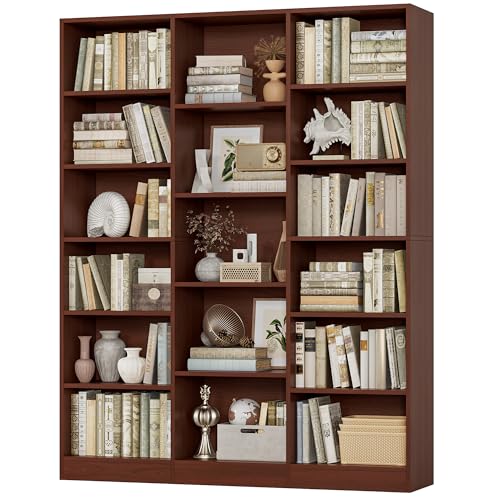
FACBOTALL Triple Wide Bookshelf, Large Bookshelf with 17 Display Shelves | 74'' Tall Bookcases and Bookshelves, 58.7'' Extra Wide Book Shelves, 5/6 Tier Shelves for Living Room, Office, Library,Cherry
One of the home product options compared in this guide.
View on AmazonIRONCK Industrial Bookshelves and Bookcases Floor Standing 6 Shelf Display Storage Shelves 70 in Tall Bookcase Home Decor Furniture for Home Office, Living Room, Bed Room, Vintage Brown
One of the home product options compared in this guide.
View on Amazon
SUNMORY 6 Tier Tree Bookshelf, Tall Small Bookcase with Storage Cabinet | Modern Narrow Bookshelves Organizer, Floor Standing Book Case Shelf for Bedroom Living Room Home Office Corner, Rustic Brown
One of the home product options compared in this guide.
View on Amazon
Shintenchi 6 Tier Bookshelf with Doors, Tall Standing Bookcase | Industrial Bookshelves Floor Standing 6 Shelf Display Storage Shelves 70.6 inches for Home Office, Living Room (Black)
One of the home product options compared in this guide.
View on Amazon
5 Tier Bookshelf, Black Bookshelves, Open Bookcase with Adjustable Shelves | Wooden, Heavy Duty, Anti-Tip Kit, Tall Book Shelves for Home Office, Living Room, Bedroom
One of the home product options compared in this guide.
View on Amazon
Aheaplus 6 Tier Rotating Bookshelf Tower, Revolving Bookcase, Rustic Brown | 360° Round Spinning Book Shelf, Narrow Swivel Bookshelves Vertical Turning Corner Bookshelf Organizer for Small Space
One of the home product options compared in this guide.
View on Amazon
FINETONES 71" Tall Bookshelf with 4 Drawers Black Bookshelf Office Bookcase | 6-Tier Double Wide Bookshelves and Bookcases with Storage, Black Bookshelf Standing Book Cabinet for Home Office, Black
One of the home product options compared in this guide.
View on Amazon
HOSTACK 86" H Triple Wide Bookshelf and Bookcase, Large Book Shelves, Black | 47"W Bookshelves with Storage, Tall Book Case with Cube Storage, 7-Tier Display Shelf for Living Room, Home Office, Libraray
One of the home product options compared in this guide.
View on Amazon| Model | Key point from the title | Price tier | Best for |
|---|---|---|---|
| SUNMORY 6 Tier Tree Bookshelf | Narrow, with storage cabinet, rustic brown | Budget | Corners and small rooms |
| SageNest 5 Tier Bookshelf | Adjustable shelves, anti-tip kit, black | Budget | Flexible shelf heights on a modest budget |
| IRONCK 6 Tier Display Shelf, 70in | Floor standing, open display | Mid-range | Plain display storage |
| IRONCK Industrial 6 Shelf, 70 in | Vintage brown industrial look | Mid-range | Industrial or loft-style rooms |
| Shintenchi 6 Tier with Doors | 70.6 inches, doors, black | Mid-range | Hiding clutter behind doors |
| Aheaplus 6 Tier Rotating Tower | 360 degree revolving, narrow, rustic brown | Mid-range | Corners with very little floor space |
| FINETONES 71″ Bookshelf with 4 Drawers | 6-tier, double wide, drawers, black | Premium | Mixed storage in a home office |
| HOSTACK 86″ Triple Wide | 47″W, cube storage, 7-tier, black | Premium | Tall walls and large collections |
| FACBOTALL Triple Wide Bookshelf | 74″ tall, 58.7″ wide, 17 display shelves, cherry | Premium | A statement wall of display storage |
What is changing in the bookshelf category
Bookcases are no longer bought only for books. Living-room and home-office shelving now carries plants, speakers, framed photos, baskets and collectibles, and listing titles reflect that with words such as “display storage” and “cube storage”. Several of the units here are marketed for the living room, home office and bedroom at once, which suggests sellers expect the same shelf to fill more than one role.
Another shift is the spread of mixed-format designs. Alongside the plain open bookcase there are towers with cabinets, units with drawers, versions with doors and rotating columns. These variants trade shelf capacity for concealment or a smaller footprint, so the label “bookshelf” now covers quite different furniture.
Finally, wide formats have grown. A triple-wide unit can serve as a room divider or a full wall feature, though the listing titles rarely tell you the weight limit or how the unit is braced. Safety expectations have also moved: anti-tip hardware is increasingly mentioned in titles and instructions, and buyers with children or pets tend to ask about it first. Expect finishes and materials to vary, and read the listing for what the frame, shelves and back panel are actually made of.
Finally, buyers are asking more practical questions: does it fit through the door, how long does it take to assemble, and can it be anchored without damaging a rented wall? Those questions rarely get answered in a title, so the buying guide below turns them into a checklist.
How these nine were picked
We selected nine bookshelf listings that state a height or tier count, a format and a colour, and cover narrow, wide, doored, drawered and rotating designs. Each entry below relies only on its own title; for anything else we say “check the listing”. Nobody on the team used or measured these units. Our basis is published specifications, manufacturer documentation and buyer reviews, and we flag near-duplicates and ambiguous wording plainly.
The nine listings in detail
SUNMORY 6 Tier Tree Bookshelf with Storage Cabinet
The title describes a six-tier, narrow, floor-standing shelf with a storage cabinet in rustic brown, aimed at bedrooms, living rooms and corners. “Tree bookshelf” typically refers to a stepped or branch-like layout, but the title does not describe the shape, so check the photos. It is the lowest tier in this set, which makes it an entry point for someone with a small collection.
Imagine a studio apartment where a corner is free but a standard bookcase would crowd the doorway: a slim unit like this uses height instead of width. The cabinet portion gives you a spot for items you would prefer not to display.
Who should skip it: anyone with a large library of oversized books, or someone who needs a wide wall unit. A slim tower rewards careful loading, so keep the heaviest volumes on the bottom tiers and use the upper levels for light items such as small plants or framed photos.
Pros
- Narrow footprint stated in the title
- Cabinet adds concealed storage
Cons
- No height, width or weight limit in the title
- Narrow shelves may not hold oversized books
Check the listing for dimensions, shelf depth and anchoring hardware. One question to ask: how deep are the shelves compared with my largest books?
SageNest 5 Tier Bookshelf, Black, with Anti-Tip Kit
This listing is an open black bookcase with adjustable shelves, a “heavy duty” and wooden description, and an anti-tip kit. Adjustable shelves matter because they let you fit tall art books or sets of binders without losing a tier. The title does not give a height, width or weight limit, so those need checking.
A renter setting up a first home office could use it for paperbacks on one tier and storage boxes on another, adjusting as the collection grows. The mention of an anti-tip kit is a good sign for homes with children, though you should still confirm what is in the box and what wall type the hardware suits.
Who should skip it: buyers who need a very tall or very wide unit, since five tiers is the shortest stack in this group. The ability to move shelves is the selling point, so it makes most sense when your collection includes a few awkward sizes that fixed shelves would waste.
Pros
- Adjustable shelves and anti-tip kit are named
- Budget tier
Cons
- “Heavy duty” is a seller phrase without a stated capacity
- Dimensions missing from the title
Check the listing for per-shelf load limits and dimensions. One question to ask: what is the weight limit per shelf and for the whole unit?
IRONCK Bookshelves and Bookcases, 6 Tier Display Storage, 70in
The title describes a floor-standing, six-tier display storage unit about 70 inches tall, suited to a home office, living room or bedroom. No colour, material or width appears, so the photos matter. It sits in the middle tier of the set, and it is the plainer of the two IRONCK entries.
This is the sort of shelf you choose when you want a neutral frame to fill with books, a few decorative items and a plant. It does not claim doors, drawers or cubes, which keeps the design simple.
Who should skip it: people who want doors, drawers or a specific wood tone, as the title mentions none. Because this and the industrial version are so close in wording, compare the photos and descriptions line by line so you do not order the wrong finish.
Pros
- 70in height stated
- Straightforward open design
Cons
- Material, width and capacity not stated in the title
- Near-duplicate of the other IRONCK listing
Check the listing for finish, width and assembly details. One question to ask: how does this differ from the industrial IRONCK version?
IRONCK Industrial Bookshelves and Bookcases, 6 Shelf, Vintage Brown
This second IRONCK listing uses nearly the same wording as the first, but is labelled industrial and finished in vintage brown, with 70 inches of height. It is the better fit if your room has exposed brick, metal fixtures or a workshop feel, because the title signals that styling choice.
Think of a home office with dark floors and black metal accents: a vintage brown, industrial-styled shelf would tie in, whereas a pale, minimalist version might not. The title does not say what the frame or shelf materials are, so do not assume metal or solid wood.
Who should skip it: anyone furnishing a light, Scandinavian or coastal room, where a dark vintage brown could feel heavy. If you are unsure, compare both IRONCK listings side by side with a swatch of your floor colour before deciding.
Pros
- Industrial styling stated
- Height stated at 70 in
Cons
- Materials unclear from the title
- Essentially a restyled sibling of the other IRONCK listing
Check the listing for materials and weight capacity. One question to ask: what are the frame and shelves made of?
Shintenchi 6 Tier Bookshelf with Doors, Industrial, Black
The title states six tiers, doors, an industrial look, 70.6 inches of height and black finish. Doors are the key feature, because they hide clutter and reduce visible dust. They also change how you use the unit: books you reach for daily may be a nuisance behind doors, while seldom-used items suit them well.
A shared living room where you want the television remote, board games and old paperbacks out of sight is a good scenario. The title does not say whether every tier has doors or only some, so check the photos carefully. For ideas, our piece on putting doors on bookshelves covers the hardware trade-offs.
Who should skip it: readers who pull books off the shelf several times a day, because opening doors each time becomes tedious. It also helps to check ceiling clearance before ordering, since 70.6 inches is close to the limit for some rooms with low beams or sloped ceilings.
Pros
- Doors hide mixed contents
- 70.6 inch height stated
Cons
- Hinges and door alignment are a possible wear point
- Door coverage per tier unclear
Check the listing for door type, hinge details and capacity. One question to ask: which tiers have doors, and are they removable?
Aheaplus 6 Tier Rotating Bookshelf Tower, Rustic Brown
This one is a different type of furniture: a 360-degree revolving column with six tiers, described as narrow and suitable for corners and small spaces. Because it spins, you can reach every shelf from one position, which is useful where wall space is limited.
It suits a studio or a child’s room corner where a regular bookcase would block movement. It is not the right choice for large art books, binders or heavy sets, because circular shelves are smaller and rotation adds stress. For tight rooms, our guide to bookshelves for small apartments has more narrow options.
Who should skip it: households with small children who might spin or climb the tower, and anyone planning to load it with heavy hardcovers. A rotating column also needs clear floor space around it so the shelves can turn freely without catching on furniture.
Pros
- Reachable from a single standing spot
- Small floor footprint
Cons
- Smaller shelves limit large formats
- Rotation mechanism is a long-term wear point
Check the listing for diameter, shelf depth and weight limit. One question to ask: how much weight can the rotating base handle?
FINETONES 71″ Tall Bookshelf with 4 Drawers, Black
The title describes a six-tier, double-wide black unit about 71 inches tall with four drawers, aimed at the home office. Drawers provide closed storage for papers, cables or supplies alongside open display shelves. That mixed format is the reason to pick it over a plain bookcase.
A work-from-home setup is the obvious scenario: books and binders on the open shelves, stationery and chargers in drawers. The title does not state the width, drawer runners or weight limits, which matter for office use.
Who should skip it: renters short on wall width, since a double-wide unit takes real room, and buyers who want every tier open. The drawers also mean more moving parts, so keep loads inside them modest and avoid pulling a drawer fully out when it is full.
Pros
- Drawers add closed storage
- Double-wide format gives more shelf area
Cons
- Premium tier within this set
- Drawer and shelf capacity not given
Check the listing for drawer construction and dimensions. One question to ask: what are the exact width and depth, and will it fit my wall?
HOSTACK 86″ H Triple Wide Bookshelf with Cube Storage, Black
The tallest listing here at 86 inches, and a 47-inch width, with seven tiers and cube storage. The title contains a typo (“Libraray”), which is a minor reason to read the listing carefully. Cube storage suits baskets, boxes and mixed items.
It fits a high-ceilinged living room or library wall where you want a big storage feature. At 86 inches, anchoring is not optional, and you need to check ceiling height, stairways and door widths for getting the pieces in. Our unique bookshelves for small rooms page is the better place to look if floor space is limited.
Who should skip it: people with standard-height ceilings or narrow stairwells, since an 86-inch carton and a tall assembled frame can be difficult to handle. Plan for two adults to assemble it, build it on the floor and stand it up only once the room has enough clearance.
Pros
- Maximum height and storage in this set
- Cube storage for baskets and boxes
Cons
- Needs careful anchoring and headroom
- Premium tier
Check the listing for weight limits and anchoring parts. One question to ask: does my ceiling allow an 86-inch unit to be stood up?
FACBOTALL Triple Wide Bookshelf, 17 Display Shelves, Cherry
The title mentions 17 display shelves, 74 inches of height and 58.7 inches of width, in a cherry finish. It also says “5/6 tier”, which is ambiguous; look at the product images to count the actual tiers. This is the widest unit in the set, so the main practical question is wall space.
It suits a family room that needs a large display wall for books, games and collectibles. A wide unit can sag over time under dense loads, so spread weight evenly and check whether the listing mentions a centre support.
Who should skip it: anyone who dislikes a bold red-brown finish or who wants a lightweight, easily moved piece. A wide unit is awkward to relocate, so it works best as a permanent fixture against one long wall, installed once and anchored properly.
Pros
- Many display shelves
- Large storage area
Cons
- Tier count wording is unclear
- Premium tier; wide shelves may sag
Check the listing for shelf thickness and weight limits. One question to ask: what is the exact tier count and per-shelf load?
Bookshelf buying guide
Measure first: height, width and depth
Start with the wall. Measure the width you can spare, the ceiling height and any obstacles such as baseboards, outlets, vents and window sills. Then measure the route the box will take through doors, hallways and stairs, because long cartons can be awkward. Titles in this set range from about 70 inches tall to 86 inches, and from narrow towers to a 58.7-inch-wide unit. Shelf depth often is not stated at all, but it decides whether your largest books fit, so check the listing.
Format: open, doored, drawered, cube or rotating
Open shelves are for display and quick access. Doors hide mess but make access slower. Drawers store small items that do not belong on a shelf. Cubes take baskets and boxes. A rotating tower trades capacity for reach. Think about what will actually live on the unit, then choose the format; a plain open bookcase is usually the most flexible. Be wary of choosing for looks alone and ending up with shelves that do not fit your books.
Load, span and sagging
Weight limits are rarely in the title. Books are heavy, and a wide shelf with a long unsupported span will bend over time, particularly with hardcovers. Look for a stated per-shelf limit, adjustable shelf pins and a back panel. As a rule of thumb, heavy items go low and light decor goes high, which also helps stability. A figure you cannot find in the listing is a reason to ask the seller before you buy.
Material and finish
Titles in this set rarely name the material, so read the description for particleboard, MDF, solid wood, metal tubing or a combination. Engineered wood is common at these price tiers and is fine for light to moderate loads, but edges and corners can chip if the unit is moved, and moisture can swell the board. Metal frames add rigidity but can be heavier to move. Finish matters more than it seems: a dark finish shows dust, a light one shows scuffs, and a glossy surface shows fingerprints. If the listing mentions low-emission or certified boards, treat that as a seller claim and read the details.
Stability and anchoring
Any tall bookcase can tip if loaded unevenly or if a child climbs it. Use the anti-tip hardware provided, or buy suitable anchors for your wall type, and follow the manufacturer’s instructions and local codes. If you rent, ask about anchoring options that minimise wall damage. Do not place heavy items on the top shelves. Never allow children to climb shelving.
Worked example: fitting a collection to a wall
Assume you own 220 paperbacks and 60 hardcovers. As an estimate, a paperback takes about 1 inch of shelf length and a hardcover about 1.5 inches, so you need around 310 inches of shelf length (an assumption-based estimate only). A six-tier unit of 24-inch-wide shelves gives about 144 inches, so you would need two such units or a wider design; a triple-wide unit with larger shelves would need fewer pieces. In practice, leave 20 percent spare space for growth, so aim for about 370 inches.
| Spec concept | What to look for | Why |
|---|---|---|
| Height | Below ceiling with clearance | A unit that is too tall cannot be stood upright |
| Shelf depth | Stated in the listing | Decides whether large books fit |
| Weight limit | Per-shelf figure | Prevents sagging and damage |
| Anti-tip hardware | Included and wall-appropriate | Reduces tip-over risk |
| Adjustable shelves | Pin holes or sliding clips | Lets you fit different book sizes |
| Back panel | Fully enclosed or open | Affects rigidity and what can slip out |
If your shelf will be built into a feature wall, the built-in bookshelves with glass doors guide shows what permanent installations involve.
Care and long-term upkeep
Dust open shelves with a dry or slightly damp cloth and avoid harsh cleaners on laminated or veneered surfaces. Keep the unit away from radiators, direct sun and damp walls, since heat and moisture can warp engineered board. Re-check fasteners a few weeks after assembly, because screws and cam locks can settle, and tighten them gently without over-torquing. If you rearrange adjustable shelves, support the shelf pins fully and avoid stacking all the weight at the centre of a wide span. Treat doors and drawers gently: close them rather than slamming them, and keep drawer loads modest.
Mistakes buyers make
Skipping the wall measurement. A beautiful unit that overshoots the ceiling or blocks a vent is a return waiting to happen.
Ignoring depth. Narrow towers look neat but may not take oversized books.
Not anchoring. Tall shelves need to be fixed to the wall, especially with children or pets in the home.
Overloading wide spans. A triple-wide shelf full of hardcovers can bow; spread the weight and use supports.
Assuming near-duplicates are identical. The two IRONCK listings share wording but differ in style, so confirm which one you want.
Forgetting assembly logistics. Large cartons are heavy and awkward. Clear the room, lay out the hardware and, for the tallest units, recruit a second person before starting.
Trusting vague terms. “Heavy duty” and “wooden” are seller words, not specifications.
Verdict by use case
Small corner: the SUNMORY tower or the Aheaplus rotating unit. Adjustable and budget-friendly: the SageNest. Plain display: the IRONCK pair, picking the finish that suits the room. Hiding clutter: the Shintenchi with doors. Home office with closed storage: the FINETONES with drawers. Big wall and large collection: the HOSTACK or FACBOTALL, only after confirming weight limits and anchoring.
If you cannot decide between two listings, the safer choice is usually the one whose seller gives the clearest dimensions, weight limits and anchoring instructions, even if it is not the cheapest. A shelf that you can anchor properly and load sensibly will outlast a better-looking one with vague specifications.
Frequently asked questions
How tall should a bookshelf be for a standard room?
Most rooms with standard ceilings can take a shelf in the 70 to 75 inch range, which is the height several listings here state. Measure your ceiling, any crown moulding or baseboard, and leave clearance above so the unit can be stood up without scraping. Taller units, such as the 86-inch listing, need extra headroom and more careful anchoring.
Do I need to anchor a tall bookshelf to the wall?
Yes, wherever you can. Tall, narrow furniture can tip, particularly when children climb or when the top shelves hold heavy items. Use the anti-tip hardware supplied, or purchase suitable wall anchors for your wall type, and follow the manufacturer’s instructions and local codes. Put the heaviest books on the lower shelves.
Are engineered-wood bookshelves strong enough for heavy books?
It depends on shelf span, thickness and the stated weight limit. Many listings do not give a per-shelf capacity in the title, so check the listing. As a general rule, wider shelves sag more under dense loads such as hardcovers, so the triple-wide units benefit from mid-supports and even weight distribution.
Is an open bookcase or one with doors better?
Open shelves make books easy to reach and suit display, while doors hide clutter and reduce dust on what sits behind them. Doors usually reduce light and airflow and add hinges that can loosen. Choose by what you plan to store: books you read often suit open shelves; mixed storage suits doors or drawers.
What suits a small room best?
A narrow tall unit or a rotating tower puts storage on a small floor footprint. A rotating tower in particular fits a corner where a normal bookcase would block movement, but each shelf is smaller and holds fewer large books. Check the listing for the footprint measurements and shelf depth before you commit.
How long does assembly take?
The listings do not state assembly time, and it varies with size and the number of parts. As a rough planning estimate, tall units with many panels can take well over an hour with two people. Clear floor space, sort the hardware and follow the manual’s order, because tightening some fasteners too early can make later steps harder.