Key takeaways
- Climate: Choose materials that tolerate your local mix of sun, rain, humidity, frost, or salty air; outdoor performance varies widely between regions.
- Space: Measure doors, stairs, and the usable seating zone before buying. Modular or lightweight pieces are easier to rearrange when every inch matters.
- Maintenance: Look for washable cushions, nonporous surfaces, rust-resistant frames, and finishes that do not demand frequent sealing or repainting.
- Storage: Consider where cushions, covers, and loose accessories will live. Stackable chairs and compact sectional components can prevent a crowded patio.
- Use: Dining sets suit regular meals, while deep seating and conversation sets work better for lounging. Match the material to the way you actually use the space.
What's inside
Choosing patio furniture is rarely as simple as picking the nicest-looking set. In a small outdoor area, bulky frames can choke the walkway, cushions may become storage problems, and a material that performs well in dry weather can struggle with humidity, salt air, or intense sun. The right choice depends on more than style: you need to balance footprint, weight, maintenance, comfort, and how easily each piece can be moved or stored.
This guide compares the most practical patio furniture materials for 2026, with a small-space organization perspective. The featured sets cover HDPE, aluminum, wicker, and mixed-material designs, so you can match your furniture to your climate, available storage, entertaining habits, and the amount of upkeep you realistically want to handle.
As an Amazon Associate we earn from qualifying purchases.


How to Choose a/an Patio Furniture Material (2026)
- Climate: Choose materials that tolerate your local mix of sun, rain, humidity, frost, or salty air; outdoor performance varies widely between regions.
- Space: Measure doors, stairs, and the usable seating zone before buying. Modular or lightweight pieces are easier to rearrange when every inch matters.
- Maintenance: Look for washable cushions, nonporous surfaces, rust-resistant frames, and finishes that do not demand frequent sealing or repainting.
- Storage: Consider where cushions, covers, and loose accessories will live. Stackable chairs and compact sectional components can prevent a crowded patio.
- Use: Dining sets suit regular meals, while deep seating and conversation sets work better for lounging. Match the material to the way you actually use the space.
The Best Patio Furniture Material (2026)s Reviewed
Outdoor Furniture Set 6 Patio Sofa Set
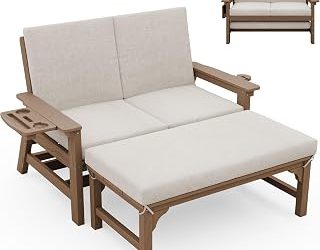
This HDPE sectional is a strong choice for buyers who want the visual warmth of wood-inspired furniture without the regular refinishing. Its weather-resistant, low-maintenance frame pairs with deep seating and substantial cushions, while the modular format gives small patios more flexibility than a single fixed sofa.
Outdoor Furniture Set 7 Patio Sofa Set
The seven-piece HDPE configuration adds more layout options for households that occasionally need extra seating. It is particularly useful on a balcony or compact deck because separated sections can be shifted around the perimeter, opening a central path when the space needs to serve more than one purpose.
11-Piece Aluminum Outdoor Dining Set
Aluminum is one of the most practical patio materials for dining areas: it is comparatively light, resists rust, and is easier to move when cleaning or rearranging. This set combines a rectangular table with wicker-rattan chairs, creating a dedicated meal zone that can work well beside a pool or in a backyard entertaining area.
HOOOWOOO 13-Piece Wicker Conversation Set
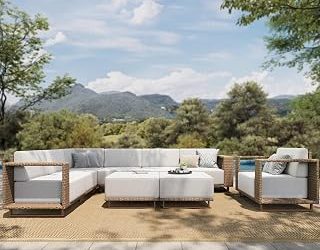
This expansive wicker conversation set centers on an L-shaped couch, swivel rocking chairs, and a fire pit table. It is best suited to a larger patio or a space where entertaining is the priority; in a smaller footprint, map the full chair swing and walking clearance before committing.
Aluminum 5-Piece Patio Conversation Set
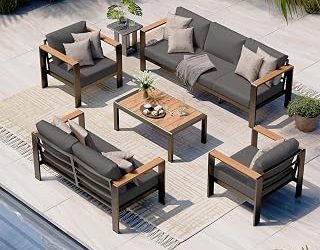
For compact porches, balconies, and decks, this graphite aluminum set offers a more manageable footprint than a full dining arrangement. The sectional design keeps seating together without requiring a large table, and washable thick cushions are a practical advantage when outdoor textiles are exposed to dust, pollen, or food spills.
Frequently Asked Questions
What is the best material for patio furniture?
There is no universal winner, but aluminum and HDPE are excellent all-around choices. Aluminum is lightweight and rust-resistant, while HDPE offers a sturdy, low-maintenance option with a more substantial appearance. Your climate and storage situation should decide the final choice.
Is aluminum or wicker better outdoors?
Aluminum generally requires less attention and is easier to move, making it useful for small spaces. Wicker can provide a softer, more decorative look, but inspect the weave and frame quality and use protective covers when the furniture will sit in harsh weather.
How do I organize patio furniture in a small space?
Start by preserving a clear route from the door to the yard or railing. Place the largest piece against a wall, choose nesting or movable tables, and keep cushions in one dedicated deck box or indoor storage area rather than scattering them across chairs.
Does patio furniture need to be covered?
Covers are helpful even for weather-resistant furniture because they reduce dirt, fading, and cushion wear. Use breathable covers that fit properly, and allow damp furniture to dry before covering it to discourage trapped moisture and mildew.
Final Thoughts
For flexible, low-maintenance seating, the Outdoor Furniture Set 6 Patio Sofa Set and Outdoor Furniture Set 7 Patio Sofa Set are compelling HDPE options. The Aluminum 5-Piece Patio Conversation Set is the most space-conscious pick, while the 11-Piece Aluminum Outdoor Dining Set makes more sense when meals and group gatherings are central to your patio plans.