Key takeaways
- Base compatibility: Check the pole diameter and choose a heavy, stable base suited to the umbrella size and your surface. Table-mounted umbrellas benefit from a sturdy table, while freestanding models need substantially more ballast.
- Ventilation: A vented or tiered canopy gives trapped air somewhere to escape, reducing pressure beneath the fabric. This can improve stability, though it does not make an umbrella storm-proof.
- Frame strength: Reinforced ribs and a robust pole are more useful than decorative details. For breezier patios, prioritize the manufacturer’s stated wind guidance and inspect joints for unnecessary flex.
- Footprint: Measure the open canopy and the operating clearance around it. A cantilever umbrella can shade a seating area without a center pole, but its offset design demands careful base placement.
- Daily operation: Crank mechanisms and push-button tilts make frequent repositioning easier. Choose simple controls if the umbrella will be opened and closed often in a tight space.
What's inside
Wind is one of the quickest ways to turn a comfortable patio into a frustrating one. An umbrella that looks sturdy in a product photo may still wobble, lift, or twist when gusts arrive—especially if its base is undersized, its canopy catches air, or it is placed in an exposed corner. In a compact outdoor area, stability matters even more because furniture, walls, and railings can create unpredictable wind channels.
This guide focuses on practical patio-umbrella choices for smaller decks, balconies, gardens, and dining spaces. I’ve compared canopy design, frame construction, ventilation, adjustment features, and everyday footprint so you can choose an umbrella that provides shade without making your outdoor layout harder to manage. Remember that no patio umbrella should be left open in severe weather, and a properly weighted base is essential.
As an Amazon Associate we earn from qualifying purchases.


How to Choose a/an Patio Umbrella Wind (2026)
- Base compatibility: Check the pole diameter and choose a heavy, stable base suited to the umbrella size and your surface. Table-mounted umbrellas benefit from a sturdy table, while freestanding models need substantially more ballast.
- Ventilation: A vented or tiered canopy gives trapped air somewhere to escape, reducing pressure beneath the fabric. This can improve stability, though it does not make an umbrella storm-proof.
- Frame strength: Reinforced ribs and a robust pole are more useful than decorative details. For breezier patios, prioritize the manufacturer’s stated wind guidance and inspect joints for unnecessary flex.
- Footprint: Measure the open canopy and the operating clearance around it. A cantilever umbrella can shade a seating area without a center pole, but its offset design demands careful base placement.
- Daily operation: Crank mechanisms and push-button tilts make frequent repositioning easier. Choose simple controls if the umbrella will be opened and closed often in a tight space.
The Best Patio Umbrella Wind (2026)s Reviewed
PURPLE LEAF 10′ x 10′ Double-Top Cantilever
The PURPLE LEAF cantilever umbrella is the most deliberate choice for shading a seating zone without placing a pole through the middle of a table. Its square double-top canopy and advertised 35MPH wind-resistant frame suit homeowners who want a larger, more architectural shade solution, while the stated 30-minute setup and easy operation are useful advantages. Its offset design does require a properly weighted base and a little more planning than a conventional market umbrella.
EliteShade USA 9ft 3-Tier Market Umbrella
EliteShade USA’s three-tier canopy is particularly appealing for patios where moving air is a recurring concern. The commercial-grade positioning, heavy-duty ventilation, reinforced construction, crank opening, and UPF 50+ protection make it a feature-rich option for dining areas and poolside spaces. Its 9-foot footprint remains manageable, but the frame still needs a dependable base and should be closed before strong weather arrives.
Midtown Umbrellas 9 Ft Terylast Patio Umbrella
The Midtown Umbrellas model is a strong fit for buyers who care about long-term fabric performance as much as daily usability. Its Terylast canopy is advertised as 10-year no-fade, while the auto-tilt aluminum frame and eight reinforced ribs add convenient adjustment and structural support. The navy canopy with black pole offers a clean, graphic look for a compact deck or garden dining setup.
9′ Outdoor Patio Market Umbrella with Crank and Tilt
This straightforward 9-foot market umbrella covers the essentials without overcomplicating a small outdoor layout. Eight sturdy ribs, a push-button tilt, and a crank mechanism make it easy to angle shade as the sun moves, especially when the umbrella is positioned beside a wall or railing. It is best paired with a quality base and sensible weather habits rather than treated as a permanently open wind solution.
JEAREY 9FT Outdoor Patio Umbrella
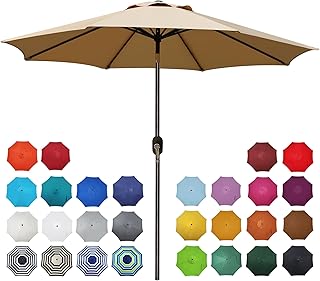
JEAREY’s 9-foot umbrella is a practical everyday pick for a table, deck, backyard, or pool area. The eight-rib frame, push-button tilt, crank lift, waterproof description, and UV-protection positioning cover the features most households actually use. Its beige canopy can brighten a smaller space, although light fabric may show outdoor dust more readily than darker alternatives.
Frequently Asked Questions
What is the best patio umbrella shape for windy conditions?
A vented or tiered canopy can release some air pressure, and a smaller round canopy may be easier to stabilize than a large solid one. Shape alone is not decisive: base weight, frame quality, placement, and closing the umbrella before gusty weather matter just as much.
How heavy should a patio umbrella base be?
The right weight depends on canopy diameter, pole design, whether the umbrella sits through a table, and how exposed the patio is. Follow the umbrella maker’s guidance, then choose the heaviest practical base that fits your layout. Cantilever models generally require specialized ballast.
Can I leave a patio umbrella open overnight?
It is safer to close and secure it whenever the space is unattended, particularly overnight or before changing weather. A tie, cover, or storage sleeve can keep the folded canopy controlled, but these accessories do not replace a stable base.
Is a cantilever umbrella better than a table umbrella for a small patio?
It can be, if you need unobstructed table space or want to shade a lounge chair from the side. However, the base often occupies valuable floor area, so measure both the open canopy and the ballast footprint before buying.
Final Thoughts
For broad, offset shade, the PURPLE LEAF 10′ x 10′ cantilever is the most distinctive option. The EliteShade USA 9ft 3-Tier stands out for ventilation-focused design, while the Midtown 9 Ft Terylast umbrella is a compelling choice for shoppers prioritizing long-term canopy color and convenient auto-tilt operation. Whichever model you choose, pair it with the correct base and close it before the wind becomes a problem.