Key takeaways
- Ventilation: Choose a canopy with a vented or double-top design. It allows trapped air to escape instead of building pressure beneath the fabric.
- Frame construction: Look for reinforced ribs, a strong center pole, and hardware that does not feel flimsy. Aluminum is light and rust-resistant, while braced frames can add meaningful stability.
- Base weight: The umbrella is only as secure as its foundation. Match the base to the canopy size, and use extra weight or a bolted mount for large or cantilever models.
- Canopy proportions: Larger umbrellas provide more shade but catch more wind. In a compact patio, a properly anchored 9-foot model may be safer than an oversized canopy.
- Storage habits: Always close the umbrella when wind picks up or when you leave the area. A protective cover and indoor storage during severe weather can substantially extend its life.
What's inside
Wind can turn an ordinary patio umbrella into a wobbling nuisance—or a serious hazard. A canopy that feels sturdy on a calm afternoon may twist, lift, or strain its pole when gusts arrive, especially if the base is too light or the umbrella is left open near a table.
This guide focuses on the features that matter in exposed outdoor spaces: venting, frame strength, canopy size, tilt control, and dependable anchoring. The selections cover practical table umbrellas as well as larger designs for patios, pools, and seating areas that need more thoughtful weight distribution.
As an Amazon Associate we earn from qualifying purchases.


How to Choose a/an Patio Umbrella For Windy Area (2026)
- Ventilation: Choose a canopy with a vented or double-top design. It allows trapped air to escape instead of building pressure beneath the fabric.
- Frame construction: Look for reinforced ribs, a strong center pole, and hardware that does not feel flimsy. Aluminum is light and rust-resistant, while braced frames can add meaningful stability.
- Base weight: The umbrella is only as secure as its foundation. Match the base to the canopy size, and use extra weight or a bolted mount for large or cantilever models.
- Canopy proportions: Larger umbrellas provide more shade but catch more wind. In a compact patio, a properly anchored 9-foot model may be safer than an oversized canopy.
- Storage habits: Always close the umbrella when wind picks up or when you leave the area. A protective cover and indoor storage during severe weather can substantially extend its life.
The Best Patio Umbrella For Windy Area (2026)s Reviewed
9′ Outdoor Patio Umbrella with 8 Ribs
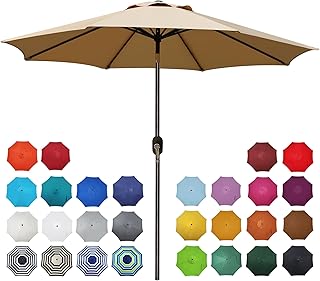
This straightforward market umbrella is a sensible choice for buyers who need everyday shade without taking up too much patio space. Its eight-rib frame, push-button tilt, and crank opening provide useful control, although it should be paired with a properly weighted base rather than treated as inherently storm-proof.
EliteShade USA 9ft 3-Tier Market Patio Umbrella
The three-tier canopy is the standout feature here, giving warm air and gusts more room to move through the umbrella. Its commercial-grade positioning, crank opening, UPF 50+ protection, and fade-resistant fabric make it a strong fit for a sunny deck or poolside table where ventilation matters.
EliteShade USA 9ft Market Patio Umbrella in Heather Beige
This version combines a neutral finish with practical crank-and-tilt adjustment, making it easy to reposition as the sun moves across a small outdoor seating area. The vented top and UPF 50+ fabric are helpful in breezy conditions, but a secure base remains essential for reliable performance.
10FT Patio Umbrella with Tilt and Crank
A 10-foot canopy gives a little more coverage than a standard dining-table umbrella while retaining familiar push-button tilt and crank controls. The eight sturdy ribs and waterproof, UV-protective fabric suit larger tables, though the additional surface area means buyers should upgrade their base weight accordingly.
PURPLE LEAF 12ft Extra Large Wood-Grain Patio Umbrella
For expansive dining or lounge zones, this 12-foot model offers generous shade and a visually warmer wood-grain finish without using a wooden frame. Its braced construction, 240 GSM fade-resistant fabric, and UPF 50+ coverage make it one of the more substantial options here; it is best installed with a heavy, stable base and plenty of clearance.
Frequently Asked Questions
What makes a patio umbrella better for windy areas?
A vented canopy, sturdy ribs, a rigid pole, and a well-matched base all contribute to better wind performance. No freestanding umbrella should be considered safe to leave open in strong or rapidly changing weather.
Is a double-top umbrella better in wind?
It can be. A double-top or multi-tier canopy helps release air pressure, which may reduce lifting and twisting during ordinary gusts. It does not eliminate the need for a heavy base or careful weather-related storage.
How heavy should a patio umbrella base be?
The right weight depends on the canopy diameter, pole design, table configuration, and local wind exposure. Larger and cantilever umbrellas generally require substantially more support than a standard 9-foot table umbrella, so follow the manufacturer’s recommendation and add anchoring where appropriate.
Can I use a 12-foot umbrella on a small patio?
Usually, it is a poor fit unless the patio has generous clearance and a very secure mounting system. A 9-foot umbrella is often easier to position, close, and store, while also creating less wind-catching surface in a confined space.
Final Thoughts
For most windy patios, the EliteShade USA 9ft 3-Tier Market Patio Umbrella offers the most useful balance of ventilation and everyday coverage. Choose the PURPLE LEAF 12ft model when broad shade is the priority and you can provide a serious base; for smaller spaces, the eight-rib 9-foot umbrella is the easier-to-manage option.