Key takeaways
- Water resistance: Choose a material that will not absorb much moisture, especially for uncovered patios and balconies. Quick-drying construction helps prevent musty odors and mildew.
- UV stability: Direct sunlight can fade fibers and weaken plastics. Look for outdoor-rated materials described as fade-resistant or UV-resistant.
- Cleaning: A low-pile or flatweave rug is usually easiest to vacuum, sweep, rinse, and dry. Avoid deep textures if leaves and sand frequently collect in your space.
- Weight and storage: Lightweight plastic rugs are convenient for seasonal storage and small homes, while heavier woven rugs tend to stay flatter in breezy conditions.
- Layout and scale: In a tight area, use a rug large enough to visually group furniture but not so large that it blocks doors, drains, or walking paths.
What's inside
Choosing an outdoor rug is less about picking a color and more about selecting a material that can survive moisture, sunlight, dirt, and daily traffic without becoming a storage problem. In a small patio, balcony, porch, or entryway, the wrong rug can trap water, curl at the edges, shed fibers, and make a compact space feel cluttered.
This guide to the Best Material For An Outdoor Rug (2026) focuses on practical construction: recycled plastic, polypropylene-style synthetic fibers, flatweaves, texture, drainage, and ease of cleaning. The featured options are suited to different priorities, from lightweight balcony coverage to a more finished-looking rug for a high-traffic patio.
As an Amazon Associate we earn from qualifying purchases.


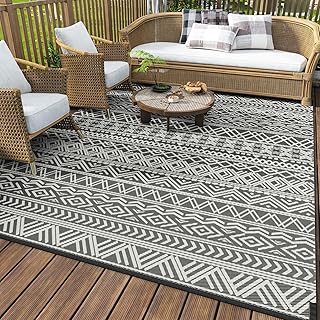

How to Choose a Material For An Outdoor Rug (2026)
- Water resistance: Choose a material that will not absorb much moisture, especially for uncovered patios and balconies. Quick-drying construction helps prevent musty odors and mildew.
- UV stability: Direct sunlight can fade fibers and weaken plastics. Look for outdoor-rated materials described as fade-resistant or UV-resistant.
- Cleaning: A low-pile or flatweave rug is usually easiest to vacuum, sweep, rinse, and dry. Avoid deep textures if leaves and sand frequently collect in your space.
- Weight and storage: Lightweight plastic rugs are convenient for seasonal storage and small homes, while heavier woven rugs tend to stay flatter in breezy conditions.
- Layout and scale: In a tight area, use a rug large enough to visually group furniture but not so large that it blocks doors, drains, or walking paths.
The Best Material For An Outdoor Rug (2026)s Reviewed
Unique Loom Casual Transitional Flatweave Rug
This light gray and ivory rug uses a low-profile indoor/outdoor flatweave that works particularly well in compact seating areas. Its subdued pattern and restrained palette make a small patio feel more open, while the synthetic construction is easier to maintain than natural-fiber rugs exposed to weather.
JONATHAN Y Estrella Boho Medallion Rug
The Estrella’s textured weave brings definition to a large patio without relying on a thick pile that can hold moisture and debris. Its navy and gray medallion design is a strong choice for high-traffic zones, pet-friendly households, and covered porches where easy cleaning matters.
JONATHAN Y Ourika Moroccan Geometric Rug
With orange and cream geometric detailing, the Ourika adds warmth and pattern to plain decking or concrete. The textured synthetic weave offers a more indoor-rug-like appearance while remaining practical for outdoor use, making it useful when a small space needs one bold focal point rather than several decorative pieces.
Mykonos Recycled Plastic Reversible Rug
This reversible gray and white mat is made from 100% recycled plastic and is designed to resist weather, water, stains, fading, and UV exposure. Its crease-free, low-maintenance format is especially convenient for renters, campers, and homeowners who need to roll, move, or store a rug frequently.
MontVoo Waterproof Reversible Outdoor Rug
The MontVoo is a lightweight plastic-straw style rug with a waterproof, reversible surface suited to RVs, balconies, picnics, beaches, and patios. Its portability is the main advantage: it can define a sitting area without adding much bulk to a small storage closet, though anchoring may be helpful in windy locations.
Frequently Asked Questions
What is the best material for an outdoor rug?
For most uncovered spaces, weather-resistant synthetic materials such as plastic or polypropylene-style fibers offer the best balance of water resistance, durability, color retention, and simple cleaning. The right choice depends on whether you value softness, portability, or maximum exposure resistance.
Are plastic outdoor rugs comfortable?
Plastic rugs are generally firmer and less plush than woven synthetic rugs, but their flat surfaces are practical under outdoor furniture. Add a separate cushion or outdoor mat where people will stand or sit for longer periods.
Can an outdoor rug stay outside in the rain?
Many outdoor rugs can handle rain, but no material benefits from remaining wet indefinitely. Elevate or hang the rug periodically so air can circulate underneath, and allow it to dry fully before rolling it for storage.
How do I stop an outdoor rug from blowing away?
Place furniture legs along the edges, use discreet outdoor rug corner weights, or choose a heavier construction for exposed locations. A properly sized rug also tends to stay flatter and more stable than an undersized one.
Final Thoughts
For a polished patio or porch, the JONATHAN Y Estrella is a compelling high-traffic option, while the Unique Loom Flatweave suits smaller, calmer seating areas. If easy storage and weather resistance come first, the Mykonos Recycled Plastic Rug is the most practical small-space pick.