Key takeaways
- Use the fan to cool people, not the empty room; switch it off when the space is unoccupied.
- Choose a reverse function for winter circulation, especially in enclosed porches or garages.
- Keep blades and grilles clean so dust does not reduce airflow or create imbalance.
- Confirm the ceiling box, wiring, and mounting hardware before ordering; hire a qualified electrician when support or wiring is uncertain.
What's inside
What Is The Best Outdoor Ceiling Fan (2026) depends less on blade count or appearance than on the space you need to cool. A fan for a compact covered porch has very different requirements from one for an open-sided patio, workshop, or garage. Outdoor exposure, ceiling height, airflow, motor noise, lighting, and control options all affect whether a fan feels useful or becomes an awkward fixture that takes up visual and physical space.
This guide takes a small-space organization approach: choose the fan that improves comfort without creating clutter, glare, maintenance headaches, or an installation problem. We’ll cover outdoor ratings, sizing, airflow, lighting, controls, mounting, and the features worth paying for. Our recommended picks include compact hanging designs, large high-volume fans, and smart models suited to covered outdoor rooms.
As an Amazon Associate we earn from qualifying purchases.




Start With the Location and Outdoor Rating
First, identify how much weather your fan may encounter. A wet-rated fan is designed for locations exposed directly to rain and moisture. It is the safer choice for an uncovered patio, pergola, or porch where water can reach the housing. A damp-rated fan is intended for protected areas such as a fully covered porch, screened room, or bathroom. It should not be installed where rain can blow onto it.
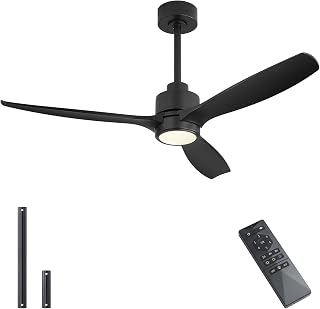
Do not treat “outdoor” in a product title as a substitute for checking the actual certification. Look for the manufacturer’s wet or damp rating, installation instructions, and approved mounting locations. The WINGBO 48-inch fan, for example, combines outdoor suitability with a light, while the addlon 20-inch caged fan is a practical plug-in option for a gazebo or patio where hardwiring a ceiling fixture is inconvenient.
Choose the Right Size for the Room
Blade span should match the area being cooled, but the goal is not simply to buy the largest fan available. In a small seating zone, an oversized fan can dominate the ceiling and create excessive air movement. For compact porches and dining nooks, a fan around 42 to 52 inches is often easier to place. Medium patios and garages may suit a 52- to 60-inch model, while large open areas benefit from 60 inches or more.
Large fans can be especially effective in broad, uncluttered spaces because they move air over a wider area at a lower speed. The Minislak 72-inch fan and Ohniyou 60-inch industrial model are aimed at larger zones rather than tight balconies. Measure the usable ceiling area, not just the total floor area, and keep blades clear of walls, beams, lights, and tall furniture.
Compare Airflow, Noise, and Motor Quality
Airflow is commonly expressed in CFM, or cubic feet per minute. A higher CFM can be useful outdoors, where breezes and open boundaries dilute the cooling effect, but it is only meaningful when considered alongside blade span and speed settings. For a compact covered porch, balanced airflow with a quiet motor may be more comfortable than maximum output.
DC motors are often a strong choice for homes because they tend to offer quiet operation, efficient energy use, multiple speeds, and a reverse function. The Ohniyou 60-inch model highlights a quiet 35dB DC motor and app control, while the 52-inch dark walnut solid-wood fan emphasizes a quiet BLDC motor and a simpler three-blade design. If the fan will hang near a conversation area or bedroom window, prioritize published noise information and a smooth low-speed setting.
Decide Whether You Need a Light
A ceiling fan light can eliminate the need for a separate floor lamp, which is valuable in a small porch or balcony where every inch of floor space matters. However, integrated lighting is not automatically better. A fan without a light may be preferable if the area already has wall sconces, recessed lighting, or a dining pendant.
For flexible everyday use, look for dimming and adjustable color temperature. The WINGBO fan offers 3CCT lighting and dimming, while the 65-inch modern outdoor fan combines a light with Alexa, app, and remote controls. Check whether the light is bright enough for the task, whether replacement parts are available, and whether the fixture creates glare when viewed from seating height.
Check Controls, Mounting, and Installation Space
Remote controls are convenient, particularly when a wall switch is not nearby. App and voice controls can be helpful when the fan is installed in a hard-to-reach location, but they add setup requirements and may depend on a stable Wi-Fi connection. A straightforward remote may be the better choice for a seasonal patio or guest space.
Measure ceiling height before buying. Blades should be safely above head level, and the fan must attach to a ceiling box rated for fan support—not an ordinary light-fixture box. Sloped ceilings may require an angled adapter, while high ceilings may need a downrod. The addlon 20-inch hanging fan is useful when a plug-in setup and hook-mounted format suit the space, but it still needs secure overhead support and adequate clearance around the cage.
Tips
- Use the fan to cool people, not the empty room; switch it off when the space is unoccupied.
- Choose a reverse function for winter circulation, especially in enclosed porches or garages.
- Keep blades and grilles clean so dust does not reduce airflow or create imbalance.
- Confirm the ceiling box, wiring, and mounting hardware before ordering; hire a qualified electrician when support or wiring is uncertain.
Frequently Asked Questions
What is the best ceiling fan size for a small porch?
A 42- to 52-inch fan is often a sensible starting point for a small porch, provided the blades have safe clearance from walls and furniture. For a very compact seating area, a smaller hanging or caged fan may be easier to position than a conventional ceiling fan.
Is a wet-rated fan necessary under a covered patio?
Not always. A fully enclosed or deeply covered patio may only require a damp-rated fan, but wind-driven rain can change the answer. If water may reach the fan, choose a wet-rated model and follow the manufacturer’s installation requirements.
Are outdoor ceiling fans worth installing without air conditioning?
Yes, when you want to improve perceived comfort in a seating area. Fans create evaporative cooling across skin but do not lower the actual air temperature. They work best when aimed over occupied zones and paired with shade.
Should I choose a fan with a light?
Choose one if it replaces another fixture and helps keep the floor clear. Skip the light if you already have adequate illumination or want a cleaner, lower-profile ceiling. Dimming and selectable color temperature make an integrated light more versatile.
Conclusion
The best outdoor ceiling fan for 2026 is the one that fits the weather exposure, ceiling height, room size, and daily habits of your space. Large models such as the Minislak or Ohniyou suit broad areas, while the WINGBO, 65-inch smart model, addlon hanging fan, and 52-inch wood-blade design address different combinations of lighting, controls, style, and installation needs. Prioritize the correct outdoor rating, adequate clearance, useful airflow, and quiet operation before choosing decorative extras.