Key takeaways
- Add-on or all-in-one: A standalone net slips over the hammock you already have, which keeps your storage footprint small. An integrated hammock-and-net system takes up one slot instead of two but means retiring your current setup.
- Packed size over listed weight: Weight matters on the trail; volume matters in a closet. Look for nets that stuff into their own attached pocket so there’s no separate bag to lose in a drawer.
- Mesh count and no-see-um rating: Standard mosquito mesh won’t stop midges, gnats, or biting sand flies. Finer no-see-um netting costs slightly more airflow but is the difference between sleeping and scratching.
- Zipper placement: Side or diagonal zippers let you get in and out without unhooking anything. Dual-sided zippers are worth seeking out if your hammock hangs against a wall or railing where one approach is blocked.
- Ridgeline support: Netting needs something to hold it off your face. A built-in ridgeline or a simple cord run above the hammock keeps the mesh tented rather than draped, which matters more than any other single feature for comfort.
What's inside
If you hang a hammock on a balcony, in a studio, or in a rented backyard corner, you already know the trade-off: the moment the light fades and the air cools into the good part of the evening, the insects arrive. Most people respond by going inside, folding the hammock away, and losing the one seat in their home that actually feels restful. A bug net solves that, but the wrong one turns a lightweight hanging chair into a bulky, sagging tangle that never gets used twice.
This guide looks at hammock bug nets through a small-space lens: how compactly each one stores, how quickly it goes up and comes down, and whether it works with the hammock you already own or requires a full replacement. I’ve broken down the five specs that actually matter for tight quarters, reviewed the strongest options for 2026, and answered the questions that come up most often from apartment dwellers and weekend campers alike.
As an Amazon Associate we earn from qualifying purchases.


How to Choose a Hammock Bug Nets (2026)
- Add-on or all-in-one: A standalone net slips over the hammock you already have, which keeps your storage footprint small. An integrated hammock-and-net system takes up one slot instead of two but means retiring your current setup.
- Packed size over listed weight: Weight matters on the trail; volume matters in a closet. Look for nets that stuff into their own attached pocket so there’s no separate bag to lose in a drawer.
- Mesh count and no-see-um rating: Standard mosquito mesh won’t stop midges, gnats, or biting sand flies. Finer no-see-um netting costs slightly more airflow but is the difference between sleeping and scratching.
- Zipper placement: Side or diagonal zippers let you get in and out without unhooking anything. Dual-sided zippers are worth seeking out if your hammock hangs against a wall or railing where one approach is blocked.
- Ridgeline support: Netting needs something to hold it off your face. A built-in ridgeline or a simple cord run above the hammock keeps the mesh tented rather than draped, which matters more than any other single feature for comfort.
The Best Hammock Bug Nets (2026)s Reviewed
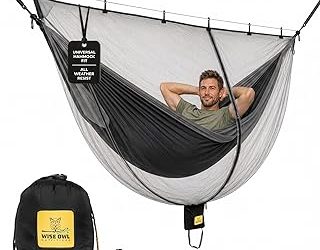
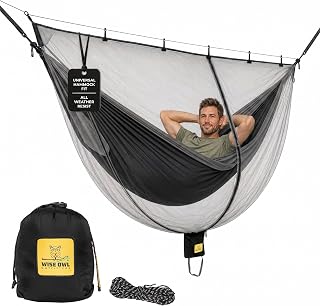
Wise Owl Outfitters Hammock Bug Net
This is the sensible first purchase for anyone who already owns a hammock they like, sliding over the existing setup without new hardware or a new hang. It packs down small enough to live in a side table drawer, which is exactly what you want when the hammock itself is the only furniture you have room for.
XL Hammock Bug Mosquito Net (11 x 4.6 ft)
The generous 11-foot length and dual diagonal zippers make this the most flexible option for awkward hanging spots, since you can enter from whichever side isn’t against a wall. The no-see-um polyester mesh handles the smaller biting insects that cheaper nets let straight through.
Onewind 11ft Ultralight Camping Hammock with Mosquito Net
A properly considered all-in-one, with an integrated no-see-um bugnet and ridgeline built into 40D ripstop nylon that stuffs remarkably small. If you’re buying your first serious hammock and want a single item rather than two, this is the one to size up.
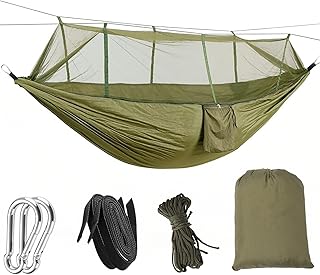
Camping Hammock with Mosquito Net and Rain Fly
Adding a rain fly extends the usable season considerably, which matters if your hammock lives on a covered balcony or under a tree rather than indoors. The trade-off is bulk, so plan on a dedicated shelf rather than a drawer.
2-in-1 Double/Single Camping Hammock with Mosquito Net
The 500 lb capacity and convertible double or single configuration make this the most adaptable choice for shared spaces, and the included tree straps mean no separate suspension purchase. It’s a strong value pick for anyone equipping a first apartment or a spare corner.
Frequently Asked Questions
Will a standalone bug net fit my existing hammock?
Most nets are cut generously and slide over standard gathered-end hammocks. Measure your hammock’s total length first, and choose a net at least as long, since a short net pulls tight and presses mesh against your body.
Do I need a ridgeline?
Yes, in practice. Without one the mesh collapses onto your face. Some hammocks include one; otherwise a length of paracord strung above the hammock does the job for a few dollars.
Can I use a hammock bug net indoors?
You can, and it’s genuinely useful in ground-floor rooms or spaces with open windows and no screens. Anchor into studs or use a freestanding stand rather than trusting drywall.
How do I store these in a small apartment?
Stuff-sack designs are your friend. Keep the net and hammock together in one bag so setup is a single retrieval, and hang the bag from a hook rather than stacking it on a shelf where it becomes clutter.
Final Thoughts
For most people the Wise Owl Outfitters net is the right call, adding real protection to a hammock you already own for very little money or storage space. If you want one integrated piece of gear, the Onewind 11ft ultralight is the better-built option, while the XL 11 x 4.6 ft net with dual diagonal zippers is the most accommodating choice for tight or wall-adjacent hangs.