Key takeaways
- Cotton or high-cotton blends: natural fiber with good water uptake.
- Looped terry pile: more surface area than flat weaves.
- Moderate-to-high weight: more fiber means more capacity.
- Low-twist or combed yarn: softer and often more absorbent once bloomed.
- Proper washing: clean fibers absorb better than coated ones.
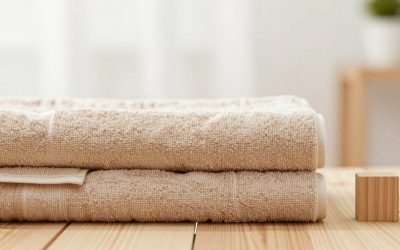
The most absorbent bath towels combine cotton or cotton-blend fibers with a looped pile of moderate to high weight. Absorbency comes from surface area and fiber capacity, which is why a dense terry towel usually outperforms a thin or flat-woven one. Absorbency also depends on how well the towel has been washed and cared for. This is a research-led guide, not a hands-on test.
The Physics, Briefly
A towel absorbs water in two ways: water clings to the surface of fibers and loops, and it is drawn into the spaces between fibers. Cotton is naturally hydrophilic, so it pulls water in quickly. Loops add surface area, meaning more places for water to cling. Heavier towels have more material, so they hold more total water. Finishing treatments, such as silicone softeners, can temporarily reduce absorbency until they wash out.
Features That Raise Absorbency
- Cotton or high-cotton blends: natural fiber with good water uptake.
- Looped terry pile: more surface area than flat weaves.
- Moderate-to-high weight: more fiber means more capacity.
- Low-twist or combed yarn: softer and often more absorbent once bloomed.
- Proper washing: clean fibers absorb better than coated ones.
Absorbency Versus Drying Speed
These two traits pull in opposite directions. A very absorbent towel holds a lot of water and therefore dries slowly. If your bathroom is small or humid, the most absorbent option may not be the most practical. Consider whether you value a single big soak-up or a towel that is ready again quickly.
| Towel type | Absorbency | Drying speed | Who it suits |
|---|---|---|---|
| Heavy cotton terry | Very high | Slow | Well-ventilated bathrooms, long showers |
| Medium cotton terry | High | Moderate | Most households |
| Cotton-microfiber blend | Medium to high | Faster | Quick routines |
| Waffle weave | Medium | Fast | Humid or small bathrooms |
Why a Towel Can Seem Less Absorbent Over Time
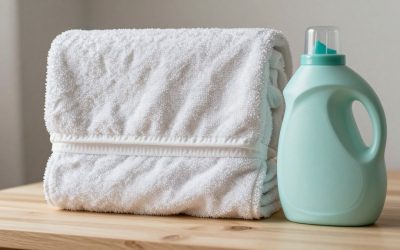
- Softener buildup: fabric softener and dryer sheets leave a coating that repels water.
- Too much detergent: residue stiffens fibers.
- Overloaded washers: towels do not rinse well when crammed.
- Body products: lotions and oils transfer to towels and can build up.
- Age: thinning pile reduces surface area.
A common reset is to wash with hot water and a small amount of detergent, followed by a vinegar rinse, then a second plain rinse. Results vary, but many users report improvement.
Starting Searches
For a broad overview, see super absorbent bath towels. If you want a heavier option, heavyweight cotton bath towels are the typical category. For households that need balance, fast drying absorbent bath towels help compare tradeoffs. Check the fiber content and weight, and read what reviewers say after repeated washes.
Break-In Tips for New Towels
New towels often feel less absorbent than expected. Wash them two or three times before judging them, and do not use softener during that period. Dry on medium heat. Fluffing by hand or a few minutes in the dryer helps the loops stand up. If a towel has shed noticeable lint, that is typical in early washes and generally lessens over time.
FAQ
Does higher GSM guarantee absorbency?
Not by itself. Fiber, weave, and cleanliness also matter.
Are microfiber bath towels more absorbent?
They wick quickly and hold a lot for their weight, but many people still find cotton terry feels more thorough on skin.
Do dark towels absorb differently?
Color does not significantly change absorbency, though dye processes can affect initial feel.
Choose a heavier cotton towel for maximum soak-up, a waffle or blend for quick turnaround, and care for it gently so the absorbency lasts.