Key takeaways
- Measure your bed’s spare width first: Lie on your side in your usual spot and measure from your back to the mattress edge. If it’s under 14 inches, skip full U-shaped pillows and choose a wedge or contoured design instead.
- Prioritize hip-gap fill: Side sleeping creates a gap between your knees and a hollow under your waist. Support that fills both keeps your spine neutral and prevents the sacroiliac ache that wakes you hourly.
- Demand a daytime home: Inflatable options collapse to shoebox size; memory foam wedges slide under a bed frame or behind a headboard. Anything that has to live on the floor will get kicked, tripped over, and eventually resented.
- Check temperature behavior: Pregnancy raises your baseline body temperature, and dense foam traps heat. Look for cooling covers, breathable knit fabrics, or removable washable sleeves.
- Plan for the postpartum phase: After delivery you may need support for C-section incisions, nursing posture, or brief stomach sleeping. Products with belly cutouts extend usefulness well past week six — which is better value than a pillow you retire at delivery.
What's inside
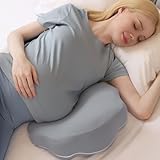
The best overall pick for pregnancy and postpartum side sleeping is the Chilling Home Portable W-Shaped Pregnancy Wedge Pillow, with the DONAMA Memory Foam Cooling Maternity Pillow as the runner-up. The Chilling Home wins because it delivers targeted hip, belly, and lumbar support in a footprint small enough to tuck into a nightstand drawer — and in a small bedroom, that matters as much as the support itself.
Here’s the problem nobody warns you about: side sleeping during pregnancy is the recommended position, but the gear that makes it comfortable is enormous. A full-length U-shaped body pillow can swallow half a queen mattress and has nowhere to live during the day. If you’re in a studio, a one-bedroom, or a shared room where the crib is already claiming floor space, you need support that earns its square footage. This guide evaluates pregnancy and postpartum side-sleeping support systems on three axes: pressure relief for hips and lower back, ease of repositioning at 3 a.m., and — the part most roundups skip — how compactly the thing stores and how much of the bed it surrenders to your partner.
As an Amazon Associate we earn from qualifying purchases at no extra cost to you. Product prices and availability are accurate as of the date shown and are subject to change.



Quick Comparison
| Product | Best For | Standout Feature | Rating |
|---|---|---|---|
| Chilling Home Portable W-Shaped Wedge | Overall small-space side sleeping | Modular wedge shape, drawer-sized storage | Top-rated |
| PregSpag Inflatable Pregnancy Pillow (Pink) | Budget buyers and travel | Deflates flat, includes electric pump | Highly rated |
| Inflatable Pregnancy Pillow with Belly & Head Hole | Premium prone-position relief | Dual cutouts for face and belly | Highly rated |
| DONAMA Memory Foam Cooling Maternity Pillow | Hot sleepers | Cooling cover over contouring foam | Top-rated |
| Inflatable Full Body Pregnancy Mattress (Brown) | Back and hip pain relief | Full-body airbed with belly hole | Well rated |
How to Choose a Mattress for Pregnancy and Postpartum Side Sleeping
- Measure your bed’s spare width first: Lie on your side in your usual spot and measure from your back to the mattress edge. If it’s under 14 inches, skip full U-shaped pillows and choose a wedge or contoured design instead.
- Prioritize hip-gap fill: Side sleeping creates a gap between your knees and a hollow under your waist. Support that fills both keeps your spine neutral and prevents the sacroiliac ache that wakes you hourly.
- Demand a daytime home: Inflatable options collapse to shoebox size; memory foam wedges slide under a bed frame or behind a headboard. Anything that has to live on the floor will get kicked, tripped over, and eventually resented.
- Check temperature behavior: Pregnancy raises your baseline body temperature, and dense foam traps heat. Look for cooling covers, breathable knit fabrics, or removable washable sleeves.
- Plan for the postpartum phase: After delivery you may need support for C-section incisions, nursing posture, or brief stomach sleeping. Products with belly cutouts extend usefulness well past week six — which is better value than a pillow you retire at delivery.
The Best Mattresses for Pregnancy and Postpartum Side Sleeping, Reviewed
Best Overall: Chilling Home Portable W-Shaped Pregnancy Wedge Pillow
The W-shape braces your belly and lumbar curve simultaneously without stretching the length of the bed, making it the smartest choice for apartment sleepers and anyone sharing a full or queen. It’s also light enough to flip when you switch sides, which is the real test of any pregnancy support.
Best Budget: PregSpag Inflatable Pregnancy Pillow with Hole, Pink
Best for first-time buyers who aren’t sure how much support they’ll need, and for anyone with genuinely zero storage. It inflates in about a minute with the included electric pump and packs down to nothing, so it can live in a closet bin between uses or travel to a hospital bag.
Best Premium: Inflatable Pregnancy Pillow with Belly & Head Hole
The dual cutouts let you rotate toward your stomach for short stretches without compressing your bump or craning your neck — a relief valve for sleepers who never adapted to strict side sleeping. Worth the upgrade if you’re a lifelong stomach sleeper.
Best for Hot Sleepers: DONAMA Memory Foam Cooling Maternity Pillow
Ideal for third-trimester sleepers in warm bedrooms or homes without central air. The cooling cover keeps the contact surface from heating up, while the foam holds its shape all night rather than flattening under your hips like polyester fill does.
Best for Back & Hip Pain Relief: Inflatable Full Body Pregnancy Mattress with Belly Hole, Brown
A full-length option for sleepers whose pain is severe enough to need head-to-toe support, and a practical pick for guest rooms or floor setups. It distributes weight broadly, then deflates completely so the room returns to normal by morning.
Frequently Asked Questions
Which side should I sleep on while pregnant?
Left-side sleeping is generally recommended in later pregnancy to improve blood flow to the placenta, though switching sides overnight is normal and fine. Choose support you can reposition easily so switching doesn’t fully wake you.
Can I use these after delivery?
Yes. Wedge and contoured pillows are useful for nursing posture and for propping during C-section recovery, and belly-cutout designs let you return to stomach sleeping comfortably once cleared by your provider.
How do I store one of these in a small bedroom?
Inflatable models deflate into a drawer or under-bed bin. For foam wedges, use the vertical gap behind a headboard or a slim under-bed storage bag — treat it like linens, not furniture.
Do I need a new mattress or just added support?
If your mattress is under seven years old and not visibly sagging, targeted support is the cheaper and more effective fix. Replace the mattress only if you can feel a dip where your hips land.
Final Thoughts
For most pregnant and postpartum side sleepers in tight quarters, the Chilling Home W-Shaped Wedge offers the best balance of support and storability, the DONAMA Cooling Memory Foam Pillow is the pick if you run hot, and the PregSpag Inflatable Pillow is the budget-friendly, pack-it-away option that works in even the smallest bedroom.