Key takeaways
- Weather rating: Choose a fan specifically marked wet-rated or suitable for outdoor use. Covered patios still experience windblown moisture and condensation, so indoor-only models are a poor shortcut.
- Mounting style: Flush-mount fans preserve headroom beneath low ceilings, while hanging or hook-mounted models can be more flexible in gazebos and rental-friendly spaces.
- Airflow and size: Match blade span to the patio. Compact areas benefit from smaller fans that circulate air without creating visual clutter; larger open patios need stronger airflow and broader coverage.
- Lighting: A built-in dimmable light can replace a separate fixture, but a no-light fan may be the better choice when the patio already has sconces, string lights, or a ceiling lantern.
- Controls and motor: Multiple speeds, reversible rotation, timers, and remote controls improve everyday convenience. DC motors are particularly useful when quiet operation and lower energy use matter.
What's inside
Choosing a ceiling fan for a patio is less straightforward than picking one for a bedroom. Outdoor spaces face humidity, temperature swings, dust, and limited mounting room, while a fan that is too large can overwhelm a compact porch or gazebo. Lighting, controls, motor noise, and installation style also matter when every square foot has to work harder.
This guide focuses on practical outdoor-patio priorities: weather resistance, airflow, clearance, lighting, control options, and ease of installation. The selections cover plug-in hanging fans, low-profile flush mounts, and compact no-light designs so you can match the fan to your space rather than force the space to accommodate it.
As an Amazon Associate we earn from qualifying purchases.



How to Choose an Outdoor Patio Ceiling Fan (2026)
- Weather rating: Choose a fan specifically marked wet-rated or suitable for outdoor use. Covered patios still experience windblown moisture and condensation, so indoor-only models are a poor shortcut.
- Mounting style: Flush-mount fans preserve headroom beneath low ceilings, while hanging or hook-mounted models can be more flexible in gazebos and rental-friendly spaces.
- Airflow and size: Match blade span to the patio. Compact areas benefit from smaller fans that circulate air without creating visual clutter; larger open patios need stronger airflow and broader coverage.
- Lighting: A built-in dimmable light can replace a separate fixture, but a no-light fan may be the better choice when the patio already has sconces, string lights, or a ceiling lantern.
- Controls and motor: Multiple speeds, reversible rotation, timers, and remote controls improve everyday convenience. DC motors are particularly useful when quiet operation and lower energy use matter.
The Best Outdoor Patio Ceiling Fan (2026)s Reviewed
addlon 20-Inch Outdoor Caged Ceiling Fan
The addlon is a smart small-space solution for patios, porches, and gazebos where a conventional 52-inch fan would feel oversized. Its caged design, IP65 water protection, hanging hook, six speeds, light, timer, and remote control make it especially practical for flexible placement and compact outdoor zones.
56-Inch Wet-Rated Outdoor Ceiling Fan with Lights
This large-span option is built for patios that need broad circulation rather than a concentrated breeze. Its wet-rated construction, UV-coated blades, high-airflow design, quiet DC motor, remote, and dimmable three-color-temperature lighting give it the versatility to serve both open-air entertaining areas and covered outdoor rooms.
DREO 42-Inch Low-Profile Ceiling Fan
DREO’s compact low-profile format is well suited to a small covered patio or a multipurpose indoor-outdoor area with limited clearance. The 22dB motor, six speeds, reversible direction, quick-install design, and dimmable five-color-temperature light provide useful control without adding much visual bulk.
Amico 52-Inch Low-Profile Ceiling Fan
The Amico combines a broad 52-inch span with a flush-mount profile, making it a useful choice for covered patios with standard-height ceilings. Its quiet reversible DC motor, three-color dimmable light, remote, memory function, and timer are convenient for households that want a set-it-and-forget-it setup.
Hunter 36-Inch Cassius Indoor/Outdoor Ceiling Fan
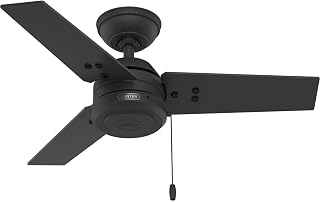
For shoppers who already have adequate patio lighting, the Hunter Cassius keeps the design simple with a no-light configuration and pull-chain control. Its 36-inch scale, matte-black finish, covered-patio suitability, and droop-free blades make it a tidy fit for compact porches, balconies, and narrow seating areas.
Frequently Asked Questions
What size ceiling fan is best for a small patio?
Small patios and porches often work well with fans in the 20- to 42-inch range, depending on layout and ceiling height. A compact fan can improve comfort without crowding furniture, blocking sightlines, or creating awkward blade clearance.
Can I install an indoor ceiling fan on a covered patio?
Only use a model whose specifications allow outdoor placement. A covered area is not automatically protected from moisture, and an indoor-rated fan may not have the corrosion resistance or weather protection needed for patio conditions.
Are flush-mount fans better for low ceilings?
Usually, yes. Flush-mount fans minimize the distance between the motor housing and ceiling, preserving headroom in porches and enclosed patios. Before installation, confirm the manufacturer’s required clearance from the floor, walls, and nearby fixtures.
Is a lighted patio ceiling fan worth choosing?
A lighted model is valuable when the fan will replace a central fixture or when you want fewer items overhead. If the space already has layered lighting, a no-light fan may offer a cleaner appearance and let you choose brighter task or ambient fixtures separately.
Final Thoughts
For flexible small-space cooling, the addlon 20-Inch Outdoor Caged Ceiling Fan is a particularly practical pick. Larger patios may benefit more from the 56-inch wet-rated model, while the DREO 42-inch fan is a balanced choice when low clearance, quiet operation, and adaptable lighting are the priorities.