Key takeaways
- Move the rug to a washable surface. A clean driveway, patio, or outdoor utility area is preferable to grass, where dirt can transfer back into the fibers. Clear nearby furniture so you have room to turn the rug.
- Remove dry debris first. Shake, sweep, or vacuum the front and back. Pick out leaves and twigs by hand instead of grinding them into the weave.
- Pre-rinse with a gentle stream. Start at one end and direct water toward the opposite edge so soil flows away rather than deeper into the rug. Do not use a concentrated jet on the fibers or backing.
- Apply diluted cleaner sparingly. Use a soft brush or sponge and work in small sections. A light layer of suds is enough; excessive detergent is harder to rinse and can leave the rug tacky.
- Rinse until the water runs clear. Residual soap attracts dust. Press the rug gently to check for trapped cleaner, but do not twist or wring it.
- Dry completely on both sides. Drape the rug over a clean railing or several sturdy chairs, turning it periodically. Small-space owners should avoid laying it flat against a wall, where the underside can stay damp.
What's inside
Outdoor rugs make a small patio, balcony, or entry area feel finished, but they also collect pollen, food residue, soil, algae, and moisture. Left untreated, that buildup can create odors, flatten the fibers, and encourage mildew—especially when a rug is placed close to a wall or under furniture where air circulation is limited.
This guide explains the best way to clean an outdoor rug without oversaturating it or damaging its backing. You’ll learn how to identify the material, choose between gentle washing and targeted stain treatment, use outdoor-cleaning products responsibly, and dry the rug quickly in a compact space.
As an Amazon Associate we earn from qualifying purchases.



Choose the Cleaning Method Before You Start
Check the care label first. Most polypropylene outdoor rugs tolerate water and mild soap, while rugs made with natural fibers, jute, cotton, or delicate woven blends may require a gentler approach. Avoid assuming that a rug marketed for outdoor use is completely stainproof or safe for strong cleaners.
For routine dust and loose dirt, vacuum both sides or shake the rug outdoors. A soft-bristle brush can loosen grit from low-pile rugs, but avoid aggressive scrubbing, which can roughen fibers and spread stains. If the rug has a rubber, latex, or nonwoven backing, inspect it for cracking before washing. A deteriorating backing may shed small particles or become slippery when wet.
Test Any Cleaner in a Hidden Spot
Patch testing is the most important step when using a specialized outdoor cleaner. Apply a small amount to an inconspicuous corner, follow the product’s stated dwell time, and rinse or blot as directed. Once dry, check for fading, color transfer, stiffness, or changes to the backing.
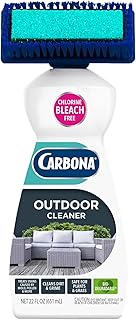
For isolated marks on outdoor furniture and rugs, Carbona Oxy Powered Outdoor Cleaner with Built-In Brush is a convenient spot-treatment option. Its integrated sponge-and-bristle brush is useful for controlled application, but work lightly and avoid saturating the rug. For larger areas, dilute Simple Green Oxy Solve Total Outdoor Cleaner Concentrate according to its label and use it manually rather than reaching for a pressure washer immediately.
How to Clean an Outdoor Rug
- Move the rug to a washable surface. A clean driveway, patio, or outdoor utility area is preferable to grass, where dirt can transfer back into the fibers. Clear nearby furniture so you have room to turn the rug.
- Remove dry debris first. Shake, sweep, or vacuum the front and back. Pick out leaves and twigs by hand instead of grinding them into the weave.
- Pre-rinse with a gentle stream. Start at one end and direct water toward the opposite edge so soil flows away rather than deeper into the rug. Do not use a concentrated jet on the fibers or backing.
- Apply diluted cleaner sparingly. Use a soft brush or sponge and work in small sections. A light layer of suds is enough; excessive detergent is harder to rinse and can leave the rug tacky.
- Rinse until the water runs clear. Residual soap attracts dust. Press the rug gently to check for trapped cleaner, but do not twist or wring it.
- Dry completely on both sides. Drape the rug over a clean railing or several sturdy chairs, turning it periodically. Small-space owners should avoid laying it flat against a wall, where the underside can stay damp.
Handling Mold, Mildew, Algae, and Green Stains
Dark or green marks may come from mildew, algae, soil, or simply color transfer from wet leaves. Treat the source of the moisture as well as the stain: increase airflow, separate the rug from damp masonry, and avoid storing it while even slightly wet.
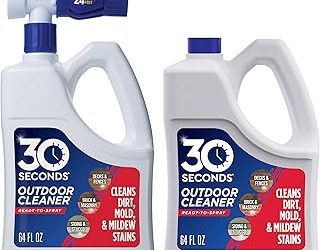
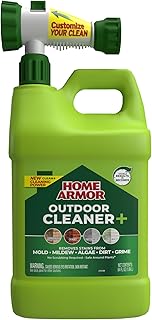
For larger outdoor surfaces, products such as Wet & Forget Outdoor Cleaner & Stain Remover, Home Armor Outdoor Cleaner+, and 30 SECONDS Outdoor Cleaner are designed for exterior stains. They are not automatically the right choice for every textile. Read the label carefully to confirm rug or fabric compatibility, protect surrounding surfaces, and keep runoff away from plants and waterways. Some formulas are intended to work over time with weather exposure, while others require rinsing. Never mix cleaners, and do not combine a mold product with bleach or another chemical unless the manufacturer specifically permits it.
For a small, localized mark, the ready-to-use 30 SECONDS Outdoor Mold & Mildew Stain Remover Spray may be easier to control than a hose-end formula. Apply only where needed, keep the rug’s saturation low, and rinse according to the instructions. Wear gloves and provide ventilation while working.
Picking the Right Gear for a Small Space
Good organization matters as much as cleaning power. A compact hand vacuum, soft scrub brush, absorbent towels, and a shallow bucket are usually more useful than bulky equipment. A hose-end cleaner can cover a large patio efficiently, but it may deliver more liquid than a balcony rug can comfortably handle. The 30 SECONDS Outdoor Cleaner Hose End Sprayer 2 Pack is best considered for compatible outdoor surfaces around the rug, not as a reason to flood a textile.
Concentrates such as Simple Green Oxy Solve can be economical when you clean several outdoor items, but measure carefully and store the container securely. If you prefer a ready-to-use option, Home Armor or a targeted spray reduces setup and leftover solution. Choose the mildest product that can reasonably handle the problem, and prioritize fast drying over stronger chemistry.
Tips
- Clean outdoor rugs on a warm, breezy day, but avoid intense midday heat if the care label warns against it.
- Place a washable mat beneath the rug’s high-traffic edge to reduce soil and moisture buildup.
- Use furniture risers or small spacers to improve airflow under a rug in a tight balcony layout.
- Roll the rug only after it is fully dry; store it upright in a breathable cover rather than sealed plastic.
Frequently Asked Questions
Can I pressure-wash an outdoor rug?
Usually, no. Pressure can stretch the weave, lift fibers, damage the backing, and force dirt deeper into the construction. Use a gentle hose spray or manual cleaning unless the rug manufacturer specifically approves pressure washing at a stated setting.
How often should I clean an outdoor rug?
Shake or vacuum it weekly during heavy use, then rinse or wash it every few months as needed. Clean sooner after spills, storms, or prolonged damp weather. A rug under a dining table generally needs more frequent spot treatment than one in a sheltered seating area.
What removes a musty smell?
First, rinse away residue and dry the rug completely on both sides. If the odor returns, inspect the backing, floor, and nearby wall for persistent moisture. Avoid masking the smell with fragrance; the underlying dampness needs to be corrected.
Can I use household laundry detergent?
A small amount of mild detergent may be suitable for some synthetic rugs, but check the care instructions first. Avoid fabric softener, powdered products that may not dissolve, and heavily fragranced formulas. Thorough rinsing is essential because leftover detergent attracts dirt.
Conclusion
The best way to clean an outdoor rug is a controlled, low-saturation process: remove dry grit, test a suitable cleaner, wash gently, rinse thoroughly, and dry with plenty of airflow. In a small outdoor space, thoughtful placement and storage prevent as much grime as cleaning removes. Select gear for the rug’s material and the size of the job, and treat specialty mold or algae products as carefully as you would any household chemical.