Key takeaways
- The best ceiling fan cleaning tools are the ones that reach your fan and clean both sides of each blade, so the right pick starts with how high the fan sits. This guide compares four current dusters on reach, head…
The best ceiling fan cleaning tools are the ones that reach your fan and clean both sides of each blade, so the right pick starts with how high the fan sits. This guide compares four current dusters on reach, head design, and whether the cleaning sleeve is washable.
As an Amazon Associate we earn from qualifying purchases.
By KK Home Furnishings Editorial Team
How to Choose Ceiling Fan Cleaning Tools
The right tool depends on your fan’s height and shape, so these criteria stay practical: measuring the fan height before choosing reach, comparing C-shaped heads to flat dusters, weighing washable microfiber against disposable refills, and confirming pole compatibility so the tool actually reaches the blades up high.
Measure Fan Height Before Choosing Reach
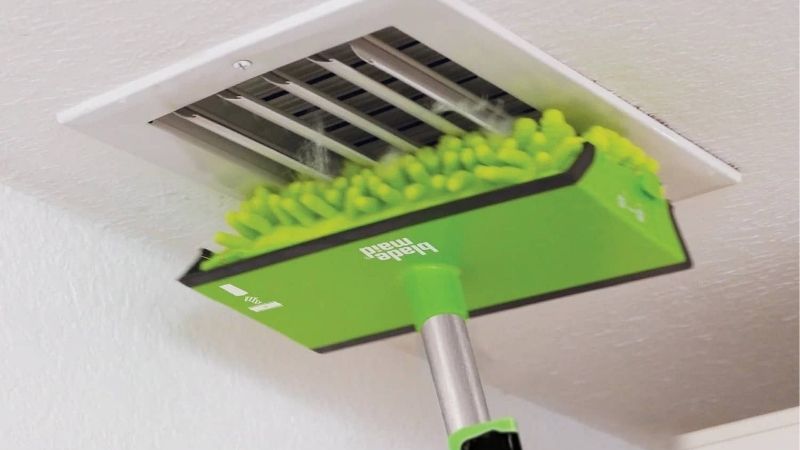
Reach is the first number, since a duster that cannot touch the blades is useless no matter how good the head is. Measure from the floor to the blades, then compare it to a tool’s reach: the Harbor Breeze extendable duster lists a 40.5-inch handle extension and a listing claim of reaching fans up to about 10 feet.
Match the reach to your fan and your own height, since you add your arm span to the tool length when cleaning. A standard 8-foot ceiling fan is reachable with a short extendable duster, while a vaulted or two-story foyer fan needs a long pole, so measure before buying rather than assuming any duster clears your particular ceiling.
Buying short is the common mistake, leaving you back on a chair or ladder the tool was meant to let you avoid. If the fan sits high, prioritize a pole with enough reach over a nicer head, since a well-made duster that falls short still forces unsafe standing, which defeats the whole reason for buying an extendable cleaning tool.
C-Shaped Heads vs Flat Dusters
Head shape decides whether you clean both sides of a blade in one pass or only one. A C-shaped head, like the Unger duster’s, wraps over and under the blade to catch dust top and bottom together, while a flat duster cleans one face at a time, so the geometry changes how many passes each blade needs to come clean.
Choose a C-shaped head for speed on standard flat blades, since wrapping the blade cuts the job roughly in half. A pivoting flat head, like the Libman’s 180-degree design, adapts to angles and tight spots, so match the head to your blade shape, because an odd-profile or very wide blade may suit a flexible flat head better.
Head design also affects dust control, since a wrap-around head holds debris rather than knocking it onto the floor below. A flat duster can scatter dust if pushed too hard, so work gently, and pick the head that fits your blades, since the wrong shape means extra passes and more dust falling onto the furniture under the fan.
Washable Microfiber vs Disposable Refills
The cleaning surface is either washable or disposable, and that choice sets the running cost over time. The Unger duster uses a machine-washable sleeve and the Libman a poly-fiber head, so a washable surface can be reused many times, while disposable refills add a recurring cost each time the pad loads up with dust.
Choose washable microfiber to cut long-term cost and waste if you will actually launder it between uses. Disposable refills suit those who prefer not to wash a dusty pad, so weigh convenience against cost, since a washable sleeve only saves money if it goes into the wash rather than sitting dirty in a drawer unused for months.
Avoid treating any microfiber as a disinfectant, since a washable sleeve traps dust but is not a general germ-killing feature. Clean or replace the surface when it stops picking up dust, because a loaded pad just smears debris around, and a washable sleeve left unwashed performs no better than a disposable one past its useful life.
Pole Compatibility Matters
Some dusters are complete tools and others are heads meant for a pole you already own, so check which you are buying. The Ettore MicroSwipe lists an 11.5-inch tool length and is Click-Lock compatible with extension poles sold separately, so confirm whether a duster includes a handle or expects you to supply a compatible pole.
Match a head to your existing pole system if you own one, since a Click-Lock head on a matching pole saves buying a whole new tool. If you have no pole, a self-contained extendable duster is simpler, so decide which route fits your setup, because a head without a compatible pole cannot reach the fan on its own at all.
Pole systems also vary in lock strength, and a loose joint makes a long tool wobble at the blade up high. Check that the head seats firmly on the pole, since a weak connection flexes under pressure, and keep the reach honest, because a tool length like 11.5 inches is the head alone, not the full reach once a pole is added.
Top Picks
These four are current ceiling fan dusters compared on reach, head design, and whether the cleaning surface is washable; all sit in the budget tier, so confirm the live price and, more importantly, that the reach suits your fan height before choosing among the heads and the extension options available here.
| Product | Best For | Key Spec | Watch Out For |
|---|---|---|---|
| Unger Ceiling Fan Duster 989660 | Best overall | C-shaped head; machine-washable sleeve; pole-compatible | Reach depends on your pole |
| Libman 584 | Best value | 180-degree pivot head; poly fiber | Flat head, one face per pass |
| Ettore MicroSwipe 48212 | Existing extension poles | 11.5 in tool length; Click-Lock; pole sold separately | No handle included |
| Harbor Breeze Extendable Duster | Built-in extension | 40.5 in handle extension; reaches fans up to ~10 ft | 10 ft is a listing claim |
Best Overall – Unger Ceiling Fan Duster 989660
The Unger duster suits most buyers who want both sides of a blade cleaned in a single pass. It uses a C-shaped head that wraps over and under the blade and a machine-washable sleeve, and it is pole-compatible, so it combines efficient cleaning with a reusable surface at a budget-tier price for a standard flat-blade fan.
The wrap-around head is the standout, cutting the job roughly in half compared with a flat duster, and the washable sleeve keeps running costs down. It suits standard flat blades on reachable fans, and because it is pole-compatible, it adapts to a higher fan if you pair it with a pole that has the reach you actually need.
The catch is that its reach depends on the pole you use, so confirm your pole clears the fan before relying on it. The washable sleeve only saves money if you actually launder it, and the C-shaped head suits flat blades, so an unusually shaped or very wide blade may clean better with a flexible flat head instead of this one.
Best Value – Libman 584
The Libman 584 fits buyers who want a low-cost, flexible duster for standard reachable fans. It uses a poly-fiber head on a 180-degree pivot, so the head angles into tight spots and adapts to blade angles, which makes it a practical budget pick when a wrap-around head is not needed for your particular blade shape at home.
The 180-degree pivot is the draw, letting the head reach odd angles that a fixed flat duster cannot manage. At the lowest price in this group it is the value choice, so it reads as the pick for a reachable standard fan where flexibility matters more than cleaning both blade faces in a single pass across each blade.
As a flat head, it cleans one face of each blade per pass, so expect more passes than a C-shaped duster needs. Clean or replace the poly-fiber head when it stops lifting dust, and keep moisture away from the motor housing, since a flat duster pushed too hard can scatter debris onto the furniture directly below the fan.
Best for Existing Extension Poles – Ettore MicroSwipe 48212
The Ettore MicroSwipe fits owners who already have a compatible extension pole system at home. It lists an 11.5-inch tool length and is Click-Lock compatible, with the extension pole sold separately, so it is the pick when you want to add a fan-cleaning head to a pole you already own rather than buying a whole new tool.
The Click-Lock compatibility is the highlight, letting the head seat on a matching pole to reach a high fan safely. For anyone with an existing pole system, this avoids duplicating a handle, so it reads as the efficient choice when reach is solved by your pole and you only need the right head to clean the blades up high.
The catch is that the 11.5-inch figure is the tool length, not the reach, since no handle is included with it. Confirm your pole is Click-Lock compatible and seats firmly, since a loose joint makes a long tool wobble at the blade, and remember a head alone cannot reach the fan without a compatible pole supplying the length.
Best for Built-In Extension – Harbor Breeze Extendable Duster
The Harbor Breeze extendable duster suits buyers who want reach built into the tool itself, with no separate pole. It lists a 40.5-inch handle extension and a listing claim of reaching fans up to about 10 feet, so it is the self-contained pick for a higher fan when you want one tool that reaches the blades on its own.
The built-in extension is the draw, delivering reach without a separate pole purchase, which suits a tall standard fan or a stairwell fixture. It reads as the pick when you want a single tool that extends to the blades, so there is nothing else to buy or assemble beyond the duster to start cleaning a high fan in the home.
The watch-out is that the up-to-10-foot figure is a listing claim and a use-case reach, not a precise measured spec. Confirm the extended length against your fan height plus your own reach, since a claimed ceiling reach assumes you add your arm span, and verify it clears your fan before relying on it over a stairwell.
Frequently Asked Questions
These answers cover what buyers ask most about cleaning a fan safely, from how to reach a high fixture without a ladder, to how to clean both sides of each blade, whether to clean a running fan, and how to keep moisture away from the motor housing while the fan is switched off and the blades are fully stopped.
How do I clean a high ceiling fan without a ladder?
Use an extendable duster or a head on a long pole so you can reach the blades from the floor safely. The Harbor Breeze duster claims reach to fans around 10 feet, and a Click-Lock head on a matching pole extends further, so match the tool’s reach to your fan height plus your arm span before climbing anything at all.
Measure the floor-to-blade height first, since buying a tool that falls short sends you back onto a chair or ladder. If the fan is very high, prioritize reach over head features, because a well-made duster that cannot touch the blades still forces the unsafe standing the extendable tool was specifically supposed to let you avoid.
Work with the fan switched off and move the duster slowly to keep dust from scattering onto the furniture below. A wrap-around head cleans faster from a distance, so it helps on high fans, and keep a firm grip on a long tool, since a loose pole joint makes the head wobble and miss the blade at full extension up high.
How do I clean both sides of fan blades?
A C-shaped head cleans both sides at once by wrapping over and under the blade, while a flat duster does one face per pass. The Unger duster’s wrap-around design catches top and bottom together, so for standard flat blades it halves the work compared with flipping a flat head to reach each side separately each time.
If you use a flat or pivoting head like the Libman’s, plan two passes per blade, one for the top and one for the underside. Angle a pivoting head to reach the blade’s far face, so you still clean both sides, since skipping the top lets dust build where it is hardest to see and then drifts down over time onto the room below.
Whichever head you use, clean or wash it when it stops lifting dust, since a loaded pad smears rather than collects. A washable sleeve helps here if you launder it, and work gently on both faces, because pressing hard can bend a thin blade and knock accumulated dust straight onto the floor and furniture below the fan.
Is it safe to clean a fan while it is running?
No; always switch the fan off and let the blades fully stop before cleaning them. A moving blade can throw a duster or injure your hand, so turn off the fan at the switch, and for extra safety on a fixture you are wiping closely, cut power at the breaker before working near the motor housing or the mounting.
With the fan stopped, you can clean both blade faces without the head catching, and you avoid flinging dust across the room. Give the blades a moment to settle, since a fan coasts after switch-off, so confirm they are fully still before reaching up, especially on a high fan where you are working at the end of a long pole.
Keep moisture away from the motor housing while cleaning, since water near the motor or wiring is a hazard. Use a dry or barely damp head rather than a wet one, and avoid spraying cleaner onto the fixture, because excess moisture near the motor can cause problems and a damp blade attracts dust again faster afterward.
How do I keep a duster working well over time?
Wash or replace the cleaning surface regularly, since a loaded head stops picking up dust and starts smearing it around. The Unger’s machine-washable sleeve and the Libman’s poly-fiber head both need cleaning when they load up, so launder or swap the surface rather than pushing a dusty pad around the blades over and over.
Avoid treating microfiber as a disinfectant, since a washable sleeve traps dust but is not a general germ-removing feature. Store the tool dry so the head does not stay damp, because a damp pad can mildew, and a clean, dry surface simply lifts far more dust than one that is already full from the last cleaning session.
Check the pole or extension joints too, since a loose lock makes a long tool wobble and miss blades up high. Tighten or reseat the connection before cleaning a high fan, and confirm the head is firmly attached, since a head that slips off at full extension is both frustrating and a hazard over a stairwell or high ceiling.
Final Thoughts
Choosing ceiling fan cleaning tools well starts with reach, then head design and a washable surface, not the duster’s looks. The Unger leads on a both-sides C-shaped head and a washable sleeve, the Libman on value, the Ettore for existing poles, and the Harbor Breeze on built-in reach, so measure your fan height first.