Key takeaways
- The right clothes storage boxes for wardrobes fit the wardrobe itself — the inner depth, the shelf opening and the room to pull a box out — not just a capacity number. This guide compares boxes on that geometry, and…
The right clothes storage boxes for wardrobes fit the wardrobe itself — the inner depth, the shelf opening and the room to pull a box out — not just a capacity number. This guide compares boxes on that geometry, and weighs soft fabric SKUBB-style boxes against rigid plastic ones for different wardrobe spaces.
As an Amazon Associate we earn from qualifying purchases.
By KK Home Furnishings Editorial Team
How to Choose Clothes Storage Boxes for Wardrobes
A wardrobe box is judged by fit, not raw capacity: it has to slide into the shelf opening, suit the inner depth, and leave room to pull out. Fabric and rigid boxes suit different spaces. Four things decide the buy: the wardrobe geometry, fabric versus rigid, the lid and access, and stacking within the wardrobe.
Measure the Wardrobe Geometry First
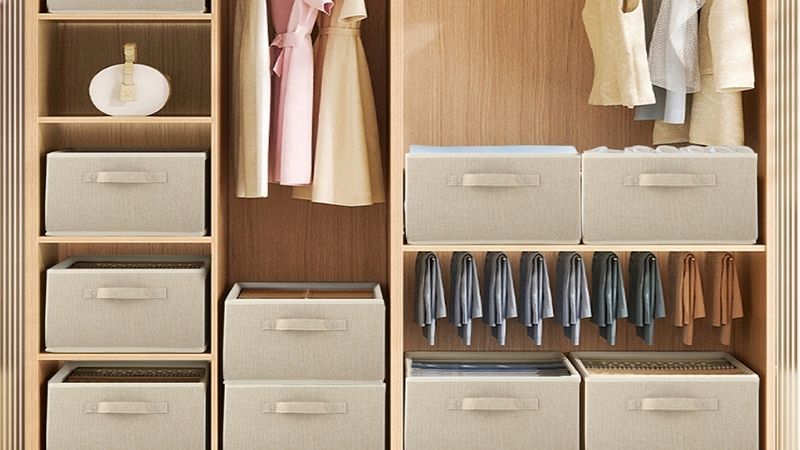
Start with the wardrobe, not the box. Measure the inner depth, the height of each shelf opening, and the clearance to pull a box out past the door or frame. An IKEA SKUBB large is 35½ by 20¾ by 7½ inches, which suits a deep shelf, while a Sterilite 15-quart box at 16½ by 13 by 6⅝ fits a shallower, narrower one.
Match the box footprint to the shelf opening and depth. A box deeper than the shelf juts out and blocks the door; one shorter than the depth wastes space at the back. The 20¾-inch depth of a SKUBB suits a standard wardrobe shelf, so compare the box’s depth and height to your measured opening before buying it.
Pull-out clearance is the detail people miss. A box on a high or tight shelf needs room to tilt or slide out past the frame, and a rigid box cannot flex to clear a lip that a soft one can. Leave clearance for the way you will actually retrieve it, since a box that fits on the shelf but cannot come out is no use.
Fabric or Rigid Boxes
The big fork is soft fabric versus rigid plastic. Fabric boxes like IKEA SKUBB are light, collapse flat when empty, and flex to clear a tight opening, suiting clothes on a shelf; rigid Sterilite boxes hold their shape, stack firmly and protect contents better, suiting heavier or crushable items. Each fits a different wardrobe need.
Match the type to the contents and the shelf. Fabric suits folded knitwear and seasonal clothes where light weight and flexibility matter, and it stores flat off-season; rigid suits items you want protected from crushing or that you stack high. A fabric box also breathes a little, which suits clothes stored for a whole season.
Durability differs by type. Fabric boxes can sag or fray at the handles over time and offer no crush protection, while rigid boxes can crack at the lid clips if overloaded or cold. Favor fabric with reinforced sides and handles, or rigid with sturdy clips, and match the choice to how the box will be loaded and handled.
Lid and Access
How a box opens on a shelf matters as much as its size. Fabric boxes often have a fold-over or zip lid and a front handle for pulling off a shelf; rigid boxes have a clip lid you may need to lift clear. A box you have to fully remove to open is less convenient on a high shelf than one with front access.
Match the access to the shelf height and how often you reach in. For daily items, a box with a front opening or an easy lid at a reachable height works best; for off-season storage up high, a simple lidded box you pull down occasionally is fine. Consider whether a clear or labeled front helps you find contents without opening it.
Lids and closures are the wear points. A zip can fail, a fold-over flap can lose shape, and a rigid clip can crack, so favor simple, robust closures. For clothes, a fully sealed lid is not essential and can trap humidity, so a breathable fabric lid or a loosely closed rigid one often suits a wardrobe better than an airtight seal.
Stacking Within the Wardrobe
If you stack boxes on a shelf, they must stack stably and still be reachable. Rigid boxes with flat, interlocking lids stack securely; fabric boxes stack only lightly and can slump under weight. Measure the shelf height against the stacked boxes, since a stack that reaches the shelf above cannot be opened without unstacking it first.
Match the stack to access. Keep frequently used boxes on top or at the front, and heavier ones low so the stack stays stable and you are not lifting weight down from a height. On a single shelf, same-size boxes line up and stack best, so choosing one box size for a wardrobe section keeps it tidy and reachable over time.
A loaded stack stresses the bottom box, so rigid boxes carry a stack better than fabric, which can crush the contents below. Do not stack higher than you can safely lift down, and keep weight sensible. Favor boxes that stack flat and square, since a leaning stack tips when the door is opened or a box is pulled.
Top Picks
Four boxes cover the common wardrobe needs, two fabric and two rigid, separated by fit and type rather than raw capacity. The wardrobe geometry and whether you want soft or rigid storage decide the choice. Each leans on manufacturer-stated specs and a tier, not a fixed price — confirm it before you buy.
| Product | Best For | Key Spec | Watch Out For |
|---|---|---|---|
| IKEA SKUBB large | Best for a deep shelf, seasonal clothes | 35½×20¾×7½ in; fabric | Fabric sags; no crush protection |
| IKEA SKUBB small | Best for a standard shelf | 17×20¾×7½ in; fabric, folds flat | Light duty; soft sides |
| Sterilite 27 Qt | Best for rigid, stackable storage | 16½×13×12¼ in; rigid | Taller; check shelf height |
| Sterilite 15 Qt | Best for a shallow shelf | 16½×13×6⅝ in; rigid | Shallow; limited depth |
IKEA SKUBB Large: Best for a Deep Shelf and Seasonal Clothes
For a deep wardrobe shelf, the SKUBB large is a fabric box at 35½ by 20¾ by 7½ inches that holds a lot of folded or seasonal clothes. It reads budget tier; prices move, so confirm the current price and measure your shelf opening and depth against its footprint, since at 35 inches wide it needs a genuinely wide shelf.
Its appeal is light, flexible fabric that folds flat when empty and flexes to clear a tight opening, ideal for off-season storage you pack away. The breathable fabric suits clothes left for a season. Use the front handle to pull it off a high shelf, and keep it to folded items rather than anything that needs crush protection.
As a fabric box, it offers no crush protection and the sides can sag when half-full or fray at the handles over time. Do not stack heavy items on it, and store it flat when not in use to extend its life. For clothes you want protected or stacked high, a rigid box suits better; for soft seasonal storage, this is the pick.
IKEA SKUBB Small: Best for a Standard Shelf
For a standard wardrobe shelf, the SKUBB small is a fabric box at 17 by 20¾ by 7½ inches that suits folded clothes without claiming a wide shelf. It reads budget tier; verify the current price, and note its 20¾-inch depth matches a typical shelf, while its 17-inch width lets two sit side by side on a wider one.
A narrower fabric box suits sorting clothes by type across a shelf, and it folds flat when empty for easy storage. The flexible sides clear a tight opening a rigid box would catch on. Use it for folded knitwear and everyday items, matching the number of boxes to your shelf width so they line up neatly without overhanging the edge.
Like the large SKUBB, it is light-duty with soft sides and no crush protection, and the handles and fabric wear over time. Keep heavy or hard items out of it, and do not stack weight on top. Favor it where flexibility and breathability matter more than rigidity, and pair it with rigid boxes for anything that needs protecting.
Sterilite 27 Qt: Best for Rigid, Stackable Storage
When you want rigid, stackable storage, the Sterilite 27-quart box has an exterior of 16½ by 13 by 12¼ inches that holds its shape and stacks securely. It reads budget tier; confirm the current price, and measure your shelf height against its 12¼-inch height, since a taller rigid box can be too tall for a tight shelf opening.
Its rigid walls protect crushable items and let boxes stack flat and square on a shelf, which fabric cannot. The 16½ by 13 inch footprint suits a standard shelf, and a clear version lets you see contents. Use it for items you want protected or stacked, keeping the heaviest box at the bottom of any stack for stability.
Treat its lid as latching, not airtight, and leave a little airflow or a moisture absorber for clothes stored long-term. The lid clips are the wear point, and cold can make plastic brittle, so avoid overfilling and store it out of harsh conditions. Favor sturdy clips, since a cracked lid is the usual first failure on a rigid box.
Sterilite 15 Qt: Best for a Shallow Shelf
For a shallow shelf or under a hanging rail, the Sterilite 15-quart box keeps a low profile at 16½ by 13 by 6⅝ inches. It reads budget tier; verify the current price, and measure the gap it will slide into, since its low 6⅝-inch height suits a tight opening where a taller box like the 27-quart will not fit.
Its shallow rigid form suits flat-folded clothes, accessories or items under a hanging section, and it stacks neatly with its siblings. The same 16½ by 13 inch footprint as the 27-quart means the two mix and stack together. Use it where depth is limited and you want rigid protection without the height of a deeper box.
As a shallow box it holds less, so it is for flat items rather than bulk, and the lid clips are again the wear point. Treat it as latching, not sealed, and add a moisture absorber for long storage. Store it out of temperature extremes, do not overfill, and it serves as a tidy, stackable box for a shallow wardrobe shelf.
Frequently Asked Questions
Wardrobe-box shoppers ask the same things: how to measure for a shelf, whether fabric or rigid is better, whether the boxes are airtight, and how to stack them safely. The answers below use the dimensions above and focus on fitting the wardrobe, not just the raw capacity of the box itself.
How Do I Measure for a Wardrobe Box?
Measure three things in the wardrobe first: the inner depth, the height of the shelf opening, and the clearance to pull a box out past the frame. Then match the box’s depth, height and width to those figures. A box that fits the shelf footprint but is too tall for the opening, or too deep to pull out, will not work.
Leave a little room on each dimension so the box slides in and out easily, and account for the door or frame lip in the pull-out path. For a stack, measure the shelf height against the stacked boxes too. Measuring the wardrobe, not the box, is what prevents the common mistake of a box that technically fits but cannot be used.
If the opening is tight, a fabric box flexes to clear a lip that a rigid one catches on, which is one reason to choose soft over rigid in a snug space. Note the clear floor in front too, since you need room to stand and pull. The wardrobe’s geometry, measured first, decides which box type and size actually fit.
Fabric or Rigid Boxes for a Wardrobe?
It depends on the contents and the space. Fabric boxes are light, flexible and fold flat, suiting folded clothes and tight openings and breathing a little for seasonal storage; rigid boxes hold their shape, stack firmly and protect crushable items. Neither is best for everyone — match the type to what you store and the shelf.
Choose fabric for soft, folded items where flexibility and flat off-season storage matter, and rigid where you need protection, firm stacking, or to keep contents clean and dry. In a tight opening, fabric wins; for a high, stable stack, rigid wins. Many wardrobes use both: fabric for clothes, rigid for shoes or items to protect.
Weigh durability too: fabric can sag and fray, rigid can crack if overloaded or cold. Favor reinforced fabric or sturdy-clipped rigid boxes, and do not load fabric beyond light duty. The right mix often depends on the shelf — fabric where it must flex or fold away, rigid where it must stack and protect what is inside.
Are These Boxes Airtight?
No. Fabric boxes are breathable by design, and rigid latching boxes clamp the lid but are not sealed unless the maker states a gasket. For clothes in a wardrobe that is usually fine, since a little airflow prevents trapped humidity. Do not expect any of these to be moisture- or pest-proof without a stated airtight rating.
For long-term or damp-area storage, add a moisture absorber and keep clothes clean and dry before packing, since neither type seals out humidity. A breathable fabric box can actually suit stored clothes better than a sealed one, which can trap damp. Confirm any airtight claim in the specs rather than assuming the lid provides it.
If you need real protection — from moths, dust or moisture over months — add a breathable garment bag or a cedar deterrent inside the box rather than relying on the lid. The box organizes and contains; protecting the clothes long-term is a separate step. For everyday wardrobe use, breathable containment is usually all that is needed.
How Do I Stack Wardrobe Boxes Safely?
Stack rigid boxes, not fabric, for a stable column, and keep the heaviest at the bottom. Rigid boxes with flat, interlocking lids stack securely; fabric boxes slump under weight and should not be stacked high. Measure the shelf height against the stack so the top box can still be opened without reaching the shelf above.
Keep frequently used boxes on top or at the front so you are not unstacking to reach them, and do not stack higher than you can safely lift down. Same-size boxes stack best, so pick one size per section. A loaded stack that leans or overloads the bottom box is the usual cause of a wardrobe spill when the door opens.
If you must store heavy items up high, use a rigid box you can lift down safely rather than a fabric one that can give way. Keep the stack square and within the box’s clip strength. The goal is a stable, reachable arrangement, since a box that is hard or unsafe to retrieve defeats the point of organizing the wardrobe.
Final Thoughts
The right clothes storage boxes for wardrobes fit the wardrobe’s geometry first — the inner depth, the shelf opening and the pull-out clearance — then suit the contents, fabric for flexible folded storage, rigid for protection and stacking. Measure the shelf before buying, not just the box, and choose the type for what you store.