Key takeaways
- Front-clip labels: Metal or acrylic card holders that clip to the bin’s front edge. Best for fabric bins where adhesive labels peel off textured fabric. Use 2″ x 3″ cards with large print so you can read them from 6 feet away.
- Adhesive vinyl or chalkboard labels: Work best on smooth plastic bins. Avoid on fabric. Rounded corners prevent peeling.
- Picture labels for kids: A simple icon plus word helps kids maintain the system without reading. Place labels at the center of the bin, not the top edge, for low cubes.
- Stacking inside the cube: Only stack with rigid bins that have lids. Leave 0.5 inch of clearance on each side for easy pull-out. Do not double-stack fabric bins; the bottom bin will crush.
- Stacking the unit itself: 2-cube and 3-cube units can be stacked vertically to make a 6-cube tower, but only if the manufacturer designs them for it and you anchor the combined unit. Horizontal side-by-side placement is more stable than a tall narrow tower, especially on carpet.
A cube storage organizer stays tidy long-term when you match bin material to weight and handling, respect per-cube weight limits of 15-30 lbs, and plan for stacking stability and label visibility from the start.
For most living rooms, bedrooms, and entryways, a 6-cube or 8-cube configuration with 13-inch fabric bins for light items and one or two rigid plastic bins for heavy or spill-prone storage hits the best balance of look, durability, and easy maintenance. Use open cubes for display and labeled bins for clutter that needs to stay hidden but accessible.

Furinno Cubicle X-Shelf Cube Insert, 3-Shelf Cube Organizer, White
Included for 'Cube Storage Organizer: Best Bins, Shelves and Setup Ideas' because the listing specifies 3-Shelf Cube Organizer and White, details this guide uses to compare options.
View on Amazon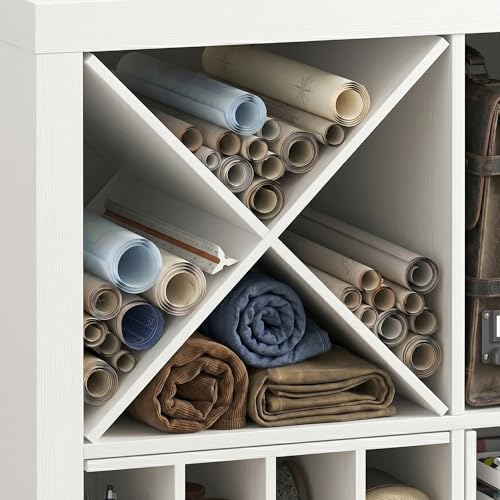
Mikkagu X-Shelf Cube Insert, Cube Organizer Fits into Triple Thick Cubes, IKEA Kallax, for Organizers and Storage, White
Included for 'Cube Storage Organizer: Best Bins, Shelves and Setup Ideas' because the listing specifies Cube Organizer Fits into Triple Thick Cubes and IKEA Kallax, details this guide uses to compare options.
View on Amazon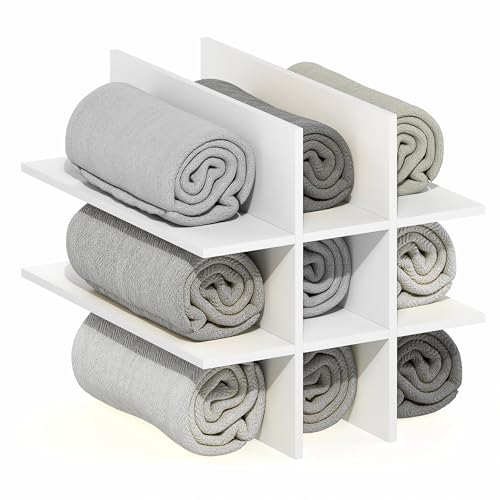
Furinno Cubicle 9-Compartment Cube Insert, Grid Cube Organizer, White
Included for 'Cube Storage Organizer: Best Bins, Shelves and Setup Ideas' because the listing specifies Grid Cube Organizer and White, details this guide uses to compare options.
View on Amazon
Amazon Basics Collapsible Fabric Storage Cube Bins Organizer with Handles for Organization and Organizing Solution, 13"x13"x13", Beige, 6-Pack
Included for 'Cube Storage Organizer: Best Bins, Shelves and Setup Ideas' because the listing specifies 13"x13"x13" and Beige, details this guide uses to compare options.
View on AmazonFabric vs. Plastic Bins: Which Lasts Longer and Where
Both bin types fit the standard 13 x 13 inch cube, but they age very differently. Fabric bins depend on their frame and fabric weave, plastic bins depend on wall thickness and lid design.
| Feature | Fabric Bin (Collapsible with Cardboard or Metal Frame) | Plastic Bin (Polypropylene or Polyethylene) | Best For |
|---|---|---|---|
| Typical Weight Limit | 8-15 lbs before sides bow | 15-25 lbs, holds shape under load | Heavy items: tools, pantry cans, vinyl records |
| Durability Failure Point | Seams fray, cardboard insert warps with humidity, handles tear at stitching after 1-2 years of daily pulls | Cracks at corners if dropped, hinges or lids warp in heat above 120°F | Fabric for dry, low-use closets; plastic for garages, mudrooms, kids’ rooms |
| Cleaning | Spot clean or vacuum; not machine washable if it has cardboard stiffeners | Wipeable, rinseable, resists stains and pet hair | Plastic wins for snacks, craft supplies, pet toys |
| Structure & Stacking | Collapses flat, soft sides can sag when half-full; do not stack heavy on top | Rigid walls keep a flat top, stackable with lids | Plastic for stacking inside a cube or on top of the unit |
| Look and Noise | Soft texture, muted colors, quiet when pulled | Glossy or matte, can scrape and rattle on wood laminate | Fabric for living room and bedroom; plastic for utility areas |
| General Market Range (13″ size) | Usually $10-$25 each | Usually $12-$30 each | Mix both to control cost |
Reinforced fabric bins with sewn-in metal wire or solid MDF inserts last significantly longer than single-cardboard versions. If you choose fabric, look for double-stitched handles, 600D canvas or poly-canvas, and a removable bottom insert you can replace. For plastic, choose BPA-free polypropylene at least 2mm thick with reinforced rims rather than thin, flexible dollar-store bins that flex under 10 lbs.
How Much Weight Can a Cube Storage Organizer Actually Hold?
Weight limits are per cube and for the total unit, and exceeding them causes the middle shelves to sag first. Most organizers use partitioned vertical dividers that carry the load, so the top row is always weakest.
| Unit Type | Material | Per-Cube Limit | Total Unit Limit (6-Cube Example) | What Causes Sagging |
|---|---|---|---|---|
| Budget Laminate / Particleboard (3/8″ – 1/2″ panels) | Engineered wood with paper veneer | 15-20 lbs | 75-100 lbs total | Books, records, or dumbbells across one row |
| Mid-Range Laminate (5/8″ panels, thicker dowels) | Engineered wood with melamine | 20-30 lbs | 120-150 lbs total | Collected weight on top without wall anchoring |
| Solid Wood / Metal Frame Cubes | Pine, rubberwood, or steel frame | 30-50 lbs | 180-250 lbs total | Uneven floor without leveling feet |
A standard hardcover book weighs about 1.5 lbs, so a single cube filled with books quickly hits 30-35 lbs and will bow a budget unit within months. Keep books to one or two cubes low and centered, or use a solid wood unit like the IKEA Kallax range if books are the primary use. Always anchor any unit taller than 30 inches or any stacked configuration to a wall stud with the included anti-tip hardware, especially in homes with kids or pets.
When to Add a Lid or Choose Open Bins
Open-top fabric bins are faster for daily grab-and-go items like hats, scarves, and toys. Lidded plastic bins protect against dust and stacking pressure and are better for seasonal storage on a high cube or in a closet where you will stack a second bin on top. If you need labels, lidded bins need a front-facing label, not a top label you cannot see at eye level.
Label and Stacking Options That Keep It Tidy
An organizer fails when no one can find or return things. Visibility and consistent bin height matter more than decorative labels.
- Front-clip labels: Metal or acrylic card holders that clip to the bin’s front edge. Best for fabric bins where adhesive labels peel off textured fabric. Use 2″ x 3″ cards with large print so you can read them from 6 feet away.
- Adhesive vinyl or chalkboard labels: Work best on smooth plastic bins. Avoid on fabric. Rounded corners prevent peeling.
- Picture labels for kids: A simple icon plus word helps kids maintain the system without reading. Place labels at the center of the bin, not the top edge, for low cubes.
- Stacking inside the cube: Only stack with rigid bins that have lids. Leave 0.5 inch of clearance on each side for easy pull-out. Do not double-stack fabric bins; the bottom bin will crush.
- Stacking the unit itself: 2-cube and 3-cube units can be stacked vertically to make a 6-cube tower, but only if the manufacturer designs them for it and you anchor the combined unit. Horizontal side-by-side placement is more stable than a tall narrow tower, especially on carpet.
For maintenance, standardize. Decide on one bin height per row so the front line stays even. Leave one cube open per row for display or for items too tall for a bin, like a 15-inch tall vase or a 12-inch tall storage basket with handles.
Setup Ideas by Room Size and Layout
Cube organizers need breathing room to pull bins out and to avoid blocking airflow and outlets. Measure before you buy, including baseboards and door swing.
- Clearance to pull a bin: Allow at least 24 inches in front of the unit. A 13-inch bin needs a full 14-15 inches to slide out, plus your body space.
- Clearance around furniture: Keep 2-3 inches between the back of the organizer and the wall for the anti-tip strap and cords. Keep 4-6 inches from heat vents so fabric bins do not collect dust and dry out.
- Room fit: In a 10×12 ft bedroom, a 4-cube horizontal unit (about 48-58 inches wide x 15-16 inches deep x 30 inches tall) fits along the foot of the bed or under a window without crowding a 30-inch walking path. A 6-cube vertical unit (about 36 inches wide) works better in a narrow 8×10 ft home office where floor depth is limited.
- Height planning: A 30-inch tall horizontal unit can double as a bench with a cushion or a TV stand for TVs up to 50 inches if the top panel is rated for 40-60 lbs. A 60-70 inch tall 8-cube unit should be treated as a bookcase and anchored.
3 Tidy Configurations That Work
1. Entryway Drop Zone (4-cube horizontal): Two lidded plastic bins on the bottom for shoes and pet supplies that need wipe-down. Two fabric bins on top for gloves and hats. Top surface left open for keys and mail. Place a 18 x 30 inch rug in front so bins do not drag grit across hard floors.
2. Living Room Toy and Media Wall (8-cube, 2 rows of 4): Bottom row: four fabric bins with picture labels for toys, all at kid height. Top row: two open cubes for books and baskets, two bins for chargers and controllers with cord clips threaded through the back panel hole. Anchor to wall and route cords behind.
3. Closet System Add-On (6-cube vertical): Use inside a reach-in closet. Top cubes for less-used lidded bins, middle cubes for folded sweaters in open fabric bins, bottom cubes with one plastic bin for heavy items like hand weights. Leave 1 inch of clearance on each side of the closet walls to prevent scraping.
Decision Matrix: Pick Your System by Situation
| Your Situation | Best Unit Choice | Best Bin Mix | Why It Works |
|---|---|---|---|
| Small apartment, need seating + storage | 4-cube or 6-cube horizontal, 15-16″ depth, solid top | 4 fabric bins + bench cushion | Doubles as seating or window bench, bins hide clutter without deep closet needs |
| Kids and pets, daily heavy use | Metal frame or solid wood cubes, rounded edges | Mostly lidded plastic bins, front-clip labels | Wipeable, dent-resistant, labels survive pulling and chewing |
| Renter, cannot drill or want to move often | Low 4-cube unit, no stacking, freestanding | Light fabric bins to keep move-out weight low | Under 35 lbs empty, fits through 28-30″ doorways assembled |
| Back pain or limited bending | 6-cube vertical, waist-height access | Lightweight fabric bins on top and middle, nothing heavy above shoulder height | Keeps daily items between 28-54″ high, avoids floor-level lifting |
| Home office, paper and supplies | 8-cube with back panels | Mix: plastic for ink and tools, fabric for paper and mail | Back panels stop items from falling through and hide cords |
Assembly, Moving, and What Wears First
Most budget cube organizers ship flat in one box weighing 35-55 lbs for a 6-cube unit and 55-75 lbs for an 8-cube unit. Boxes are typically 45-60 inches long, so measure your vehicle and your stairwell. Doorways in older homes are often 28-29 inches wide; an assembled 15-16 inch deep unit fits through easily when turned sideways, but a fully loaded unit should never be dragged.
Assembly usually takes 40-80 minutes with a Phillips screwdriver and the included hex key. Cam locks and dowels are the weak point. Do not over-torque, and add a thin bead of wood glue to dowels if you plan to keep the unit for 5+ years. What wears first is almost always the laminate edge on the bottom and the screw holes if the unit is moved assembled. Lift, do not slide, and add felt pads under the base to protect floors and reduce stress on joints.
For long-term care, rotate heavy bins between cubes every 6 months to prevent permanent shelf sag, and keep humidity around 35-55% to prevent particleboard swelling and fabric mildew. If a shelf starts to bow more than 1/8 inch, reduce load in that cube and move heavy items lower and closer to the vertical dividers where support is strongest. Replacement bins are standardized at 11-13 inches, so you can swap colors or materials later without replacing the whole organizer.
What to Check Before You Buy
- Confirm internal cube dimensions: 13.25 x 13.25 x 15 inches is ideal for common bins; some units are 11.5 inches and limit bin choices.
- Check panel thickness: 1/2 inch or thicker resists sag; ask for weight limits in writing if not listed.
- Verify inclusion of back panels, anti-tip kit, and wall anchors for drywall versus plaster.
- Choose a finish that matches your maintenance tolerance: white shows scuffs and pet hair faster than woodgrain or gray.
- Budget realistically: laminate cube units usually run $50-$180 for 4-cube to 8-cube sizes, solid wood and metal-frame versions usually $180-$400.