Key takeaways
- A chair for a compact desk lives or dies by its footprint, not its comfort rating. The caster base and the arms decide whether it tucks fully under the top. This guide compares a desk chair for small desk setups…
A chair for a compact desk lives or dies by its footprint, not its comfort rating. The caster base and the arms decide whether it tucks fully under the top. This guide compares a desk chair for small desk setups by overall width and depth — the number listings hide behind seat size — plus arm style and base clearance.
As an Amazon Associate we earn from qualifying purchases.
By KK Home Furnishings Editorial Team
How to Choose a Desk Chair for a Small Desk
Fit in a tight corner comes down to four measurements, and seat size is not the main one. The overall width and depth, the arms, the caster base and the back height together decide whether the chair rolls under the desk and clears the wall behind it. Read each as an outer dimension, not a cushion size.
Overall Width and Depth, Not Seat Width
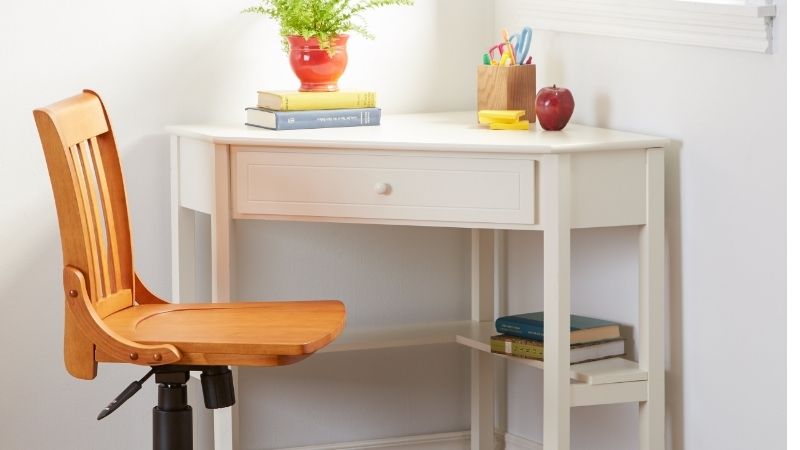
The number that matters is the chair’s outer width and depth, which includes the base and any arms — not the seat you sit on. An Offices To Go OTG11343B measures 19 by 23 inches overall, while an IKEA LOBERGET/MALSKÄR runs 26⅜ inches square; both seat one person, yet they claim very different floor space.
Match that outer figure to the gap under and around your desk. In a corner setup, depth decides how far the chair sticks out when pushed back; width decides whether it clears a side wall or a filing cabinet. Measure the knee space and the clear floor behind the desk before trusting a seat-width spec.
A smaller outer footprint also ages better in a tight room because it meets fewer walls. A chair that overhangs its desk gets knocked on every pass, loosening the base and scuffing the trim. Choosing the slimmest overall width that still fits you keeps those daily collisions, and the wear they cause, down.
Decide Between Arms and Armless
Arms add width and can stop a chair tucking fully under the top. An armless model like the OTG11343B or the IKEA LOBERGET/MALSKÄR slides right under a small desk, reclaiming the chair’s depth when you stand; a task chair with fixed arms needs the arms to clear the apron or it parks proud of the desk.
Armless suits the tightest corners and anyone who pulls the chair in to free the walkway. Arms help with longer sitting sessions and getting up, but only if they fit under your desk — measure the apron height and the arm height first, because an arm an inch too tall turns a compact chair into a space hog.
Arms are also a common wear point. Padded armrest tops flatten and peel over time and are rarely sold separately, so a worn arm can date an otherwise sound chair. Armless builds simply have fewer parts to fail, which is part of why they stay slim and serviceable in a small workspace for longer.
The Caster Base Sets the Real Footprint
Even an armless chair is only as compact as its base. A five-star caster base spreads wider than the seat for stability, and that diameter — not the seat — is what swings into a wall or a desk leg when you turn. A low-back task chair such as the Realspace Jancy lists about 24 by 26 inches overall, base included.
In a corner, leave room for the base to swivel without hitting the desk pedestal or the wall. If the floor is carpet, factor a chair mat into the clearance, since casters need it to roll freely; a hard-floor caster on carpet digs in and drags, which fights the compact setup you are trying to build.
Casters are the first thing to wear and, happily, the easiest to replace. A dragging or squeaking wheel is usually a cheap swap, not a reason to retire the chair, so favor a base with a standard caster stem. A gas cylinder that sinks is the pricier failure; check that replacement cylinders exist for the model.
Back Height and Adjustment for a Corner
Back height changes both support and how the chair reads in a small room. A low-back task chair like the Jancy keeps sightlines open and slides under a desk with an overhang; a taller back gives more lumbar support but needs clearance above the desk edge and can crowd a short wall behind it.
Pick the back that matches your sitting hours and your room. Short sessions at a compact desk do fine with a low back; all-day work wants more support, so check the backrest height and whether the seat height adjusts enough for your desk. A chair that cannot drop low enough forces a cramped posture.
Adjustment hardware is where budget chairs fail quietly. A tilt lock that slips or a height lever that creeps down are common long-term complaints, and they are hard to repair. Office-furniture certifications such as BIFMA X5.1 signal durability testing; where a maker lists it, it beats a padding description.
Top Picks
Four compact chairs cover the usual corners: an ultra-slim armless pick, a tuck-away IKEA option, a low-back task chair and a square-footprint seat with support. Overall width is the real separator here — it ranges from 19 to about 26 inches — so each entry leans on stated dimensions and a tier, not a set price.
| Product | Best For | Key Spec | Watch Out For |
|---|---|---|---|
| Offices To Go OTG11343B | Best overall for a tight desk | 19×23 in overall; armless | No arm support for long sessions |
| IKEA LOBERGET/MALSKÄR | Best for tucking fully away | 26⅜×26⅜ in; armless | Adjustment limited to the lift |
| Realspace Jancy | Best for a low-back corner | ~24×26 in; low-back task | Base still swings wide to turn |
| Lorell 25953 | Best for square-footprint support | 24×24 in overall; task chair | Check arm clearance under apron |
Offices To Go OTG11343B: Best Overall for a Tight Desk
For the smallest corners, the OTG11343B leads because its 19-by-23-inch overall footprint is the slimmest here and it is armless, so it disappears under the desk. It reads budget-to-mid tier for a commercial-grade task chair; prices move, so confirm the current price at the retailer before you order.
That narrow width is the whole appeal in a box room or a shared corner: pushed in, it frees the walkway, and the compact base swings without clipping a nearby cabinet. Being armless, it tucks the full 23-inch depth away, which a fixed-arm chair in the same class simply cannot do under a low apron.
The trade-off is support on long days, since there are no arms to rest on and the back is modest. For all-day work you may prefer more lumbar help. As a commercial-line chair, replacement casters and a gas cylinder are usually available, which keeps a daily-use seat going well past the budget mark.
IKEA LOBERGET/MALSKÄR: Best for Tucking Fully Away
The LOBERGET seat on a MALSKÄR base is the simplest way to clear a desk when you stand. Armless and about 26⅜ inches square, it rolls fully under a compact top and reads budget tier, which makes it an easy second chair or a starter for a small home office. Confirm the current price at IKEA first.
Its appeal is low commitment: no arms to catch on the apron, a molded seat that wipes clean, and a footprint that tucks away to open the floor. It suits short to medium sessions and tight shared spaces more than eight-hour shifts, where the firm molded seat and basic back begin to show their limits.
That basic specification is the catch — adjustment is limited to the height lift, with no tilt tuning at all. The molded shell is durable and easy to clean, and IKEA stocks replacement casters and cylinders, so the usual wear points are serviceable even though the chair sits at the low end of the range.
Realspace Jancy: Best for a Low-Back Corner
Where a desk sits under a shelf or a low ceiling, the Realspace Jancy keeps things open with a low-back profile and an overall size near 24 by 26 inches. It lands budget-to-mid tier for a home task chair; check the current price and the covering option, since fabrics and stock change between runs.
The low back slides under a desk overhang and keeps a small room feeling far less crowded, while still giving more lumbar shape than a flat stool or bench. It works well for a secondary workspace or a compact corner where a tall executive back would crowd the wall and block light from a nearby window.
Remember the base: at about 26 inches deep it still needs room to swivel, so measure the clear floor behind the desk, not just the knee gap. On carpet, add a mat into that clearance. The usual budget-chair watch points are the tilt lock and cylinder, so favor a run that lists replaceable parts.
Lorell 25953: Best for Square-Footprint Support
When you want more support than an armless stool without a sprawling base, the Lorell 25953 offers a tidy 24-by-24-inch square footprint as a conventional task chair. It reads mid tier for an office-grade seat; verify the current price and whether the arms are fixed or removable before you commit.
A square footprint is predictable in a corner because width and depth match, so it clears evenly on both axes when you turn. It gives the back support that longer sessions want. The catch for a small desk is the arms — measure your apron height, because arms that will not slide under cost you the clean tuck.
If the arms do block the tuck and are not removable, the chair parks proud of the desk and eats the depth you were trying to save. Office-line Lorell chairs generally offer replacement casters and cylinders, and a model that lists BIFMA testing is the safer long-term bet for daily use.
Frequently Asked Questions
Shoppers for a compact chair keep circling the same few worries: whether armless really saves meaningful space, how to size the swinging base, and whether a small chair can still support a full workday. The answers below lean on the overall dimensions listed above rather than on seat-size marketing claims.
What Size Desk Chair Fits a Small Desk?
Match the chair’s overall width and depth to the clear floor and knee space, not the seat size. The compact options here run from about 19 to 26 inches wide overall, so measure the gap under the desk and the floor behind it, then choose the slimmest chair that still fits your body comfortably.
If you are between sizes, round down on width and prioritize a model that tucks away, since a chair you can push fully under effectively returns its depth to the room. On a shared or multi-use desk, a compact armless seat also stores easier against a wall when the surface is needed for something else.
Depth is the sneaky dimension because it sets how far the chair protrudes when pushed back from a wall-facing desk. Armless models reclaim that depth under the top; arms and taller backs do not. If the desk sits in a traffic path, prioritize the depth number over a plush-seat spec every time.
Is an Armless Chair Better for a Small Desk?
Often, yes, for pure space. An armless chair tucks fully under the desk and frees the walkway, which is why two of the picks here are armless. The trade is arm support on long days, so the answer depends on how many hours you sit and whether any arms would clear your desk apron at all.
If you want arms in a tight space, look for ones that detach or that sit low enough to slide under the top. Measure the apron height first, from the floor to the underside of the desk. A fixed arm an inch too tall defeats the point by holding the chair out, turning a small-desk chair into a space hog you cannot tuck away.
There is a comfort middle ground, too: a chair with low or soft, flip-up arms gives some forearm support yet still clears the apron. Decide by your longest typical session, since an hour of email tolerates armless fine, while a full workday is where even modest arm support starts to earn back the width it costs.
Do I Need a Chair Mat on Carpet?
On carpet, usually yes, if you want the chair to roll. Standard chairs ship with hard-floor casters that drag and dig into carpet, so a mat lets the base move freely and protects the pile. The mat’s footprint also counts as clearance in a small room, so measure it into your layout early.
The mat has to match the pile height, since a thin hard-floor mat buckles on deep carpet. Alternatively, swap in carpet-rated casters, which grip and roll without a mat, though they scratch hard floors — so pick casters for the floor you actually have rather than trying to serve both at once.
Size the mat to the base’s full swing, not just the seat, so the casters stay on it as you turn and roll. A mat that is too small lets a wheel drop onto bare carpet at the edge, which drags and digs exactly where you move most, defeating the smoother roll you bought the mat to get in the first place.
Can a Compact Chair Support All-Day Work?
It can, if you prioritize adjustment over size. A small footprint does not rule out good support, but a basic budget chair with a fixed back and no tilt will tire you on a full day. Look for a real seat-height range and a working tilt, and check for BIFMA testing where the maker lists it.
If all-day comfort is the goal, a compact task chair with real adjustment beats a plush but static seat. Match the seat-height range to your desk so your forearms rest level, and choose a model with replaceable cylinders and casters so a daily-use chair stays supportive for years, not months.
Pair the chair with the desk height as well, since no seat fixes a surface that is set too high. If your forearms ride upward when the seat is adjusted for your legs, add a keyboard tray or raise the seat and use a footrest, so a compact chair is not blamed for a mismatch the desk itself is causing.
Final Thoughts
The best desk chair for small desk use is the one whose overall width, depth and base still clear the corner once you turn and stand, not the one with the comfiest-sounding seat. Measure the clear floor behind the desk and the apron height before buying, then favor replaceable casters and a cylinder so the fit lasts.