Key takeaways
- A single hot dish or a dragged serving bowl can leave a mark on a table you spent real money on. The fix is dining table padding, meaning a protective pad placed on top of the tabletop, usually under a…
A single hot dish or a dragged serving bowl can leave a mark on a table you spent real money on. The fix is dining table padding, meaning a protective pad placed on top of the tabletop, usually under a tablecloth, to guard against scratches, spills and heat. The trick is matching the pad’s fit, backing and heat claim to your table.
As an Amazon Associate we earn from qualifying purchases.
By KK Home Furnishings Editorial Team
How to Choose Dining Table Padding
Four things decide whether a pad protects your table or quietly damages it: an exact tabletop measurement, whether you choose a custom or trim-to-fit pad, what the backing does against your finish, and how the maker actually words its heat claim. Each one is easy to get wrong by eye, so work through them in order before you buy.
Start With an Exact Tabletop Measurement
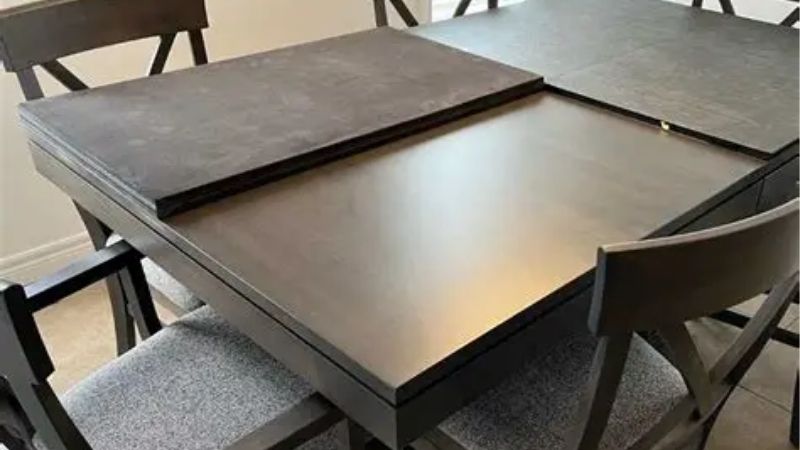
Every other decision rests on one measurement: the length and width of the tabletop itself, taken across the surface, plus the diameter at any leaves you use. A pad cut to your top protects the whole surface, while a guess leaves an exposed lip exactly where hot plates and elbows land, so measure before you shop rather than after.
Measure the way you actually use the table. If you keep leaves in most of the time, size the pad to the extended top and note the seam positions; if you store leaves, measure the closed table and plan a separate section. Round, oval and boat-shaped tops need the longest and widest points recorded, not a single number, because the pad has to follow the real edge.
An oversized pad is almost as bad as an undersized one, since overhang catches on chairs and bunches under a tablecloth. Trim-to-fit pads let you correct a slightly generous cut at home, but a custom pad is only as good as the numbers you send, so double-check the measurement and confirm how the maker wants leaves and rounded corners specified.
Choose Custom Fit or Trim-to-Fit
Pads come two ways, and the split drives both price and protection. A custom pad, like the Elite Custom Table Pad, is cut exactly to your tabletop from a solid fiberboard core; a trim-to-fit pad, like the YourTableCloth Deluxe, arrives in standard sizes with a flannel-backed vinyl top you cut down to your table at home.
Pick custom when the table is expensive, oddly shaped or used hard, because an exact cut covers the full surface and sits flat with no gaps. Pick trim-to-fit when you want quick, affordable coverage on a rectangular table and can live with a slightly less tailored edge; it is the easier choice for a rental or a table you may replace.
The long-term difference shows at the edges and folds. A rigid custom core resists dishing and holds its shape over years of place settings, while a flexible trim-to-fit pad can crease at fold lines and compress where the same hot dish always lands, so match the construction to how often the table takes a beating.
Check the Backing Against Your Finish
The side touching your table matters as much as the side facing up. Backings vary widely: the Elite pad uses a Dura-Velvet bottom, the YourTableCloth pad is flannel-backed, and a softer option like the Matouk Table Silencer is a 50 percent cotton, 50 percent polyester pad meant to cushion and quiet the surface rather than armor it.
Different finishes want different contact surfaces. A soft flannel or felt backing is gentle on polished wood and lacquer and helps the pad grip without sliding, while any pad left on a finish for long stretches should be lifted occasionally so trapped moisture does not dull the sheen; check the maker’s guidance for your specific finish before leaving a pad in place permanently.
Backing is also where cheaper pads fail first. A thin or slick backing slides under a tablecloth and can trap condensation against the wood, so favor a grippy, breathable contact layer, and remember that newer engineered-core pads should meet formaldehyde-emission limits under TSCA Title VI (EPA) if the new-pad smell is a concern in a small dining room.
Read Heat Claims Carefully
Heat protection is the claim most often oversold, so read the exact wording. In this group only the Elite Custom pad states a numeric limit, listed by the maker as up to 550 degrees Fahrenheit; the YourTableCloth, Matouk and Table Pad Factory pads describe themselves as heat-resistant without publishing a temperature, which is a weaker, unquantified claim.
Treat those as different levels of protection, not the same promise. A numeric manufacturer rating gives you something to plan around, while a bare “heat-resistant” label tells you the pad tolerates warmth but not how much, so do not assume every pad shrugs off a pan straight off the stove just because one in the category is rated to a high figure.
Whatever the label says, protect the pad itself from true cookware heat. A trivet under anything hot off a burner is cheap insurance, because repeated direct heat compresses and discolors even a rated pad over time, and a replacement pad costs more than the trivet that would have saved it.
Top Picks
These four span the real range of dining table padding, from an exact custom pad to easy trim-to-fit protection and a soft silencer layer. Construction details come from each maker’s listings; pricing on custom pads varies by table size and options, so each pick carries a tier and you should check the current price before ordering.
| Product | Best For | Key Spec | Watch Out For |
|---|---|---|---|
| Elite Custom Table Pad | Best for Exact Custom Fit | Fiberboard core; vinyl top; up to 550°F stated | Premium, made to order |
| YourTableCloth Deluxe | Best for Easy Trim-to-Fit | Vinyl top, flannel backing; multiple sizes | “Heat-resistant,” no numeric limit |
| Matouk Table Silencer | Best for Soft Table Silencing | 50% cotton / 50% polyester; custom sizes | Cushions rather than armors |
| Table Pad Factory Custom | Best Custom Alternative | Custom magnetic heat-resistant pad | Exact temp needs page confirmation |
Elite Custom Table Pad – Best for Exact Custom Fit
The Elite pad is the pick when the table is worth protecting properly. It is built on a solid fiberboard core with a vinyl top and a Dura-Velvet bottom, cut exactly to your tabletop, and it carries the only numeric heat figure in this group at a manufacturer-stated up to 550 degrees Fahrenheit. It sits at the premium end, so check the current price for your size.
Because it is cut to your measurements, it covers the full surface with no exposed lip and sits flat under a tablecloth, which is exactly what an expensive or antique table needs. The rigid core is also what lets it resist dishing over years of use, so it is the one to choose when the pad has to last as long as the table.
The trade-offs are cost and commitment. A custom pad is a made-to-order purchase, so your measurements have to be right and it takes longer to arrive than an off-the-shelf pad, and a rigid pad is harder to store than a rollable one; keep your order details in case you add leaves or change the table later.
YourTableCloth Deluxe – Best for Easy Trim-to-Fit
This is the practical, affordable choice for a rectangular table you want covered this week. It is a cushioned heavy-duty pad with a vinyl top and flannel backing, sold in multiple standard sizes you trim down to your table at home, which makes it the low-effort route to everyday scratch and spill protection. It reads as a budget-tier option, so check the current price.
The flannel backing is gentle on polished wood and helps the pad stay put, and trim-to-fit means you are not locked into a maker’s cutting turnaround. For a rental, a kids’ table or any surface where you want protection without a custom order, it does the core job without fuss.
Read its heat wording honestly: the page calls it heat-resistant but publishes no temperature, so it is not a substitute for a trivet under genuinely hot cookware. A flexible pad can also crease at fold lines and compress where the same dish always lands, so expect it to protect well against spills and scratches while treating true heat as a job for a separate pad or trivet.
Matouk Table Silencer – Best for Soft Table Silencing
The Table Silencer is a different kind of pad, meant to cushion and quiet rather than armor. It is a 50 percent cotton, 50 percent polyester pad available in custom sizes, so it softens the clatter of plates and glasses and gives a tablecloth a smoother, more finished drape over a hard surface. Pricing is retailer dependent, so check the current price.
Choose it when your main goals are comfort and a quieter, softer-feeling table rather than maximum heat or impact defense, which makes it a natural fit under a fabric tablecloth for formal dining. The soft construction follows the table edge cleanly and adds a pleasant weight to linens.
Its limit is exactly that softness: a cushioning pad does not stand in for a rigid heat-rated pad, and like the YourTableCloth it lists heat resistance without a published temperature. A soft pad can also hold spills against the surface if liquid soaks through, so wipe up promptly and pair it with a trivet when hot dishes are in play.
Table Pad Factory Custom – Best Custom Alternative
This is the second custom route, useful if you want an exact fit but a different construction than the Elite. It is a custom, magnetic, heat-resistant pad cut to your tabletop, so you get tailored coverage and sections that align cleanly on a table with leaves. It is a mid-to-premium purchase, so check the current price for your size and shape.
Custom cutting means full-surface coverage and a flat lie under a tablecloth, the same core advantage as any made-to-order pad, and the magnetic sections make a multi-piece pad easier to align and keep from shifting during a meal. It is a sensible alternative when you want a tailored pad from a dedicated pad maker.
The caveat is its heat claim: the pad is described as heat-resistant, but the exact temperature needs confirmation on the current product page rather than being assumed from another brand’s figure. As with any custom pad, your measurements drive the result, so verify leaf and corner details before ordering, and use a trivet for cookware straight off the heat.
Frequently Asked Questions
These are the questions buyers ask before committing, answered with the specifics from the picks above so you can match a pad to your table.
What is dining table padding used for?
It protects the tabletop from scratches, impacts, spills and heat, and in softer versions it also quiets dishes and smooths a tablecloth. The pad sits on the surface, usually under a cloth, so it takes the daily abuse instead of your finish; that is why fit and backing matter as much as the top layer.
How much protection you need depends on the table and the household. A hard-used family table or an expensive wood top justifies a rigid, heat-rated custom pad, while a lightly used table may only need a trim-to-fit pad against scratches and spills; decide which failure you are guarding against before you pay for the heaviest option.
If your only concern is light scratches or the occasional spill, a simpler clear protector or a tablecloth may be enough, but check it against your finish first. A pad left permanently on a sensitive finish can trap moisture, so whatever you choose, lift it occasionally and confirm the backing suits your tabletop.
Should a table pad be the exact size of the tabletop?
Yes, aim for the exact surface size, not larger. A pad cut to the tabletop covers everything and sits flat, while overhang catches on chairs and bunches under a cloth, and an undersized pad leaves the edges exposed where hot plates and elbows actually land.
The way you handle leaves changes the number. Size the pad to the configuration you use most, and if you add and remove leaves, plan matching sections rather than one oversized piece; custom pads are cut to your measurements, so the figure you send is the figure you get, which is why a careful measurement matters more than the pad brand.
Trim-to-fit pads give you a margin for error because you can cut them down at home, so if you are unsure, a trimmable pad is the safer first buy. For a custom order, confirm how the maker wants rounded corners and leaf seams specified before you commit, since those details are hard to correct after cutting.
Can a table pad go directly on wood?
Usually yes, provided the backing suits the finish, which is the whole reason backing varies between pads. A soft flannel or felt-backed pad is gentle on polished wood and helps the pad grip, while a slick or very stiff backing can slide or trap moisture against the surface over time.
The risk with any pad left in place is trapped humidity, which can dull a finish. Lift the pad occasionally to let the surface breathe, wipe up spills before they soak through, and on a delicate or newly refinished top, check the maker’s guidance for that finish rather than assuming every pad is safe to leave on indefinitely.
If you are protecting a finish you are unsure about, test the pad in a corner for a few days and watch for any sheen change before covering the whole table. A breathable backing and a tablecloth on top usually give the safest combination of protection and airflow for solid wood.
Does a table pad protect from hot dishes?
Some do, to a point, but read the exact claim rather than assuming. Only the Elite pad here states a numeric limit, listed at up to 550 degrees Fahrenheit by the maker, while the others say heat-resistant without a published temperature, which is a weaker claim you should not treat as pan-off-the-stove proof.
Even a rated pad has limits that depend on how hot the dish is and how long it sits. Direct, repeated heat compresses and discolors a pad over time, so a high stated figure is a cushion against serving-warm dishes, not an invitation to park a searing pot on bare padding; the number buys margin, not immunity.
The reliable approach is to use a trivet under anything straight off a burner or out of the oven and let the pad handle serving-temperature plates and spills. A trivet costs little and spares the pad, which makes it the sensible habit regardless of which pad’s heat rating you rely on.
Final Thoughts
Good dining table padding is less about the brand and more about matching four things to your table: an exact measurement, the right custom or trim-to-fit construction, a backing that suits your finish, and a heat claim you read literally rather than hopefully. A rigid custom pad protects an expensive top for years, a trim-to-fit pad covers a rental this week, and a soft silencer quiets a formal table; whichever you choose, measure carefully and keep a trivet handy for the dishes no pad is built to take.