Key takeaways
- A modern dining table should earn its place with fit before finish. Clean lines, rounded edges, walnut, oak, steel, and veneer can all look current, but the right choice starts with the room envelope, real seating count, and where the…
A modern dining table should earn its place with fit before finish. Clean lines, rounded edges, walnut, oak, steel, and veneer can all look current, but the right choice starts with the room envelope, real seating count, and where the legs leave knee space. These four picks make those tradeoffs easier to compare.
As an Amazon Associate we earn from qualifying purchases.
By KK Home Furnishings Editorial Team
How to Choose a Modern Dining Table
Start with the occupied room, not an isolated furniture photo. Castlery recommends about 36 inches of clearance from the table edge to walls or large furniture as a planning target. That is not a universal code, but it is a useful first check before shape, finish, or a dramatic base wins the decision.
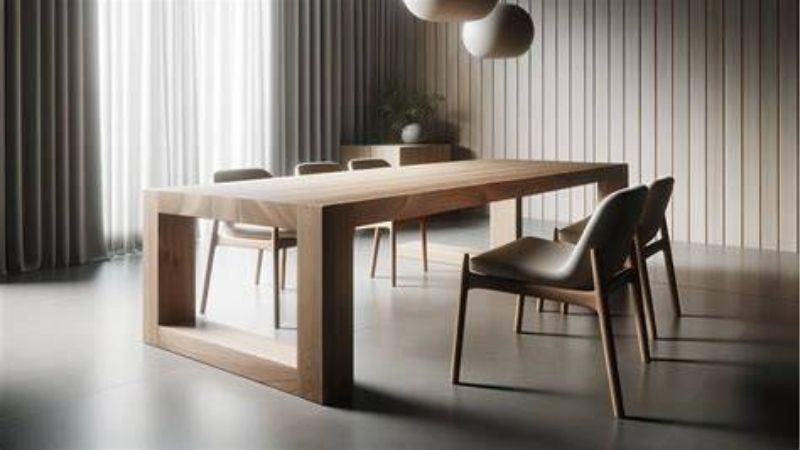
Match the Table Footprint to the Room Envelope
Measure the space where the table will live, then reserve room for chairs to pull back and for people to pass. Using a 36-inch planning clearance around the published top size, the four tables here need room envelopes ranging from about 135 by 107 inches to roughly 163 by 107 inches before nearby furniture is considered.
The Castlery Nico is the shortest rectangular option here at 63 inches long and 35.4 inches deep, while the IKEA STOCKHOLM 2025 stretches to 90.5 inches at a similar 35.375-inch depth. A longer top can add seats, but it also increases the clear wall-to-wall run needed for comfortable circulation.
Treat the clearance figure as a starting point and test your own chair depth, door swing, and traffic route. In a tight dining room, tape the tabletop outline on the floor, place one chair in its pulled-back position, and walk the path you actually use. That check often matters more than a catalog room photograph.
Check Seating Count and Leg Placement Together
Published seating counts are useful when the base leaves enough usable span for your chairs. Room & Board lists six seats on the 72-inch Rand and publishes 66 inches between its corner-set legs, while Castlery rates the 63-inch Nico for four to six people and places its cylindrical legs inward from the rounded top.
Article lists six seats for the 71-inch Seno, and IKEA lists six to eight for the 90.5-inch STOCKHOLM 2025. Those numbers are brand-stated capacities, not a promise that every armchair or extra-wide seat will fit. Chair width, apron position, and leg location can reduce the number that feels practical.
If you already own chairs, compare their overall width with the clear span between supports whenever the manufacturer publishes it. If that spacing is not listed, mock up the leg positions from the assembly drawing or product diagram. A modern dining table with a generous top can still feel cramped when the base interrupts knees.
Use Materials and Finish to Set the Modern Style
Modern does not point to one material. The Seno uses walnut veneer with solid rubberwood, the Nico is solid American oak, the Rand configuration here pairs a solid walnut top with a natural steel base, and the STOCKHOLM 2025 combines oak veneer with solid-wood veneered legs. Each creates a different visual weight.
Warm walnut and oak work well when the room already has black, cream, stone, or muted upholstery because the grain becomes the softer focal point. A steel base introduces a sharper architectural line, while an oval veneered top reduces hard corners visually. Keep the number of competing wood tones limited so the table reads as intentional.
Finish also changes upkeep. Article advises a soft damp cloth and avoiding harsh household cleaners on Seno. IKEA specifies damp-cloth cleaning and periodic screw retightening for STOCKHOLM 2025. Follow the maker care sheet rather than treating all wood, veneer, lacquer, and steel finishes as interchangeable.
Coordinate Chairs, Lighting, and Visual Weight
A modern dining table feels current when the whole dining zone is balanced, not when every item matches. Slim legs and a rectangular top can take a fuller upholstered chair, while a sculptural base often looks cleaner with simpler seating. Leave enough visual separation between the chair backs and the underside of the pendant or chandelier.
For the four tables here, the lightest visual profiles come from Seno and Rand because their legs sit near the corners and the tops read as relatively thin. Nico is more sculptural, with a 1.6-inch top and chunky cylindrical legs. STOCKHOLM 2025 uses a long oval silhouette that softens a large dining footprint.
When mixing finishes, repeat one element elsewhere instead of matching everything. A natural steel base can echo a light fixture, walnut can repeat in a sideboard, and oak can connect to flooring without being identical. This kind of controlled repetition keeps the dining area cohesive while preserving contrast and depth.
Top Picks
No single table is an outright overall winner because room length, chair width, and preferred material can reverse the choice. The comparison below uses verified overall dimensions, stated seating, and published construction. The room-envelope figures are derived from the same 36-inch planning clearance so the fit differences stay comparable.
| Product | Best For | Key Spec | Watch Out For |
|---|---|---|---|
| Room & Board Rand 72-inch Table | Best For Configurable Materials | 72W x 36D x 29H in; seats 6; 31 top options | Premium tier; glass and stone tops are unattached |
| Article Seno 71-inch Dining Table | Best For Mid-Century Proportions | 71W x 37.5D x 29H in; seats 6 | Veneer and solid-wood mix; some assembly required |
| Castlery Nico 63-inch Dining Table | Best For Compact Solid Oak | 63W x 35.4D x 29.9H in; seats 4-6 | Bulky delivery; standard service excludes assembly |
| IKEA STOCKHOLM 2025 Table | Best For 6-8 Seats | 90.5L x 35.375W x 29.5H in; seats 6-8 | Long room envelope; chairs sold separately |
Room & Board Rand 72-inch Table – Best For Configurable Materials
The main caveat with the Rand is cost and configuration complexity: this is a premium-tier table, and some glass or stone tops sit unattached on the base. In the 72-inch walnut and natural-steel configuration, Room & Board lists a 72 by 36 by 29-inch size, six seats, and a 66-inch span between the legs.
That leg spacing is the strongest reason to consider Rand for a six-chair setup. The 26-inch floor-to-bottom clearance and corner-set steel legs keep most of the long sides usable, while the 31 published top options let you shift the look from solid wood to glass, stone, quartz, ceramic, or powder-coated MDF.
With a 36-inch planning clearance, this size calls for a room envelope of about 144 by 108 inches before a sideboard or doorway intrudes. The walnut top uses a water-based acrylic finish and the natural-steel base is lacquered. Full-service furniture delivery is part of the buying model, so access measurements matter early.
Article Seno 71-inch Dining Table – Best For Mid-Century Proportions
Seno is not an all-solid-walnut table, so buyers specifically seeking solid walnut throughout should look elsewhere. Article lists walnut veneer with solid rubberwood, a 71 by 37.5 by 29-inch overall size, a 77-pound product weight, and seating for six in a mid-century modern profile with slim legs.
The proportions make Seno an easy visual fit for many contemporary dining rooms without turning the table into the dominant object. Its derived planning envelope is about 143 by 109.5 inches with 36 inches around the top, almost the same length requirement as the 72-inch Rand but with a little more tabletop depth.
Seno sits in a mid-tier band for this group. Article says some assembly is required, estimates about 15 minutes, and offers a 30-day satisfaction guarantee. Setup is fairly simple, but care still matters: use a soft damp cloth, avoid harsh cleaners, and keep the wood away from strong heat sources.
Castlery Nico 63-inch Dining Table – Best For Compact Solid Oak
Nico uses thick, rounded legs, so its sculptural look trades some under-table openness for visual presence. Castlery lists the 63-inch version at 63 by 35.4 by 29.9 inches, with a 1.6-inch top, 42.5 inches between the legs at the stated measurement height, and seating for four to six people.
The table is solid American oak with a glazed chestnut PU lacquer finish, and Castlery publishes a 220.5-pound maximum bearing support for this size. Its derived room envelope is about 135 by 107.4 inches, the shortest of the four rectangular or oval footprints here when the same circulation allowance is applied.
Nico sits in a mid-to-premium tier and ships as bulky furniture. Castlery says the legs need fitting, while standard shipping does not include unpacking or assembly; White Glove service can handle both. The product also carries a five-year limited warranty and 30-day returns, useful details for a large furniture order.
IKEA STOCKHOLM 2025 Table – Best For 6-8 Seats
The STOCKHOLM 2025 needs the longest clear run in this group, so its six-to-eight-seat capacity is best for a room that can support a 90.5-inch top. IKEA lists the oval table at 90.5 by 35.375 by 29.5 inches and recommends indoor use. The long sides provide more seating length without a deep rectangular footprint.
Its tabletop is a layered construction using particleboard, honeycomb paper filling, oak veneer, and clear acrylic lacquer; the legs are solid wood with oak veneer. IKEA states that the table meets EN 15372 and ANSI/BIFMA X5.5 requirements for safety, durability, and stability in general non-domestic use.
This is a premium-tier IKEA option in this group. The same clearance method produces a planning envelope of about 162.5 by 107.4 inches, so delivery and room fit deserve attention. Dining chairs are separate, and IKEA recommends retightening the screws after about two weeks and as needed. That maintenance step is simple but easy to overlook.
Frequently Asked Questions
A modern dining table is easier to choose when the styling question is separated from the fit question. These answers focus on six-seat sizing, material tradeoffs, circulation space, and shape so you can compare a favorite design against the dimensions and construction details that affect daily use.
What Size Modern Dining Table Works for Six People?
For six people, a practical starting point is a table around 60 inches long and 30 inches deep or larger, which matches Room & Board guidance for six-seat rectangular tables. The exact fit still depends on chair width, leg placement, and whether anyone needs to sit at the short ends.
The six-seat examples here illustrate the range. Nico is 63 inches long and is rated for four to six, Seno is 71 inches and rated for six, and Rand is 72 inches with six seats and a published 66-inch span between the legs. STOCKHOLM 2025 extends to 90.5 inches and is rated for six to eight.
If your chairs have arms or wide upholstered backs, measure them instead of relying on the seat count alone. Place the chairs side by side at the spacing you prefer, then compare that run with the usable distance between table supports. This avoids buying enough tabletop length but too little clear chair space.
Is Solid Wood Better Than Veneer for a Dining Table?
No, solid wood is not automatically better than veneer for every buyer. Solid wood can be refinished more aggressively in some constructions, while high-quality veneer can deliver stable grain coverage and reduce the amount of premium lumber required. Finish system, substrate, edge treatment, and care still matter.
Nico is the clearest solid-wood example here, using solid American oak. Rand can be configured with a solid walnut top, while Seno combines walnut veneer and solid rubberwood. STOCKHOLM 2025 uses oak veneer over an engineered core with solid-wood veneered legs, showing how different modern tables mix materials.
Choose based on the surface you want to live with rather than a simple hierarchy. If you expect frequent moves or refinishing, ask how thick the finished surface is and what repairs the maker allows. If consistency and a lighter engineered structure matter more, a veneered construction may be a sensible fit.
How Much Clearance Should I Leave Around a Modern Dining Table?
Around 36 inches from the table edge to walls or large furniture is a useful planning target, and Castlery publishes that figure in its dining-table guidance. It should be treated as a starting point rather than a guarantee because chair depth, room traffic, drawers, doors, and seated bodies change the space required.
The room-envelope comparison in this guide applies the same allowance to all four tables, which makes the size differences easier to see. Nico needs the shortest clear length at about 135 inches, while STOCKHOLM 2025 reaches roughly 162.5 inches. Nearby furniture can push the practical requirement higher.
Test the busiest side of the room rather than measuring empty wall space. Pull a chair back, open the nearest door or cabinet, and walk behind it. A table can technically fit between walls yet still create an awkward route to the kitchen, patio, hallway, or storage furniture used every day.
Is an Oval or Rectangular Table Better for a Modern Dining Room?
Neither shape is universally better. Rectangular tables make efficient use of straight walls and can give clear long-side seating, while oval tables remove sharp corners and visually soften a long footprint. The better choice depends on traffic flow, the chair layout, and whether the room already has many hard lines.
Seno, Rand, and Nico are rectangular interpretations with different edge treatments and base positions. STOCKHOLM 2025 uses an elongated oval, which can make circulation around the ends feel less abrupt. That benefit does not reduce its overall length, so the 90.5-inch dimension still needs a large enough room.
For an open-plan room, use the table shape to reinforce the zone. A rectangular top can align with cabinetry, an island, or a rug edge, while an oval top can create contrast against boxy architecture. Keep the seating and light fixture centered on the table so the dining area reads as one composition.
Final Thoughts
Before ordering a modern dining table, measure the delivery route as carefully as the dining zone: entry door, hallway turns, stair landings, elevator, and the final doorway. A table that works beautifully on the floor plan can still become a difficult delivery when a long top or bulky base cannot reach the room intact.