Key takeaways
- In down vs down alternative bedding, real down typically insulates well with little weight, while polyester alternatives can cost less and suit shoppers avoiding feathers. Neither is automatically cooler, easier to wash, or better for allergies. Compare warmth level, fill…
In down vs down alternative bedding, real down typically insulates well with little weight, while polyester alternatives can cost less and suit shoppers avoiding feathers. Neither is automatically cooler, easier to wash, or better for allergies. Compare warmth level, fill weight, the outer fabric, and the actual care label before choosing.
As an Amazon Associate we earn from qualifying purchases.
By KK Home Furnishings Editorial Team
Down vs Down Alternative: What Is the Real Difference?
Down refers to the soft clusters beneath the outer feathers of ducks and geese. Down alternative is a category of fills designed to imitate that loft, commonly polyester fiber or microfiber. A few alternatives use other fibers, so inspect the actual composition instead of assuming every product is polyester or animal-free. The comparison below concerns comforters and duvet inserts, not pillow firmness.
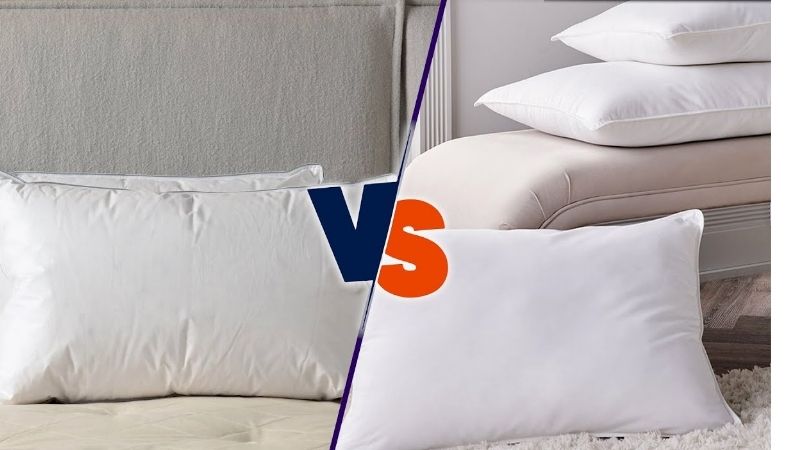
This comparison draws on the U.S. Federal Trade Commission guidance on down labeling, IDFL fill-testing explanations, Textile Exchange certification criteria, and published bedding care instructions reviewed in October 2026. It is an editorial comparison of materials and construction, not a hands-on comparison of particular comforters. No tested sleep-temperature or durability results are claimed.
| Decision Factor | Natural Down | Down Alternative | What to Check |
|---|---|---|---|
| Fill source | Duck or goose underplumage clusters | Usually polyester or microfiber; sometimes other fibers | Exact fill composition and percentage |
| Warmth for its weight | Typically strong insulation with relatively little fill weight | May need more filling to achieve comparable insulation | Published warmth level and fill weight |
| Loft and drape | Airy, compressible clusters with good loft recovery when cared for | Ranges from cloud-like clusters to flatter batting | Stitching and how fill is distributed |
| Heat and moisture comfort | Varies with amount of down, cover fabric, and room | Also varies substantially by fiber, shell, and weight | Lightweight option and breathable shell |
| Laundry | Some washable, but full drying and adequate machine capacity matter | Often washable; oversized designs can still need commercial machines | Model-specific sewn-in care label |
| Allergy questions | Actual feather sensitivity is possible; dust and mites also matter | Not automatically allergen-free; dust can still collect | Known sensitivities and cleanable covers |
| Price and ownership | Often a higher initial price, with potential long service life | Often lower upfront price, but loft retention varies | Build quality, cleaning effort, and budget |
| Animal sourcing | Animal-derived; RDS may document a certified supply chain | Synthetic polyester contains no animal down; blends vary | Certifications and actual material list |
Read the table as typical trade-offs, not performance guarantees. A thin down comforter can be less warm than a heavily filled synthetic one. Likewise, a tightly woven shell may affect breathability even if the fiber inside has favorable properties. Start with the warmth recommendation for your room and sleep habits before treating either fill as the automatic winner.
What Down and Down Alternative Are Made From
True down consists of soft clusters rather than the broad, quilled outer feathers that are sometimes mixed into bedding. The FTC expects down and feather claims to reflect actual content, and a claim of entirely down fill must be substantiated. If a description says down and feathers, the percentages are more informative than marketing words such as luxury or hotel-style.
For a synthetic alternative, read the law label and item specifications. Polyester microfiber, recycled polyester, and proprietary fibers are not interchangeable performance grades. Some products use a blend of recycled polyester and cellulosic fiber, while others use cotton, wool, or silk. An alternative fill does not establish that the whole item is vegan if the shell or trim uses animal-derived materials.
Warmth, Fill Power, and Fill Weight Are Not the Same
Fill power measures the volume occupied by a specified quantity of down under a defined laboratory method. IDFL explains why conditioning and measurement methods matter. A higher down fill-power number generally indicates more loft per unit of mass; it does not alone reveal how warm the finished comforter feels on a particular bed. Fill weight and the amount of insulation also matter.
Do not compare the fill-power number of a down insert directly with the total pounds of polyester filling in another product. Instead compare the maker’s warmth category, fill distribution, shell, and intended sleeping environment. A box-baffle design may allow more room for lofty down, while a sewn-through seam can create thinner areas. Stitching is therefore a functional detail, not merely decoration.
Cleaning, Allergies, and Sourcing Need Separate Checks
Many synthetic comforters are machine-washable, but that is a model claim rather than a rule for every alternative fill. The Company Store gives cold, gentle washing and low or no-heat tumble drying instructions for specific polyester-filled products, while Brooklinen directs buyers to commercial machines for its own oversized inserts. Read the label and check whether the machine lets the bedding move freely.
Neither material automatically eliminates dust mites or other bedroom allergens. Cleaning the protective cover and keeping the entire insert dry matter; people with a confirmed sensitivity to bird materials may have another reason to choose a non-feather fill. If animal welfare is your concern, a genuine Responsible Down Standard claim addresses sourcing and chain of custody, not washability or heat performance.
Which Fill Should You Choose in Seven Everyday Situations?
The most useful comparison is your sleeping situation, not a ranking of unrelated products. These examples show when one fill is a practical starting point and when a different fabric weight or construction matters more. They also separate price, washing, and ethical preferences so a feature that is unimportant to you does not decide the purchase.
You Sleep in a Cold Room but Dislike Heavy Covers
Start with a down comforter labeled for the warmth level you need. Down can provide substantial insulation with a relatively light, lofty fill, reducing the heavy draped feeling that some sleepers dislike. Examine both fill power and fill weight, because high loft alone does not guarantee that a lightweight, summer-rated insert will keep a cold sleeper comfortable in winter.
Consider a baffle-box construction if you want room for loft and a consistent filled surface. Check the shell for down leakage and whether the fill is distributed evenly. A warm synthetic can also work, but it may feel bulkier at comparable warmth. If you enjoy the feeling of a heavier cover, that added weight may be a preference rather than a drawback.
You Overheat or Your Bedroom Temperature Changes Often
Choose a lightweight comforter in either fill instead of assuming that down alternative must sleep cool. Heat retention depends on the actual amount of insulation, fabric covering, airflow, and bedroom temperature. A thick polyester insert can be hotter than a lightly filled down one, and a heavyweight down comforter can also be too insulating for someone who runs warm.
Look for a light warmth category and an outer fabric you find comfortable. A breathable cotton shell can be a useful preference, but weave and added covers still change how the whole setup feels. If you switch between cool evenings and warm mornings, removable layers may be more adaptable than an all-season comforter marketed as perfect for every room.
Children, Pets, or Spills Make Laundry a Frequent Job
Down alternative is often the more practical default when laundry is frequent, provided the specific label allows machine washing. The deciding limitation may be the comforter’s size in the washing machine, not the fill type. A queen or king insert packed into a small washer may fail to rinse or dry fully and can strain seams regardless of what fibers are inside.
Choose a protective duvet cover that can be washed separately and remove stains promptly according to the care instructions. The Company Store advises commercial front-loading equipment for some large polyester-filled models. Do not copy one brand’s wash settings onto another product, particularly if the shell, backing, or fill construction differs.
You Want Light, Springy, Hotel-Style Loft
Natural down deserves the first look if you value a soft, compressible insert that regains loft when shaken and aired appropriately. The down clusters can spread out to create fullness without requiring a dense, weighty filling. But a luxurious look also depends on good baffle construction, quality shell material, and enough filling for the chosen bed size.
High-grade clustered synthetic fillings can imitate that appearance, sometimes very convincingly when new. Examine how a comforter is stitched and whether large unfilled corners develop after laundering. The label alone cannot predict its long-term shape. Do not treat phrases such as cloud-soft or premium loft as measured performance without published support.
Avoiding Animal-Derived Fill Is a Priority
Select an alternative whose disclosed fill and other components meet your requirements. A polyester-filled insert avoids duck and goose down, while cotton-filled options may also satisfy that preference. Verify any wool, silk, leather trim, and blend disclosures if you require a fully animal-free product. Marketing a product as down alternative does not establish certification or full-material composition.
If you are open to animal-derived down but care about sourcing, examine a product-specific Responsible Down Standard claim. Textile Exchange describes RDS as a voluntary system addressing bird welfare and traceability, including prohibitions on live plucking and force feeding. RDS is not a statement that down is vegan, and no certification should be assumed merely because the brand sells a certified item elsewhere.
Two People Sharing a Bed Prefer Different Warmth
Neither down nor down alternative solves opposing temperature preferences by itself. Consider two separate twin-sized covers or different-weight layers so each person can adjust independently. The lighter-sleeping partner may prefer a thin synthetic or thin down insert, while the colder sleeper may benefit from more down loft or a warmer synthetic. The fill decision comes after the desired warmth level.
If using a single king cover, favor the fill and warmth rating that both can tolerate and adjust with separate sheets or light throws. Check how much the insert hangs over the edges and whether the duvet cover fits its actual measurements. An oversized comforter can add drape, but its mass and coverage will not make a too-warm fill comfortable.
You Want Lower Upfront Cost Without Ignoring Longevity
Down alternative commonly offers a lower entry price, making it reasonable for a guest room, seasonal bedding, or a budget-sensitive purchase. You still need to compare shell quality, stitching, and whether the fill keeps its shape after the care routine you expect to use. Synthetic clusters that mat quickly can require replacement sooner, and price alone does not settle value.
Down often costs more initially but can retain loft for years when its construction and care are good. This is a potential ownership advantage, not a promise for any particular manufacturer or a fixed lifespan. Consider whether you have access to an appropriately sized washer and dryer, whether professional cleaning would be needed, and what a protective cover adds to upkeep.
Frequently Asked Questions
These questions address material labels and long-term use details that warmth-based shopping advice does not settle. They are useful when two comforters have similar descriptions but very different specifications, fill mixtures, or certification claims.
Is Down Alternative the Same Thing as Microfiber?
No. Down alternative describes the filling category, while microfiber describes very fine fibers that may be used in that filling or in fabric. Polyester microfiber is common, but alternative inserts can also contain other synthetic or blended fibers. An outer cover made of microfiber does not reveal what is inside the comforter.
Check the fill-composition field rather than relying on the product title. A polyester shell with down fill is still a down comforter; a cotton shell with polyester clusters is an alternative-fill comforter. This distinction matters when you are shopping for animal-free material, a particular fabric feel, or a specific laundry method.
Does Higher Down Fill Power Always Mean a Warmer Comforter?
No. Higher down fill power generally means more loft per unit of down, not a complete warmth rating for a finished comforter. The actual mass of filling, dimensions, baffle construction, and shell change the amount and distribution of insulation. A summer-weight high-fill-power duvet may therefore be less warm than a winter-weight duvet using lower-fill-power down.
When comparing two down products, look for the same testing basis if the manufacturer publishes fill power, then compare their fill weights and intended warmth levels. The testing laboratory IDFL describes multiple conditioning methods, another reason not to treat a bare number as a universal guarantee. Different brands may use different warmth labels.
Can Down and Down Alternative Both Be Used Inside a Duvet Cover?
Yes. Either type of comforter may function as a duvet insert if its size and construction suit the cover. Corner loops or ties can help hold it in place, but they are product-specific details rather than a requirement of one fill category. Choose a compatible length and width rather than assuming every queen insert is identical.
A removable cover can protect either fill from routine body oils and soil and is easier to launder than a bulky insert. It will also influence how warm and breathable the combined bedding feels. For a close, smooth appearance, compare the actual insert and cover measurements printed by their respective manufacturers.
Is Recycled Polyester Down Alternative Automatically More Sustainable?
No. Recycled content describes the origin of some fibers, not the entire environmental impact of a comforter. Manufacturing, fabric construction, dyeing, expected service life, laundering, and disposal still matter. A brand may state recycled fiber percentages or publish chain-of-custody certifications, but those claims should be checked for the actual item.
The Global Recycled Standard and Recycled Claim Standard address particular recycled-content and supply-chain claims; they are not warmth or comfort ratings. Compare those disclosures with realistic longevity and maintenance needs. Conversely, the Responsible Down Standard addresses welfare and chain of custody for animal-derived down, not a blanket proof of low environmental impact.
Final Thoughts
The best answer to down vs down alternative is a trade-off: choose down when airy warmth for its weight and lasting loft matter most, or a well-constructed alternative when you prefer non-feather fill, simpler routine care, or a lower upfront price. Neither wins every sleep environment. Compare warmth rating, actual fill, shell, wash label, and any product-specific certification before deciding.