Key takeaways
- If you are asking how much electricity does an electric blanket use, the answer depends on its rated wattage and actual heating time. A Westinghouse heated throw lists 100 watts: at that continuous draw, one hour uses 0.10 kWh, costing…
If you are asking how much electricity does an electric blanket use, the answer depends on its rated wattage and actual heating time. A Westinghouse heated throw lists 100 watts: at that continuous draw, one hour uses 0.10 kWh, costing about 2 cents at the July 2026 U.S. residential average rate. Real usage can be lower when heat cycles off.
As an Amazon Associate we earn from qualifying purchases.
By KK Home Furnishings Editorial Team
How Much Power Does an Electric Blanket Use?
The number on the tag or controller is the starting point, not a universal figure for every electric blanket. Westinghouse publishes a 100-watt rating for its gray heated throw, a 50-by-60-inch model. That is a specific product example; it does not establish the wattage of every bed-size blanket, dual-control design, or older unit.
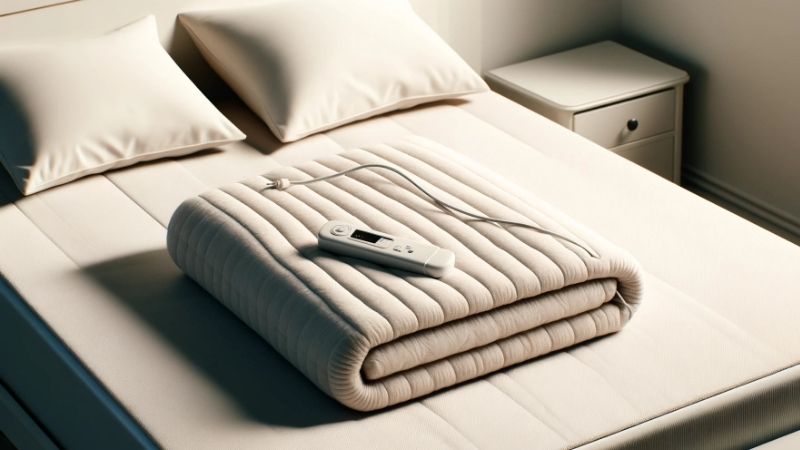
This guide uses manufacturer-published wattage, U.S. Energy Information Administration definitions and July 2026 residential pricing, and guidance from ESFI and UL Solutions. Figures are researched rather than personally measured. The table models full rated power for each interval, not an observed test of any thermostat or controller.
| Time at 100 W | Electricity Used | One Session at 18.31 Cents/kWh | 30 Sessions |
|---|---|---|---|
| 15 minutes | 0.025 kWh | Less than $0.01 | About $0.14 |
| 30 minutes | 0.050 kWh | About $0.01 | About $0.27 |
| 1 hour | 0.100 kWh | About $0.02 | About $0.55 |
| 90 minutes | 0.150 kWh | About $0.03 | About $0.82 |
| 2 hours | 0.200 kWh | About $0.04 | About $1.10 |
| 3 hours | 0.300 kWh | About $0.05 | About $1.65 |
| 4 hours | 0.400 kWh | About $0.07 | About $2.20 |
Every row assumes steady 100-watt consumption for the whole period and uses the EIA July 2026 nationwide residential average of 18.31 cents per kWh, released in September 2026. Actual tariffs vary by utility and location. Thirty sessions means thirty separate uses, not necessarily a recommendation to run the item every day.
Wattage Is a Power Rating, Not a Monthly Bill
Watts describe the rate of electrical use while a device is operating. Kilowatt-hours describe how much energy it has consumed over time, which is what an electricity bill generally prices. The EIA distinguishes these units explicitly. A 100-watt label alone cannot tell you the monthly cost without knowing how long the unit draws power.
Find the rating on the sewn label, underside of the controller, supplied manual, or official listing for the exact model. It may appear as W or as an electrical input specification. If several separate controllers supply different heating zones, read their combined instructions rather than assuming one controller represents the entire blanket.
What a Published 100-Watt Rating Actually Supports
Westinghouse describes a 100-watt, 50-by-60-inch heated throw with six heat settings and a four-hour automatic shutoff. Those specifications are manufacturer statements for that listing, not a meter reading. Another blanket may carry a different rating, and even the same label does not reveal the power drawn during every minute of a heating session.
The figures in the table are transparent maximum-duration examples at an assumed continuous 100-watt draw. A controller that cycles its heating element can have a lower measured energy total during the same elapsed time. Conversely, a different, higher-rated product should not be assigned these exact costs without checking its own electrical label.
Why 2026 Electricity Prices Change the Answer
The EIA reported an average U.S. residential electricity price of 18.31 cents per kilowatt-hour for July 2026. That is a national monthly statistic, not the tariff every household pays. A home in a high-price state or on a time-of-use plan can face a substantially different price for the same energy consumed by heated bedding.
Look at the variable energy price on your utility statement, including any per-kWh supply or delivery charges that apply to additional use. Fixed account fees do not usually increase because of one more blanket session. If the bill shows changing peak and off-peak rates, use the price relevant to the period you actually operate the blanket.
What Changes Electricity Use in Seven Situations?
The strongest variables are the electrical rating, how much of a session the heater is energized, and the length of that session. These examples distinguish measured energy from a rough estimate, show what two controls can change, and explain when a cheaper-looking blanket may not lower your whole-home heating costs.
1. You Prewarm the Bed for Half an Hour
For the illustrated 100-watt input, a half-hour of continuous heating represents 0.05 kWh, or about one cent at the EIA reference rate. That is an energy estimate, not a guarantee about how fast bedding warms. A blanket that reaches a comfortable level and cycles off will show a different reading from an uninterrupted load.
UL Solutions advises using an electric blanket to warm the bed and then turning it off before sleep. Prewarming is a sensible example of a limited session, but only if the particular manual permits the arrangement. Keep it spread flat, check the control, and switch it off and unplug it when finished as the safety guidance advises.
2. You Leave a Higher Heat Setting Selected
A higher setting may keep the heating element energized more frequently or change how a product regulates warmth. It does not follow that setting 8 always consumes twice as much power as setting 4. Manufacturers rarely publish a measured watt-hour figure for each control position, and heat settings are not standardized across brands.
If you need to know the difference, use a suitable plug-in electricity meter during separate, supervised sessions of comparable duration. Avoid covering, folding, or pressing the powered blanket to force a longer heat cycle. An abnormally hot area, damaged cord, or erratic controller is a stop-use warning, not an opportunity to compare energy readings.
3. You Have a Queen or King Blanket With Two Controls
A larger bed blanket may have separate heating zones, but its total electrical rating must be checked by exact model. Running both zones can draw more power than energizing only one if the design truly allows independent operation. Neither bed size nor controller count provides enough information to announce a universal total wattage.
Read the manual and product label to identify the full unit rating and the behavior of each zone. When testing energy at the wall, compare the meter with one allowed zone on and with both allowed zones on, under safe operating conditions. Do not disconnect or alter an energized controller to simulate single-zone use.
4. Your Blanket Turns Its Heater On and Off
UL 964, the safety standard for electrically heated bedding, recognizes that some bedding is thermostatically controlled. A thermostat can interrupt or adjust heating after the product warms, so time plugged in is not the same as time drawing its full rated power. Room conditions and control design can affect those cycles.
This is why the table uses a declared full-power assumption rather than calling its costs typical. To learn actual consumption, record kilowatt-hours with a meter across the whole permitted session, including warmup. A short snapshot of instantaneous watts could miss a heating cycle and misrepresent average use.
5. You Compare a Heated Throw With a Space Heater
A heated throw is meant to warm bedding or a person within the use conditions of its manual; a space heater is intended to warm room air and nearby surfaces. Those are different heating jobs. A low-wattage throw can use less electricity while operating than a high-output room heater, but this alone does not prove equivalent comfort or savings.
Whole-home costs depend on whether you actually reduce use of the central heating system and whether the rest of the home still needs adequate warmth. A blanket cannot provide frost protection for pipes or the environmental heating required by other occupants. Do not replace safe room heating with a powered blanket for someone unable to sense overheating.
6. You Use It Under a Different Electricity Rate
At the national July 2026 reference price, two hours at a continuous 100 watts represents about four cents. That figure changes when the utility applies a different per-kWh rate. It also varies with the chosen model, actual cycling, or time-of-use period. A universal claim that all heated blankets cost only pennies per night would hide those conditions.
Use a recent bill or utility account portal for your actual rate rather than assuming the EIA average applies to you. If you are on a prepaid plan or have a separate seasonal rate, confirm the applicable period. Separate metered energy from fixed account charges and avoid promising any exact monthly reduction in your heating bill.
7. You Want to Cut Costs Without Extending Use
The most direct ways to reduce electric blanket consumption are shorter permitted sessions and a heat level that achieves your desired warmth without needless runtime. Insulating the room, dressing appropriately, and using ordinary unheated bedding can also improve comfort, but never pile layers over powered bedding in a manner its manual prohibits.
ESFI warns against leaving electric blankets unattended or operating them while sleeping, and warns about folds, damaged cords, extension cords, and covering the appliance while powered. Use a reputable, appropriately listed product; UL 964 is a standard category, not proof that a particular SKU has been certified. Check the label and safety instructions.
Frequently Asked Questions
These questions address measurements and assumptions not settled by a simple cost estimate. Use the exact model manual for safe-use limits, and remember that electricity prices and controller behavior can make two similarly described blankets perform differently.
Is a 100-watt electric blanket always drawing 100 watts?
No. A 100-watt product rating describes a specified electrical input, but a thermostatic controller may reduce or interrupt heating during operation. Some electronics can also draw a small amount when connected but not actively heating, depending on design. The rating is a useful starting point, not a continuous-use log.
For a real answer, use an appropriately rated, compatible plug-in energy meter and examine kilowatt-hours over an approved session. Check that the controller and outlet are in good condition and do not introduce an extension cable or power strip. If the manual forbids an accessory or arrangement, follow the manual rather than taking the reading.
Can an electric blanket noticeably increase my electric bill?
It can increase the bill, but the size of that increase is specific to your wattage, sessions, and electricity tariff. In the table, thirty two-hour sessions at a continuous 100-watt draw represent about $1.10 at the EIA July 2026 average. That is an illustration rather than a promise or a forecast for your household.
A bill includes many appliances, changes in weather, heating and cooling needs, utility fees, and potential price adjustments. If the bill jumps sharply, do not automatically blame the blanket. Compare actual measured consumption and usage records with your tariff before attributing an increase to a small heated-bedding item.
Does the auto-off timer reduce electric blanket energy use?
An auto-off feature can limit operating time when it stops heating as specified by the manufacturer. Westinghouse lists a four-hour automatic shutoff for its particular heated throw, but other models have different controls. A timer does not guarantee the heating element ran at maximum wattage before shutting down.
The feature also is not permission to leave heated bedding unattended or sleep with it on. ESFI gives conservative advice against powered use while sleeping, and UL Solutions recommends prewarming before bedtime and switching the blanket off. Consult the exact manual; an automatic shutoff is a backup feature rather than a substitute for supervision.
Do electric blankets use electricity when switched off?
Some controllers may draw a small standby amount while plugged in, while an actual mechanical disconnection can remove that draw. There is no justified universal standby wattage for electric blankets without a specific model and measurement. A power indicator going dark does not itself document zero watt-hours over an extended period.
When you are finished, follow the manufacturer’s shutdown procedure and unplug the device as UL Solutions recommends. Never pull on the cord or disturb connectors while the unit is operating. If a plug or controller is damaged, stop use instead of continuing to meter it. The safer practice also avoids needless standby use.
Final Thoughts
To answer how much electricity does an electric blanket use, start with the exact wattage and your local kWh price, then consider how long the heat actually runs. A published 100-watt model offers a clear example, not a category average. Meter permitted sessions for better estimates, and never trade electrical safety for a lower bill.