Key takeaways
- An electric blanket vs space heater decision comes down to what needs warming. Choose a heated blanket for one person’s direct, localized comfort while awake; choose a space heater for supervised warming of room air. Neither device is appropriate for…
An electric blanket vs space heater decision comes down to what needs warming. Choose a heated blanket for one person’s direct, localized comfort while awake; choose a space heater for supervised warming of room air. Neither device is appropriate for every sleeping situation, and their power ratings serve different jobs.
As an Amazon Associate we earn from qualifying purchases.
By KK Home Furnishings Editorial Team
Electric Blanket vs Space Heater: Key Differences
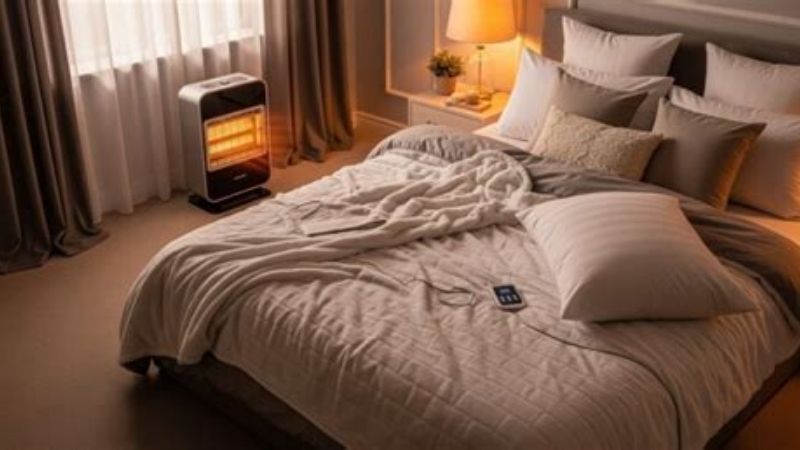
The comparison is not simply which appliance becomes hotter. A blanket transfers heat through the fabric around its user, while a portable electric heater warms surrounding air and nearby surfaces. The most useful choice depends on occupancy, the size of the area, electrical demand, and whether the proposed setting allows safe use.
| Decision Factor | Electric Blanket | Electric Space Heater | Practical Takeaway |
|---|---|---|---|
| Where warmth goes | Directly to the person under the blanket | Room air and nearby objects | Blanket for one seated person; heater for shared room comfort |
| Published example rating | Bedsure HeatX: 110 W per controller | Lasko CT14401: 1,500 W on high | Examples from named models, not category averages |
| One hour at full rated input | 0.11 kWh for one 110 W controller | 1.50 kWh for 1,500 W | Illustrative maximum-input arithmetic, not measured typical use |
| Four hours at full rated input | 0.44 kWh for one controller | 6.00 kWh for 1,500 W | Real demand changes with settings, cycling, and shutoff |
| Placement and use | Use flat as the product instructions permit; no pinching or folding | Level floor, clear of combustibles, plugged into wall | Never treat the two devices as interchangeable |
| While sleeping | General ESFI guidance advises against sleeping with it on; verify specific manual | CPSC says turn it off before sleeping | Do not rely on an automatic timer as permission |
What Each Appliance Actually Heats
A blanket’s heating elements operate close to the covered person’s body, so the user can feel warmer without first raising the entire room’s temperature. It works best when someone can safely remain under the fabric as directed. It does not condition the surrounding room for other occupants or warm exposed areas in the same way.
An electric space heater produces heat that spreads into its surroundings through air movement, radiation, or both, depending on the design. This can help people sitting apart feel more comfortable in a chilly room, but performance varies with drafts, insulation, layout, and heater placement. A watt rating alone cannot guarantee a specific room temperature.
Why Power Use Is Not an Equal-Comfort Test
Bedsure lists 110 W per controller for its HeatX queen heated blanket, while Lasko lists 1,500 W for the CT14401 ceramic tower heater [Bedsure, HeatX listing; Lasko, CT14401 listing; accessed October 2026]. These are examples of product specifications, not evidence that every blanket or heater has those wattages.
The energy table applies EIA’s kilowatt-hour definition to uninterrupted operation at those published inputs [EIA, Measuring Electricity]. A thermostat may cycle the heater; a blanket controller may regulate its elements or turn off. More importantly, the devices warm different areas, so comparing only their kWh cannot establish equal comfort or overall household savings.
Safety Rules Differ More Than Features Suggest
The Consumer Product Safety Commission instructs users to keep portable heaters at least three feet from bedding, curtains, furniture, and other combustibles, plug them directly into wall outlets, and switch them off when sleeping [CPSC, 2026]. Set a heater on a stable, level surface and keep its power cord away from traffic and fabrics.
For electric blankets, ESFI cautions against extension cords, power strips, folded or tucked heating fabric, and placing objects on top; its general prevention guidance also discourages use while sleeping [ESFI, Electric Blanket Fire Prevention]. Follow the exact blanket’s care and use instructions, and discontinue use if fabric, connectors, or cords are damaged.
Which Should You Choose in Six Everyday Situations?
Think about who is cold and what you expect to change. Each situation below identifies a likely starting choice and an important limitation. The best option is the one that meets the real need without creating an unsafe cord route, blocked heater clearance, or unapproved sleeping arrangement.
One Person Reading or Watching TV on the Couch
For one awake adult who wants warmth while sitting still, a properly used electric blanket is usually the more targeted tool. It concentrates warmth around the covered person rather than working to warm the living room. Select a fabric size and controller arrangement that can lie as directed without being compressed by cushions or recliner parts.
A space heater becomes more useful if the couch is far from a safe electrical connection for a blanket, or if uncovered hands and feet need warmer room air. However, the three-foot clearance must be achievable from the sofa, throws, and curtains. If that clearance is not possible, do not squeeze a portable heater into the remaining gap.
Working at a Desk in a Chilly Home Office
A space heater may suit a person who needs warmer air while typing, moving around, and stepping away from the chair. Choose a location on the floor that meets the manufacturer’s clearance instructions and does not put a cord where a rolling chair can catch it. Turn the heater off whenever the room is unattended.
A heated blanket can suit quieter seated work when it can drape freely and the controller remains accessible. It is less convenient if the person frequently stands up, rolls a chair across cables, or layers the fabric under heavy desk accessories. An electric blanket should never be used as a floor mat or under the wheels of a chair.
Keeping Several People Comfortable in One Room
When several people are spread around a common room, warming the room is generally a better match than warming only one person. A properly sized and positioned space heater may provide supplemental heat, but its claimed coverage is model-specific and depends on room heat loss. It is not a substitute for assessing the home’s primary heating system.
Several heated blankets could provide separate personal zones, but that does not automatically make the arrangement more economical or safe. Check the electrical load and placement for each appliance, and never connect multiple devices through a power strip. If occupants need a stable room temperature, consider building heat and insulation first.
Taking the Chill Off a Bed Before Lights Out
A compatible electric blanket may be useful for warming bedding before getting into bed, if the manufacturer’s manual permits that use. Follow the model’s layering and placement instructions, then turn it off and disconnect it as instructed before sleeping. ESFI’s general safety guidance cautions against sleeping with electric heating fabric switched on.
A portable space heater is not a bed warmer and must not be aimed into bedding or left on through the night. CPSC explicitly advises switching portable heaters off when sleeping [CPSC, 2026]. If a sleeping area is persistently too cold, address the room’s approved heating and insulation rather than treating unattended portable heat as the solution.
Dealing With a Cold or Drafty Room
If cold air makes the entire space uncomfortable, a blanket only helps the covered occupant; the room itself remains cold. A portable heater can provide some local room heat while awake and present, but open doors, unsealed windows, and poorly insulated walls may require far more heat than expected. Check drafts and the existing thermostat first.
Do not assume a 1,500-watt heater will achieve any specific temperature in any room. The heater’s operating time can grow with heat loss, while an electric blanket will not protect plumbing or unattended rooms from freezing. In prolonged cold weather, maintain appropriate primary home heating and follow local emergency-heating guidance.
Homes With Children, Pets, or Limited Heat Awareness
Both choices need added scrutiny when children or pets may pull cords, cover heating surfaces, or move close to hot equipment. A heater’s tip-over switch and a blanket’s automatic shutoff can reduce certain hazards but are not substitutes for safe placement and supervision. CPSC warns that portable heaters can be hazardous for people unable to respond to overheating.
For anyone who may not readily notice excessive heat or move away from it, do not assume that direct heated fabric is the safer alternative. Ask a clinician or caregiver for individual guidance when heat sensation or mobility is reduced, and follow any product-specific contraindications. A safely maintained central heating system may be the better choice.
Frequently Asked Questions
These additional questions cover outlet loading, emergency heating, and common assumptions about electric heaters. They matter even after you have decided whether your primary need is personal warmth or warmer room air.
Can an Electric Blanket and a Space Heater Share an Outlet?
Do not assume they can. ESFI specifically says not to plug other electrical devices into the same wall outlet as a portable space heater, and it directs users to plug the heater straight into the wall [ESFI, Home Safety]. A convenient two-socket receptacle does not by itself show that a circuit can safely support a large heating load.
Do not use a power strip, extension cord, or multi-outlet adapter to make space for both. If you are unsure whether a circuit can accommodate your appliances, ask a qualified electrician rather than relying on the apparent number of available sockets. Keep both devices’ plugs and cords undamaged and accessible.
Can a Heated Blanket Replace Whole-Home Heating?
No. A heated blanket can make an individual user more comfortable while awake, but it does not keep the whole dwelling warm. It cannot protect unoccupied rooms or water pipes during freezing conditions, and it does not resolve heating needs for other people. Treat it as a localized comfort product rather than a building heating system.
If your primary heat fails, follow local emergency advice and contact the building owner, utility, or heating contractor as appropriate. Never use ovens, grills, or other unapproved equipment as room heaters. The right response to dangerous indoor cold is a safe heat source or a warmer location, not longer unsupervised blanket use.
Do Electric Space Heaters Produce Carbon Monoxide?
An all-electric resistance space heater does not burn fuel during normal operation, so it does not generate carbon monoxide through on-site combustion. Fuel-burning portable heaters are different and can create carbon monoxide hazards. Make sure you know which kind you own before following any safety advice aimed at combustion appliances.
Even without combustion, an electric heater still poses potential fire, burn, and electrical hazards. Follow CPSC’s clearance and shutoff advice. Every household should also maintain appropriate smoke alarms, while carbon monoxide alarms remain important where combustion sources or attached garages could expose occupants.
Does a Radiator-Style Heater Always Use Less Power Than a Fan Heater?
No. An oil-filled electric radiator and a ceramic fan heater can have the same rated electrical input despite different heat-delivery methods. Neither design guarantees a lower power bill from its name alone. Actual energy consumption depends on input settings, thermostat operation, room conditions, and how long heat is requested.
When comparing specific heaters, read their labels and compare energy in kilowatt-hours under equivalent operating conditions. A heater with a lower setting can draw less while operating, yet may run longer. If efficiency is the priority for sustained room heating, compare the home heating system and heat-pump options rather than just heater shapes.
Final Thoughts
The right electric blanket vs space heater choice starts with the heating target. For supervised, awake personal comfort, a suitable electric blanket offers focused warmth; for several occupants or cold room air, a correctly placed space heater addresses a different need. Check exact model instructions, power ratings, and safety clearance before using either.