Key takeaways
- The verified 70 7/8-inch width exceeds Samsung’s example screen width.
- A 15-inch-high unit keeps the furniture line visually low.
- Modular door options separate visible electronics from everyday accessories.
A 70-inch television can look at home on a simple bench or in a full media wall, but the screen’s real width, foot placement, and weight determine what fits. These entertainment center ideas for 70 in tv layouts compare six practical approaches, from a compact modular console to a wide storage wall, without confusing an attractive cabinet with a TV-rated support.
As an Amazon Associate we earn from qualifying purchases.
By KK Home Furnishings Editorial Team
Low-Profile Entertainment Centers for a 70-Inch TV
Start with the television model, not its diagonal label. For example, Samsung lists its 2025 US-market 70-inch U8000F at 61.7 inches across, 11 inches deep with its stand, and 42.8 pounds with the stand attached. Those are Samsung model measurements, not dimensions shared by every 70-inch set. Compare your exact television’s footprint and weight with the cabinet manufacturer’s stated limits before selecting a look.
| Idea | Space or Size Needed | Cost Tier | Effort and Time |
|---|---|---|---|
| Low modular TV bench | About 71-inch cabinet, subject to exact TV footprint | Entry to mid furniture tier | Cabinet assembly and anchoring; check all parts |
| Wide soundbar-ready credenza | Roughly 80 inches or wider if wall space allows | Mid furniture tier | Measure devices and cable access before assembly |
| Paired side towers and center bench | Wide wall; clear access around screen and doors | Mid to upper furniture tier | Multiple units and separate wall anchors |
| Floating bench beneath wall-mounted TV | TV-rated wall mount plus independently secured bench | Mid to upper installation tier | Verify wall construction and mounting instructions |
| Drawer-based gaming media center | Broad cabinet; device ventilation and drawer clearances | Mid furniture tier | More internal organization and cable routing |
| Asymmetric cabinet with side return | Uneven or narrow wall with clear circulation | Entry to mid furniture tier | Layout planning; fewer full-width built-ins |
1. Low Modular Bench With a Calm, Uncluttered TV Wall
Best For: Apartments and straightforward family rooms where the screen should dominate, not a tall shelving structure.
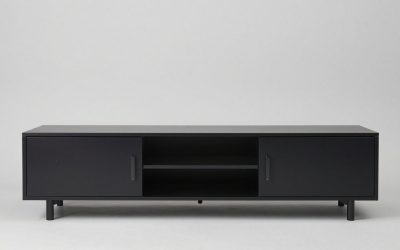
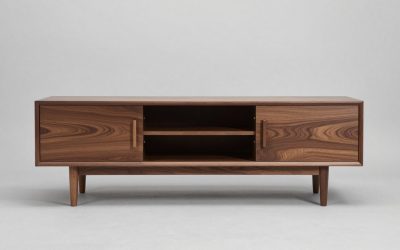
A low, wide cabinet gives a large screen a stable-looking visual base while leaving the wall open around it. This layout is especially useful when the same room accommodates conversation, dining, and television: fewer vertical dividers make the 70-inch display feel less crowded. Keep the decorative objects off the immediate edges of the screen so the TV remains the clear focus.
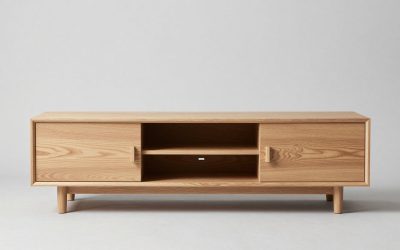
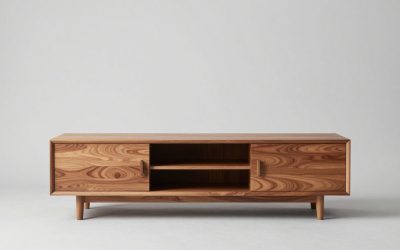
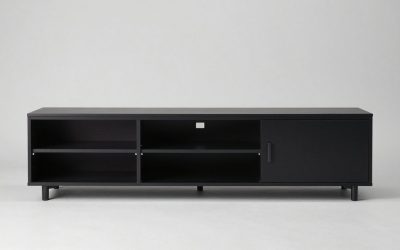
IKEA’s US BESTÅ TV unit 005.657.77 is a concrete scale reference: 70 7/8 inches wide, 15 3/4 inches deep, and 15 inches high, with a published top TV-weight limit of 66 pounds. Samsung’s 70-inch U8000F is 42.8 pounds with its feet, making the published loads plausible for that pairing; verify the actual foot span, model manuals, and assembled unit before placing any screen on it.
Plan the cabinet as everyday furniture, not an empty shelf for a television. Closed sections can hold remote controls and spare HDMI leads; one accessible compartment should handle the connected equipment. IKEA’s documentation also specifies support legs and wall anchoring conditions for the relevant unit. Finish changes and modular door choices can improve appearance, but they do not expand the stated TV load limit.
Pros:
- The verified 70 7/8-inch width exceeds Samsung’s example screen width.
- A 15-inch-high unit keeps the furniture line visually low.
- Modular door options separate visible electronics from everyday accessories.
Cons:
- The cabinet is not suitable for every heavier 70-inch TV.
- Short furniture gives limited room for tall receivers or speakers.
Who Should Skip It: Choose the wide credenza if a soundbar, receiver, and several consoles need dedicated shelf space.
2. Wide Credenza With a Dedicated Soundbar Zone
Best For: Movie-focused living rooms with multiple connected devices and enough wall width for generous side margins.
A credenza wider than the television creates breathing room for audio equipment without crowding the screen. An approximately 80-inch-or-wider layout is a design option rather than a universal requirement: the useful dimension depends on the TV feet, speakers, and wall. A central open bay makes more sense than ornamental end shelves if a soundbar and streaming box must remain visible.
To judge the proportions, compare the 61.7-inch body width and 44.2-inch stand-foot spacing published for Samsung’s 70-inch U8000F against any proposed credenza. A wider top alone does not prove suitability; its published TV capacity must also cover the screen and stand. As a cautionary example, IKEA lists one taller, 94 1/2-inch BESTÅ combination with only a 35-pound TV limit.
Place speakers so the cabinet front does not cover their output or the TV’s remote receiver. Measure the usable interior width of the soundbar bay as well as its height, then check the soundbar manufacturer’s placement directions. When shopping in the mid design tier, favor practical shelves and removable cable access over carved trim that leaves no room to unplug a console.
Pros:
- The longer top can provide landing space beyond a 61.7-inch screen.
- A dedicated audio bay reduces competition between soundbar and accessories.
- Separate closed sections hide cables without sacrificing equipment accessibility.
Cons:
- A visually wide cabinet can still carry a surprisingly low TV-weight rating.
- Oversized pieces restrict walkways in narrow living rooms.
Who Should Skip It: Choose a low modular bench if your media setup is simple and the wall cannot accommodate a credenza.
3. Center TV Bench With Two Independent Storage Towers
Best For: Larger family rooms where books, games, and closed storage must share one substantial television wall.
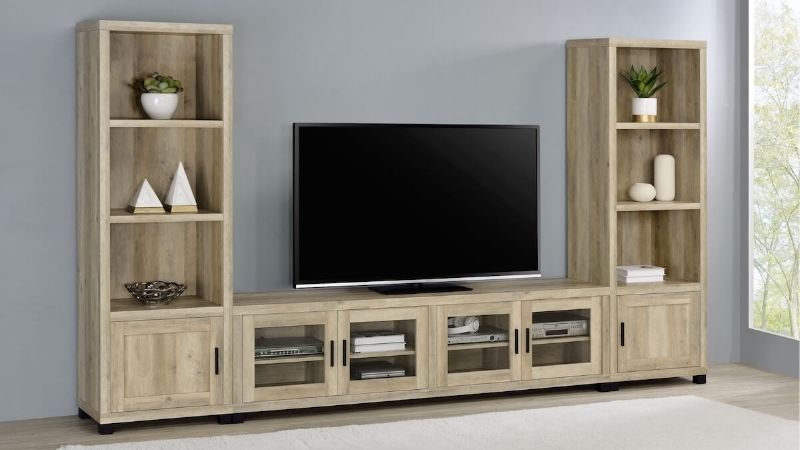
Paired side towers make the television part of a designed wall rather than an isolated black rectangle. The strongest version puts a properly rated TV bench at the center and keeps the tall storage cabinets structurally independent. This separation matters: it allows shelving to evolve without resting upper furniture on a television cabinet not engineered to support that additional load.
Use the actual 70-inch screen width when sketching the opening. Samsung’s 61.7-inch U8000F width is a useful manufacturer example, but the required clearance changes with each TV and its access ports. Leave the sides usable for service and for the television maker’s specified ventilation. Measure the total wall and doorway dimensions before committing to full-height towers.
Put high-use remotes and games in easy-reach lower compartments and decorative books where they are visible without competing with the display. Tall cabinets need their own anti-tip fittings installed according to the manufacturer. This multi-piece arrangement costs more in materials and assembly than a single bench, but its strongest advantage is flexible storage that does not depend on replacing the TV.
Pros:
- Independent towers let storage grow without loading the TV bench.
- Mixed open and closed storage suits a family media collection.
- Swappable shelves accommodate changing games and streaming equipment.
Cons:
- Two tall units increase anchoring work and delivery complexity.
- Careless side spacing can block TV ventilation or service access.
Who Should Skip It: Choose the floating-bench idea if you want open wall space rather than a symmetrical shelving frame.
Wall-Mounted and Storage-First Layouts for Larger Screens
A large TV does not always have to rest on the furniture below it. Wall-mounted displays can separate screen support from storage, which opens up slimmer cabinet styles, but only when the mount and the wall structure are suitable. Meanwhile, households with game consoles often benefit more from lower drawers than decorative shelving. The remaining designs solve those different jobs instead of repeating the same console in another finish.
4. Wall-Mounted Television Over a Long Floating Bench
Best For: Minimalist rooms where floor space feels precious and the wall can accept an appropriate television mount.
Floating storage makes a 70-inch display look intentionally framed while leaving the floor line visible. The essential design decision is to support the TV and the cabinet independently: a floating media unit is not automatically a shelf for a television. Set screen height for your actual seating position and use the open area beneath the bench for easy cleaning, not as an excuse to skip cable routing.
IKEA offers a wall-mounted BESTÅ bench configuration measuring 94 1/2 inches wide, 16 1/2 inches deep, and 15 inches high. Its listing describes three combined frames and cable-management openings, but wall load depends on wall construction and suitable fixings. That width is a layout illustration, not proof the bench can carry a freestanding 70-inch TV or replace a dedicated TV wall mount.
Ask the installer to identify framing, stud positions, and any electrical lines before drilling, using the TV and cabinet manufacturers’ mounting directions. The television’s weight, mounting-hole pattern, and bracket compatibility all matter. Hidden wires may require code-compliant in-wall provisions; ordinary power cords should not simply be concealed inside a wall. Keep service access practical after installation.
Pros:
- The 94 1/2-inch bench format gives the media wall a long visual baseline.
- Separate wall supports allow TV height and cabinet height to differ.
- Visible floor beneath the cabinet suits rooms with compact footprints.
Cons:
- Wall type and anchoring details may rule out the floating configuration.
- Concealed cabling requires more careful installation and future service planning.
Who Should Skip It: Choose the low floor-standing bench when drilling restrictions or uncertain wall framing make floating installation impractical.
5. Wide Drawer-Based Center for a Gaming Household
Best For: Homes with game consoles, handheld controllers, accessories, and a television wall that needs closed storage.
A gaming-oriented entertainment center should prioritize how equipment is used, cooled, and accessed rather than how many doors it shows. Drawers keep controllers and spare cables together, while open bays accommodate devices that need unobstructed airflow. This arrangement works especially well when consoles are rotated between players and a soundbar remains permanently connected to the television.
The IKEA BESTÅ doors-and-drawers combination 695.750.00 is 94 1/2 inches wide, 16 1/2 inches deep, and 29 1/8 inches tall; IKEA states a maximum TV weight of only 35 pounds for its top. That is below the Samsung U8000F’s 42.8-pound assembled weight, so that precise television should not sit on that precise unit. Wall-mount the TV separately or choose a verified stronger cabinet.
Use drawer inserts for batteries and small controllers, and check actual device dimensions against shelf openings before purchase. Do not trap powered consoles or AV receivers behind closed doors unless their manufacturers allow that installation and ventilation. As devices change, adjustable shelves can extend the furniture’s usefulness, but hinges and runners still need regular inspection for loosening or wear.
Pros:
- Two drawers in the documented BESTÅ layout organize small gaming accessories.
- Adjustable shelves can accommodate evolving devices within their stated loads.
- Cable openings help separate frequent-use equipment from stored clutter.
Cons:
- The example cabinet’s 35-pound TV limit excludes some 70-inch sets.
- Closed bays may be inappropriate for heat-producing equipment during operation.
Who Should Skip It: Choose the side-tower layout if books and display items matter more than controller and cable drawers.
6. Asymmetric Console and Side Cabinet on an Awkward Wall
Best For: Rooms with a doorway, window, or offset seating area that makes a centered wall unit feel forced.
An asymmetrical arrangement keeps the television’s viewing position logical even when the surrounding architecture is not balanced. Place the display where seats have a clear sightline, then run a low cabinet beneath it and add a separate narrow cabinet only on the wall’s available side. This approach avoids forcing two bookcases into a room with an inconvenient doorway.
Measure the real TV body before assuming a short wall is usable. Samsung’s example 70-inch set is 61.7 inches wide; other models can vary, as can plug position and stand geometry. A cabinet that is visually shorter than the screen might work only if the manufacturer permits the intended placement and the feet fit fully on a rated surface. A wall mount changes support needs, not access requirements.
Keep the high cabinet from blocking traffic, windows, or the remote’s path to the TV. If the side cabinet stores heavy items, put them low and secure the furniture using its intended restraints. Unlike a built-in entertainment wall, the elements can be moved independently during a room redesign; that flexibility matters when a household changes sofa position or replaces the screen later.
Pros:
- A one-sided cabinet preserves space around doorways and walking routes.
- Separate furniture pieces adapt when seating or television placement changes.
- Open negative space prevents a large display from overwhelming narrow walls.
Cons:
- Uneven furniture heights need careful visual balancing and cable placement.
- The freestanding TV option still requires verified footprint and rated support.
Who Should Skip It: Choose the paired-tower arrangement when you have a broad uninterrupted wall and need symmetrical storage.
Frequently Asked Questions
Before ordering an entertainment center, separate the screen’s diagonal class from its usable footprint, and distinguish cabinet styling from structural support. These answers address common questions that often appear only after the furniture is unpacked, when returns or rearrangements are hardest.
How wide does a TV stand need to be for a 70-inch television?
The width must accommodate the actual television body and its feet according to the stand maker’s instructions. A 70-inch screen is measured diagonally, not across the front; for reference, Samsung publishes a 61.7-inch overall width for its 70-inch U8000F. That does not establish a universal cabinet-width rule.
A visually wider console often looks more balanced and leaves more room for devices, but first verify the feet sit entirely on the usable top. Check the TV’s dimensions with its original stand, not merely the wall-mount dimensions. Also make sure cables and connectors remain accessible at the back.
Can a 70-inch TV sit directly on a 70-inch-wide entertainment center?
Yes, it can if the TV’s full stand footprint fits, its complete weight is within the furniture’s published limit, and both manufacturers permit the placement. The nominal size alone is not enough. Some units wider than the screen have low allowable TV-weight ratings despite looking substantial.
For instance, IKEA’s 70 7/8-inch BESTÅ base has a stated 66-pound TV capacity, while the taller 94 1/2-inch combination discussed above specifies 35 pounds. Follow the US Consumer Product Safety Commission’s Anchor It guidance [CPSC, 2025] to use TV-intended furniture and anchor the screen and furniture appropriately; attractiveness is not an anti-tip measure.
Is a wall-mounted TV center a good choice for a rental?
It can be, but only with the landlord’s permission and a wall capable of holding the specific mount and display. If drilling is prohibited, choose a suitable floor-standing TV cabinet instead of improvising adhesive supports or hanging a heavy screen from a decorative floating shelf.
Check whether the property has masonry, wood studs, or another wall system before choosing fixings. Reversible storage arrangements are often easier to take to a new home, but even freestanding furniture may require anti-tip restraints under the manufacturer’s instructions. Plan permission and patching work before purchase.
Where should a soundbar and AV receiver go in a large media center?
Place the soundbar where its speakers and controls are not blocked, using the bar manufacturer’s placement directions. An AV receiver needs a shelf with sufficient dimensions and the free-air clearance specified in its own manual; a closed cabinet is not automatically a safe equipment enclosure.
Allow cords to reach their ports without sharp bends, and make sure doors can open when plugs are connected. If the TV and furniture are both wall mounted, keep their cable routes serviceable independently. The best-looking arrangement is the one you can still troubleshoot without dismantling the entire wall.
Final Thoughts
The strongest entertainment center ideas for 70 in tv start with the television’s actual footprint, supported weight, and the equipment you use every day. Choose a low bench for simplicity, a broad credenza for audio gear, independent towers for shared storage, or a properly installed wall-mounted arrangement when the wall permits it. Verify the exact models before committing to the furniture’s appearance.