
Key takeaways
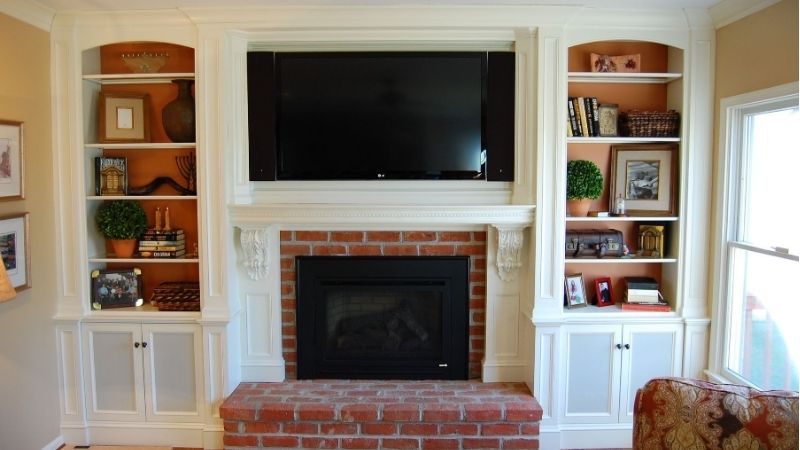
- Coordinated paint ties the television wall to existing door and window trim.
- Small accessories can occupy side surfaces without crowding the screen.
- Retaining the existing mantel may avoid a full surround replacement.
A TV centered over a mantel can be a balanced focal point only when the screen is comfortable to watch and fireplace heat is compatible with the television. Thoughtful fireplace with mantel and tv layouts begin with both instruction manuals, then use shelf depth, finishes, and viewing angles to shape the wall.
As an Amazon Associate we earn from qualifying purchases.
By KK Home Furnishings Editorial Team
Fireplace With Mantel and TV Ideas for Classic Rooms
Three familiar fireplace shapes create very different rooms: a painted surround adds architectural detail, stone supplies quiet texture, and a timber beam introduces warmth. The ideas below keep the TV centered above the mantel, not alongside the fireplace. Before styling any working hearth, verify its exact mantel-clearance chart and whether the TV manufacturer permits the proposed location.
| Idea | Space or Size Needed | Cost Tier | Effort and Time |
|---|---|---|---|
| Painted traditional mantel | Existing chimney breast with enough width for balanced trim | Low to medium for cosmetic changes | Paint and finish work; professional mounting check |
| Stone surround with slim shelf | Solid mounting zone above a hearth opening | Medium to high | Finish installation and qualified wall assessment |
| Rustic timber beam mantel | Room for an approved projecting mantel and TV mount | Medium | Carpentry plus fireplace-specific clearance verification |
| Compact electric fireplace wall | Room for a listed electric unit, shelf, and TV | Medium | Electrical planning, mounting, and finishing |
| Linear gas feature wall | Properly designed fireplace enclosure and heat outlet | High | Professional design and installation |
| Adjustable TV above a mantel | Load-bearing wall and room for mount travel | Medium to high | Mount selection and professional installation |
Painted Colonial Mantel – Best for Traditional Living Rooms
Best For: Homeowners with a conventional fireplace who want the screen to feel integrated with existing trim.
Painting the mantel and surrounding millwork the same soft white makes the TV read as one part of an architectural wall rather than as a second competing feature. This works especially well when the room already has crown molding or paneled doors. Keep the trim treatment visually quiet near the black screen and let smaller details sit at the sides.
Measure the fireplace opening, the existing mantel projection, and the usable wall width before adding molding. A painted wood shelf remains combustible even when coated, so the fireplace manual determines its permissible position. Samsung’s U.S. mounting guidance discourages locating its TVs above fireplaces because heat can affect the set [Samsung, 2026].
A muted wall color can make a black television less dominant when it is off. Check how the screen looks from your primary seat with a cardboard template before drilling, particularly if the mantel already sits high. Paint and trim repairs may be manageable cosmetic jobs; modifying a working fireplace surround or its clearances is not.
Pros:
- Coordinated paint ties the television wall to existing door and window trim.
- Small accessories can occupy side surfaces without crowding the screen.
- Retaining the existing mantel may avoid a full surround replacement.
Cons:
- Raised trim can make an already high-mounted television appear even taller.
- Painted wooden projections still require the fireplace maker’s combustible-material clearance.
Who Should Skip It: Skip ornate new millwork if your room is minimalist or your fireplace clearance rules prohibit the proposed shelf.
Honed Stone Surround – Best for Calm, Transitional Spaces
Best For: Households that prefer subtle texture around the television rather than a collection of mantel ornaments.
A pale limestone-look or porcelain surround creates a low-contrast field that supports a dark TV without turning the wall into a busy gallery. A restrained projecting ledge can define the transition between fire and screen. It is a particularly good visual choice when the sofa, curtains, and rug already contribute plenty of texture.
Choose stone, tile, adhesives, backing, and any shelf assembly for the actual fireplace application; a stone face alone does not make hidden wall materials safe at every distance. For a gas unit, mantel clearance can depend on projection and heat-management configuration, so use the exact installation manual [Napoleon, 2026].
Before ordering slabs or tile, draw the exact outside dimensions of your TV and locate its mount on a dimensioned elevation. Large-format tile minimizes joints but may require more careful substrate preparation. Stone changes the appearance, not the TV’s heat tolerance, so final approval still depends on the fireplace and television documentation.
Pros:
- Neutral surface texture complements both fabric sofas and leather seating.
- Few mantel objects are needed to achieve a finished composition.
- Tile can visually connect the firebox with nearby flooring materials.
Cons:
- Slab work and suitable structural backing increase installation complexity.
- Noncombustible facing does not automatically protect electronics behind the television.
Who Should Skip It: Avoid a heavy new surround when the wall construction cannot be assessed or a simpler finish suits the room.
Natural Wood Beam Mantel – Best for Warm Rustic Rooms
Best For: Rooms with simple furniture and enough ceiling height to balance a substantial beam below the television.
A single timber beam adds an earthy horizontal line beneath the TV, making the fireplace feel grounded without a surround of decorative objects. Use the beam’s tone to echo a nearby coffee table or floor rather than matching every wood finish. A dark charcoal backdrop can visually soften the TV, while the mantel remains the wall’s warm accent.
The thickness and projection of a wood mantel influence the clearance requirements published for a working fireplace. Do not copy a shelf height from a decorating photograph: a deeper combustible projection may require greater separation from the firebox. Verify the actual fireplace model, shelf construction, and heat behavior before committing to a beam.
Reclaimed-looking material can be achieved with a new finished beam if old timber quality or hidden fasteners are uncertain. Keep stockings, greenery, and dangling decorations away from an operating fire. A well-finished beam still needs periodic inspection for discoloration, warping, and loose supports, especially after heating seasons.
Pros:
- One horizontal timber element can replace several separate mantel decorations.
- Wood tone links the hearth visually with flooring and coffee tables.
- A simple rectangular shape suits both rustic and restrained modern rooms.
Cons:
- Deep combustible beams can limit placement under a manufacturer’s clearance chart.
- Heavy reclaimed wood may demand additional approved structural support.
Who Should Skip It: Choose a thinner noncombustible treatment instead if the required wood clearance pushes the TV uncomfortably high.
Modern Mantel and TV Layouts for Everyday Viewing
Modern fireplaces make it tempting to push the television down toward the opening, but that proximity is not a universal design permission. These three approaches suit different starting points: an electric fireplace package, a purpose-designed gas enclosure, or an adjustable TV mount for an existing mantel. Treat the wall layout and the heat path as one plan.
Compact Electric Fireplace Mantel – Best for Small Media Walls
Best For: Smaller living rooms where a narrow mantel can define the hearth without overwhelming the television wall.
An electric fireplace below a clean-edged mantel offers the appearance of a focal-point hearth without the mass of a traditional chimney breast. A painted wall panel helps the TV, mantel, and firebox look intentional. Choose the surround first by its available wall footprint and by where the heater actually expels warm air, not just the flame display.
Electric fireplaces are not automatically safe directly below electronics. Check the precise model’s installation manual for outlet direction, permitted mantel materials, and clearance above the heater. Units with a heating function may draw substantial power, so follow that model’s power-connection instructions and never block its intake or exhaust openings.
Conceal streaming devices in a ventilated cabinet away from the mantel rather than stacking them over a warm air outlet. A flame-only visual mode, when explicitly supported by the selected unit, can suit mild evenings without switching on the heater. Keep cable routing separate from the fireplace enclosure and use electrical work appropriate to the wall.
Pros:
- Compact proportions fit walls that cannot accommodate a broad masonry surround.
- Some models offer decorative flames without operating their heating element.
- A minimal mantel makes the TV the clear secondary focal point.
Cons:
- Top or front heat vents may restrict furniture and television placement.
- Electrical access and heater circuits can complicate a seemingly simple renovation.
Who Should Skip It: Avoid this treatment if the proposed vent direction would send hot air toward the TV or obstruct clearance.
Linear Gas Fireplace With a Slim Mantel – Best for Planned Renovations
Best For: Homeowners remodeling the entire fireplace wall who can plan gas venting, enclosure depth, and television placement together.
A long horizontal flame window, a narrow contrasting mantel, and a TV centered above it can produce a strong architectural composition. Use a shallow shelf to mark the divide without layering picture frames beneath the screen. The arrangement works best when the enclosure, television size, and cabinetry are designed as one elevation from the start.
Some specific gas models provide heat-management options that redirect hot air away from electronics. Heat & Glo describes TV-oriented solutions for selected gas fireplaces, including Passive Heat and SmartWall systems, but their permitted placements depend on the model and installed kit [Heat & Glo, 2026]. Never apply one model’s clearance to another.
Have a qualified installer confirm combustible mantel clearances, wall finishes, vent locations, and the TV’s permitted operating conditions before construction begins. Leave service access for the fireplace and wiring for the screen. A slim-looking media wall can still need considerable concealed space for safe airflow and manufacturer-approved components.
Pros:
- Horizontal firebox proportions complement wide screens and long, low cabinetry.
- Selected listed heat-management systems permit design flexibility when correctly installed.
- Integrated planning can hide power and signal cables without improvised routing.
Cons:
- Gas, venting, and enclosure work normally require specialist installation.
- Optional heat-management kits are not interchangeable across fireplace model lines.
Who Should Skip It: Avoid this route when a modest cosmetic refresh would suffice or professional installation is beyond your plans.
Adjustable TV Mount Above a Minimal Mantel – Best for High Hearths
Best For: Households with an existing tall mantel who need better seated viewing without rebuilding the entire surround.
A television installed over a tall fireplace may look balanced from the doorway yet feel awkward when viewed from a sofa. A tilt or height-adjustable mount can help the screen face seated viewers, while a simple painted mantel keeps the hardware visually unobtrusive. This approach addresses viewing comfort; it does not solve an unsafe thermal location.
SANUS recommends considering tilting or full-motion mounts for elevated TVs and checking both wall studs and electrical boxes before installation [SANUS, 2019]. Confirm the chosen bracket supports your TV’s exact mounting pattern and weight. The fireplace wall must offer an approved structural attachment zone that avoids flues and other concealed services.
Mock up the screen’s lowest usable position with painter’s tape and sit in every regular viewing chair. Check whether a moving screen could enter an area affected by rising fireplace heat or bump decor on the mantel. If its travel creates a heat or collision risk, limit the movement or choose a different television location altogether.
Pros:
- Tilting the screen can improve sightlines from a seated position.
- Some adjustable brackets allow alignment around off-center wall framing.
- Existing surround materials may remain untouched if mounting conditions permit.
Cons:
- A moving screen may enter the fireplace’s hot-air path when lowered.
- Some masonry or chimney walls cannot accept ordinary TV-mount fasteners.
Who Should Skip It: Do not use an adjustable bracket to compensate for failed heat checks or unsupported wall construction.
Frequently Asked Questions
Keep the fireplace manual and the approved installation drawing after the project is finished. Replacing the television, changing the mantel depth, or adding an electronic accessory can affect ventilation, clearance, or support requirements. A layout that was reviewed for one combination should not be assumed suitable for every later upgrade.
Should the mantel be wider than the television?
Not necessarily. A mantel can be shorter than the TV or extend beyond it, depending on the width of the firebox and the surrounding wall. The most convincing proportions come from testing the actual screen width against the entire fireplace surround, not choosing a fixed percentage for every room.
Mark the television outline and proposed shelf ends with removable tape, then view the wall from the doorway and main sofa. If the screen reaches almost to the side trim, a quieter narrow shelf often looks less crowded than a very wide beam. Mantel clearance and secure mounting still govern the final dimensions.
What costs matter besides the new mantel?
Include the structural TV mount, approved cable and electrical work, wall finishing, and any repairs needed when existing stone or masonry is opened. A working gas fireplace may also require professional assessment or a compatible heat-management system before the desired TV position can be considered.
A quick coat of paint is a different project from altering a vented firebox enclosure. Request separate estimates for decorative finishing, TV installation, and fireplace work, with the required scope specified. That helps distinguish an optional design upgrade from a safety requirement that cannot be omitted.
Can renters create a fireplace-and-TV wall without drilling?
Sometimes, but only within the lease and the actual wall and appliance limitations. If the fireplace is permanently out of service and the property owner confirms that status, a removable decorative mantel treatment may be an option. A TV still needs stable, approved support rather than a shelf improvised from lightweight decor.
Do not conceal working vents, drill into a chimney structure, or add a heater under a television without permission and model-specific checks. For a rental where mounting is prohibited, consider placing the television on a separate rated console while keeping the fireplace as a visual feature elsewhere in the room.
Can a soundbar sit on the mantel below the TV?
Only if the mantel can support it, the soundbar’s ventilation and mounting requirements are met, and the location stays within the device’s permitted operating conditions. Mantel surfaces near a working fireplace can be exposed to heat, and placing another electronic component there may increase clutter.
A compatible TV-mounted soundbar bracket or separate media cabinet can be a cleaner solution, subject to the support limits for both devices. Make sure the soundbar does not cover the TV’s lower screen edge or interfere with an adjustable mount throughout its full permitted travel.
Final Thoughts
The strongest fireplace with mantel and tv arrangement begins with a full-size wall mockup viewed from the sofa, not a catalog image. Ask the installer for one dimensioned drawing that marks the firebox opening, mantel projection, TV mounting zone, cable path, and the separate clearance requirements for every working component.
