Key takeaways
- If you are shopping for a kids chair, start with the child’s age, the height of the seat, and the job the chair needs to do. A reading seat, a craft chair, and a homework chair are not the same…
If you are shopping for a kids chair, start with the child’s age, the height of the seat, and the job the chair needs to do. A reading seat, a craft chair, and a homework chair are not the same thing, so the best answer is usually the one that fits the child’s routine instead of the cutest finish.
As an Amazon Associate we earn from qualifying purchases.
By KK Home Furnishings Editorial Team
How to Choose a Kids Chair
A good child-sized chair should let a child sit with feet supported, arms relaxed, and enough room to get in and out without climbing. For this guide, we focused on indoor options for reading, crafts, and early homework rather than feeding seats, outdoor chairs, or high chairs.
Start With the Child’s Age and Daily Task
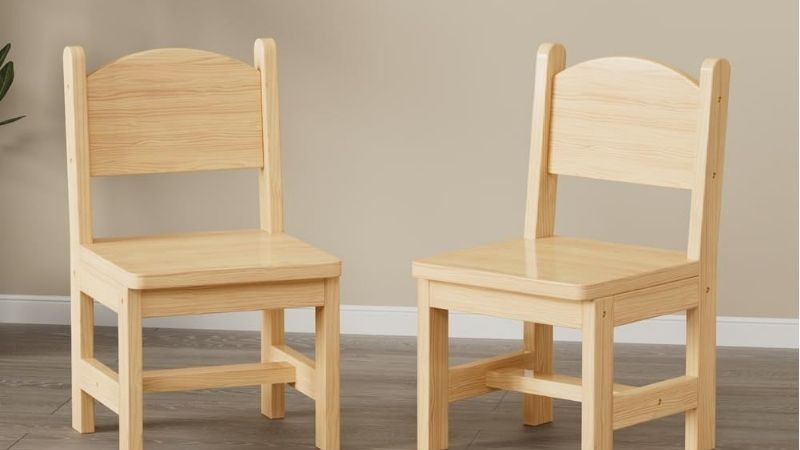
The first filter is age and routine. A lounge-style seat works best for story time or screen time, while a straighter wood chair fits coloring, puzzles, and table work better. If the seat will be used every day, match it to the activity before you start comparing colors or themes.
Official age guidance is useful because it tells you how the brand sees the chair being used. IKEA lists the SUNDVIK chair for ages 3 to 6, Melissa & Doug positions its pair for 3- to 8-year-olds, Delta Children recommends the MySize Chair Desk for ages 3 and up, and Pottery Barn Kids sizes its Anywhere Chair for ages 2 to 6.
That range matters because a broad key like kids chair can cover toddlers, preschoolers, and grade-school users. If you are buying for a younger child who mostly reads or relaxes, a lower soft seat often feels more natural. If you need a place for drawing, crafts, or worksheets, a firmer upright seat is usually the better starting point.
Read Seat Height Before You Read Style
Seat height is the number that most quickly changes how useful a chair feels. Melissa & Doug gives its wooden chairs an 11-inch seat height, and IKEA lists the SUNDVIK seat at 29 cm, or about 11 3/8 inches. Those numbers are close enough that both chairs land in the same preschool-sized zone for table work and play.
Soft chairs sit much lower. Pottery Barn Kids gives the Kids Anywhere Chair a seat height of 8.5 inches, which is a better fit for lounging than for a table. Delta does not publish a separate seat height for the MySize Chair Desk, but the full unit stands 22.83 inches high and is clearly built as a low preschool workstation.
For a seat that will sit at an activity table, height deserves more attention than style language like modern or cute. A child can always grow into a finish, but they cannot comfortably use a chair that puts the table too high or makes their knees rise awkwardly when they sit down.
Check Footprint, Arms, and Storage Needs
Small chairs can still take up surprising room once you add a table, a shelf, or a reading corner. IKEA’s SUNDVIK is compact at 28 cm wide and 29 cm deep, making it the easiest pick here to tuck beside a kids table. Pottery Barn Kids gives the Anywhere Chair a much larger footprint at 25.25 inches wide and 21 inches deep.
Delta’s MySize Chair Desk saves you from buying a separate child-sized desk, but that convenience comes with a bigger fixed footprint. The unit measures about 20 inches wide and 23 inches deep, and the attached work surface cannot be separated from the seat. That can be excellent for a dedicated project corner, but it is less flexible in a shared room.
Melissa & Doug sits in the middle. Each chair is still compact, but the pack includes two seats, so you should think about where both will live. A broad search for this product often turns into a space-planning problem, so it helps to decide early whether you need one mobile seat, two matching chairs, or a seat that already includes a work surface.
Prefer Easy-Clean Materials and Stable Construction
Children’s seating gets glue, markers, crumbs, and spills, so the surface should match the mess you expect. Solid wood and painted wood are usually the easiest to wipe clean after crafts or snacks. That favors IKEA’s pine construction and Melissa & Doug’s wood design when you want a chair that can move between art time and mealtime.
Fabric-covered foam has a different advantage. Pottery Barn Kids uses a machine-washable slipcover on the Anywhere Chair, which is helpful if the chair will be used for reading, resting, or everyday lounging. Delta also focuses on practical upkeep with a scratch-resistant finish on the MySize Chair Desk and removable storage pieces for crayons or art supplies.
Construction details matter, too. Melissa & Doug calls out a reinforced, tip-resistant design, and Delta says the MySize Chair Desk meets or exceeds CPSC safety standards. Whatever chair you choose, treat the published age guidance as a hard limit, keep it on a level floor, and avoid using it in ways the maker does not describe.
Top Picks
The best kids chair for your home depends on whether you need a simple seat, a bundled study station, a compact chair for a small table, or a soft lounge spot. These four picks stand out because each solves a different everyday problem clearly enough to justify its space.
| Product | Best For | Key Spec | Watch Out For |
|---|---|---|---|
| Melissa & Doug Pair of Solid Wood Chairs 2-Piece Set | Best Overall | 11-inch seat height, 100-pound rating | Sold as a pair, not a single chair |
| Delta Children MySize Chair Desk | Best For Preschool Projects | Ages 3+, about 20 inches wide and 23 inches deep | Chair and desk are one fixed unit |
| IKEA SUNDVIK Children’s Chair | Best For Small Spaces | Seat height 29 cm, width 28 cm | Brand guidance stays within ages 3 to 6 |
| Pottery Barn Kids Anywhere Chair® | Best For Reading Corners | Seat height 8.5 inches, ages 2 to 6 | Low lounge shape is not ideal at a table |
Melissa & Doug Pair of Solid Wood Chairs 2-Piece Set – Best Overall
This is the most balanced pick for a broad search because it stays close to what most parents mean by the term: a simple, upright, child-sized seat that can handle crafts, snacks, drawing, and everyday play. Melissa & Doug gives the set an 11-inch seat height and a 100-pound weight rating, which is strong coverage for a preschool or early grade-school home setup.
The design also solves a common real-world issue: many families do not buy one chair, they buy for siblings, cousins, or play dates. Because this set includes two matching chairs, it can outfit a small table or reading corner without a second shopping round. The reinforced, tip-resistant design is another plus when you know kids will slide the chairs around or climb in and out often.
The trade-off is simple. If you truly need one seat and no backup, buying a pair may leave you storing the extra chair. You also need to assemble the chairs yourself. Still, for a general-use kids chair that works across several activities and does not lock you into a lounge-only or desk-only setup, this is the clearest overall winner here.
Delta Children MySize Chair Desk – Best For Preschool Projects
Delta Children takes a different approach by combining the chair and work surface into one piece. For families shopping mainly for coloring, tracing, writing practice, or snack time, that bundled design can be more useful than a separate chair on its own. The MySize Chair Desk is recommended for ages 3 and up and measures about 20 inches wide, 23 inches deep, and nearly 23 inches high.
The biggest advantage is control. The seat height and desktop are built to work together, so you do not have to guess whether a separate table will line up well. Delta also includes a removable cup holder and a fabric storage bin under the seat, which helps keep markers, paper, or small toys close by. The scratch-resistant finish is a practical detail for a high-use playroom or bedroom corner.
The main limitation is flexibility. This is not the best fit if you want something that can move easily from a table to a reading nook or family room. Because the desk is attached, it uses more fixed floor space than a simple chair and cannot adapt to several table heights. For a single preschool project station, though, it makes a lot of sense.
IKEA SUNDVIK Children’s Chair – Best For Small Spaces
If space is tight, the IKEA SUNDVIK is the neatest physical fit in this guide. IKEA lists the chair at 28 cm wide, 29 cm deep, and 55 cm high, with a 29 cm seat height and a 26 cm seat depth. That compact footprint makes it much easier to slide under a small children’s table or keep in a bedroom corner without crowding the room.
The solid pine build is another reason it works well in busy family spaces. It has the straight, wipeable simplicity that suits crafts, quick snacks, and casual play, and IKEA recommends it for children ages 3 to 6. If you want a chair that feels more like mini furniture than a toy, this one has the cleanest traditional look of the four picks.
The watch-out is growth. Unlike a broader age-range chair, the SUNDVIK is a more defined preschool-size option, so older or taller children may outgrow it sooner. It is also a plain chair, which means you still need a matching kids table or another surface for activities. In a small room, however, its compact dimensions are hard to beat.
Pottery Barn Kids Anywhere Chair® – Best For Reading Corners
The Anywhere Chair is the softest and most lounge-oriented option here. Pottery Barn Kids sizes the Kids Anywhere Chair for ages 2 to 6 and gives it a seat height of 8.5 inches, with an overall footprint of 25.25 inches wide and 21 inches deep. That lower, cushioned profile is a better match for reading, winding down, or calm play than for formal table work.
It earns its place because many parents searching this term are really trying to create a cozy bedroom or story-time nook. The machine-washable slipcover helps with everyday use, and the product’s broad back and arms make it feel more like a child-sized lounge chair than a temporary floor cushion. If comfort is the main goal, it stands apart from the upright wood options.
The downside is that the same low seating that makes it inviting for books and quiet time makes it weaker at tables. It is also larger than it first appears, so you should plan its footprint before buying. For a child who needs a soft place to read rather than a seat for crafts or early homework, this option is the best fit of the group.
Frequently Asked Questions
Most questions about a kids chair come down to fit, use case, and how long the seat will stay useful. These quick answers focus on those practical buying decisions so you can avoid ending up with a chair that looks right but gets ignored after a week.
What Size Kids Chair Should I Buy?
Buy the size that matches both the child and the activity. For upright table use, the preschool chairs here cluster around an 11-inch seat height, while the lounge-style Anywhere Chair sits lower at 8.5 inches. The right fit should let the child sit down and get up without climbing or slumping.
Age guidance helps narrow the field fast. IKEA places the SUNDVIK at ages 3 to 6, Melissa & Doug uses 3 to 8 years, Pottery Barn Kids sizes the Anywhere Chair for 2 to 6 years, and Delta targets the MySize Chair Desk at ages 3 and up. Those ranges are not perfect, but they are useful as a first screen.
If the chair will sit at a table, compare the seat height to the table you already own. If the goal is a reading corner, focus more on entry height, arm support, and footprint. That is why a chair that feels ideal in a bedroom nook can feel awkward at an art table or play surface.
Is a Soft Chair Good for Homework?
Usually not as the main homework seat. A soft chair can be great for reading or relaxing, but younger children usually do better with a more upright posture when they need to color, write, or use a low table for longer stretches. That is where a wood chair or chair-desk setup tends to work better.
The difference shows up clearly in the picks above. The Anywhere Chair has a low 8.5-inch seat height and a lounge profile, while the Melissa & Doug and IKEA chairs sit around the 11-inch mark and keep the body more upright. Delta goes further by pairing the seat with a built-in work surface designed for project time.
If you want one chair for both reading and table work, an upright seat is usually the safer compromise. If your child already has a proper table chair and you want to add comfort elsewhere, a soft chair becomes much easier to justify. The best choice depends on whether work or relaxation is the main job.
How Long Should a Child Use One Chair?
It depends on the chair’s age range, dimensions, and how quickly your child grows. A preschool-scale seat may feel right for several years, but the usable life shortens if the child is already tall for their age or if the chair is being used with a table that is slightly too high.
The broadest runway in this group comes from Melissa & Doug, which markets its pair for ages 3 to 8. IKEA is narrower at 3 to 6, and Pottery Barn Kids puts the Anywhere Chair at 2 to 6. Delta’s MySize Chair Desk starts at age 3 and works best while the child is still in that lower preschool-sized furniture stage.
A simple way to tell when it is time to move on is to watch how the child enters and exits the chair and whether the surface height still feels natural. If knees crowd too high, the backrest stops being useful, or the table relation looks off, the next size up is usually the right move.
Do I Need a Matching Table With My Chair?
No, but many families eventually do. A standalone chair is enough for reading, dressing, or occasional sitting, yet activity-heavy use like coloring, puzzles, snacks, and worksheets usually works better with a table or desk that matches the chair’s size.
That is the main appeal of Delta’s MySize Chair Desk. It removes the guesswork by giving you a coordinated seat and work surface in one piece. Melissa & Doug and IKEA are more flexible because you can pair them with an existing child-sized table, but that also means you need to check fit yourself.
If your child already has a low table, a separate chair is usually the smarter buy. If not, buying a chair without a suitable surface can lead to an awkward setup that gets little use. In small rooms, deciding this before you shop can save both space and frustration.
Final Thoughts
The best kids chair here is the Melissa & Doug Pair of Solid Wood Chairs 2-Piece Set if you want the most flexible everyday option, while Delta Children makes more sense for a built-in preschool workstation, IKEA is strongest for tight rooms, and Pottery Barn Kids wins when comfort in a reading corner matters most.