Key takeaways
- 36 inches of clear walkway in front of the pantry if it faces a counter or island. 42 to 48 inches is needed if you have a dishwasher or oven opposite the pantry.
- 2 inches of breathing room on each side of the cabinet for walls and baseboards, plus 1 inch on top if you have crown molding or low ceilings.
- Door swing clearance: Hinged doors need 18 to 24 inches of clear space to open 90 degrees. Sliding or barn doors need zero swing clearance and are better for galley kitchens.
- Weight limit check: Floors in older apartments handle freestanding pantries well, but keep total loaded weight under 250 to 300 pounds for cabinets on casters or thin vinyl flooring.
What's inside
- What Size Pantry Cabinet Actually Fits a Small Kitchen?
- Shelf Adjustability: The Feature That Determines What You Can Store
- Food-Safe Materials and Construction: What Holds Up in a Kitchen
- Ventilation vs. Sealed Storage: Which Keeps Food Fresher?
- Decision Matrix: Which Pantry Cabinet Fits Your Situation
- Assembly, Moving, and Durability Realities
- How to Choose in 5 Minutes
- FAQ
The best kitchen pantry storage cabinet for a small kitchen is a freestanding cabinet 24 to 30 inches wide, 15 to 18 inches deep, and 60 to 72 inches tall with adjustable shelves and ventilated or mesh-panel doors, because it fits through standard 29 to 30-inch doorways, holds 2 to 3 weeks of dry goods for 1 to 2 people, and does not block workflow in kitchens under 100 square feet.
- What Size Pantry Cabinet Actually Fits a Small Kitchen?
- Shelf Adjustability: The Feature That Determines What You Can Store
- Food-Safe Materials and Construction: What Holds Up in a Kitchen
- Ventilation vs. Sealed Storage: Which Keeps Food Fresher?
- Decision Matrix: Which Pantry Cabinet Fits Your Situation
- Assembly, Moving, and Durability Realities
- How to Choose in 5 Minutes
- FAQ
What Size Pantry Cabinet Actually Fits a Small Kitchen?
Small kitchens are typically galley kitchens 8×10 feet, L-shaped kitchens 10×10 feet, or apartment kitchens under 70 square feet. Your pantry has to leave clearance for movement and appliance doors.

Sauder Select Storage Cabinet/ Pantry cabinets, White finish
Included for 'Kitchen Pantry Storage Cabinet: Best Freestanding Pantries for Small Kitchens' because the listing specifies White finish, details this guide uses to compare options.
View on Amazon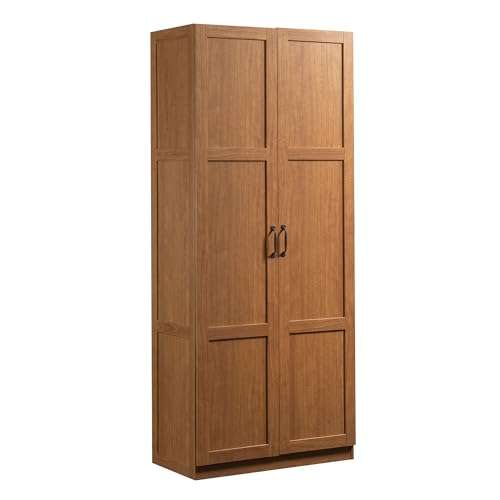
Sauder Select Storage Cabinet, Pantry Cabinet Kitchen Storage with Adjustable Shelves, Bathroom Storage Cabinet, in Highland Oak
Included for 'Kitchen Pantry Storage Cabinet: Best Freestanding Pantries for Small Kitchens' because the listing specifies Pantry Cabinet Kitchen Storage with Adjustable Shelves and Bathroom Storage Cabinet, details this guide uses to compare options.
View on Amazon
Sauder HomePlus Storage Cabinet/ Pantry cabinets, Soft White finish
Included for 'Kitchen Pantry Storage Cabinet: Best Freestanding Pantries for Small Kitchens' because the listing specifies Soft White finish, details this guide uses to compare options.
View on Amazon
Sauder HomePlus Storage Cabinet/ Pantry cabinets, Dakota Oak finish
Included for 'Kitchen Pantry Storage Cabinet: Best Freestanding Pantries for Small Kitchens' because the listing specifies Dakota Oak finish, details this guide uses to compare options.
View on AmazonUse these minimum clearances when measuring:
- 36 inches of clear walkway in front of the pantry if it faces a counter or island. 42 to 48 inches is needed if you have a dishwasher or oven opposite the pantry.
- 2 inches of breathing room on each side of the cabinet for walls and baseboards, plus 1 inch on top if you have crown molding or low ceilings.
- Door swing clearance: Hinged doors need 18 to 24 inches of clear space to open 90 degrees. Sliding or barn doors need zero swing clearance and are better for galley kitchens.
- Weight limit check: Floors in older apartments handle freestanding pantries well, but keep total loaded weight under 250 to 300 pounds for cabinets on casters or thin vinyl flooring.
| Cabinet Footprint (W x D x H) | Best For | Storage Capacity | Fits Through Doorway? |
|---|---|---|---|
| 18″ x 15″ x 65″ | Micro kitchens, studio apartments, pantry gaps between fridge and wall | 8 to 10 cubic feet; holds 30 to 40 standard cans or 12 to 15 cereal boxes | Yes, fits all interior doors |
| 24″ x 16″ x 66″ | Most small kitchens 8×10 to 10×10 ft; best all-around size | 12 to 14 cubic feet; holds a 2-week supply for 2 people | Yes, with 4 to 5 inches to spare |
| 30″ x 18″ x 72″ | Small kitchens with one open wall; families who bulk-buy | 16 to 19 cubic feet; holds small appliances on bottom shelf | Tight, measure hallway corners |
| 36″ x 18″ x 72″ | Only for kitchens with 10+ ft of uninterrupted wall | 20 to 23 cubic feet | Requires 32-inch doorway, may not fit in pre-war buildings |
If your kitchen is 10×10 feet or smaller, stay at 24 inches wide or less. A 30-inch cabinet starts to crowd the room when you also have a 24-inch deep counter and a small dining table. For a 10×12 foot kitchen, you can go to 30 inches wide if you place it on the short wall or at the end of a cabinet run, not in the middle of the work triangle.
Shelf Adjustability: The Feature That Determines What You Can Store
Fixed shelves waste vertical space. In a small pantry, adjustable shelves are not optional.
What to Look For
- Shelf peg holes every 1 to 1.25 inches: This gives you 5 to 7 height positions per shelf section. Avoid cabinets with only 3 preset slots.
- Shelf weight capacity: Look for 35 to 50 pounds per shelf for engineered wood, 50 to 75 pounds for solid wood or metal wire shelves. The total cabinet rating is usually 150 to 250 pounds.
- Shelf depth usable space: A 15-inch deep shelf holds one row of cereal boxes plus one row of cans. A 18-inch deep shelf holds two rows of cans but makes items in the back hard to see.
- Bottom shelf height: Keep the lowest shelf 4 to 6 inches off the floor. This protects food from floor-level dust and mop water and matches standard baseboard height.
Ideal Shelf Spacing by Item
- 10 to 12 inches between shelves for canned goods, jars, and spices
- 13 to 15 inches for cereal boxes, cooking oils, and small appliances like a stand mixer (which needs 14 to 17 inches of height)
- One tall section 18 to 20 inches high if you want to store a broom, bulk rice bag, or trash bin inside
Cabinets with a mix of adjustable interior shelves plus one or two door-mounted racks add 20 to 30 percent more usable storage without increasing footprint. Door racks should be no deeper than 3 to 4 inches or they will hit the interior shelves when closed.
Food-Safe Materials and Construction: What Holds Up in a Kitchen
A pantry lives near heat, steam, and occasional spills. Material choice affects off-gassing, moisture resistance, and how long shelves stay level under weight.
| Material | Pros for Pantry Use | Cons and Wear Points | Food Safety & Maintenance |
|---|---|---|---|
| Solid Wood (pine, rubberwood, poplar) | Strongest shelf span with least sag; can be sanded and refinished; holds screws best | Heaviest (80 to 120 lbs boxed); costs usually $400 to $800; can warp if humidity swings | Low VOC when finished with water-based lacquer; wipe clean, use liners for direct food contact |
| Engineered Wood (MDF / particleboard with laminate or melamine) | Lightest and most affordable (usually $150 to $350); smooth, easy-clean surface; most common for freestanding pantries | Sags over 28 inches wide without center support; swells if water sits on exposed edges | Choose CARB Phase 2 or EPA TSCA Title VI compliant boards for low formaldehyde; look for sealed edges and foil backing |
| Metal (steel frame + MDF shelves or full metal) | Highest weight capacity; best ventilation; no moisture swelling | Can dent; wire shelves need bins to hold small items; industrial look | Powder-coated steel is food-safe and non-porous; easiest to clean after spills |
| Combination (wood frame + cane / mesh / glass doors) | Ventilation plus dust protection; lighter than full solid wood | Cane and mesh need occasional dusting; glass requires careful handling during move | Excellent for food storage when shelves are solid; add shelf liners for bags of flour or sugar |
For direct contact with packaged food, all four types are safe when finished correctly. Avoid raw, unsealed particleboard interiors. If you can see or feel fuzzy, unfinished board inside, it will absorb odors and moisture. Look for melamine, laminate, or painted interiors, and add removable, washable shelf liners for flour, sugar, and produce.
Foam and fabric are not relevant for pantries, but shelf liner material matters: EVA or food-grade polyethylene liners are non-adhesive, non-slip, and do not leave residue. Avoid adhesive vinyl liners that trap moisture underneath.
Ventilation vs. Sealed Storage: Which Keeps Food Fresher?
A completely sealed cabinet keeps dust out but traps humidity from cooking. A fully open shelf keeps air moving but exposes food to dust and light. The right choice depends on what you store.
- Sealed solid doors with magnetic catches: Best for flour, rice, pasta, and spices where you want to block light and pests. Add a small silica gel canister or a 1-inch gap under the bottom shelf for airflow if your kitchen runs humid.
- Louvered, cane, mesh, or slatted doors: Best for produce, onions, potatoes, and bread that need air circulation to prevent mold. These doors reduce moisture buildup by 30 to 40 percent compared to solid doors in humid kitchens.
- Glass doors: Good compromise. You can see inventory, and they seal better than mesh but still benefit from a 0.5 to 1-inch ventilation gap at the back panel. Many pantries have a 2 to 3-inch toe kick vent or a perforated back panel for this reason.
- Wire shelves and open metal pantries: Maximum airflow but require bins or baskets to keep small packets from falling through. Pair with clear airtight containers for dry goods.
If your kitchen has poor exhaust and frequent steam, prioritize ventilated doors or a cabinet with a vented back. If you have a pest concern in an apartment building, prioritize solid doors with tight gaps (less than 2mm) and add door-seal strips.
Decision Matrix: Which Pantry Cabinet Fits Your Situation
| Your Situation | Recommended Cabinet Type | Why |
|---|---|---|
| Renter in studio or 1-bedroom, cannot wall-anchor | 24″ wide x 16″ deep metal frame with freestanding base and anti-tip feet | Lighter to move (50 to 70 lbs), no wall damage, stable without anchoring if under 66″ tall |
| Small family that bulk-buys, needs appliance storage | 30″ wide solid wood or steel-reinforced engineered wood, 72″ tall, with one 18″ tall compartment | Supports 50+ lbs per shelf for mixer, bulk bags; adjustable height handles tall items |
| Narrow galley kitchen with 36″ walkway | 18″ to 24″ wide with sliding or barn doors, 15″ deep | Saves 18 to 24″ of swing space; shallow depth keeps walkway clear |
| Kids and pets at home | Solid wood or metal with solid doors, magnetic locks, 4 to 6″ toe kick | Prevents tipping, keeps food out of reach, hides contents; anchor to wall if over 60″ tall |
| Humid climate or produce storage | Cane, louvered, or mesh-door pantry with wire or slatted shelves | Airflow prevents sprouting and mold; pair with airtight containers for grains |
| Need pantry plus counter space | 30″ wide pantry with 34 to 36″ high drawer or drop-down counter section | Creates extra prep surface at standard counter height without a full island |
Assembly, Moving, and Durability Realities
Freestanding pantry cabinets ship flat-pack in one or two boxes. Plan for the delivery before you buy.
- Box weight and size: A 24-inch engineered wood pantry ships at 65 to 95 pounds in a box 68 x 26 x 10 inches. A solid wood version ships at 90 to 130 pounds, often in two boxes. Metal frame pantries are lightest at 45 to 65 pounds.
- Doorway and stairwell fit: Measure your narrowest doorway, elevator door (often 36 inches wide but only 80 inches tall diagonally), and stairwell turn. Boxes over 66 inches long may not turn in tight apartment stairwells.
- Assembly time: Engineered wood pantries with 30 to 40 fasteners take 90 to 150 minutes with two people. Metal frame pantries take 45 to 75 minutes. You need a Phillips screwdriver and included Allen keys; a power drill speeds the process but use low torque to avoid stripping particleboard.
- What wears first: Shelf peg holes elongate under overload, door hinges loosen after 12 to 18 months of daily use, and laminate edges chip if dragged across floors. Fix by distributing weight evenly, tightening hinges every 6 months, and lifting rather than dragging.
- Anti-tip safety: Any pantry over 60 inches tall should be anchored to a stud with an L-bracket or anti-tip strap, especially on uneven floors or with children. If you cannot anchor as a renter, choose a shorter 54 to 60-inch cabinet or add 20 to 30 pounds of weight to the bottom shelf.
- Moving with it: Disassemble engineered wood pantries fully before moving. Moving them assembled cracks cam locks. Solid wood and metal frames can be moved assembled if you remove shelves and doors first and wrap the frame.
To make shelves last, never exceed the listed per-shelf limit and add a center support leg or vertical divider if your shelves span more than 30 inches. For daily-use items, place them between waist and eye level (28 to 60 inches high) to reduce bending and reaching.
How to Choose in 5 Minutes
Measure your wall, check walkway clearance, and note the narrowest doorway the box must pass through. Pick width based on that measurement, not on maximum storage. Then filter for adjustable shelves every 1 inch, a per-shelf limit of at least 40 pounds, and an interior finish that is sealed melamine or painted wood. Finally, choose door type by food: solid doors for packaged dry goods and pest control, ventilated doors for produce and humid kitchens. A 24×16-inch pantry with 5 adjustable shelves hits the sweet spot for most small kitchens under $300 to $500 and leaves room to add baskets and clear containers later.
FAQ
How deep should a kitchen pantry storage cabinet be for a small kitchen?
15 to 18 inches deep is ideal. Deeper than 20 inches makes it hard to reach items in the back and intrudes on walkways. If you are tight on space, 14 to 15 inches deep with door racks gives you more accessible storage than a single 20-inch deep shelf.
Do I need to anchor a freestanding pantry cabinet?
Anchoring is recommended for any cabinet taller than 60 inches, or if the cabinet is narrow and top-heavy when loaded. Use a wall anchor into a stud or masonry anchor. If you cannot drill, keep the heaviest items on the bottom shelf and use furniture anti-tip straps that attach with adhesive and can be removed with minimal damage.
Can I store small appliances in a pantry cabinet?
Yes, if the shelf is rated for 40 to 75 pounds and has 14 to 18 inches of vertical clearance. Leave 2 to 3 inches of ventilation space around microwaves and toasters, and avoid enclosing heat-producing appliances with solid doors while in use. Store the appliance, then pull it out to the counter to operate.