
Key takeaways
- An off-white rug separates a pale cabinet from gray upholstered seating.
- Slim cabinet proportions can keep a short TV wall visually open.
- Warm curtain fabric softens an otherwise cool, reflective television corner.
A gray TV stand can look intentional in a gray living room when each surface has a different role. For living room ideas grey with grey tv stand, start with contrast, texture, and lighting, not identical shades. These six complete room schemes show how to style the screen wall and seating without losing practical storage or safe TV placement.
As an Amazon Associate we earn from qualifying purchases.
By KK Home Furnishings Editorial Team
Light and Welcoming Gray Living Room Schemes
For everyday rooms, a pale-gray or charcoal TV stand should be one layer within a full arrangement of seating, rugs, walls, and lamps. Choose a direction based on natural light and existing furniture before deciding on decorative accessories. The comparison below covers six distinct room setups, not six products; cost tiers and effort levels are qualitative because every room starts from a different point.
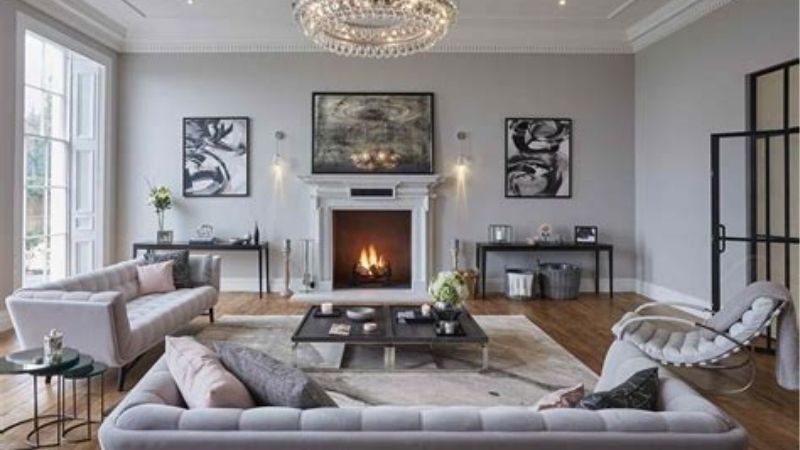
| Idea | Space or Size Needed | Cost Tier | Effort and Time |
|---|---|---|---|
| Pale gray stand and airy whites | Compact room with a clear TV wall | Low to mid | Rearrange fabrics and lamps before buying furniture |
| Charcoal cabinet and pale walls | Light-gray room with adequate walking space | Mid | Swap or refinish the console and simplify decor |
| Warm greige with oak and linen | Family room with warm flooring and natural textures | Low to mid | Sample undertones and adjust textiles |
| Cool slate with muted blue-gray | Bright room with existing cool furniture | Mid | Choose restrained blue details and reflection-free finishes |
| Mid-gray tonal wall and ribbed doors | Media wall with shelf and equipment clearances | Mid to high | Compare sheen samples and organize device ventilation |
| Gray stand on charcoal feature wall | Room with controllable screen glare and lighting | Low to mid | Test wall paint and reposition side lighting |
1. Layer a Pale Gray TV Stand Into a Bright Compact Room
Best For: Renters and apartment dwellers who want a calm, light-filled television wall without repainting the whole living room.
A pale gray TV stand belongs in a compact room when it makes the television area feel lighter rather than smaller. Pair it with slightly deeper gray upholstery and white or warm-ivory curtains so the cabinet remains visible against the wall. This is a whole-room composition: furniture scale, daylight, and textiles matter more than finding a paint color that perfectly matches the stand.
Start with an existing light-gray cabinet, an off-white wall, and a low-pile cream rug with muted gray threads. A simple flat-front media console is easier to read visually than a bulky carved piece, especially near a narrow doorway. Check the actual width and depth of the television feet against the cabinet top and confirm its published weight rating before placing a screen on it.
Place a slim floor lamp to the side of the seating area, rather than immediately behind the screen where glare can intrude. Choose washable cushion covers if the room gets daily family use; a tonal scheme looks less delicate when textiles can be cleaned. Pale cabinet fronts tend to show dark scuffs near handles, so check finish-care guidance before using abrasive cleaners.
Pros:
- An off-white rug separates a pale cabinet from gray upholstered seating.
- Slim cabinet proportions can keep a short TV wall visually open.
- Warm curtain fabric softens an otherwise cool, reflective television corner.
Cons:
- Too many equally pale surfaces can erase the cabinet silhouette.
- Light finishes may reveal fingerprints or scuffs in high-use rooms.
Who Should Skip It: Choose the charcoal contrast scheme if your current walls and sofa already have nearly identical pale-gray values.
2. Contrast a Charcoal Console With Light Gray Walls
Best For: Households with pale gray walls that need a clearly defined media focal point without a dark accent wall.
A charcoal console on soft gray walls gives the television a visual base without making the entire wall dark. Unlike a room where everything matches the wall color, this arrangement establishes a clear hierarchy: the screen is the focal point, the cabinet grounds it, and the nearby textiles add softness. A lighter sofa also keeps the seating area from feeling weighted toward the TV wall.
Choose a charcoal cabinet with a matte or low-sheen finish and doors that hide remotes, game controllers, and chargers. Pair it with a simple oatmeal sofa, a warm-white shade, and a gray-and-cream patterned rug. If the TV rests on the cabinet, evaluate stand width, actual base footprint, weight rating, and anti-tip arrangements; color contrast does not replace structural suitability.
Keep the rest of the decor quiet: one low ceramic bowl and a framed picture off to one side often read better than several shiny items flanking the screen. Test the charcoal finish beside your paint after sunset because artificial light can make a bluish dark gray look unexpectedly cool. Dust tends to show on blackened matte surfaces, so choose a finish you will maintain.
Pros:
- Dark cabinetry visually anchors a pale room without repainting walls.
- Closed fronts hide contrasting device lights and everyday media clutter.
- A textured cream rug makes the gray contrast feel more inviting.
Cons:
- Matte charcoal surfaces can reveal dust and handprints under side lighting.
- A cabinet that is too deep may obstruct circulation in narrow rooms.
Who Should Skip It: Choose the pale layered approach if a dark block would overwhelm the room or compete with existing black furniture.
3. Warm a Greige TV Stand With Oak and Linen Textures
Best For: Family living rooms with warm-gray seating, wood floors, and a preference for relaxed rather than stark monochrome styling.
Greige is useful when a gray TV stand must sit near beige textiles and honey-colored timber without looking disconnected. Aim for related warm undertones instead of forcing every object to be the same shade. An oak side table, natural-fiber rug, and linen-look curtains can turn a gray-on-gray room into a comfortable living space while leaving the media furniture understated.
Benjamin Moore identifies Revere Pewter HC-172 as a warm gray with brown undertones, a helpful paint reference rather than a promise of how any room will look. Compare a sample with the actual console, flooring, and sofa under both daylight and the lamps you usually use. For cabinetry, distinguish genuine wood veneer from an oak-look film when choosing cleaning and scratch-care methods.
Position woven baskets on a separate shelf rather than blocking ventilation grilles in an electronics compartment. A cushion in muted clay or olive is enough to introduce a natural accent; the goal is warmth, not a second dominant palette. Families with young children should also secure televisions and appropriate furniture, following the product instructions and CPSC’s anchoring guidance [CPSC, 2025].
Pros:
- Warm undertones connect gray cabinetry with oak flooring and beige seating.
- Linen and woven textures prevent a neutral scheme from feeling flat.
- Muted clay or olive details add warmth without replacing gray as the base.
Cons:
- Greige finishes may turn pinkish or muddy under some lamps.
- Wicker accessories near warm-running electronics can impede needed airflow.
Who Should Skip It: Choose the cool slate-and-blue design if your flooring and upholstery are decidedly cool rather than warm-neutral.
Deeper and More Architectural Gray TV Wall Ideas
A darker or more tonal room asks for more careful control of finish, reflections, and visual weight. The following three layouts move beyond a simple cabinet-color match by changing the relationship between the stand, feature wall, and upholstery. Keep the practical media requirements in view: accessible cables, device ventilation, rated TV support, and a clear passage around the seating.
4. Build a Cool Slate Room Around a Gray Media Cabinet
Best For: Modern homes with blue-gray seating, chrome accents, or a cool-toned wall color that already sets the palette.
A slate-gray television cabinet is convincing in a cooler living room when the surrounding blues are slightly softened, not saturated. Let a misty blue-gray sofa, silver-toned lamp, and white textured throw provide the variation. This approach is especially useful if repainting is off the table: the cabinet can connect the existing cool furnishings rather than introducing an unrelated warm brown finish.
Benjamin Moore describes Wickham Gray HC-171 and Stonington Gray HC-170 as examples with cooler blue undertones. They are paint references to sample, not recommendations to match the cabinet exactly. Evaluate color chips beside the TV unit and window fabric, then inspect them at night. Choose a rug with a subtle stripe or weave to keep a cool room from reading as one flat gray surface.
Use one matte ceramic object or a small stack of books beside the television, leaving ventilation and screen sightlines clear. Glossy chrome and mirrored fronts can create reflections during evening viewing, so move metallic accents to the side table instead of directly opposite the screen. If the room faces north, test the composition under warm lamps before buying another blue-gray furnishing.
Pros:
- Blue-gray furnishings create cohesion when existing materials already lean cool.
- Soft white textiles distinguish seating areas from a slate-gray TV zone.
- Subtle pattern adds dimension without asking for a bright accent color.
Cons:
- Cool undertones may appear colder in shaded rooms without warm lighting.
- Mirrored finishes can create unwanted reflections near the viewing position.
Who Should Skip It: Choose the greige-and-oak arrangement if the room contains honey-toned wood and beige fabrics that feel mismatched.
5. Try a Mid-Gray Tonal Media Wall With Mixed Finishes
Best For: Design-conscious households that want a monochromatic gray living room while keeping the television cabinet distinct and useful.
The most successful tonal gray rooms do not rely on matching all the paint chips. A medium-gray stand can share its color family with the wall if one surface is matte, another has wood grain, and the upholstery carries a nubby weave. The separation comes from sheen and texture, not another new hue. This is the better option when you want an intentionally coordinated living room rather than a high-contrast TV feature.
Place a mid-gray ribbed-door console against a slightly lighter wall, then introduce a cream bouclé-style chair or woven rug for texture. Use a small wall paint sample and a cabinet finish sample beside each other instead of trusting online images. A broad, low cabinet can feel architectural, but measure door swing, usable shelves, cable access, and the TV’s support requirements before ordering.
Keep audio components in ventilated sections. Crutchfield advises space above a receiver to release heat; its general guide suggests at least three inches, but your device manual and cabinet design govern the actual installation. Reserve enclosed compartments for items that do not require airflow, such as spare cables and blankets. This distinction keeps the styled media wall useful day to day.
Pros:
- Different surface textures distinguish nearly matching grays without bright color.
- Ribbed fronts add detail while closed compartments disguise loose accessories.
- Pale fabric seating offsets the visual density of a broad cabinet.
Cons:
- Online swatches rarely reveal real differences in undertone and sheen.
- Closed doors can trap heat around equipment without suitable airflow.
Who Should Skip It: Choose the charcoal contrast option if your wall and console samples visually merge even after adjusting the finish.
6. Frame a Gray Stand With a Deep Charcoal Feature Wall
Best For: Dedicated movie corners with controllable lighting and enough natural or artificial light to support a darker focal wall.
A deep charcoal feature wall can make an existing lighter-gray TV stand feel purposeful without buying a new console. The cabinet separates subtly from the darker background while the television itself recedes when turned off. This look works best when the darker wall remains localized; painting every adjoining wall the same shade can change the room’s overall mood more than homeowners expect.
Test a charcoal paint sample behind the screen and assess it while the television is both on and off. Use a gray stand with straightforward doors, a muted natural rug, and at least one warm textile to keep the room hospitable. If furniture legs or a speaker cabinet project into the walkway, measure their actual footprint with the room arranged for everyday viewing, not only in photos.
Add soft ambient lighting to the side of the room, avoiding an exposed bulb in the screen’s reflection. Dark paint makes wall imperfections and uneven patching more noticeable under grazing light, so prepare the surface carefully. Treat any wall-mounted TV and the freestanding cabinet as separate installation jobs; verify mounting hardware and furniture anchoring instead of relying on style pictures.
Pros:
- A dark feature wall creates a focused media area without replacing gray furniture.
- Warm textiles keep a charcoal backdrop from dominating the seating space.
- Low-glare ambient lighting can improve nighttime comfort without decorative clutter.
Cons:
- Dark walls can feel heavy in rooms with limited or cold daylight.
- Uneven paint preparation is more noticeable in strong side lighting.
Who Should Skip It: Choose the bright layered scheme if your main living room doubles as a daytime work or play area.
Frequently Asked Questions
The right scheme depends on what you already own and how the room functions, especially when the television wall also serves as storage or a play area. These answers focus on gray-on-gray living-room decisions that are easy to overlook in styled photos: furniture placement, whether repainting helps, and what must remain safe when placing decor near a screen.
Can a gray TV stand work with gray walls and a gray sofa?
Yes. The combination looks deliberate when the stand, walls, and sofa differ in lightness, texture, or sheen. A charcoal stand against pale walls is the easiest contrast, while mid-gray furniture and gray paint can also work with a natural rug or a linen chair. Check actual samples in your room rather than trusting identical color names.
Avoid choosing accessories only because they are gray. A woven cream rug, light timber table, or warm lampshade can mark separate functional zones while keeping the palette cohesive. If the sofa blends into the wall, change the textile or rug before assuming the television stand needs replacing.
How should I arrange furniture around a gray TV stand in a small living room?
Start with the sofa sightline and walking route, then decide where the cabinet should sit. A low, shallow stand often feels less intrusive than a tall storage wall, but its top must still support the television if the screen is not wall-mounted. Keep door swings and console drawers free of traffic paths.
Use the rug to establish the seating zone and put lamps where they help reading or conversation without reflecting in the screen. In a rental, a lighter stand and free-standing side lighting can change the feel without major construction. Confirm landlord rules before drilling anchors or installing mounts.
Do I need to repaint the walls to decorate around a gray TV console?
No. Changing one large textile, such as the living-room rug or curtains, can give the stand visual separation without repainting. Warm gray cabinets usually pair more easily with beige linen and wood; blue-gray finishes are often more compatible with cooler fabrics. Your daylight and floor color can still change the result.
Move existing artwork and lamps before buying new furniture. If you are considering paint, test a removable sample by the cabinet in morning light and under the bulbs you actually use. A small undertone mismatch often becomes much more apparent when adjacent surfaces cover large areas.
What is the safest way to style the top of a gray TV stand?
Keep the television’s base fully supported, check the stand’s stated weight capacity, and secure the TV as directed by the manufacturer. The U.S. Consumer Product Safety Commission recommends anchoring televisions and furniture to reduce tip-over risks, especially where children live or visit [CPSC, 2025]. Avoid tempting climbing objects near the screen.
Decor should stay low and away from the display, its vents, and any heat-producing equipment. Store heavy items lower in the cabinet and route cords out of children’s reach. If the TV is wall-mounted above the console, use the wall-mount instructions and do not assume the cabinet itself provides screen support.
Final Thoughts
The strongest living room ideas grey with grey tv stand treat the entire room as a composition: pick a lightness contrast, check undertones in real light, then add distinct textures. Keep the console media-ready with verified TV support, ventilation, and anchoring. Choose the scheme that fits how you actually use the space, not simply the one with the closest gray swatches.









