Our Top Picks
The modern shoe rack designs that work best at home are the ones built around your entry’s depth: tilt-out cabinets for hallways under 36 in wide, slatted open racks or benches for foyers with room to sit, and floating wall-mounted units where you want the floor clear for cleaning. Style follows that choice, through clean lines, flat or handle-less fronts, mixed materials like wood and black metal, and a low visual weight that keeps the entrance from feeling crowded.
Rather than another list of products, this guide walks through the main design families, the dimensions that make each one fit, and how to plan a foyer around a shoe rack so it looks intentional.

SONGMICS Shoe Rack Bench, 3-Tier Bamboo Entryway Bench, 27.6 Inches Width | Shoe Storage Organizer, Holds Up to 286 lb, Ink Black, BAMBOU Collection ULBS04H
Chosen because it specifies 3-Tier Bamboo Entryway Bench and 27.6 Inches Width.
View on Amazon
SONGMICS Metal Shoe Rack, 8-Tier Shoe Organizer, Holds 32-40 Pairs
Chosen because it specifies 8-Tier Shoe Organizer and Holds 32-40 Pairs.
View on Amazon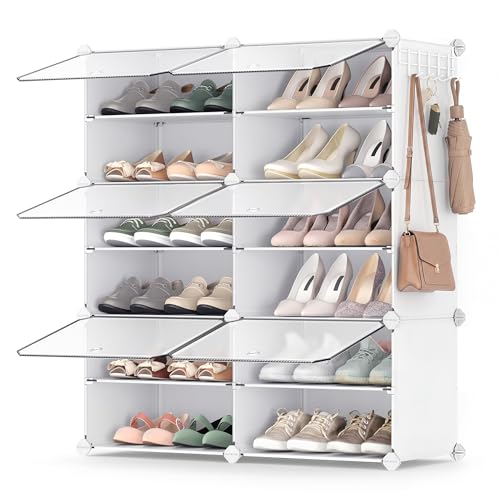
SONGMICS Shoe Rack, 6-Tier with Doors, 24-Pair Storage Cabinet
Chosen because it specifies 6-Tier with Doors and 24-Pair Storage Cabinet.
View on Amazon
SONGMICS Shoe Bench, Storage Bench, Entryway Bench with Cushion
Chosen because it specifies Storage Bench and Entryway Bench with Cushion.
View on AmazonSix Modern Design Families
1. The slim tilt-out cabinet
Hinged flip-down compartments store shoes at an angle, so the cabinet can be only 7–10 in deep. Fronts are usually flat, matte and handle-less, which reads as minimal. This is the go-to design for apartments and narrow halls. Wall anchoring is not optional: a 10 in deep cabinet with shoes in the top compartment tips easily when a flap is pulled.
2. The open slatted rack
Two to four tiers of wood or bamboo slats on a simple frame. Slats let dirt fall through and shoes air out. It looks Scandinavian in light oak or ash tones and Japanese-inspired in darker walnut stains. The trade-off is that everything stays visible, so it suits households with a modest, tidy collection.
3. The shoe bench
A seat on top, storage below. Modern versions mix an upholstered or solid wood seat with a black metal frame, or use cane-front cubbies for warmth. Seat height should be 17–19 in, the same as a dining chair, so putting on boots is comfortable.
4. The floating wall unit
Wall-mounted shelves or cabinets that stop 6–12 in above the floor. The gap makes a small foyer look larger and lets you mop or robot-vacuum underneath. Mounting needs studs or heavy-duty anchors, since a loaded unit can easily reach 40–60 lb.
5. The metal ladder or pipe rack
Thin powder-coated steel rails or tubes, often in black, white or brass. Very low visual weight and easy to wipe clean. Heels and ballet flats can slip between rails, so look for rails no more than 3–4 in apart or with a lip.
6. The built-in or closet-integrated look
Freestanding cabinets placed wall to wall, or tall shoe towers flanking a mirror, can mimic built-in joinery without carpentry. Matching heights and color to door trim is what makes this work visually.
Design Comparison at a Glance
| Design | Typical depth | Typical width | Pairs held | Visual weight | Typical price range |
|---|---|---|---|---|---|
| Tilt-out cabinet | 7–10 in | 23–32 in | 12–24 | Low to medium | $80–$300 |
| Open slatted rack | 11–13 in | 24–36 in | 8–15 | Low | $30–$150 |
| Shoe bench | 13–16 in | 32–48 in | 6–12 | Medium | $80–$350 |
| Floating wall unit | 8–14 in | 24–48 in | 8–20 | Low | $60–$300 |
| Metal ladder/pipe rack | 10–12 in | 20–36 in | 8–20 | Very low | $25–$120 |
| Tall shoe tower | 11–14 in | 18–24 in | 20–40 | High | $60–$250 |
Pair counts assume adult shoes averaging about 4.5 in wide per shoe, so one pair needs 8–10 in of shelf length side by side. Men’s size 11 and up or chunky sneakers need 10–12 in per pair and around 12–13 in of depth if stored flat.
Planning a Foyer Around the Rack
Good foyer design with a shoe rack starts with circulation. You need a clear walking path of at least 36 in past any furniture, and you need room for the front door to swing without hitting the rack.
| Entry width | Maximum furniture depth that leaves a 36 in path | Design that fits |
|---|---|---|
| 42 in | 6 in | Wall hooks plus a low floating ledge; no floor rack |
| 46 in | 10 in | Tilt-out cabinet or floating unit |
| 50 in | 14 in | Slatted rack, slim bench or metal rack |
| 56 in and up | 16–20 in | Full shoe bench, or bench plus wall cabinet above |
Also check where the door handle lands when the door is fully open. Keep at least 3–4 in between the door’s swing arc and any rack, or fit a door stop. Light switches, radiators and floor vents in the entry often decide placement more than style does.
Layering the wall above
A modern foyer usually works as three layers: the shoe storage at floor level, a mirror or art centered 57–60 in from the floor to its middle, and hooks or a narrow shelf at 60–66 in for keys and bags. Keeping the top edge of a rack or bench aligned with nearby trim or a window sill makes the arrangement look planned.
Material Choices for a Modern Look
| Material | Look | Durability in an entry | Watch out for |
|---|---|---|---|
| Solid oak, ash or acacia | Warm, natural | High; scratches can be sanded | Water from wet boots on unsealed wood |
| Bamboo | Light, Japanese-inspired | Good; resists moisture better than pine | Thin slats can crack under heavy boots |
| Engineered wood with laminate | Flat, color-matched, handle-less | Medium; edges chip and swell if wet | Water pooling at the base |
| Powder-coated steel | Industrial or minimal | High | Rust at chips if left wet |
| Cane or rattan fronts | Textured, organic | Medium | Snags from buckles and kids’ hands |
For snowy or rainy climates, add a boot tray at floor level regardless of rack design. Even a sealed wood rack will stain where meltwater sits for hours. Many modern benches leave the lowest shelf open specifically for a tray.
Designs With a Seat
Shoe rack designs with a seat are the most practical choice for families, older adults and anyone wearing lace-up boots daily. A few details make them work:
- Seat depth of 13–16 in is enough to perch; deeper benches eat hallway space.
- Toe kick: an open space under the front edge lets you tuck your heels while sitting.
- Weight rating: look for at least 250 lb on benches meant for adults; slim metal-frame benches are sometimes rated lower.
- Cushion: a removable, wipeable cushion cover handles wet coats and grocery bags better than fixed fabric.
Assembly and Living With It
Flat-pack shoe cabinets often ship in a single box of 35–60 lb and take 45–90 minutes to assemble, mostly spent on flap hinges, which need careful alignment. Open racks and metal rails are usually 15–30 minutes. On any tall or tilt-out piece, use the included anti-tip strap and screw into a stud. What wears first: flap hinges on tilt-out cabinets, laminate edges near the floor, and seat cushions on benches. Choosing designs with replaceable cushions and metal hinge hardware extends their life considerably.
More from Amazon
Programs that pair well with the guide above. Offers and eligibility are set by Amazon and may change.
Collect the home and kitchen items you want in one registry that guests can shop from.
Create a wedding registrySet up recurring deliveries of everyday items on eligible products. Terms and savings are set by Amazon.
Explore Subscribe & SaveFree shipping on eligible items, Prime Video and more. Eligible new members can start with a free trial.
Start a Prime free trialAudiobooks and podcasts to listen to on the go. Eligible new members can start with a free trial.
Try Audible freeAs an Amazon Associate we earn from qualifying purchases.