Key takeaways
- A gallon rating tells you almost nothing about whether a tote fits your shelf, because two bins of the same capacity can have very different exterior shapes. This guide to plastic bins for storage with lids compares four current totes…
A gallon rating tells you almost nothing about whether a tote fits your shelf, because two bins of the same capacity can have very different exterior shapes. This guide to plastic bins for storage with lids compares four current totes on exterior footprint, lid design and real shelf fit so the bin lands where you need it.
As an Amazon Associate we earn from qualifying purchases.
By KK Home Furnishings Editorial Team
How to Match a Storage Bin to Your Shelf
The four criteria below match a bin to a space by measurement, not label: the outside length and width, the total height with the lid on, the fact that capacity does not equal footprint, and the lid and stacking design. A 27-gallon label does not set the shelf footprint, since bins of the same capacity can differ in exterior geometry.
Measure outside length and width
Shelf fit is decided by the outside length and width, so measure those, not the gallon rating. Among these picks the HDX 27-gallon tote is about 28.5 by 19.6 inches, the Project Source 27-gallon clear tote 30.6 by 20.6, the Brightroom 45-gallon 36 by 20.75, and the Rubbermaid 18-gallon a compact 23.9 by 15.9 inches.
Those footprints range from roughly 2.6 to 5.2 square feet, so a bin must be measured against the shelf depth and width it will sit on. A tote that is two inches too long overhangs a rack or will not close a cabinet, which is why the exterior dimensions, not the capacity, are the first number to check.
Note that the two 27-gallon totes here differ in footprint, since the HDX and Project Source share a nominal capacity but not an exterior shape. That proves the label cannot predict shelf fit, so always compare the measured outside dimensions of the specific bin against the space it needs to occupy.
Check total height with the lid
Height is the dimension buyers forget, and the lid adds to it. A bin’s listed height usually includes its lid, but confirm whether a recessed stacking lid or a raised one changes the figure, since clearance under a shelf or inside a closet is set by the total height, not the body alone.
Measure the vertical gap on your shelf or in your cabinet and compare it to the bin’s full height with the lid closed. A tote that fits the footprint can still be too tall to slide onto a shelf or to stack another on top, so the height check prevents a bin that technically fits in two dimensions but not the third.
Recessed or stacking lids are designed so a second bin nests on top without sliding, which affects both the single-bin height and the stacked height. If you plan to stack, measure the combined height of two bins against the available clearance, since a stack that clears the shelf by only an inch is awkward to lift in and out.
Capacity does not equal footprint
Gallons measure volume, not floor space, so capacity and footprint move independently. The Brightroom 45-gallon bin uses the most shelf area here at about 5.2 square feet, while the 18-gallon Rubbermaid uses the least at 2.6, which is expected, but the two 27-gallon totes also differ, showing capacity alone cannot rank shelf fit.
This matters when planning a rack: more gallons usually means a larger footprint, but a taller bin can hold the same volume in less floor area, and a wide shallow bin the opposite. For plastic bins for storage with lids on a fixed shelf, the footprint, not the gallon number, decides how many you can line up.
Tapered walls also mean a bin’s interior is smaller than its exterior, so usable volume is less than the outside dimensions suggest. Never infer internal space from the outside measurements; use the footprint for shelf planning and the gallon rating only as a rough guide to how much the bin actually holds.
Snap lids, latches and stacking design
Lid design affects both security and stacking. These picks range from the HDX’s snap-fit, lockable, water-resistant lid to the Brightroom’s large latches and recessed stacking lid with wheels, so the closure determines how firmly the lid stays on and whether bins nest securely when stacked.
Latching lids hold more firmly than simple snap lids, which matters for a tall stack or a bin moved often, while a recessed stacking lid is what lets a second bin sit stably on top. Choose latches and a stacking lid if you plan to build a column, and a simple snap lid for a single bin on a shelf.
On water resistance, read the exact wording: the HDX lid is described as water-resistant, which is not the same as waterproof, so it sheds splashes but is not a sealed gasket. For anything that must stay dry in a damp basement or garage, treat water-resistant as splash protection, not a guarantee against standing water.
Top Picks
These four lidded totes cover the range from a compact 18-gallon to an extra-large 45-gallon wheeled bin. Specs are manufacturer-stated and prices move, so use the tiers and check the current figure; the exterior footprint and lid design are the details that decide whether a bin fits your shelf and stacks the way you need.
| Product | Best For | Key Spec | Watch Out For |
|---|---|---|---|
| HDX Tough Tote 27-Gal | Best Heavy-Duty Value | 27 gal; 28.5 x 19.6 x 15.2 in; snap-fit, lockable, water-resistant | Water-resistant, not waterproof |
| Project Source Clear 27-Gal | Best Clear 27-Gal | 27 gal / 108 qt; 30.6 x 20.6 x 14.3 in; snap lid; clear | Larger footprint than HDX at same gallons |
| Brightroom 45-Gal Wheeled | Best Extra-Large Wheeled | 45 gal; 36 x 20.75 x 19 in; latches; recessed lid; wheels | Largest footprint; keep heaviest on bottom |
| Rubbermaid Roughneck 18-Gal | Best Smaller Footprint | 18 gal; 23.9 x 15.9 x 16.4 in; heavy-duty lidded tote | Smallest capacity; price varies by retailer |
HDX 27-Gal Tough Tote — Best Heavy-Duty Value
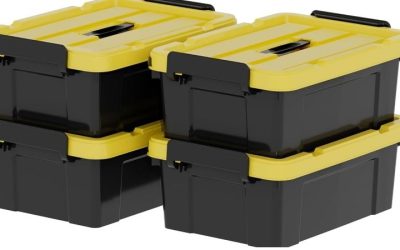
The HDX Tough Tote is the heavy-duty value pick among plastic bins for storage with lids, a 27-gallon tote about 28.5 by 19.6 by 15.2 inches with a snap-fit, lockable, water-resistant lid. It pairs a sturdy build with a secure closure at a modest price, suiting a garage or basement shelf.
Its strengths are the lockable lid and robust walls, which handle tools, gear and seasonal items better than a thin economy tote. The roughly 3.9-square-foot footprint lines up well on standard shelving, and the water-resistant lid sheds splashes, which is useful where a pipe or window might drip.
The caveat is the wording: water-resistant is not waterproof, so the lid repels splashes but is not a sealed gasket against standing water. For anything that must stay perfectly dry, add a liner or choose a sealed container, and as with any tote, its interior is smaller than the outside dimensions suggest.
Project Source 27-Gal Clear — Best Clear 27-Gal
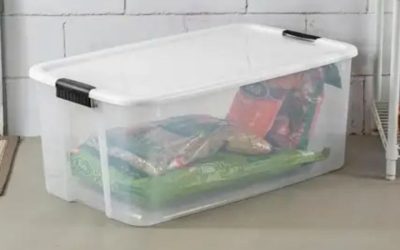
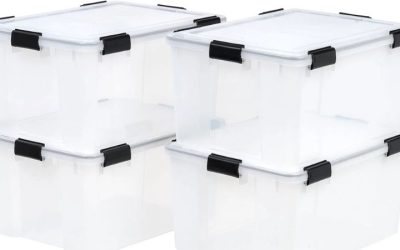
The Project Source clear tote is the pick when you need to see the contents, a 27-gallon, 108-quart bin about 30.6 by 20.6 by 14.3 inches with a standard snap lid and a clear body. Being able to identify what is inside without opening it suits closets and craft or seasonal storage in the home.
Clarity is its main advantage over the opaque HDX, saving you from unstacking bins to find one item, and the slightly lower, wider shape can suit a shallower shelf. At the same nominal 27 gallons it has a larger footprint than the HDX, which is a clear reminder that capacity does not set shelf fit.
The snap lid is less secure than a latching one, so it suits a bin that stays on a shelf rather than one moved often or stacked high. Confirm the footprint against your shelf, since its 4.4-square-foot base is larger than the HDX, and remember the clear plastic can discolor over years in direct sun.
Brightroom 45-Gal — Best Extra-Large Wheeled
The Brightroom 45-gallon is the extra-large wheeled pick, about 36 by 20.75 by 19 inches with large latches, a recessed stacking lid and wheels. It is the choice for bulky items like bedding or holiday decor, and the wheels make a heavy, full bin movable without lifting it across a garage.
Its latches and recessed stacking lid are the practical strengths, holding the lid firmly and letting a second bin nest on top, while the wheels solve the main problem of a large tote, which is weight when full. The roughly 5.2-square-foot footprint is the biggest here, so plan the shelf or floor space accordingly.
The caveats are size and stacking order: Target advises keeping the heaviest bin at the bottom of a stack, and no maximum loaded stack weight is published, so build columns conservatively. Its footprint demands real floor or shelf room, so confirm the space before buying, especially in a cabinet where 36 inches is a lot.
Rubbermaid Roughneck 18-Gal — Best Smaller Footprint
The Rubbermaid Roughneck 18-gallon is the compact, heavy-duty pick, about 23.9 by 15.9 by 16.4 inches, for shelves and spaces where the larger totes overhang. Its roughly 2.6-square-foot footprint is the smallest here, fitting standard closet shelving and tighter cabinets that cannot take a 27- or 45-gallon bin.
The Roughneck line is known for sturdy walls that resist cracking, so despite the smaller size it handles heavier contents than its footprint suggests. For organizing in units a shelf can actually hold, two compact bins often beat one oversized one, since you can lift and place each without strain.
Its 18-gallon capacity is the smallest of the four, so it suits sorting rather than bulk storage, and pricing varies by retailer. As with any tote, the interior is smaller than the outside, and a simple lidded design means it is best for a shelf rather than a tall, frequently moved stack.
Frequently Asked Questions
These answers cover what buyers ask about plastic bins for storage with lids, from whether same-capacity bins match in size to whether latching lids keep water out. The guidance is practical, and water resistance is not waterproofing, so treat any sealing claim as splash protection unless a gasket or tested seal is specified.
Do two 27-gallon bins have the same dimensions?
No, two 27-gallon bins can have different exterior dimensions, as the HDX and Project Source totes here show at the same nominal capacity. Gallons measure volume, which a maker can package in a taller or wider shape, so the label cannot predict the footprint or the fit on a specific shelf.
This is why you always measure the outside length, width and height of the exact bin rather than trusting the capacity. Two bins that both say 27 gallons can differ by inches in every direction, and that difference decides whether they line up on a rack or overhang the edge of a shelf.
When planning storage, compare the measured exterior dimensions against your space first and use the gallon rating only as a rough guide to how much each holds. Matching the footprint to the shelf, not the capacity to the need, is what prevents a bin that holds enough but does not fit where it has to go.
Should I measure the bin or the shelf first?
Measure the shelf first, then shop for a bin that fits it, since the shelf is fixed and the bin is the variable you can choose. Note the usable depth, width and vertical clearance, including anything that reduces them, before comparing bins so you know the maximum footprint and height the space allows.
With the shelf dimensions in hand, compare them to each bin’s exterior length, width and total height with the lid on. This order prevents the common mistake of buying by capacity and discovering the tote overhangs the rack or will not slide under the shelf above, which no gallon rating would have revealed.
If you are buying several bins for a unit, plan how many fit across and whether they stack within the clearance, which again starts from the shelf measurements. Leaving a small margin around each bin makes them easier to slide in and out, so size to the shelf with a little room to spare.
Are latching lids waterproof?
Latching lids are not automatically waterproof; a latch holds the lid down firmly but does not create a sealed, gasketed barrier against water on its own. A lid described as water-resistant, like the HDX, sheds splashes and light moisture but is not rated to keep out standing water in a flood.
Waterproof requires a gasket or a tested seal, which most general-purpose totes do not have, so read the exact wording rather than assuming latches mean sealed. For a damp basement or garage, treat even a latching tote as splash protection and add a liner or desiccant for anything sensitive to moisture.
If keeping contents dry is critical, choose a container that specifically states a gasket or waterproof rating rather than relying on a latch. For most household storage, a latching or snap lid keeps out dust and incidental moisture well enough, which is usually all that shelf or closet storage actually requires.
Can plastic totes be stacked when full?
Many plastic totes can be stacked when full, especially those with a recessed stacking lid like the Brightroom, which lets a second bin nest securely on top. The key is a lid designed for stacking and sensible loading, with the heaviest bins kept on the bottom of the column for stability.
Makers rarely publish a maximum loaded stack weight, so build columns conservatively and keep them to a height you can safely lift the top bin off. Target, for example, advises keeping the heaviest Brightroom bin at the bottom, which is good general practice for any stack of filled totes.
Simple snap-lid totes stack less securely than those with recessed stacking lids, so a tall column is better built from bins designed for it. Avoid overloading lower bins so the lids do not bow under the weight above, and keep stacks on a level surface so a full column does not lean and topple.
Final Thoughts
Plastic bins for storage with lids should be chosen by exterior footprint and lid design, not the gallon rating, since same-capacity bins differ in shape. The HDX offers lockable value, the Project Source clear visibility, the Brightroom extra-large wheeled capacity, and the Rubbermaid the tightest fit; measure the shelf first.