Key takeaways
- Clear bins make sorting easy, but quart capacity alone hides how a container actually fits a shelf or under a bed and what it really costs to buy in bulk. This guide to plastic containers with lids for storage compares…
Clear bins make sorting easy, but quart capacity alone hides how a container actually fits a shelf or under a bed and what it really costs to buy in bulk. This guide to plastic containers with lids for storage compares four clear options on capacity, interior size, latch design and cost per quart so the value is visible, not just the price.
As an Amazon Associate we earn from qualifying purchases.
By KK Home Furnishings Editorial Team
How to Choose Clear Plastic Storage Containers
For plastic containers with lids for storage, the four criteria below weigh what matters: quart capacity, exterior versus interior dimensions, the latch and lid design, and the cost per quart. Cost per quart measures price against capacity only, so it says nothing by itself about latch strength, wall thickness or how well the lid seals.
Capacity in quarts
Quart capacity sets how much a container holds, and these picks center on a useful mid size: the Sterilite, Brightroom and Hefty are each 32 quarts, while the IRIS is a compact 17 quarts. That 32-quart class suits sorting clothes, craft supplies or pantry overflow, holding a meaningful amount without becoming too heavy to lift full.
Match the quart size to the task: 17 quarts suits small items and tight shelves, while 32 quarts handles bulkier sorting. A container that is too large tempts overfilling, which makes it heavy and hard to move, so several mid-size bins often organize better than one oversized one you have to dig through.
Remember that quarts measure volume, not shelf footprint or shape, so two 32-quart containers can occupy very different spaces, as the wide Sterilite and tall Hefty show. Use the quart figure to judge how much a container holds and the dimensions to judge where it fits, since the two do not move together.
Exterior vs interior dimensions
Interior space is always smaller than the exterior because walls taper and the rim and lid consume room, so read both figures. The Sterilite 32-quart measures about 23.75 by 16 by 6.875 inches outside but roughly 20 by 13.375 by 6.375 inside, which is the space your items actually occupy.
The exterior decides shelf and under-bed fit, while the interior decides what you can pack, so a container that fits the space may hold less than its capacity implies if the walls taper sharply. For flat items like folded clothes, the interior length and width matter most; for bulky ones, the usable depth does.
Where a maker publishes both, as Sterilite does, use the interior for planning what goes in and the exterior for planning where it sits. Never estimate the inside from the outside, since the difference can be several inches, and a lid that adds height changes the exterior clearance you need above the container.
Latch and lid design
Latches hold a lid firmly, which matters for stacking and for containers moved often, but a latch is not a seal. These picks latch their lids, from the IRIS and Brightroom to the Hefty HI-RISE, so the closure keeps the lid secure and lets bins stack, while the clear body lets you see in without opening.
A latching lid stays put under handling and lets a second container nest on top, which a loose lid cannot, so latches suit a column or a container pulled from a shelf regularly. The clear base and lid are the point of these bins, turning a stack into a visible inventory rather than a guessing game.
Crucially, an ordinary latch is not a gasketed seal, so do not treat these as airtight or leakproof unless the exact product specifies a gasket or a tested seal. The latch secures the lid against falling off; keeping out air, moisture or pests entirely requires a sealed design these general-purpose containers do not claim.
Cost per quart
Normalizing price by capacity reveals value a sticker hides. Dividing price by quarts, these examples run about $0.40 per quart for the IRIS multipack, $0.27 for the Sterilite, $0.25 for the Brightroom and $0.28 for the Hefty as of October 2026, so the Brightroom is lowest on this normalized metric among these picks.
Cost per quart is the fairest way to compare containers of different sizes and pack counts, since a multipack and a single can look very different on the shelf. It is valid for these exact current examples, not the whole market, but it shows the 32-quart class delivers more capacity per dollar than the small IRIS multipack.
Use the figure alongside build, not instead of it, because cost per quart measures only price against nominal capacity. It says nothing about latch strength, wall thickness or seal, so a container that is cheapest per quart but thin-walled may not be the better buy for heavy or long-term storage over a sturdier one.
Top Picks
These four plastic containers with lids for storage cover the range from a compact 17-quart multipack to several 32-quart shapes. Specs are manufacturer-stated and prices move, so the per-quart figures are a snapshot from October 2026; the interior dimensions and latch design are the details that decide what fits inside and how securely the lid holds.
| Product | Best For | Key Spec | Watch Out For |
|---|---|---|---|
| Sterilite 32 Qt Latching Box | Best Overall Mid-Size | 32 qt; ext 23.75 x 16 x 6.875 in; int 20 x 13.375 x 6.375 in; ~$0.27/qt | Latch is not a gasket seal |
| Brightroom Clear 32 Qt | Best Budget per Quart | 32 qt; 24 x 16.5 x 6.5 in; int 20.625 x 14.375 x 5.75 in; ~$0.25/qt | Lowest per quart; still not airtight |
| IRIS Clear Latching 17 Qt | Best Compact | 17 qt; 16.4 x 11.8 x 7 in; latching; ~$0.40/qt (4-pack) | Smallest; highest cost per quart |
| Hefty HI-RISE 32 Qt | Best Tall Shape | 32 qt; 16.85 x 12 x 14.24 in; HI-RISE latch lid; ~$0.28/qt | Tall, narrow; different footprint to Sterilite |
Sterilite 32 Qt — Best Overall Mid-Size
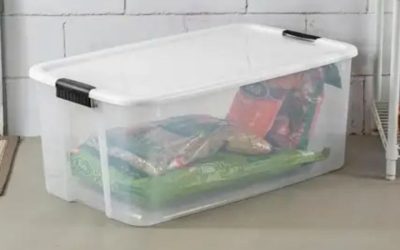
The Sterilite 32-quart latching box is the best all-round clear plastic container with lids for storage here, with a wide, shallow profile about 23.75 by 16 by 6.875 inches outside and roughly 20 by 13.375 by 6.375 inches inside at around $0.27 per quart. The published interior makes planning what fits straightforward.
Its low, wide shape suits under-bed storage and shelves, holding folded clothes or flat items where its generous interior length and width shine. Sterilite publishing both exterior and interior dimensions is a real advantage, since you can confirm both where it sits and what it holds before buying, which many brands leave vague.
The latch secures the lid and allows stacking, but it is not a gasket, so treat it as secure rather than airtight. Retailers round its dimensions slightly, so lock the manufacturer figures for planning, and remember the shallow depth suits flat storage more than bulky items that need vertical room.
Brightroom 32 Qt — Best Budget per Quart
The Brightroom clear 32-quart is the budget-per-quart pick at about $0.25 per quart, the lowest here, measuring around 24 by 16.5 by 6.5 inches outside with a roughly 20.625 by 14.375 by 5.75-inch interior. It delivers the most capacity per dollar among these current examples for general sorting.
Its wide, shallow shape mirrors the Sterilite’s, suiting shelves and under-bed storage, and the latch lid lets it stack and stay closed under handling. For buying several bins to organize a closet or garage affordably, its low cost per quart adds up across a set without sacrificing the clear visibility that makes sorting easy.
Lowest per quart does not mean best in every way, since the figure measures only price against capacity, not wall thickness or latch strength. It is not airtight despite the latch, so use it for dry goods and general storage rather than anything needing a seal, and confirm the current price, which shifts.
IRIS 17 Qt — Best Compact
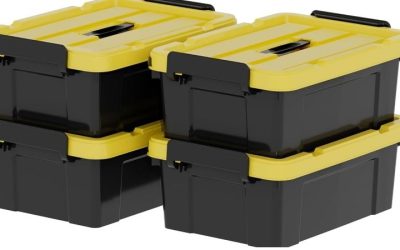
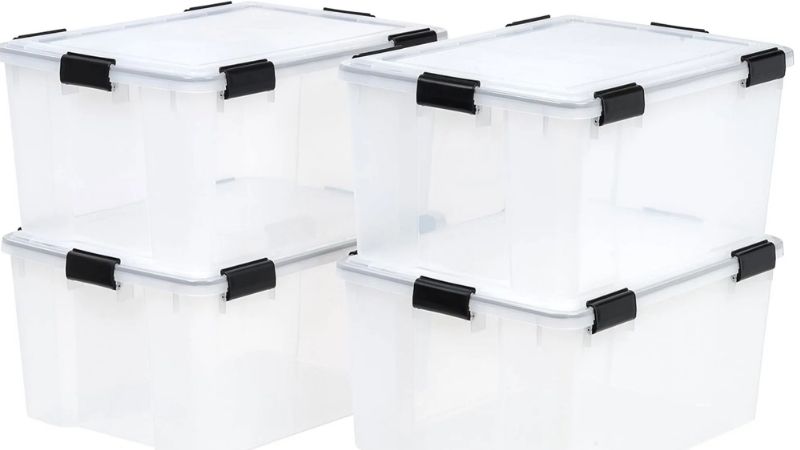
The IRIS clear latching 17-quart is the compact pick, about 16.4 by 11.8 by 7 inches, sold in a four-pack at roughly $0.40 per quart. Its small size suits tight shelves, drawers and sorting small items, where the larger 32-quart boxes would waste the space or become too heavy to lift when full.
The smaller footprint is its purpose: it fits where mid-size bins cannot and keeps each container light enough to handle easily, which suits craft supplies, hardware or seasonal accessories. Buying as a multipack makes it easy to build a matching set of small, stackable, clearly labeled containers for detailed organizing.
The trade-off is the highest cost per quart here at about $0.40, since small containers and multipacks carry a premium per unit of capacity. It latches but is not a sealed container, so it is best for dry, small-item storage, and its compact size means more bins for the same total volume than a 32-quart option.
Hefty 32 Qt HI-RISE — Best Tall Shape
The Hefty HI-RISE 32-quart is the tall-shape pick, about 16.85 by 12 by 14.24 inches, offering the same nominal capacity as the Sterilite in a very different, upright footprint at roughly $0.28 per quart. It suits narrow, tall spaces where a wide shallow bin will not fit, such as a closet corner or a pantry column.
Its upright shape is the whole point, packing 32 quarts into a smaller floor footprint by going vertical, which is useful on a deep shelf or beside appliances. The HI-RISE latch lid keeps it closed and stackable, and the clear body shows the contents, so a tall stack still functions as a visible inventory.
Being tall and narrow, it is less suited to flat items than the wide Sterilite, so match the shape to what you store. It latches but is not gasketed, so it is not airtight, and because two 32-quart containers can have such different shapes, confirm the footprint fits your space before buying for a specific spot.
Frequently Asked Questions
These answers cover what buyers ask about plastic containers with lids for storage, from whether quart capacity equals usable space to whether latching lids seal. The guidance is practical, and a latch is not a gasket, so treat these containers as secure and visible rather than airtight unless a seal is specified.
Is quart capacity the same as usable space?
No, quart capacity is the nominal volume, while usable space is less because walls taper and the rim and lid consume room. The Sterilite 32-quart, for example, measures about 20 by 13.375 by 6.375 inches inside, which is the space your items actually occupy, noticeably smaller than the exterior envelope.
Usable space also depends on what you store: flat items use the interior length and width efficiently, while bulky items are limited by the usable depth and the taper near the bottom. So two containers with the same quart rating can hold different amounts of a given item depending on their interior shape.
For planning, use the interior dimensions where the maker publishes them, as Sterilite does, rather than the quart number alone. Treat quarts as a rough guide to overall volume and the measured inside dimensions as the real limit on what fits, especially for items that must lie flat or stand upright.
Are clear storage containers better than opaque totes?
Clear containers are better when you need to see the contents without opening them, which saves unstacking a column to find one item and makes them ideal for frequently accessed storage. Opaque totes, by contrast, hide contents but can resist light-related fading and often come in heavier-duty builds for garages.
The choice depends on use: clear suits closets, crafts and pantry sorting where visibility speeds things up, while opaque suits long-term or outdoor-adjacent storage where you do not need to see in and want maximum durability. Many households use both, clear for active items and opaque for bulk or seasonal gear.
Clear plastic can discolor over years in direct sunlight and may show scuffs more than opaque, so keep it out of strong light for the longest clarity. For the organizing task these picks are built for, visible contents usually outweigh those minor drawbacks, which is why clear is the default for active storage.
Do latching lids make a container airtight?
No, a latching lid holds the lid firmly but does not make a container airtight, because a latch is not a gasketed seal. The IRIS, Brightroom and Hefty here latch securely for stacking and handling, yet none should be described as airtight or leakproof unless the exact product specifies a gasket or a tested seal.
Airtight requires a continuous gasket and a lid designed to compress it, which general-purpose storage containers like these do not have. The latch keeps the lid from popping off and lets bins stack, but air and moisture can still pass at the rim, so plan accordingly for anything sensitive to either.
If you need an airtight container for food, pests or humidity-sensitive items, choose a product that explicitly states a gasket or airtight seal. For ordinary dry storage of clothes, supplies or household goods, these latching containers are secure and keep out dust well enough, which is what shelf storage usually needs.
What size plastic box fits under a bed?
Under-bed storage usually calls for a wide, shallow container, which is why the low Sterilite and Brightroom 32-quart boxes near 6.5 inches tall suit the space. The limiting dimension is the clearance between the floor and the bed frame, so measure that height first before choosing a box.
Once you know the under-bed clearance, pick a container whose total height with the lid clears it with a little margin to slide in and out. The wide, shallow 32-quart shapes maximize capacity within a low profile, while a tall container like the Hefty HI-RISE is the wrong choice for under a bed.
Also check the box will slide on your flooring and clear any center rail or legs, and leave room to grip it when pulling it out. A low, latching, clear container is ideal under a bed, since you can see the contents, keep the lid secure and still fit it within a few inches of under-bed clearance.
Final Thoughts
Clear plastic containers with lids for storage are best compared on interior size and cost per quart, not the sticker. The Sterilite is the all-round 32-quart, the Brightroom lowest per quart, the IRIS suits compact sorting, and the Hefty HI-RISE fits tall spaces; treat a latch as secure rather than airtight.