
Key takeaways
- A second hand sofa can be a genuine bargain or an expensive mistake, and the asking price alone will not tell you which. The figure that really matters is condition: before anything else, inspect the upholstery and frame, check for…
A second hand sofa can be a genuine bargain or an expensive mistake, and the asking price alone will not tell you which. The figure that really matters is condition: before anything else, inspect the upholstery and frame, check for pests, read any labels, and price the delivery, because a used couch is only cheap once it is safely in your room.
As an Amazon Associate we earn from qualifying purchases.
By KK Home Furnishings Editorial Team
How to Choose a Second Hand Sofa
Shopping used flips the usual order of buying a couch. With a new sofa the specs are published and consistent; with a used one, every listing is a single item whose real condition is known only to the seller, so the job is to verify what you can in person before the low number tempts you into skipping the important checks.
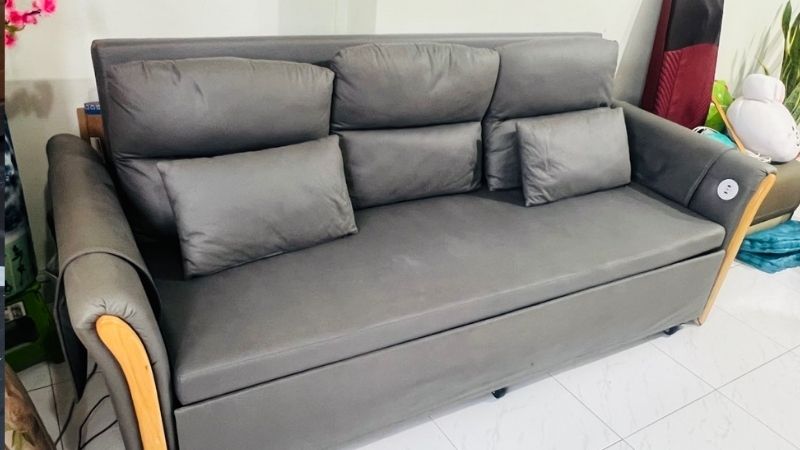
Inspect Upholstery, Seams and Hidden Areas
Start with a close look at the fabric and every seam, not the overall impression. Run your eye along the piping, under the cushions and into the folds where wear and problems hide, since a listing photo rarely shows the corners. The EPA advises inspecting used furniture for signs of bed bugs before you bring any of it into your home.
Do this inspection in person wherever possible. Lift the cushions, check the deck underneath, and look along the seams and in the frame crevices for insects, eggs or droppings, because a single couch can carry pests that are costly to clear afterward. If you cannot inspect it first, treat that as a real risk, not a formality.
Set expectations about cleaning. You can vacuum and surface-clean upholstery, but a used sofa should not be described as sanitized or bed-bug free without independent evidence, and deep stains or odors may never fully lift. Factor professional cleaning into the cost, and walk away if the seller cannot let you examine the piece closely.
Check the Frame Before You Judge the Price
The frame decides whether a used sofa is worth anything, so test it before the price sways you. Sit down firmly, shift your weight, and press on the arms and back to feel for flex, creaks or a sagging deck that signal a tired or broken frame underneath the upholstery you can actually see on the surface of the piece.
Check the legs and joints directly too. Rock the piece gently to feel for wobble, look where the legs meet the frame, and lift a corner to sense whether it is solid hardwood or a lighter engineered build. A seller’s adjective like sturdy is not evidence; what you feel and hear when you load the frame is the real test here.
Weigh repairs against the saving. A sofa that sags, squeaks or leans may need reupholstery or frame work that erases the discount, and some damage is not worth fixing. Avoid calling any used piece structurally sound unless a professional confirms it; judge the frame by how it behaves, then decide if the price still makes sense.
Measure the Sofa and the Entire Delivery Path
Used sofas come in every size, so measure the exact piece and the whole route in. The examples here range widely, from an 81-inch compact leather sofa to a 114-inch piece with a chaise, a 145-inch vintage sectional and a modular design listed at 310 centimetres, which works out to just over 122 inches long once converted to inches.
Plan the path before the purchase, not after. Measure the front door, any hallway turns, the stairwell or lift, and compare the narrowest point to the sofa’s largest dimension, because a used bargain is no bargain if it cannot get inside. Leave roughly 30 to 36 inches of walkway around where the piece will finally sit in the room.
Price the move as part of the deal. Private used sales rarely include delivery, so budget for a van, movers or a truck rental, and for the labor to carry a heavy piece up stairs. That cost is part of the true acquisition price, and on a large sectional it can rival whatever you saved over buying something brand new.
Check Age, Labels, Repairs and Return Terms
Age and paperwork tell you what you are actually buying. Ask when the sofa was made, whether it has been reupholstered, and what repairs it has had, since a decades-old vintage piece and a two-year-old resale are very different risks. Treat conflicting dates in a listing as a reason to confirm, not as something to guess at.
Labels matter, within limits. A federal flammability standard for upholstered furniture, 16 CFR Part 1640, applies to items made, imported or reupholstered on or after June 25, 2021, with certification labels required for those in scope from June 25, 2022; an older vintage sofa predates it, so a missing label is not a defect on its own.
Confirm the return terms before money changes hands. Private sales are usually final, marketplace and consignment sites vary, and a dealer listing may differ again, so know whether you can return the piece if a hidden problem appears at home. No return option raises the stakes on every single inspection step you just worked through.
Top Picks
The four listings below are current market examples rather than ranked winners, because each used sofa is a single item with seller-described condition, so none earns a Best Overall or value verdict here. They show the range of sizes and formats you will meet; the table pairs each with its headline measurement and its main unknown.
| Product | Best For | Key Spec | Watch Out For |
|---|---|---|---|
| MG+BW Leather Sofa | Current Compact Example | 81 in W × 37 in D; espresso leather | Condition is seller-described only |
| Pottery Barn Big Sur | Current Chaise Example | 114 in W × 68 in D; 4 seats | Large delivery footprint |
| Rolf Benz Kumo | Current Modular Example | 310 cm W × 180 cm D; 2-piece | Conflicting dating in the listing |
| Pearsall Sectional | Current Vintage Example | 145 in W; 1950s design listing | Provenance needs an independent check |
MG+BW Leather Sofa: Current Compact Example
The Mitchell Gold + Bob Williams leather sofa is a compact used example, listed at 81 inches wide by 37 inches deep by 31.5 inches tall with a 24-inch seat depth and an 18-inch seat height, in espresso top-grain leather. It is offered on a consignment marketplace with an asking price around $2,650, which is only one seller’s figure.
Its narrow 81-inch width makes it the easiest of these to move and to fit in an apartment or smaller room, and leather can be wiped down more readily than fabric. Confirm the exact seat depth and height suit you by sitting on it, and measure the 81-inch width against your entry path before agreeing to anything with the seller.
The unknown is condition, which the listing describes but does not independently verify. Top-grain leather shows its history in scuffs, cracks and color change, so inspect the surface and the seams closely, and do not read the listing’s description as a guarantee. Treat the asking figure as a starting point, not a verified market value.
Pottery Barn Big Sur: Current Chaise Example
The Pottery Barn Big Sur with chaise is a large used example, listed at 114 inches wide by 68 inches deep by 37 inches tall, seating four with a 21-inch seat height, at an asking price near $4,200 on a consignment marketplace. Those dimensions make it a substantial sectional rather than a standard three-seater for a smaller room.
It suits a big living room that needs a chaise and real seating capacity, but the 114-inch width and 68-inch depth demand a careful route and a lot of floor. Measure the door, hallway and any stairwell against both figures, and plan 30 to 36 inches of walkway, because a piece this size is hard to maneuver once it is inside.
The catches are size and condition together. A sectional this large costs the most to move and is the hardest to return in a private sale, and the fabric’s wear is described only by the seller. Inspect the deck, cushions and seams in person, and price the delivery and any cleaning into the total before you commit to it.
Rolf Benz Kumo: Current Modular Example
The Rolf Benz Kumo 555 is a modular used example, listed at 310 by 180 by 68 centimetres, which converts to roughly 122 by 71 by 27 inches, as a two-piece set with four back and two arm cushions. It appears on a craft-and-vintage marketplace with an asking price around $4,282, again just a single seller’s number to treat with care.
Its modular, two-piece format can make delivery easier than one solid frame, since the sections move separately through a tight space. Measure each piece rather than the combined footprint, and confirm how the modules connect. The metric sizing also means converting to inches before you compare it to your room and your doorways at home.
The clear warning is dating. The listing’s metadata conflicts on the sofa’s age, so do not infer how old or used it is from a single year shown; ask for a serial number or purchase invoice to establish provenance. Without that, treat both the age and the condition as unverified, however appealing the design looks in the photos.
Pearsall Sectional: Current Vintage Example
The Adrian Pearsall for Craft Associates sectional is a vintage used example, listed at 145 inches wide by 31 inches deep by 28 inches tall in fabric with walnut wood framing, at an asking price near $6,860 on a vintage dealer platform. As a 1950s design, it is a collector’s piece rather than a budget used sofa for everyday saving.
It suits a buyer who wants a specific mid-century design and understands vintage pricing, where provenance and originality drive the figure. The shallow 31-inch depth reads differently from a modern deep sofa, so sit on it to judge comfort. Measure the 145-inch width carefully, as it is the longest single piece here to move inside.
The honest caution is condition and authenticity. A seven-decade-old sectional may have original or reupholstered fabric and repaired joints, and it predates current flammability labeling, so none of that is a defect. Have the piece and its provenance inspected independently, and avoid any fully restored label without proof.
Frequently Asked Questions
Buyers weighing a used couch tend to ask the same practical things, mostly about inspection, pests, labels and when new simply makes more sense. Each answer starts with the direct reply, then adds the condition that changes it, so you can apply it to the specific listing in front of you rather than to a general rule for all of them.
What should I check before buying a used couch?
Check condition, size and history, in that order, before the price. Inspect the upholstery and seams, press and rock the frame for flex or wobble, look for any signs of pests, and measure the piece against your delivery path. The asking figure is the last thing to weigh, once the sofa has clearly passed the physical checks first.
Do as much as you can in person. Sit on it, lift the cushions, examine the deck and the joints, and ask when it was made and what repairs it has had, because a photo and a seller’s description cannot confirm a frame’s soundness. If an in-person look is impossible, treat the purchase as a distinctly higher-risk one.
Then price the full cost, not the sticker. Add delivery, any professional cleaning, and the odds of a repair, and compare that total against a new sofa before deciding. A used piece that needs movers, a deep clean and a new cushion can end up costing more than it first appeared once everything has been tallied up.
Can bed bugs travel on a used couch?
Yes. The EPA lists furniture as one way bed bugs move between homes and advises inspecting used pieces before bringing them inside. A sofa offers plenty of seams, folds and hidden crevices where the insects and their eggs can shelter, so a secondhand couch is a realistic route for them into a home if it goes unchecked.
The practical response is a careful inspection. Check the seams, under the cushions, along the frame and in any folds for live insects, shed skins, eggs or small dark spots before you load the piece. Buying from a non-smoking, pest-aware source lowers the odds, but it does not replace actually looking the sofa over yourself first.
If you find anything, do not try to argue it is minor. Pests on a used couch are expensive and stressful to clear once inside, so the safe move is to decline the piece rather than risk it. When in doubt, having a professional inspect or treat a secondhand sofa is far cheaper than dealing with an established infestation later.
Should a used sofa have a flammability label?
It depends on when the sofa was made or reupholstered. The federal upholstered-furniture flammability standard, 16 CFR Part 1640, applies to items made, imported or reupholstered on or after June 25, 2021, with certification labels required for those in scope from June 25, 2022. A sofa predating those dates would not carry such a label.
So a missing label is not automatically a red flag. A genuine vintage piece from decades ago was made long before the rule, and the absence of a current label simply reflects its age rather than a fault. For a recent resale, by contrast, you would expect the labeling, so use the piece’s age to judge what to expect here.
Use the label as one data point among several. It speaks to flammability compliance, not to the frame, cleanliness or comfort, so pair it with your own inspection. If a seller cannot say when a sofa was made or reupholstered, treat the uncertainty as part of the overall risk you are weighing before buying the piece at all.
When is buying new better than buying second hand?
New wins when certainty and convenience matter more than the lowest price. A new sofa comes with published dimensions, consistent condition, a warranty, delivery and a return window, none of which a one-off used listing can guarantee. If you cannot inspect a used piece in person, new is often the safer route to take overall.
It also depends on the total cost, not the sticker. Once you add delivery, cleaning and the chance of a repair, a cheap used sofa can approach the price of a new budget one that arrives clean and covered. Run that comparison for your specific listing rather than assuming used is always the more economical choice in every case.
Used still makes sense for the right buyer. If you can inspect the piece, move it affordably, and you want a specific design or a quality brand at a discount, a secondhand sofa can be excellent value. The deciding factor is whether the inspection and logistics check out, not simply which option shows the lower number first.
Final Thoughts
A good second hand sofa is one you have inspected, measured and can get home, not just the cheapest listing. Check the upholstery and frame, look for pests, read the labels against the age, and price delivery and cleaning before deciding. The leather, chaise, modular and vintage pieces are examples to judge in person, not ranked buys.









