Key takeaways
- Compare sofa fabric abrasion results with their test methods and fabric codes. Learn why rub counts cannot be converted into years of use.
What's inside
A sofa fabric’s rub count is a result from a specified abrasion test. It is not a countdown of how many times you can sit down, a lifespan in years or a complete score for the finished sofa. Use the number as one documented property alongside the test method, fabric identity and other requirements.
A larger number does not automatically make one sofa the better choice. First establish whether the two numbers describe comparable tests and whether the rest of the upholstery information answers the problems your household actually needs to manage.
Ask for the method behind the result
The Association for Contract Textiles explains in its abrasion guidance that flat abrasion results do not predict product lifespan and do not account for all forms of wear. Wyzenbeek and Martindale are test methods, not interchangeable names for a universal durability unit. Doubling a test result does not establish double the useful life.
Record the method exactly as the supplier states it, including whether the result is expressed as cycles or double rubs. Do not convert between methods using a casual ratio from a shopping article. If the listing gives only a large number followed by “durability,” ask for the test identification.
Also check what the result applies to. A fabric family name may have several compositions, backings or finishes. The evidence should match the selected fabric code, not just another textile from the same supplier.
Build a comparable specification sheet
| Field | What to obtain | Why it matters |
|---|---|---|
| Fabric identity | Pattern, color and exact code | Links the report to the order |
| Abrasion method | Named method and stated version if supplied | Prevents unlike numbers being ranked together |
| Reported result | Number, unit and endpoint wording | Separates a result from a marketing adjective |
| Other properties | Relevant separate specifications | Abrasion does not answer every use concern |
| Care instructions | Approved routine and stain-care method | Shows whether maintenance is practical |
| Finished-sofa terms | Construction and applicable warranty | Fabric data does not describe the whole sofa |
Leave missing fields visible. “No report supplied” is not the same as a low result, and a published number is not a guarantee that a product suits every use. The purpose of the sheet is to expose what you can and cannot fairly compare.
Separate abrasion from the problems you expect
Make a short list of household concerns before comparing samples. You might care about visible pilling, color change in a bright room, snagging, spills or the permitted cleaning routine. Ask for information specifically relevant to those concerns rather than using a rub count as a substitute answer.
Similarly, an abrasion figure does not establish the condition of the sofa’s cushion filling, frame or suspension. Keep these as separate buying questions. A strong fabric specification cannot correct a sofa that has the wrong dimensions or an uncomfortable seat for the intended user.
Do not interpret a high number as proof of pet-claw resistance or stain resistance. If a seller makes either claim, ask for its scope and supporting evidence. The words “performance fabric” may introduce useful features, but the detailed specification still needs to say what those features are.
Worked example: three numbers, no automatic winner
Imagine three hypothetical swatches. A reports 50,000 double rubs under a named Wyzenbeek procedure. B reports 80,000 Martindale cycles. C advertises “100,000 durability” with no method. The correct first step is not to rank C, then B, then A.
A and B use different test descriptions, while C lacks the information needed to interpret its number. The buyer requests comparable documentation and keeps the method beside every result. No calculation in this worksheet turns those values into years of household use.
Now suppose A has clear care instructions that fit the household’s routine, while B’s approved cleaning route would be difficult to arrange. That practical difference belongs in the decision alongside the verified fabric evidence. It does not prove that A will last longer, but it may explain why A better meets the buyer’s requirements.
Use samples for observations they can support
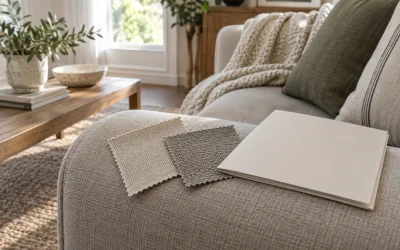
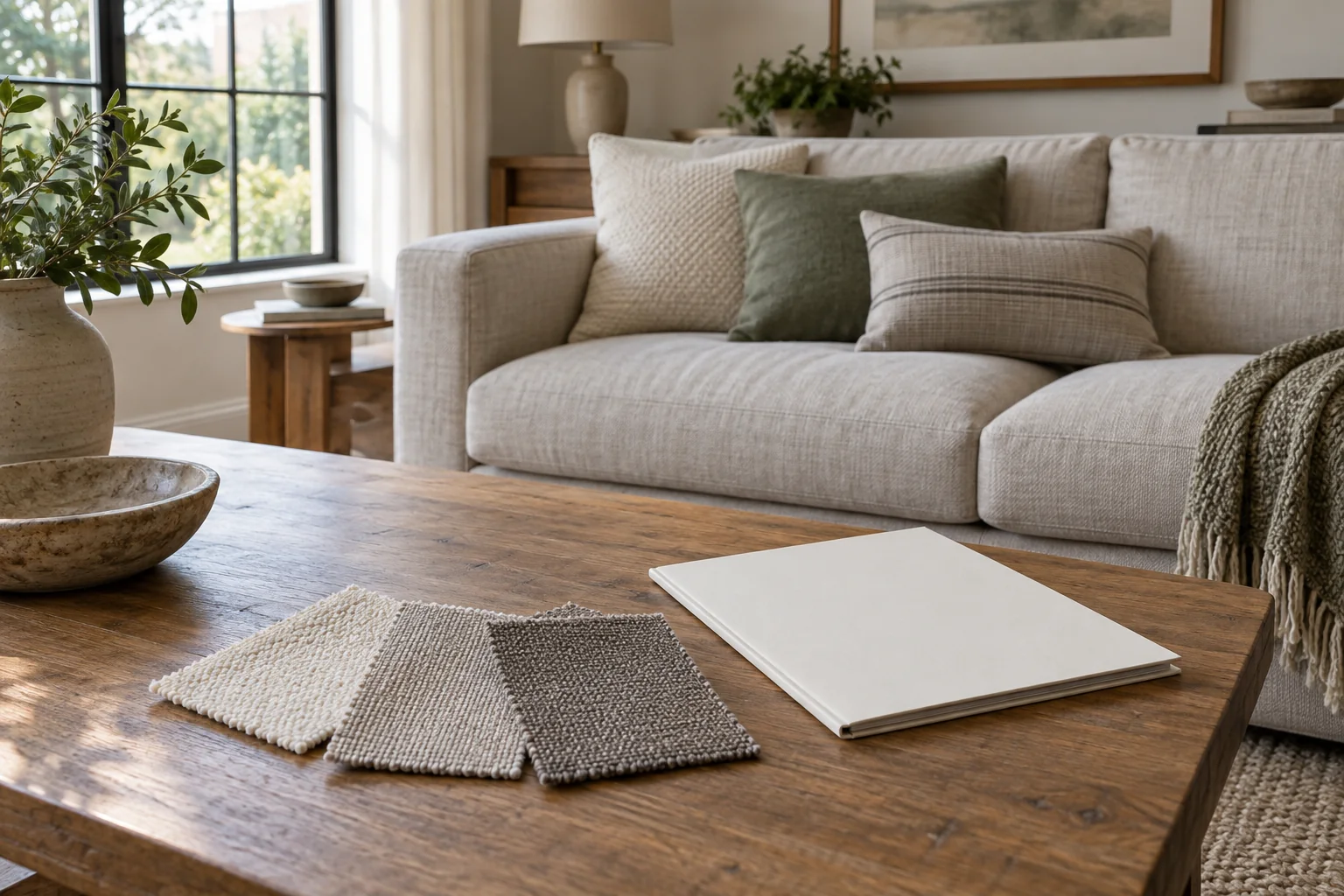
A supplier sample can help you assess texture, color and appearance beside your existing furniture. Label it with the exact fabric code and view it in the lighting where the sofa will sit. Keep the observation specific: “looks warmer beside this floor” is more defensible than “will never fade.”
Do not invent an accelerated home test by rubbing samples with abrasive tools, scratching them or applying unapproved chemicals. Such experiments do not reproduce a standardized laboratory method. They can also consume the sample needed to confirm the selected color or texture.
If the supplier permits a particular care demonstration, keep its limits clear and follow the instructions. One successful spot-cleaning demonstration still does not establish performance against every substance or repeated treatment.
Turn the comparison into a documented decision
Write a short conclusion naming the selected fabric code, the verified test information and the other factors that mattered. For example: “Chosen for its documented specification, suitable care route and preferred texture; no lifespan estimate made.” This keeps the reasoning useful without promising a result the evidence cannot support.
Save the specification and care document with the sofa order. If a later issue arises, record the observed condition and contact the seller under the actual warranty terms. A rub count helps describe a fabric test; it should never be the only fact standing between a household and an informed upholstery decision.